To avoid these ads, REGISTER NOW!

Dodged a bullet on this one, I think...

cosmokenney

Well-known member
Joined
Oct 18, 2017
Messages
275
Location
Loyalton, CA
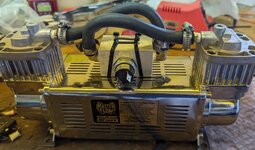
I am building an air manifold from a chunk of aluminum. It is going in my jeep for on-board air.
I drilled two holes all the way through that intersect in the middle. That way I have four holes to mount a pressure switch, the quick connect for my air line, and the two inlets from the two cylinders on the compressor.
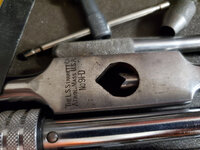
I had already cut the manifold to shape. Chamfered the edges. Ran it on the belt sander to give it that brushed aluminum look. Drilled and chamforred the holes. Then tapped three of the four holes, two 1/8 NPT and one 1/4 NPT and was in the middle of the fourth 1/4 NPT when the tap wrench broke. If it was the tap that broke in the hole it would have been a bad day in the garage for sure. I just don't have a the tools to pull a broken tap out.
Now I have to figure out where I can get some stronger tap wrenches.

Pretty sure I dodged a bullet on this project...
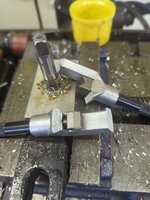
Broken Tap Wrench.jpg
 
To avoid these ads, REGISTER NOW!
OP
C

cosmokenney

Well-known member
Joined
Oct 18, 2017
Messages
275
Location
Loyalton, CA
If you are doing a lot of tapping, invest in some tap sockets. If not, just use a 12 point socket. Tap wrenches belong in the trash.
That's a good idea. In this case I was using a tap follower in the drill press. I find it much easier to start the tap that way. But it does mean I can't use a socket. Maybe a 12 point ratchet wrench would work though. Hmm...
 

Sweetcorn

Well-known member
Joined
Feb 14, 2018
Messages
680
Location
North Central Ohio
If you are doing a lot of tapping, invest in some tap sockets. If not, just use a 12 point socket. Tap wrenches belong in the trash.
Cheap tap wrenches, like what is shown in the pic, belong in the trash.

Quality tap wrenches, like Starrett, are a better tool than tap sockets and faaaarrrr better than using 12 point sockets. The angles on the flats aren't even correct on a 12 point. A triple square would be better than a 12 point, but still not the right tool for the job.

The problem with sockets is you don't apply a balanced load on the tap and often end up cutting improperly sized threads or bind and break the tap.
 

klxrcr

Member
Joined
Oct 28, 2012
Messages
14
Location
Missouri
I use a 3/8 impact and tap sockets with great success. Smaller taps just chuck them up in a drill, they will usually spin in the chuck before they break if it’s a quality tap.
 

jsaw

Well-known member
Joined
Oct 11, 2008
Messages
1,789
Location
Geneva, N.Y.
If You use tap sockets, it helps to use a sliding T handle so that You apply pressure evenly. Also if You can use a long extension You can guide and support the extension so that You do not apply side pressure to the tap
 

danielbuck

Well-known member
Joined
Apr 15, 2014
Messages
926
Cheap tap wrenches, like what is shown in the pic, belong in the trash.

Quality tap wrenches, like Starrett, are a better tool than tap sockets and faaaarrrr better than using 12 point sockets. The angles on the flats aren't even correct on a 12 point. A triple square would be better than a 12 point, but still not the right tool for the job.

The problem with sockets is you don't apply a balanced load on the tap and often end up cutting improperly sized threads or bind and break the tap.
agreed, I find it easier to keep the tap straight when using a 2 handle tap wrench. I think you also get a bit more feel that way too, when you're pushing on one side and pulling on the other side of the wrench.

I've never broken a tap wrench though, and mine aren't expensive brands. If the wrench broke, either that tap is probably dull, or the wrong size hole was drilled? Or it's just a completely crappy wrench, LOL
 

dutchgray

Well-known member
Joined
Sep 28, 2014
Messages
6,468
Location
Dorset. England.
Get on ebay and buy some used high quality tap handles, just study the pictures and get ones where the hardened steel V blocks are in visibly good condition and they will be fine.
 

Firebrick43

Well-known member
Joined
May 12, 2015
Messages
14,154
Location
West central Indiana
While I think tap sockets are the berries, use them constantly, and have a full set, I don’t think they are appropriate for tapping new holes.

Even with a T handle they are not rigid enough to properly line up when starting a tap in an untapped hole.

They also block the center hole on the end of a tap which is very useful when tapping something on a drill press or mill table with a spring loaded center in the spindle.

I always recommend the starrett 91 series tap handles
 

Monza Harry

Well-known member
Joined
Dec 29, 2018
Messages
1,433
Location
Windsor ON
Bigger tap handles of quality are an endangered species! The steel one I bought has broken 3 times IIRC. Only once in my own hands, and will not stay tight on the top drive, period! I do have the Starrett 91 A,B,C,& D, as well as the 93 A,B,C,D,E,& F. the 91 D only goes to ¾" or ¼" NPT. for ⅜" NPT and 1" taps I only have a steel one that keeps breaking the jaws, even the hardened H-13 custom made replacements. The one that ISB Cornbinder posted from Princess Auto is surprisingly good, I grab the smaller one [#6-5/16"] constantly. I replaced the handle with an 8mm pin with some extra length, I'm blown away that a PAL tool is actually that good! [Also available at HF, BTW]
That 1" capacity I have is an Irwin:
Harry
Edit: Cle-Line still offers a wrench of a style/type that has stood up well in the shops I have worked at. #5, and #6, etc.
 
Last edited:

Grant Gunderson

Well-known member
Joined
May 17, 2013
Messages
2,330
Location
Bellingham, WA
Did you use a pipe tap reamer prior to using the pipe tap? Pipe threads are tapered. If you just drill, chamfer then try to tap with a pipe tap it’s a real ***** to get them to cut and it’s no suprise the tap wrench broke. I learned this the hard way, but unlike you the pipe tap broke! Your lucky it wasn’t the pipe tap! Using a pipe reamer after drilling the holes and prior to tapping makes it a hell of a lot easier to cut the threads and wil prevent you from breaking the tap or the tap handle. I have a large pipe tap handle from Alfa tools that works well. Not as nice as my Starrett ones but works great on pipe taps.
 

gearhead1

Well-known member
Joined
Oct 14, 2013
Messages
1,935
Location
NC
Did you use a pipe tap reamer prior to using the pipe tap? Pipe threads are tapered. If you just drill, chamfer then try to tap with a pipe tap it’s a real ***** to get them to cut and it’s no suprise the tap wrench broke. I learned this the hard way, but unlike you the pipe tap broke! Your lucky it wasn’t the pipe tap! Using a pipe reamer after drilling the holes and prior to tapping makes it a hell of a lot easier to cut the threads and wil prevent you from breaking the tap or the tap handle. I have a large pipe tap handle from Alfa tools that works well. Not as nice as my Starrett ones but works great on pipe taps.
Exactly. Pipe threads are tapered. Also, you only go to a certain depth with pipe threads. If you try to go too deep or use too small of a straight hole, it’ll cause a high torque to tap.
 
To avoid these ads, REGISTER NOW!

Monza Harry

Well-known member
Joined
Dec 29, 2018
Messages
1,433
Location
Windsor ON
Grant and others the "Machinery Handbook" has charts for with and without reaming, without is typically + 1/64th to +1/32nd of an inch larger dia. at least to around the 1"NPT range that is in my experience range. That seamingly small incrrase in dia. is actually quite noticeable on the end of the tap wrench (handle). The first place I worked in the trade, drilled 29/32" [15/16ths" is far more common tap drill for ¾ NPT] and then used dry seal pressure plugs as well, tapping those was a treat for sure! 😡 Harry
 

WillyBoy

Well-known member
Joined
Nov 10, 2021
Messages
641
Location
Genesee valley area of New York state
Not to pile on, OK maybe a little. That tap wrench body looks like a lower quality casting. No strength.
I had a wrench for the chuck on the metal lathe that snapped off right where the square end transitions to the body that holds the tee handle. Turned out to be a cheap cast piece. I have a better wrench now.
 

Grant Gunderson

Well-known member
Joined
May 17, 2013
Messages
2,330
Location
Bellingham, WA
Grant and others the "Machinery Handbook" has charts for with and without reaming, without is typically + 1/64th to +1/32nd of an inch larger dia. at least to around the 1"NPT range that is in my experience range. That seamingly small incrrase in dia. is actually quite noticeable on the end of the tap wrench (handle). The first place I worked in the trade, drilled 29/32" [15/16ths" is far more common tap drill for ¾ NPT] and then used dry seal pressure plugs as well, tapping those was a treat for sure! 😡 Harry
IMG_1130.jpegI’ve done both methods and it m over the use an oversized drill method. The taper reamer method is easier to cut with the tap and always seems to result in a nicer over all finish. Plus the pipe reamer method results in less wear on the taps. On a project that already has a bunch of time Invested in it $30 for the proper reamer to do it correctly is cheap insurance.


IMG_1131.jpeg
Starrett by far makes the best tap handles. But they are not large enough for big pipe taps so I also have this Alfa tap handle. It’s held up well, but I did bend the handle using a cheater bar on it with a large pipe tap even after reaming.

Pipe taps are just a ***** to cut do to the tapper so it’s best to do whatever you can to try to make it easier.
 

Monza Harry

Well-known member
Joined
Dec 29, 2018
Messages
1,433
Location
Windsor ON
@Grant Gunderson [with respect to pipe reamers] I wholeheartedly agree, my boss however less so! Yeah nicer finished thread form, and easier tapping for sure, but last three shops I worked at had zero pipe reamers that I could find!. Makes very little sense to me either. 🤷‍♂️ Harry
 
Last edited:
OP
C

cosmokenney

Well-known member
Joined
Oct 18, 2017
Messages
275
Location
Loyalton, CA
agreed, I find it easier to keep the tap straight when using a 2 handle tap wrench. I think you also get a bit more feel that way too, when you're pushing on one side and pulling on the other side of the wrench.

I've never broken a tap wrench though, and mine aren't expensive brands. If the wrench broke, either that tap is probably dull, or the wrong size hole was drilled? Or it's just a completely crappy wrench, LOL
Tap is brand new. Not great quality, but not bad. I used a 7/16" drill bit for the 1/4-18 NPT tap. Unfortunately I don't have the reamers for that job. This boils down to the questionable quality of a $15 "professional" tap wrench. This pos: https://www.amazon.com/gp/product/B0002YUVTY/?tag=atomicindus08-20
 

gearhead1

Well-known member
Joined
Oct 14, 2013
Messages
1,935
Location
NC
Grant and others the "Machinery Handbook" has charts for with and without reaming, without is typically + 1/64th to +1/32nd of an inch larger dia. at least to around the 1"NPT range that is in my experience range. That seamingly small incrrase in dia. is actually quite noticeable on the end of the tap wrench (handle). The first place I worked in the trade, drilled 29/32" [15/16ths" is far more common tap drill for ¾ NPT] and then used dry seal pressure plugs as well, tapping those was a treat for sure! 😡 Harry
Yes - quite a difference at the tap handle.

I worked on an engine block machining line and for quality checks we had the L1/L3 gage for NPT ports. For those unfamiliar, you can google L1/L3 NPT gages and see how the hole is tapered.

If you tap too deep, the fitting might go too deep and bottom out without sealing. If you tap not deep enough, the fitting might not go deep enough, meaning not enough threads engaged. The fitting could leak. The gage is attempting to help control the happy medium.

Most people aren’t going to have access to a L1/L3 gage, so what you can do is tap it, blow out the chips, and try to hand thread in the fitting (no tape) and see how deep the fitting is in the hole. Tap a little more, check it, until you get good fitting thread engagement without going too deep.
 

danielbuck

Well-known member
Joined
Apr 15, 2014
Messages
926
Yes - quite a difference at the tap handle.

I worked on an engine block machining line and for quality checks we had the L1/L3 gage for NPT ports. For those unfamiliar, you can google L1/L3 NPT gages and see how the hole is tapered.

If you tap too deep, the fitting might go too deep and bottom out without sealing. If you tap not deep enough, the fitting might not go deep enough, meaning not enough threads engaged. The fitting could leak. The gage is attempting to help control the happy medium.

Most people aren’t going to have access to a L1/L3 gage, so what you can do is tap it, blow out the chips, and try to hand thread in the fitting (no tape) and see how deep the fitting is in the hole. Tap a little more, check it, until you get good fitting thread engagement without going too deep.
on intake manifolds (new/aftermarket ones) I usually tap the NTP ports a little deeper, I've had some only give me like 2 or 3 threads of engagement before it was too tight to turn. I suspect some places don't use gauges :ROFLMAO:
 

Boogerman

Well-known member
Joined
Jan 28, 2021
Messages
833
Location
aspen cove hill
First off, I know, I know; this is the GJ overkill nuclear option.

However, it helps to have more than one thing in your arsenal when you tap stuff.

I'll be the first to admit, I'm not particularly knowledgeable on machining. So, I need all the help I can get. I got some advice a long time ago, that I think is the best. That is, when you tap, you need to be absolutely square to the hole, and need to maintain consistent angles without pulling one side or the other. The way recommended to do that was to tap in the drill press or mill. Two low tech ways to do that. One is to chuck the tap in the chuck, and turn the machine by hand while also doing down pressure. The other is to chuck a sharp center into the chuck, put it in the dimple on the drive end of the tap, and use that to hold the tap while turning with a tap wrench. Use weight or bungie cord to hold pressure down on the tap since you don't have enough hands to do all the tasks at once.

The elegant solution is use spring loaded tapping chucks in the mill. You can even power feed with the mill.

20231214-144545.jpg

As mentioned by others, use quality tap wrenches if you turn by hand:

20231214-144515.jpg
20231214-144553.jpg

A great, somewhat portable option to the mill or drill press is a tap machine:

20231214-144852.jpg
20231214-144901.jpg

A tapmatic reversing tapping attachment for the mill is also useful, but not really handy for casual use.

Proper drill size, reamed if tapered, correct tapping fluid are also a given for success.
 

rbgearz

Well-known member
Joined
Nov 20, 2011
Messages
2,899
Location
Illinois
If you are doing a lot of tapping, invest in some tap sockets. If not, just use a 12 point socket. Tap wrenches belong in the trash.
A lot easier to start a tap straight with a tap wrench than it is with a socket. Just don't buy the cast aluminum ones. Also, like isb cornbinder suggested, the ratcheting ones are the ones to get. For bigger taps, I put file handles on the tap wrenches for more torque.
 
OP
C

cosmokenney

Well-known member
Joined
Oct 18, 2017
Messages
275
Location
Loyalton, CA
Did you use a pipe tap reamer prior to using the pipe tap? Pipe threads are tapered. If you just drill, chamfer then try to tap with a pipe tap it’s a real ***** to get them to cut and it’s no suprise the tap wrench broke. I learned this the hard way, but unlike you the pipe tap broke! Your lucky it wasn’t the pipe tap! Using a pipe reamer after drilling the holes and prior to tapping makes it a hell of a lot easier to cut the threads and wil prevent you from breaking the tap or the tap handle. I have a large pipe tap handle from Alfa tools that works well. Not as nice as my Starrett ones but works great on pipe taps.

Exactly. Pipe threads are tapered. Also, you only go to a certain depth with pipe threads. If you try to go too deep or use too small of a straight hole, it’ll cause a high torque to tap.

Grant and others the "Machinery Handbook" has charts for with and without reaming, without is typically + 1/64th to +1/32nd of an inch larger dia. at least to around the 1"NPT range that is in my experience range. That seamingly small incrrase in dia. is actually quite noticeable on the end of the tap wrench (handle). The first place I worked in the trade, drilled 29/32" [15/16ths" is far more common tap drill for ¾ NPT] and then used dry seal pressure plugs as well, tapping those was a treat for sure! 😡 Harry

Agreed a reamer would be the way to go. Trust me I must have said that to myself 6 or 20 times while tapping the 4 holes. But I am a weekend warrior. And this is a for Jeep project, so, there are about $2000 of jeep things to spend money on before I invest in a good set of reamers... and real-steel tap wrenches. I'd love to pick up a few cle-line or starretts but man that's a big investment. I've got a few tap wrenches and sets on my watch list on ebay, but they are still very low priority for me. The used starretts are even a bit above my "justifiable" price range.
I attached the chart I used to pick the drill bit, it shows a size for with or without a reamer...
 

Attachments

  • NPT chart.png
    NPT chart.png
    245.2 KB · Views: 8
OP
C

cosmokenney

Well-known member
Joined
Oct 18, 2017
Messages
275
Location
Loyalton, CA
The other is to chuck a sharp center into the chuck, put it in the dimple on the drive end of the tap, and use that to hold the tap while turning with a tap wrench.
As mentioned above, I have a tap follower (spring loaded). I chuck the follower up after chamfering the hole, then place the tap in the hole and completely load the follower spring with the quill and then set the quill stop. Once I have the tap in a thread or two, I readjust the quill stop to keep pressure on the tap. This repeats until I have the tap in enough to keep going without the aid of the follower. Works well. I just need better tools.
 

Grant Gunderson

Well-known member
Joined
May 17, 2013
Messages
2,330
Location
Bellingham, WA
Agreed a reamer would be the way to go. Trust me I must have said that to myself 6 or 20 times while tapping the 4 holes. But I am a weekend warrior. And this is a for Jeep project, so, there are about $2000 of jeep things to spend money on before I invest in a good set of reamers... and real-steel tap wrenches. I'd love to pick up a few cle-line or starretts but man that's a big investment. I've got a few tap wrenches and sets on my watch list on ebay, but they are still very low priority for me. The used starretts are even a bit above my "justifiable" price range.
I attached the chart I used to pick the drill bit, it shows a size for with or without a reamer...
Shop around. I’ve found the pipe reamers for $20-$30 a piece. I just buy them as I need them as taping for pipe threads is pretty uncommon. Amazon tends to have them especially in the smaller range and the cheap Chinesium reamers will work just fine for the occasional project and certainly worth the money to not have to scrap the part. If you have a drill press a tap guide $20 is a good investment. It will hold the taps square in the hole and then you can just use a big wrench on them instead of needing a dedicated tap handle. Not ideal but it works. For Standard size fastener taps investing in a good set of tap handles will pay for themselves over the years. Replacing cheap handles gets expensive!

Tapping for pipe threads is way more difficult than standard threads. There is no way around it. Without having a tapered bore, is extremely difficult. Just buying a different tap wrench isn’t t going to fix the root of the problem.
 

jwith68

Well-known member
Joined
Jan 10, 2006
Messages
1,639
Location
EC Missouri
I'm probably going to need my Nomex-lined Fruit-of-the-Looms shortly, but taking a step further back than the genuinely good advice you have received on thread tapping tools and techniques...

Why are you building a manifold?
 
OP
C

cosmokenney

Well-known member
Joined
Oct 18, 2017
Messages
275
Location
Loyalton, CA
Why are you building a manifold?
Because I'm cheap and using stuff I already had. And in a hurry to get this done before my off road camping trip starts. This is for a custom onboard air solution on my Jeep. I needed a way to modify a portable 12V twin cylinder air compressor to add a pressure switch (which turns the compressor off at a certain PSI) and a quick connect for the air hose. But that meant taking the output lines from the two cylinders as well. And I have to get it all to fit in a very small space. So I grabbed a chunk of aluminum and drilled intersecting holes so the two air lines coming from the cylinders would connect to the ends, and the pressure switch and quick connect would be on the other holes. I didn't want to buy a manifold and not have it fit. Attached is a couple of pics to help see what I was trying to accomplish.

Compressor1.jpg

Compressor2.jpg
 

no704

Well-known member
Joined
Apr 27, 2016
Messages
5,225
In a pinch rather than having a tapered reim just step drill down to about the right depth.
 

engineer2

Well-known member
Joined
Dec 13, 2009
Messages
11,823
Location
Chicago burbs
I was taught by my dad who was a tool-and-die maker to run the tap in a partial turn and back it out to break the chips.
Amount varies by material and the size of tap. With little taps, it's baby steps.
For example, quarter turn or so, and back it out a quarter turn, go in 1/2 a turn back out a 1/4, etc.
There are some cringe worthy Youtube videos of guys running a tap straight in.
 
To avoid these ads, REGISTER NOW!
Top Bottom