bcradio
Well-known member
Yup, all these threads are becoming a bit muchYour cheap.


Yup, all these threads are becoming a bit muchYour cheap.
Yes, I have one hand. Auto strippers make the task easier, cleaner and safer.I first learned to strip wires with a razor blade. Later I’d do it with any kind of diagonal cutting pliers either stand alone or the cutter built into needlenose pliers.
I heard a rumor that ”they” make electrician apprentices strip all their wires with diagonal cutting pliers for some initial time period.
I’m eyeballing up the knives electrical installation tool that has built in wire strippers and it’s a beautiful tool. But really… so we need wire strippers? Suppose a person is going to strip less than a dozen wires in a given year. Does having a specialized tool to speed up the job slightly actually make sense?
What I’m really asking, is two things:
1) does anyone just strip all their wires with a knife or diagonal cutters?
2) does the strip performed by the dedicated strippers result in a better outcome than other means? It’s a stretch to guess this but maybe the tension put on the wire is less with actual dedicated strippers?
Or is it really just a speed thing? And also maybe a bit of a reliability thing since 90% of the time I strip the wire fine but 10% of the time I cut through the wire fully and have to go further down and redo the strip.
If you don't know the tools you need to take in an attic for a job as a professional electrician, then you need a new profession.Yeah, I don’t buy that answer. The pros I know use very few tools and work very very quickly. I’d be surprised if bosses would put up with new workers with large kits full of specialty tools. They want them to function with basic stuff. They send these kids into attics and crawl spaces and don’t want them coming out to get a stripper out of the truck.
Dykes are OK but strippers are better.Decades ago, My electrician apprentice buddy said the wire stripper is to prevent nicking the wire, as is possible with a bare blade. No big deal for your car stereo or landscape lights, but running large service stuff, where the exterior of the conductor is carrying the current, a nick can lead to failure,
Edit: I have to say, I really have no idea where you are coming from. You were postulating about buying giant sized sockets several weeks back, just in case you might need them in the future, and now you don’t want to stock a pair of wire strippers? I must have 6 or 8 pairs of them, for big and small wire, an auto stripper, a cheap pair to loan neighbors, etc. I learned to strip wire for my HO trains and cars with my teeth, but I don’t ever do it for 110v wiring, it’s always a dedicated stripper, using the correct slot or setting for the gauge wire.
Just use large Crescents...If I don’t have a 2 1/2” socket or giant wrenches and I need to turn a 2 1/2” fastener, I’m pretty much screwed.
I just did a walk around my property, anything bigger than a 1" fastener is on plumbing, all else is lag bolts, gate hardware, furniture assembly, etc. I occasionally need big fasteners removed on vintage tools being restored, like vises, most can wait on repairs..
If I don’t have a 2 1/2” socket or giant wrenches and I need to turn a 2 1/2” fastener, I’m pretty much screwed.
Now the likelihood of me needing to turn a 2 1/2” fastener is virtually zero and the likihood I need to strip a wire in the next year is pretty good.
I love the smell of Dioxins in the morningI just burn the insulation off with a lighter. The fumes give me a good buzz to boot.


The largest bolts you'll ever find on a normal passenger vehicle are the axle nuts, and those are usually topping out at 36-38mm or so....maybe some 40-50mm ones on pickup trucks, but you still haven't cracked into the 2 inch range.I just did a walk around my property, anything bigger than a 1" fastener is on plumbing, all else is lag bolts, gate hardware, furniture assembly, etc. I occasionally need big fasteners removed on vintage tools being restored, like vises, most can wait on repairs.
Wiring, probably a mile or two with 30ish breakers over 2500 SQ ft.
If anything on my car breaks that needs a 2-1/2" metric socket, I'd be calling a tow truck, cuz I ain't gonna fix that, I have pro mechanics that do the hard stuff. I don't have the time, the indoor space to leave it torn apart for several days while I work an hour a night on it, etc.
All that leaves is loaning tools to the neighbors, and I'm not stocking tools like 2-1/2" sockets for them.
Like I said before, still don't understand.
This is exactly why. I’m still using the one I inherited from my dad who was an electrician. Probably 60+ years old and still kicking. Diagonal cutters also work good after they tried to cut through a hot wire. Leaves a perfect hole for stripping smaller gage wires.Decades ago, My electrician apprentice buddy said the wire stripper is to prevent nicking the wire, as is possible with a bare blade. No big deal for your car stereo or landscape lights, but running large service stuff, where the exterior of the conductor is carrying the current, a nick can lead to failure,
Edit: I have to say, I really have no idea where you are coming from. You were postulating about buying giant sized sockets several weeks back, just in case you might need them in the future, and now you don’t want to stock a pair of wire strippers? I must have 6 or 8 pairs of them, for big and small wire, an auto stripper, a cheap pair to loan neighbors, etc. I learned to strip wire for my HO trains and cars with my teeth, but I don’t ever do it for 110v wiring, it’s always a dedicated stripper, using the correct slot or setting for the gauge wire.
My dad had a pair of end cutters set up that way. I found a similar pair at a GS, bought it just for the memories. Him crawling out from under the house after cutting in to that hot wire....I was too young to understand (5-8 yo) what had happened, but by 14 I understood. He kept them til he passed, we left them with mom after cleaning out the garage.Diagonal cutters also work good after they tried to cut through a hot wire. Leaves a perfect hole for stripping smaller gage wires.
Plain Klein strippers.OK everyone, what's your thoughts:
1) The best wire stripper for someone who electrical work all day, every week.
2) The best wire stripper for someone who does occasional wiring work. I'm thinking of a handy homeowner remodeling a kitchen or a construction tradesman who does a variety of things. This might be the same as above, but I was thinking of the price-performance compromise.
For the last 29 years I've been using these. Like me, they are boring, but they are also proven to work every time. I've seen other guys use about every variation of the same thing. I've tried the curved handles, comfort handles and about everything in between and I always go back to my T-strippers.OK everyone, what's your thoughts:
1) The best wire stripper for someone who electrical work all day, every week.
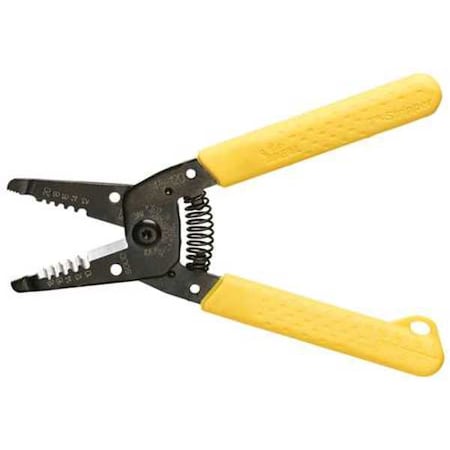
 www.zoro.com
Either above, or something like these. The first contractor I worked for supplied a pair of these which I used for about six months until I tried another guys T strippers.2) The best wire stripper for someone who does occasional wiring work. I'm thinking of a handy homeowner remodeling a kitchen or a construction tradesman who does a variety of things. This might be the same as above, but I was thinking of the price-performance compromise.
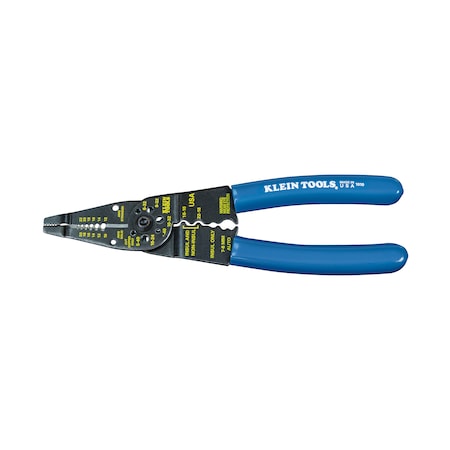 www.zoro.com
I’m lazy and I like the tool to do the work, so I just use the 40+ year old stripmasters that I got from USAF surplusOK everyone, what's your thoughts:
.
2) The best wire stripper for someone who does occasional wiring work. I'm thinking of a handy homeowner remodeling a kitchen or a construction tradesman who does a variety of things. This might be the same as above, but I was thinking of the price-performance compromise.
OK everyone, what's your thoughts:
1) The best wire stripper for someone who electrical work all day, every week.
2) The best wire stripper for someone who does occasional wiring work. I'm thinking of a handy homeowner remodeling a kitchen or a construction tradesman who does a variety of things. This might be the same as above, but I was thinking of the price-performance compromise.
