OP
ClappedOutBport
Well-known member
- Joined
- Mar 30, 2016
- Messages
- 998
Well like all days, some good with some bad.
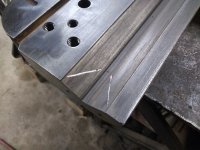
Lets start with the good. A college friend said he had some aluminum he would sell for cheap, otherwise he was gonna scrap it. He said he had some rounds too. I wasn't expecting much, but as far as I'm concerned we hit the jackpot. We got about 260lbs of 6061 roundstock, ranging up to 5.5", about 190 lbs of 6061 plate, and some 1018 and a little bit of stainless. All for just over scrap price. Definitely in "you ****" territory. He had more sheet, but we got the stuff we really wanted and didn't want to spend much of any more. We barely had any aluminum before, and really no stock at all in the larger round department, which I tend to need a lot. Hopefully no more cutting rounds out of plate for me.


Now for more good. The bearings for the clutch were installed and it's pretty quiet. It works extremely well. We also got the seal installed where it was dripping oil, and got the new tapered roller bearing installed on the outer side of the input shaft. The nut had gotten loose and the bearing had been processing around somewhat causing uneven wear. Probably got some trash in there too. So we reinstalled the clutch (again!), filled it up with the 30 weight and gave it a test run.
Now for the bad:
First, the VFD is too small and blows the internal protection unless you are pretty ginger with the clutch. And that's without the 70lb chuck.
Second, it still drips out the input shaft and(!) comes out the spindle nose at higher speeds (starting at around 450 and really slinging out at 793). For the input shaft it had some slight damage to the seal area where it had worn out. So maybe we can sleeve it after pulling the clutch yet another time. For the spindle nose, there are two issues I could see.
#1, the drain from the tapered roller is blocked as someone somewhere suggested.
#2, the seal behind it which keeps splash out of the bearing is junk and allowing splash to enter. If that seal is dead, well for one, we have to strip the entire headstock, for two, we'll have to replace every seal and probably a lot of bearings, and for three, every bad seal will probably have ruined the shaft, as that seems to be the trend. And the book notes that it's a special seal, as if we needed more to compound the issue.

So I guess the first course of action would be to drain the oil again and poke around at the bearing drain, see it it's clogged. If not, then I guess we decide whether to run it slow and accept some drippage, or pull the headstock. Certainly that would be after the rest of the lathe is back together, we need bench space and would have to do it in one fell swoop. The bearing oil supply line could also be crimped off slightly, but at some risk to the bearing.
Anyone want to buy a 1943 Sidney?
Lets start with the good. A college friend said he had some aluminum he would sell for cheap, otherwise he was gonna scrap it. He said he had some rounds too. I wasn't expecting much, but as far as I'm concerned we hit the jackpot. We got about 260lbs of 6061 roundstock, ranging up to 5.5", about 190 lbs of 6061 plate, and some 1018 and a little bit of stainless. All for just over scrap price. Definitely in "you ****" territory. He had more sheet, but we got the stuff we really wanted and didn't want to spend much of any more. We barely had any aluminum before, and really no stock at all in the larger round department, which I tend to need a lot. Hopefully no more cutting rounds out of plate for me.
Now for more good. The bearings for the clutch were installed and it's pretty quiet. It works extremely well. We also got the seal installed where it was dripping oil, and got the new tapered roller bearing installed on the outer side of the input shaft. The nut had gotten loose and the bearing had been processing around somewhat causing uneven wear. Probably got some trash in there too. So we reinstalled the clutch (again!), filled it up with the 30 weight and gave it a test run.
Now for the bad:
First, the VFD is too small and blows the internal protection unless you are pretty ginger with the clutch. And that's without the 70lb chuck.
Second, it still drips out the input shaft and(!) comes out the spindle nose at higher speeds (starting at around 450 and really slinging out at 793). For the input shaft it had some slight damage to the seal area where it had worn out. So maybe we can sleeve it after pulling the clutch yet another time. For the spindle nose, there are two issues I could see.
#1, the drain from the tapered roller is blocked as someone somewhere suggested.
#2, the seal behind it which keeps splash out of the bearing is junk and allowing splash to enter. If that seal is dead, well for one, we have to strip the entire headstock, for two, we'll have to replace every seal and probably a lot of bearings, and for three, every bad seal will probably have ruined the shaft, as that seems to be the trend. And the book notes that it's a special seal, as if we needed more to compound the issue.
So I guess the first course of action would be to drain the oil again and poke around at the bearing drain, see it it's clogged. If not, then I guess we decide whether to run it slow and accept some drippage, or pull the headstock. Certainly that would be after the rest of the lathe is back together, we need bench space and would have to do it in one fell swoop. The bearing oil supply line could also be crimped off slightly, but at some risk to the bearing.
Anyone want to buy a 1943 Sidney?