To avoid these ads, REGISTER NOW!

Drill Bit for Steel Education

DennisVog

Active member
Joined
Dec 31, 2021
Messages
31
What are the key factors for determining if a drill bit is suitable for steel? I have been through several of the threads here as well as manufacturer pages and am still not clear. The bit material (e.g. HSS, Carbide, Titanium, Tin coated), manufacturer, tip shape? I'm assuming some combination of the above.

I'm a home car restorer. Drilling steel with a hand drill or drill press. I recently bought what I thought was a decent set of Dewalt Pilot Point Titanium Drill Bits. I tried to drill a 1/8" piece of steel with my press over the weekend, and the Dewalt wasn't doing it. Even with Tap Magic cutting fluid and progressing up from smaller to large bits.
IMG_4948.jpeg

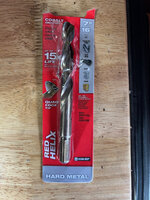
Out of frustration, I went to my local HW store and bought a Milwaukee Red Helix Cobalt bit that cost more than the entire Dewalt set because it said "hard metal". Lo and behold, it went through that piece with no effort. So a win for that bit, but I'm not clear and what made it better.
IMG_4950.jpeg
I'm willing to spend a couple hundred bucks if it means having a set of bits that I can use on metal and not have to think twice. I see good comments on Norseman, Triumph, etc. What makes them better? I see a few sets of Triump on sale at Trick Tools who seems to do a good job of curating quality products. Even visiting Triumph site it's not clear why you'd choose one over the other. Thunderbit Black and Bronze, Cobalt HSS, TiN, and TriNADO are all listed as suitable for steel.
 
To avoid these ads, REGISTER NOW!

theoldwizard1

Well-known member
Joined
Feb 22, 2011
Messages
43,245
Location
SE MI
Most of those "types" of bits you see are just coatings. They will make some difference, but not in how long they last.

All drill bits are made from High Speed Steel. There are different grades of HSS, made by adding trace amounts of other metals. Molybdenum adds "toughness"/durability. Cobalt adds strength, but the result is more brittle and can fracture.

Personally, I have been buying Drill Hog M2 bits. Lifetime warranty and they have replaced a dozen or the past couple of years.
 
OP
D

DennisVog

Active member
Joined
Dec 31, 2021
Messages
31
What speed were you using on the drill press ? I get my bits from McMaster and just buy the cheapest ones they have.
I have an old Craftsman Drill press. It has two speeds. ON or OFF. ;) The manual says no-load speed of this tool is approximately 3,000 rpm
 

Rst277

Well-known member
Joined
Oct 25, 2013
Messages
1,737
Location
Winnipeg, Manitoba, Canada
I have an old Craftsman Drill press. It has two speeds. ON or OFF. ;) The manual says no-load speed of this tool is approximately 3,000 rpm
There's the answer to the problem. The thicker and harder the steel, the slower you have to go. If you are working on cars, you're are drilling metal, steel is hardened like the frame or leaf springs. Any coated drill bit will drill through metal at lower speeds.
 

LopezBart

Well-known member
Joined
Oct 13, 2023
Messages
2,563
Location
Lopez Island, WA
I have an old Craftsman Drill press. It has two speeds. ON or OFF. ;) The manual says no-load speed of this tool is approximately 3,000 rpm
That's essentially useless for drilling steel. To make inexpensive drill bits live longer, I try to keep speeds between 80 and 120 surface ft/min at the edge of the drill for mild steel, all the way down to 20 ft/min for really hard alloys. To compute this, use RPM = (3.8197 / Drill Diameter) x surface feet/minute.

So, for a 1/4" hole in mild steel, 3.82/.25*100 = 1528 RPM. If you're drilling into harder steels - not uncommon in cars - you may wish to use half of that. Note that given the slop in the fpm numbers, remembering

4/drill diameter * 100 is easier. If you're using fractional drill bits, you can invert the fraction and multiply:

4 * (4/1) * 100 = 1600 rpm - close enough, and no calculator required.

See https://www.norsemandrill.com/feeds-speeds-drill.php for all sorts of useful info about drills.
 

rancherbill

Well-known member
Joined
Oct 18, 2007
Messages
5,335
Location
Foothills County, Alberta, Canada
HOLD ON

You will get info on good and bad drills, and it tells you a lot.

The most probable reason they are not drilling is that they are NOT SHARP. In my experience, I would say most big box brands need to be sharpened out of the box. Don't buy more drills - spend your money on a drill sharpener like Drill Doctor. You will always have sharp drills.
 

seber

Well-known member
Joined
May 31, 2016
Messages
4,205
Location
Deep East Tx.
All Standard drill bits are HSS (M2). There may be minor differences in heat treat but the real difference in drill bits is how they are ground. Cheap bits won't cut because they are ground improperly or not actually sharp. TIN coating can help by reducing the friction of the chips sliding up the flutes. That can keep the bit cooler. It doesn't take a lot of heat to ruin a bit. Normal temper for M2 is around 700f. Much higher than that will soften the steel. Get a good drill bit sharpener and learn how to use it and even very cheap bits will last as long as any. Let me take that back. Chinese bits are mostly **** but that is due to the steel not meeting AISI specs.
 

isb cornbinder

Well-known member
Joined
Nov 3, 2010
Messages
7,073
Location
Pacific South West, BC, Canada
HOLD ON

You will get info on good and bad drills, and it tells you a lot.

The most probable reason they are not drilling is that they are NOT SHARP. In my experience, I would say most big box brands need to be sharpened out of the box. Don't buy more drills - spend your money on a drill sharpener like Drill Doctor. You will always have sharp drills.

I never buy "cheap" drill bits. Cleveland or better are the way to go. Know the best speed for the size of bit you are using. JOKISCH is one of the best drilling and cutting pastes. Another is ANCHOR LUBE. Use them sparingly. What spills on the floor will do nothing for your cutters.
If your find yourself having to drill stainless, always start with a sharp bit. One into the cut, never lift or restart. I you are able, try clamping a piece of sacrificial flat steel behind your cut. The should help to prevent the bit from catching and possibly breaking as it breaks through..
My first choice for taps and dies is YAMAWA.
I agree with having a method for sharpening drill bits. I bought a Sterling. While not for everyone, the Sterling will more than live up to its multi-thousand dollar price.
 

Attachments

  • STERLING MOBILE BASE 3.jpg
    STERLING MOBILE BASE 3.jpg
    89.4 KB · Views: 39
  • STERLING SCALE 2.jpg
    STERLING SCALE 2.jpg
    60.3 KB · Views: 28
  • STERLING SCALE.jpg
    STERLING SCALE.jpg
    67.7 KB · Views: 28
  • STERLING MOTOR HOUSING.jpg
    STERLING MOTOR HOUSING.jpg
    62.9 KB · Views: 29
  • STERLING IN RED 1.jpg
    STERLING IN RED 1.jpg
    61.4 KB · Views: 37
Last edited:

AEAdam

Well-known member
Joined
May 27, 2023
Messages
2,788
Location
SE PA
I've never had a HSS bit that'll cut anything harder than mild steel. For any kind of hardened steel, I go cobalt.
Right.
#1 No big box store drills EVER. They aren’t even good fpr wood.
#2 No Chinese drills. In fact, I only buy US made drills
#3 If you want to drill holes in mild steel or better you want M-42 Cobalt steel, not M-35. And they must be USA or Canada, because they are the only countries certified to the M-42 spec. Drill bits that say “Cobalt” aren’t typically M-42, because M-42 is a US spec.
#4 A good set of cobalt M-42 bits will set you back hundreds, so be smart, buy the sizes/sets you need. HINT: look into cobalt tap and drill sets. My set is HSS and very high quality.
 

RyanE

Well-known member
Joined
Feb 4, 2013
Messages
201
Location
Golden, BC
I have an old Craftsman Drill press. It has two speeds. ON or OFF. ;) The manual says no-load speed of this tool is approximately 3,000 rpm

Are you sure? A drill press? 3000rpm probably would have smoked the more expensive bit you used as well. Or sent the piece you were drilling into orbit 😬.
 

LopezBart

Well-known member
Joined
Oct 13, 2023
Messages
2,563
Location
Lopez Island, WA
I've never had a HSS bit that'll cut anything harder than mild steel. For any kind of hardened steel, I go cobalt.
Slow it down. Heat (at the cutting edge) kills drills; the heat developed at the cutting edge gets transferred back into the rest of the drill; since the alloy of the steel doesn't affect the heat transfer very much, speed of the drill (assuming lube, feed, etc are the same) is how you control the temperature of the cutting edge. Here's an ancient reference (almost my age) to drilling various kinds of steel w/ carbon steel drill bits: https://www.icscuttingtools.com/pdfs/drills-speeds-feeds.pdf
 
OP
D

DennisVog

Active member
Joined
Dec 31, 2021
Messages
31
That ain't gonna work for any but the smallest holes.
I am not questioning the guidance related to importance of drill speed, but I can tell you that when I switched to the Milwaukee Red Helix Cobalt bit it went through no problem. I'm just not clear what about that bit was the key to improvement (i.e., bit material, sharper bit, coating, tip).
 
To avoid these ads, REGISTER NOW!

LopezBart

Well-known member
Joined
Oct 13, 2023
Messages
2,563
Location
Lopez Island, WA
I am not questioning the guidance related to importance of drill speed, but I can tell you that when I switched to the Milwaukee Red Helix Cobalt bit it went through no problem. I'm just not clear what about that bit was the key to improvement (i.e., bit material, sharper bit, coating, tip).
Hard to say, but cobalt steels are tough and very resistant to high temperatures.... so if you're drilling too fast, cobalt helps. Also, coatings can reduce friction, and keep the cutting tip cooler.
 

JradM

Well-known member
Joined
Sep 4, 2019
Messages
1,820
Location
Alberta
While there is lots of good advice in this thread and invitations to spend lots of money, you ought to be able to drill mild steel with practically any mediocre drill bit - especially on a drill press. The expensive ones will be sharper and last longer, but you could do with some titanium-coated Ryobi bits.

Those Dewalt bits you bought should have been pretty decent in fact. If you were being serious though, and actually drilled a 7/16" hole at 3000 rpm, you likely ruined the temper on the Dewalt bit long before it had a chance to get any work done. That's way too fast.

Metallurgy, sharpness and tip design all make a difference. It sounds like you found a bit that was able to cut despite the speed - which is kind of impressive. If that's how you're going to use your drill bits, then I think you found your brand! You might also like some of the reviews Project Farm did on drill bits, because he purposefully abused them to get them to fail.

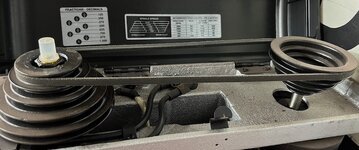
Are you sure your old Craftsman drill press doesn't have any speed adjustment though? It doesn't have some stepped pullies hiding under the cover?

If not, I think all you can do is use lots of cutting oil and really bear down on it so the bit is under lots of pressure.
 

Dave455

Well-known member
Joined
Mar 19, 2013
Messages
5,829
Location
Sussex, England
Quite simple - more than anything, it’s simply the quality of the drill bit! The folks telling you to go for Norseman, Triumph etc are giving you good advice.

With a bit of experience you can tell good from bad by the feel, especially in a drill press. Till you develop that, it’s a safe bet to buy from a reputable maker or dealer. Forget fancy patterns and exotic coatings, good HSS will do an awful lot of what you need.

But, you have to buy decent stuff. I have yet to find anything from China that comes close to what I would consider acceptable.

Some years ago I was drilling some steel castings, about half an inch think, but with hard spots like most cast steel. I was using eastern European HSS drill bits and would get about a dozen holes from each bit.

I switched to a British made Dormer (no longer available) and completed the job (200 ish holes) with one bit. That’s the difference the bit quality makes.

I now generally buy from a drill bit specialist. Sometimes I know the maker of the bit, sometimes not, but they always do what I need. Triumph (U.S.A.), Presto (U.K.), Osborn (U.K.), Guhring (Germany), Walter (Germany) and Izar (Spain) have all been good.

As a general rule use regular HSS as your “go to”. If you get problems with heating or hard materials then try Cobalt, but most times you don’t need it. Up to about 1/8 I use TiN coated bits and chuck them when blunt.

If you’re using a drilling machine, some cutting fluid, and stepping up the drill sizes, the drill bit quality and cutting speed are the only variables left.

Cutting speed is seldom an issue up to 1/8 but if you are drilling a bigger hole than that you will need to slow it down somehow.
 
Last edited:

Jswain

Well-known member
Joined
Apr 26, 2013
Messages
2,465
Location
Calgary, AB
I am not questioning the guidance related to importance of drill speed, but I can tell you that when I switched to the Milwaukee Red Helix Cobalt bit it went through no problem. I'm just not clear what about that bit was the key to improvement (i.e., bit material, sharper bit, coating, tip).
Sure, but for how long? Are you with smoking an expensive bit every few holes?

Around here you can routinely get a standing drill press used for $150-300 canuckadian, if you could do the same and sell yours then damn near any drill bit would do.

If you're not willing to fix the problem I would get good at sharpening bits

I keep a good set for the drill press/mill/lathe and then I use your everyday yellow coated HSS for hand drilling or jobs where damage may occur. No problems drilling through anything I come across, I do sharpen them all myself though.

Just seems like a waste to spend hundreds on drill bits to ruin them when you could simply find a different drill press
 

JradM

Well-known member
Joined
Sep 4, 2019
Messages
1,820
Location
Alberta
Just seems like a waste to spend hundreds on drill bits to ruin them when you could simply find a different drill press
Exactly! A single speed drill press also struck me as nuts.

Drilling mild steel up to 3/4" genuinely shouldn't be an issue for any mediocre drill bit. That doesn't mean there aren't better and worse grades - but that just isn't a particularly tough task.
 

Jeep_Dave

Member
Joined
Oct 24, 2023
Messages
24
Location
Seattle WA
I have a set that looks similar to this pic (not this brand, I bought them at Central Welding Supply) that are bits designed for steel with stepped tips. They cost me around $125 for the set but since buying them I haven't had to replace a single one (also working on car type stuff mostly). I agree 100% on slower speed, but I love these because I can cut in one pass without doing small, medium, large holes etc. Just my .02.

1711405944129.png
 

pfaustus

Well-known member
Joined
Feb 6, 2016
Messages
361
Aren't those dewalt bits with a pilot point basically wood bits? I would expect almost any HSS plain old fashioned twist bit to do better.
 
OP
D

DennisVog

Active member
Joined
Dec 31, 2021
Messages
31
Are you sure your old Craftsman drill press doesn't have any speed adjustment though? It doesn't have some stepped pullies hiding under the cover?

If not, I think all you can do is use lots of cutting oil and really bear down on it so the bit is under lots of pressure.
Well it sure does now that I know what to look for. I saw the "no-load speed of this tool is approximately 3,000 rpm." statement at the beginning of the manual and took it as being fixed. Assumed if it had adjustment it would have been via the electronic display.

I'm embarrassed to admit I've been using it at the default 3k for years. Didn't know I had an option. Guess if I had RTFM all the way to the end I might have found it.😖

IMG_4990.jpeg
All that said, I'm still intrigued by the distinctions of drill bits. Guess it will matter less now if I learn to use my tool correctly.
 

Jswain

Well-known member
Joined
Apr 26, 2013
Messages
2,465
Location
Calgary, AB
Well it sure does now that I know what to look for. I saw the "no-load speed of this tool is approximately 3,000 rpm." statement at the beginning of the manual and took it as being fixed. Assumed if it had adjustment it would have been via the electronic display.

I'm embarrassed to admit I've been using it at the default 3k for years. Didn't know I had an option. Guess if I had RTFM all the way to the end I might have found it.😖

IMG_4990.jpeg
All that said, I'm still intrigued by the distinctions of drill bits. Guess it will matter less now if I learn to use my tool correctly.
So was it on the fastest setting and now you switched it to the slowest? It will make a huge difference if so

Slow rpm and plenty of pressure with some cutting oil if you're drilling anything half *** thick
 

Beerhippie

Well-known member
Joined
Oct 13, 2023
Messages
9,976
Location
Far NE Oregon
Well it sure does now that I know what to look for. I saw the "no-load speed of this tool is approximately 3,000 rpm." statement at the beginning of the manual and took it as being fixed. Assumed if it had adjustment it would have been via the electronic display.

I'm embarrassed to admit I've been using it at the default 3k for years. Didn't know I had an option. Guess if I had RTFM all the way to the end I might have found it.😖

IMG_4990.jpeg
All that said, I'm still intrigued by the distinctions of drill bits. Guess it will matter less now if I learn to use my tool correctly.
I think most metal workers would put that on the lowest setting and never change it. That's what I did for years. Now I've built a variable-speed DP and use drill bit speed tables (less math) and set my RPMs to match.

I'm loving the cobalt bits (135 degree, split point) these days. They claim to be an alloy (5% cobalt), not a coating, but my observation is that they well outlast any other cheap drill bits I've used.

I always use at least a 1/8" bit to drill a pilot hole for anything over 1/4". That really saves on tip wear on the larger, more expensive bits. I buy 1/8" bits by the dozen.

I drill lot of 316 and 304 stainless--brewery--and that stuff is hard on bits. Slow speed, high pressure or you're screwed. You get one try and then the metal work-hardens. I love it when I can bring my work to the drill press, but that isn't always (or often) the case. I do some crazy stuff to get a good brace for putting pressure on a bit at times.
 
Last edited:

NUTTSGT

Super Moderator
Staff member
Joined
Sep 14, 2009
Messages
51,098
Location
Northern Central Ohio
Aren't those dewalt bits with a pilot point basically wood bits? I would expect almost any HSS plain old fashioned twist bit to do better.
That's all I use them on, wood or plastic.
Well it sure does now that I know what to look for. I saw the "no-load speed of this tool is approximately 3,000 rpm." statement at the beginning of the manual and took it as being fixed. Assumed if it had adjustment it would have been via the electronic display.

I'm embarrassed to admit I've been using it at the default 3k for years. Didn't know I had an option. Guess if I had RTFM all the way to the end I might have found it.😖

IMG_4990.jpeg
All that said, I'm still intrigued by the distinctions of drill bits. Guess it will matter less now if I learn to use my tool correctly.
Now you know. When you said 3000 rpm, I thought no way it was single speed unless it was ungodly old.

I'd also suggest, if you don't do it already, is cut yourself some pieces of OSB or plywood to put on the table to save the drill bit when you run through the material you are drilling.
 

JradM

Well-known member
Joined
Sep 4, 2019
Messages
1,820
Location
Alberta
Well it sure does now that I know what to look for. I saw the "no-load speed of this tool is approximately 3,000 rpm." statement at the beginning of the manual and took it as being fixed. Assumed if it had adjustment it would have been via the electronic display.

I'm embarrassed to admit I've been using it at the default 3k for years. Didn't know I had an option. Guess if I had RTFM all the way to the end I might have found it.😖

IMG_4990.jpeg
All that said, I'm still intrigued by the distinctions of drill bits. Guess it will matter less now if I learn to use my tool correctly.
That made me so happy. What a discovery!
 

rooster59

Well-known member
Joined
Nov 16, 2014
Messages
972
Location
Land of the Pines
I keep my belts on pulleys for the slowest speed, always use 90 weight for cutting oil. I’m not doing any production, so slow is good. Always clamp the work or use a vise. Do some study if drilling stainless, HSLA, etc.
 

Renegade1LI

Well-known member
Joined
Mar 11, 2018
Messages
4,993
Location
long island ny
That's all I use them on, wood or plastic.

Now you know. When you said 3000 rpm, I thought no way it was single speed unless it was ungodly old.

I'd also suggest, if you don't do it already, is cut yourself some pieces of OSB or plywood to put on the table to save the drill bit when you run through the material you are drilling.
And prevent the arc of shame
 

lilredex

Well-known member
Joined
Apr 29, 2006
Messages
5,956
Location
Toronto
About thirty years ago, I bought six drill bit sets from Canadaian Tire on sale. Have drilled everything, even spring leaves with them. The secret? Drill slowly, keep constant pressure on the bit and keep the bit flooded in oil. Drill through a washer hole to keep the oil plentiful and corralled. I usually use cutting oil, but have also had good luck with using old motor oil in the past. My drill press also never leaves the slowest speed.
 

Attachments

  • Drill Bits 1A (2).JPG
    Drill Bits 1A (2).JPG
    487.6 KB · Views: 25
  • Drill Bits 1B.JPG
    Drill Bits 1B.JPG
    1.1 MB · Views: 23
  • Drill Press - HF #38142 1C.JPG
    Drill Press - HF #38142 1C.JPG
    755 KB · Views: 18
  • Drill Press - HF #38142 1D.JPG
    Drill Press - HF #38142 1D.JPG
    511.6 KB · Views: 18

Joemctag

Well-known member
Joined
Aug 11, 2017
Messages
813
Location
Outside raleigh nc
That's all I use them on, wood or plastic.

Now you know. When you said 3000 rpm, I thought no way it was single speed unless it was ungodly old.

I'd also suggest, if you don't do it already, is cut yourself some pieces of OSB or plywood to put on the table to save the drill bit when you run through the material you are drilling.
Pilot points work on mild steel, but since you reallly can’t sharpen them, just plastics and wood for me. Putting a scrap under your work gets to be a habit. You keep them by your drill press.
 

Jswain

Well-known member
Joined
Apr 26, 2013
Messages
2,465
Location
Calgary, AB
Pilot points work on mild steel, but since you reallly can’t sharpen them, just plastics and wood for me. Putting a scrap under your work gets to be a habit. You keep them by your drill press.
I'm not a big fan of the fancy points for that reason. Sure it might drill slightly better but once it's dull it's done. Even a cheap, plain tipped drill can be sharpened over and over
 

LopezBart

Well-known member
Joined
Oct 13, 2023
Messages
2,563
Location
Lopez Island, WA
I'm not a big fan of the fancy points for that reason. Sure it might drill slightly better but once it's dull it's done. Even a cheap, plain tipped drill can be sharpened over and over
Yup; all one can do is to grind a regular point on the drill. A Drill Doctor or other jig is helpful when starting from scratch.
 

Sumboodie

Well-known member
Joined
Mar 20, 2021
Messages
10,737
Location
AK
I never buy "cheap" drill bits. Cleveland or better are the way to go. Know the best speed for the size of bit you are using. JOKISCH is one of the best drilling and cutting pastes. Another is ANCHOR LUBE. Use them sparingly. What spills on the floor will do nothing for your cutters.
If your find yourself having to drill stainless, always start with a sharp bit. One into the cut, never lift or restart. I you are able, try clamping a piece of sacrificial flat steel behind your cut. The should help to prevent the bit from catching and possibly breaking as it breaks through..
My first choice for taps and dies is YAMAWA.
I agree with having a method for sharpening drill bits. I bought a Sterling. While not for everyone, the Sterling will more than live up to its multi-thousand dollar price.
What does that Ancher Lube have in it. Was reading it's silicone, which good luck painting over.
 

Plastikosmd

Well-known member
Joined
Nov 17, 2016
Messages
1,254
The standard 135, 118 pilot tips are just as easy to resharpen on a grinder as a regular drill. Once they get too short the bit can be converted to a standard bit or recut (on same grinder) as a pilot. For my bigger damaged bits (where the side flute are damaged), I just grind them to a pilot tip as to not have to have to shorten the bit so much
 
To avoid these ads, REGISTER NOW!
Top Bottom