
You are using an out of date browser. It may not display this or other websites correctly.
You should upgrade or use an alternative browser.
You should upgrade or use an alternative browser.
Duct type for kitchen , bath and dryer
- Thread starter branimal
- Start date


yeldogt; said:With a low slope flat roof -- modified that's full torch down with granular coating. I would have used a torched down non granular a base -- attached the flange torching it down. Covered with granular torch down. You ahve to ver a flat roof as it will flood with water.
Just want to confirm the steps:
1. torch down the base sheet,
2. torch the flange of the pitch pan to the base sheet
3. torch the granular sheet
Also is cutting a hole in the sheets the size of the vent pipe preferable to laying sheets all around the sides?
mrobins297aaa
Well-known member
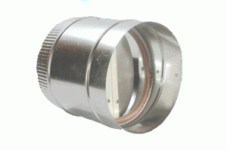
Also do you guys think butterfly backdraft dampers are worth installing to keep the cold air out?
you need a damper for the kitchen hood either at the hood or at the roof if you don't your going to get a lot of cold air coming in.
you don't need them at both places
mrobins297aaa; said:you need a damper for the kitchen hood either at the hood or at the roof if you don't your going to get a lot of cold air coming in.
you don't need them at both places
Thanks! Does the same logic apply to bathroom and dryer exhaust?
mrobins297aaa
Well-known member
Thanks! Does the same logic apply to bathroom and dryer exhaust?
I think most bathroom exhaust have a damper internal to them.
all the dryer exhaust wall terminations I have seen have a damper in them
I guess to answer your question yes it does apply
you're also going to have driven rain getting into that seam of duct and running inside .
you're also going to have driven rain getting into that seam of duct and running inside .
I'm going to run a bead of silicone or other outdoor waterproofer along that seam.
Local exhaust ventilation is good for kitchens and bathrooms, but fans must be certified
to provide their rated airflow at 0.25 in w.c. Standard 62.2 requires that local exhaust ventilation be provided for:
Kitchens: 100 cfm or more if intermittently operated OR 5 air changes per hour (ACH) of kitchen volume if continuously operated
Bathrooms: 50 cfm or more if operated intermittently OR 20 cfm if continuously operated
if your budget is tight, a simple ventilation improvement such as an upgraded bath fan, though not ideal, can meet the minimum requirements for both local exhaust ventilation and whole-building ventilation.
to provide their rated airflow at 0.25 in w.c. Standard 62.2 requires that local exhaust ventilation be provided for:
Kitchens: 100 cfm or more if intermittently operated OR 5 air changes per hour (ACH) of kitchen volume if continuously operated
Bathrooms: 50 cfm or more if operated intermittently OR 20 cfm if continuously operated
if your budget is tight, a simple ventilation improvement such as an upgraded bath fan, though not ideal, can meet the minimum requirements for both local exhaust ventilation and whole-building ventilation.
Yeah for sure, butterfly dampers are installed in round ductwork to prevent damper protection from air leakage. They would reduce your energy consumption as well and make your ductwork perform in better way.Also do you guys think butterfly backdraft dampers are worth installing to keep the cold air out?
Terry D
Well-known member
Local exhaust ventilation is good for kitchens and bathrooms, but fans must be certified
to provide their rated airflow at 0.25 in w.c. Standard 62.2 requires that local exhaust ventilation be provided for:
Kitchens: 100 cfm or more if intermittently operated OR 5 air changes per hour (ACH) of kitchen volume if continuously operated
Bathrooms: 50 cfm or more if operated intermittently OR 20 cfm if continuously operated
if your budget is tight, a simple ventilation improvement such as an upgraded bath fan, though not ideal, can meet the minimum requirements for both local exhaust ventilation and whole-building ventilation.
Just to let you know, you are posting in a thread that is almost 1 1/2 years old