To avoid these ads, REGISTER NOW!

Duct type for kitchen , bath and dryer

branimal

Well-known member
Joined
May 31, 2016
Messages
1,938
I'm ducting a kitchen , 2 baths and a dryer.

From what I understand:

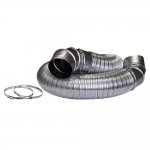
kitchen --> metal ducting
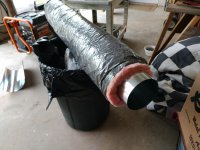
dryer --> semi-ridgid
baths (separate lines) --> flexible ducting


pics in order
metal
semi-ridgid
flexible


Just want to confirm. Going to HD tomorrow.

Is it preferable to slope upwards to exhaust point? If so whats the slope?

Can I use Galvanized strap to support duct? If so what intervals should support be provided?

Can sheet metal screws be used to connect junctions for the kitchen duct? Dryer duct and bathroom duct needs proper DUCT foil tape from what I read.

Thanks guys!
 

Attachments
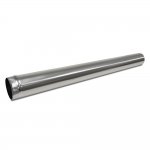
  • metal-ducts-cp7x60-64_1000.jpg
    metal-ducts-cp7x60-64_1000.jpg
    24.3 KB · Views: 33
  • semi ridgid - everbilt-flexible-ductwork-mfx48ulmkhd-64_1000.jpg
    semi ridgid - everbilt-flexible-ductwork-mfx48ulmkhd-64_1000.jpg
    46.6 KB · Views: 32
  • flexible duct everbilt-gas-fittings-connectors-af425ulphd-64_400_compressed.jpg
    flexible duct everbilt-gas-fittings-connectors-af425ulphd-64_400_compressed.jpg
    11.3 KB · Views: 31
Last edited:
To avoid these ads, REGISTER NOW!

dw1

Well-known member
Joined
Jan 26, 2015
Messages
1,335
Location
Ky
I just built a house and my HVAC contractor ran all the exhaust ducts. Our vent hood above the gas range was 6" round pipe that went out thru the roof. The dryer was 4" round pipe that went out the side of the house, all three bath fans were metal flexible piping, it went across attic and out thru soffit with a vent cap in my soffit
 
OP
B

branimal

Well-known member
Joined
May 31, 2016
Messages
1,938
dw1; said:
I just built a house and my HVAC contractor ran all the exhaust ducts. Our vent hood above the gas range was 6" round pipe that went out thru the roof. The dryer was 4" round pipe that went out the side of the house, all three bath fans were metal flexible piping, it went across attic and out thru soffit with a vent cap in my soffit

Good catch dw1.

I didn't mention sizing. All sizes are determined by the specific exhaust appliance (not upsizing or downsizing)

Kitchen 6"
Dryer 4"
Bathrooms 4"
 

mrobins297aaa

Well-known member
Joined
Sep 20, 2010
Messages
3,283
Location
south east michigan
as far as the kitchen hood I would let it slope back towards the hood if you have any horizontal runs.

Get 6" x 60"lg 30 ga pipe and put 1 hanger on each joint. 30 ga pipe is easy to cut and work with you don't need anything heavier than that.

Something else to consider is whether you want to insulate it on the outside? if your in a cold climate it may sweat in the winter on the inside of the pipe and drip water thru the hood.

I just finished mine and I insulated it just to make sure.

use those #7 x 1/2 zip screws and alum foil tape
 

Attachments

  • IMG_20190604_182647365.jpg
    IMG_20190604_182647365.jpg
    142 KB · Views: 50

jbwilkins

Well-known member
Joined
Mar 16, 2016
Messages
310
Location
Nashville Tn
Semi rigid is not approved for dryers per code.....It may be 'allowed' in your market, but isn't code approved.......It can (and is) used for the connection from the appliance to the 'wall' duct work, but that's typically a short run.....
 
OP
B

branimal

Well-known member
Joined
May 31, 2016
Messages
1,938
mrobins297aaa; said:
as far as the kitchen hood I would let it slope back towards the hood if you have any horizontal runs.

Get 6" x 60"lg 30 ga pipe and put 1 hanger on each joint. 30 ga pipe is easy to cut and work with you don't need anything heavier than that.

Something else to consider is whether you want to insulate it on the outside? if your in a cold climate it may sweat in the winter on the inside of the pipe and drip water thru the hood.

I just finished mine and I insulated it just to make sure.

use those #7 x 1/2 zip screws and alum foil tape


Got the insulation. Good call.

Worth insulating a dryer line?


Sent from my iPhone using Tapatalk
 
OP
B

branimal

Well-known member
Joined
May 31, 2016
Messages
1,938
jbwilkins; said:
Semi rigid is not approved for dryers per code.....It may be 'allowed' in your market, but isn't code approved.......It can (and is) used for the connection from the appliance to the 'wall' duct work, but that's typically a short run.....

You’re right. Went with 4” rigid for the dryer run.
Thanks.


Sent from my iPhone using Tapatalk
 
OP
B

branimal

Well-known member
Joined
May 31, 2016
Messages
1,938
Now that I have the ducting on hand, I have some more questions.

I'm going to install ventilation stacks on my low sloped roof.

A little background. I'm renovating the top floor (3rd) of a 3-family house - all the houses are attached in this area.

Ideally I would exhaust off to the back wall of the house, but in my case that would require doing work on a ladder 40' off the ground to get the wall jacks installed.

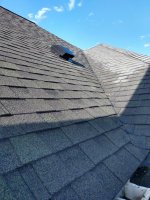
I do have an existing roof penetration that, I believe, is the ventilation outlet for the house. No fans, just 4 louvered walls and a glass top.

The louvered box's glass top face measures 33"x23".

I'd like to remove the glass top and replace with a 3/4" sheet of plywood. Then attach piece of galvanized steel on top of the plywood.

Then cut holes for the appropriate roof jacks for the appliance being exhausted.

Is this a good plan?

I calculated the run lengths for the dryer and range hood (including elbows) and I am at the following:

Dryer exhaust (4" metal) : 29' with a max of 45' (when including 2 90 elbows) that's 64% of capacity. Majority of the run is horizontal.


Kitchen exhaust (6" metal): 33' with a max of 35'. 94% of capacity. Majority of the run is horizontal.

The bathroom runs are very short. Should I use flexible ducting for the bathrooms or semi-rigid?


Is there a preferred roof jack style for specific appliances? I saw a few different styles in home depot. Some have dampers, some don't. The exhaust devices themselves are equipped with dampers.

Is insulating the dryer duct run worthwhile? I'm insulating the kitchen run for sure.

Both pipes make long horizontal runs in unheated spaces. Above the ceiling and below the roof joists.
 

Attachments

  • IMG_5344.jpg
    IMG_5344.jpg
    91.1 KB · Views: 66

yeldogt

Well-known member
Joined
Jan 2, 2012
Messages
18,184
I always use rigid duct for anything that's buried in a wall.

Both of those runs are long -- Max is max ... it's not ideal.

That kitchen may not work as well as you like -- also noise increase.
 

mrobins297aaa

Well-known member
Joined
Sep 20, 2010
Messages
3,283
Location
south east michigan
I don't know why you can't use flex duct for the bathroom exhaust.

I would insulate that dryer exhaust if it's in a unconditioned space.

I would be concerned with 29' of dryer exhaust and some way to clean it out. Maybe some tee's located at a few spots.
This is the roof jack I used for my hood it has a damper. (I did not install the damper at the kitchen hood location)
 

Attachments

  • IMG_20190602_181153774_HDR.jpg
    IMG_20190602_181153774_HDR.jpg
    142.1 KB · Views: 45
OP
B

branimal

Well-known member
Joined
May 31, 2016
Messages
1,938
yeldogt; said:
I always use rigid duct for anything that's buried in a wall.

Both of those runs are long -- Max is max ... it's not ideal.

That kitchen may not work as well as you like -- also noise increase.

Rigid duct - agreed. I'm definitely not using the flexible style for the bathrooms now that you reminded me that I wont have access to it. I might use semi rigid but def not flexible foil style ducting.


The alternative to making long runs for the kitchen range duct and dryer is to cut holes in the roof and shoot straight up. 4' for the kitchen, 6-7' for the dryer. No 90's on either run.

That would require cutting a hole through the roof. Should be straight forward b/c everything is wide open right now.

The tough part is making it water tight on a low pitch roof.

The options are sealing the penetrations with a roof pitch box, or use the flashing that comes with the roof jack.

I see some roofs in my area with 3-4' of vent pipe exposed through the roof and the "jack" attached to the top of the exposed vent pipe. Why do people do that? (The penetrations are sealed with tar.)


Roof pitch box video:
 

Attachments

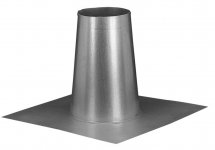
  • master-flow-vent-pipe-flashing-sppo6x6-64_1000.jpg
    master-flow-vent-pipe-flashing-sppo6x6-64_1000.jpg
    50.6 KB · Views: 23
Last edited:

yeldogt

Well-known member
Joined
Jan 2, 2012
Messages
18,184
On a flat roof or very low slope -- they often do a curb. Even a 1/12 can get you a riser -- but it has to be incorporated into the roofing material. In a retrofit -- they would hot tar a section of roofing. Rubber is glued.
 

mrobins297aaa

Well-known member
Joined
Sep 20, 2010
Messages
3,283
Location
south east michigan
Rigid duct - agreed. I'm definitely not using the flexible style for the bathrooms now that you reminded me that I wont have access to it. I might use semi rigid but def not flexible foil style ducting.


The alternative to making long runs for the kitchen range duct and dryer is to cut holes in the roof and shoot straight up. 4' for the kitchen, 6-7' for the dryer. No 90's on either run.

That would require cutting a hole through the roof. Should be straight forward b/c everything is wide open right now.

The tough part is making it water tight on a low pitch roof.

The options are sealing the penetrations with a roof pitch box, or use the flashing that comes with the roof jack.

I see some roofs in my area with 3-4' of vent pipe exposed through the roof and the "jack" attached to the top of the exposed vent pipe. Why do people do that? (The penetrations are sealed with tar.)


Roof pitch box video:

it's not tough if you do it correctly, just don't do it the way they did it in that video, that is not the correct way to install that pitch pocket.

If you look at your picture of the roof jack in your post you can see the part that attaches to the roof has a 6" flange all around there's a reason for that.

When you install that flashing you coat that full 6" underneath with roof tar/mastic and then you fasten it to the roof. Now for that to leak the water has to leak thru that full 6" of mastic to get in the building. In the video he only has 1" lip turned out and then he coats it with mastic, well that's maybe 1/4" thick? if it gets a pin hole in it the water is going to leak in.

Maybe use something the attached picture, you shove the pipe up thru it install a storm collar and some type of top, or even double 90 deg with a screen..............you don't need hot tar/pitch you can use the same things they used in that video.......we always use the dewitts roof mastic, you can get at home depot. I did feel for them doing that in 8 deg weather.........btdt
 

Attachments

  • 1365447343_875_HCRTFg.jpg
    1365447343_875_HCRTFg.jpg
    53.5 KB · Views: 17

Jackfre

Well-known member
Joined
Dec 26, 2010
Messages
4,410
Location
N CA
I reversed the pipe connections on my range hood. If any grease or debris decides to leak out of a joint I do not want it up in the attic.
I suspect you will have difficulty with your dryer. When you do you can look at this to fix the system.

https://www.tjernlund.com/dryer_booster.htm
 
OP
B

branimal

Well-known member
Joined
May 31, 2016
Messages
1,938
mrobins297aaa; said:
it's not tough if you do it correctly, just don't do it the way they did it in that video, that is not the correct way to install that pitch pocket.

If you look at your picture of the roof jack in your post you can see the part that attaches to the roof has a 6" flange all around there's a reason for that.

When you install that flashing you coat that full 6" underneath with roof tar/mastic and then you fasten it to the roof. Now for that to leak the water has to leak thru that full 6" of mastic to get in the building. In the video he only has 1" lip turned out and then he coats it with mastic, well that's maybe 1/4" thick? if it gets a pin hole in it the water is going to leak in.

Maybe use something the attached picture, you shove the pipe up thru it install a storm collar and some type of top, or even double 90 deg with a screen..............you don't need hot tar/pitch you can use the same things they used in that video.......we always use the dewitts roof mastic, you can get at home depot. I did feel for them doing that in 8 deg weather.........btdt

Great advice. Would you nail that 6" flange to the roof? (After you've applied mastic to the full 6" underneath)

Can galvanized metal duct pipe be used on the exterior? If I wanted my roof jack exhaust to be a 3 ft above the roof surface.

I looked up some videos on installing a roof vent on a flat roof and saw guys laying a piece of roof material around the roof jack and heating it up with LP gas and a torch. Is that a better way, easier, overkill?
 

Attachments

  • lincoln-electric-torches-tanks-kh825-01-64_1000.jpg
    lincoln-electric-torches-tanks-kh825-01-64_1000.jpg
    33.4 KB · Views: 16
OP
B

branimal

Well-known member
Joined
May 31, 2016
Messages
1,938
Jackfre; said:
I reversed the pipe connections on my range hood. If any grease or debris decides to leak out of a joint I do not want it up in the attic.
I suspect you will have difficulty with your dryer. When you do you can look at this to fix the system.

https://www.tjernlund.com/dryer_booster.htm

What do you mean by reversing the pipe connection on the range hood?

I'm going to do a shorter run for both the dryer and range hood. Thanks for the link!!
 

mrobins297aaa

Well-known member
Joined
Sep 20, 2010
Messages
3,283
Location
south east michigan
Great advice. Would you nail that 6" flange to the roof? (After you've applied mastic to the full 6" underneath)

Can galvanized metal duct pipe be used on the exterior? If I wanted my roof jack exhaust to be a 3 ft above the roof surface.

I looked up some videos on installing a roof vent on a flat roof and saw guys laying a piece of roof material around the roof jack and heating it up with LP gas and a torch. Is that a better way, easier, overkill?

you don't need to do any of that.

If you want you can put the roof cement right on the roof instead of putting it directly on the flange either way what ever is easiest. you can nail it or screw it to the roof make sure you use galv roofing nails or plated screws out near the edges of the flange after that put another coating of roof cement over the screws and maybe 2" over the edge of the flashing and 2" on to the roof.

you don't really have to do anything to the roof other than sweep away any dirt, unless it has stones than you need to chip them away from underneath of the flashing.

no problem with 3' above the roof or galv. pipe outdoors..........don't over think it it's not that complicated.

edit: this is the stuff we used and homedepot stocks.......there are other brands just make sure you get the trowel grade and not the liquid, it's to runny
 

Attachments

  • dewitt-products-roof-cement-patches-202-1-64_1000.jpg
    dewitt-products-roof-cement-patches-202-1-64_1000.jpg
    102.8 KB · Views: 17
Last edited:
To avoid these ads, REGISTER NOW!
OP
B

branimal

Well-known member
Joined
May 31, 2016
Messages
1,938
mrobins297aaa; said:
you don't need to do any of that.

If you want you can put the roof cement right on the roof instead of putting it directly on the flange either way what ever is easiest. you can nail it or screw it to the roof make sure you use galv roofing nails or plated screws out near the edges of the flange after that put another coating of roof cement over the screws and maybe 2" over the edge of the flashing and 2" on to the roof.

you don't really have to do anything to the roof other than sweep away any dirt, unless it has stones than you need to chip them away from underneath of the flashing.

no problem with 3' above the roof or galv. pipe outdoors..........don't over think it it's not that complicated.

edit: this is the stuff we used and homedepot stocks.......there are other brands just make sure you get the trowel grade and not the liquid, it's to runny

Thanks!
 
Last edited:
OP
B

branimal

Well-known member
Joined
May 31, 2016
Messages
1,938
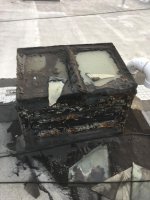
Got it done. Will probably pull a storm collar down to the top of the pitch pan to help divert rain. For 6$ it’s worth the peace of mind.

Will give it a smooth overcoat in the morning when it’s cooler out.

Mrobbins297 yeah I was overthinking it.

Thanks for the help!!!

707e64dfc6ac211d3644788b09ee7e79.jpg


Sent from my iPhone using Tapatalk
 

Attachments

  • 707e64dfc6ac211d3644788b09ee7e79.jpg
    707e64dfc6ac211d3644788b09ee7e79.jpg
    970.6 KB · Views: 0
Last edited:

Jackfre

Well-known member
Joined
Dec 26, 2010
Messages
4,410
Location
N CA
"Reversed the flow on the range hood!" I put a coupling on top of the range hood and the first piece of pipe was male end down. That way, if there is and **** coming back it runs down the inside of the pipe and doesn't leak out at each joint.
 

yeldogt

Well-known member
Joined
Jan 2, 2012
Messages
18,184
Got it done. Will probably pull a storm collar down to the top of the pitch pan to help divert rain. For 6$ it’s worth the peace of mind.

Will give it a smooth overcoat in the morning when it’s cooler out.

Mrobbins297 yeah I was overthinking it.

Thanks for the help!!!

707e64dfc6ac211d3644788b09ee7e79.jpg


Sent from my iPhone using Tapatalk

Roof cement is IMO the most overused stuff in the world -- it not long lived and will often start leaking in a few months. Don't think you can just forget about what you have there -- how flat is that roof ?

Did you just glue that down ? Or get under roofing and cover with proper modified roofing and attach?

Most flats have some pitch -- unless a rubber. In the winter with snow -- it's a pool
 

Attachments

  • 707e64dfc6ac211d3644788b09ee7e79.jpg
    707e64dfc6ac211d3644788b09ee7e79.jpg
    205.9 KB · Views: 0
OP
B

branimal

Well-known member
Joined
May 31, 2016
Messages
1,938
yeldogt; said:
Roof cement is IMO the most overused stuff in the world -- it not long lived and will often start leaking in a few months. Don't think you can just forget about what you have there -- how flat is that roof ?


Did you just glue that down ? Or get under roofing and cover with proper modified roofing and attach?


Most flats have some pitch -- unless a rubber. In the winter with snow -- it's a pool


Roof is 3 degrees grade. Drops 3 feet in height over over 56’ Long.

I think my roof is many layers of roofing asphalt laid on top of one another. And not rubber.

I Just glued and screwed the pitch pan to the roof.

Not really sure on how to get under the roofing and replace. I saw some guys laying pieces of roofing asphalt with a LP tank and torch.


Sent from my iPhone using Tapatalk
 

yeldogt

Well-known member
Joined
Jan 2, 2012
Messages
18,184
You are going to have to keep on that -- understand that it's not done correctly.
 
OP
B

branimal

Well-known member
Joined
May 31, 2016
Messages
1,938
yeldogt; said:
You are going to have to keep on that -- understand that it's not done correctly.


Yeah I get the that feeling.

How would you have done it? I have to cut 2-3 more penetrations in the next couple of weeks.

Willing to buy the tools and materials.


Sent from my iPhone using Tapatalk
 

yeldogt

Well-known member
Joined
Jan 2, 2012
Messages
18,184
I typically use a curb on a flat -- pan w/ "V" and collar. There are many ways w/ modified roofs. But you need roofing material above -- you just have a layer of mastic.

The roofing is put down on top of the flange
 

mrobins297aaa

Well-known member
Joined
Sep 20, 2010
Messages
3,283
Location
south east michigan
did you use the roof jack?, I don't see it, it looks like you just shoved the pipe up thru the roof and tared it.
if you did than that's not correct.

edit after a closer look it looks like you used that square roof jack on that round pipe, normally you use a round roof jack on a round duct and a storm collar.

I think you'll be alright if you got that tar underneath the flange of the roof jack, it sure looks like you have enough tar on it. I would run a bead of roof cement up that seem on the pipe.
on the others I would use a round roof jack on round pipe and install a storm collar.
maybe get a couple of caulking tubes of roof cement to due the seem on the pipe and on top of the storm collar.
 
Last edited:

mrobins297aaa

Well-known member
Joined
Sep 20, 2010
Messages
3,283
Location
south east michigan
I typically use a curb on a flat -- pan w/ "V" and collar. There are many ways w/ modified roofs. But you need roofing material above -- you just have a layer of mastic.

The roofing is put down on top of the flange

that's not correct on a round roof jack the roof jack sets on top of the roofing, even on a brand new roof it sets on top of the roofing.

even that square roof jack in post #13 is not made to set under the roofing it is made to set on top of the roofing it's not a true roof curb.

the only time that a roof curb sets under the roofing is when it has a wood nailer all around the top and the roofing is rolled up along the sides and nailed to the top of the curb

just for the record were talking about a tar or hot pitched roof not a rubber roof
 
Last edited:
OP
B

branimal

Well-known member
Joined
May 31, 2016
Messages
1,938
mrobins297aaa; said:
did you use the roof jack?, I don't see it, it looks like you just shoved the pipe up thru the roof and tared it.
if you did than that's not correct.


Yes I used the pitch pan. If you look closely you’ll see the square box sits on top of the roof. I just got carried away with the black flashing stuff and applied it to the pitch pan.

This is what it looked like before I installed it.


3f4148b5ea9e748bc4297e11b455d162.jpg


Sent from my iPhone using Tapatalk
 

Attachments

  • 3f4148b5ea9e748bc4297e11b455d162.jpg
    3f4148b5ea9e748bc4297e11b455d162.jpg
    767.5 KB · Views: 0

mrobins297aaa

Well-known member
Joined
Sep 20, 2010
Messages
3,283
Location
south east michigan
I think you'll be ok, make sure you put the storm collar on there, from what I can see the only issues that could be a problem would be that vertical seem on the pipe it self and where the round pipe touches the sides of the roof jack.......the storm collar should take care off that. hopefully it'll cover.
 

mrobins297aaa

Well-known member
Joined
Sep 20, 2010
Messages
3,283
Location
south east michigan
just for the record
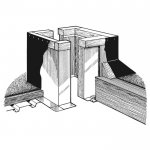
this is a true roof curb and would be installed under the roofing material.
notice how the roofing material is continuous and rolls up the side of the curb and is nailed to the wood nailer on the top.

also notice it has a small flange on the bottom for attaching to the roof, not like the roof jacks in this post with there wide flanges..........like I said before there's a reason for that.
 

Attachments

  • rc2ab-notext_1_700x700.jpg
    rc2ab-notext_1_700x700.jpg
    63.4 KB · Views: 19
Last edited:

yeldogt

Well-known member
Joined
Jan 2, 2012
Messages
18,184
Yes I used the pitch pan. If you look closely you’ll see the square box sits on top of the roof. I just got carried away with the black flashing stuff and applied it to the pitch pan.

This is what it looked like before I installed it.


3f4148b5ea9e748bc4297e11b455d162.jpg


Sent from my iPhone using Tapatalk

Is there a collar/ transition from square to round.
 

Attachments

  • 3f4148b5ea9e748bc4297e11b455d162.jpg
    3f4148b5ea9e748bc4297e11b455d162.jpg
    115.7 KB · Views: 0

yeldogt

Well-known member
Joined
Jan 2, 2012
Messages
18,184
that's not correct on a round roof jack the roof jack sets on top of the roofing, even on a brand new roof it sets on top of the roofing.

even that square roof jack in post #13 is not made to set under the roofing it is made to set on top of the roofing it's not a true roof curb.

the only time that a roof curb sets under the roofing is when it has a wood nailer all around the top and the roofing is rolled up along the sides and nailed to the top of the curb

just for the record were talking about a tar or hot pitched roof not a rubber roof

With a low slope flat roof -- modified that's full torch down with granular coating. I would have used a torched down non granular a base -- attached the flange torching it down. Covered with granular torch down. You ahve to ver a flat roof as it will flood with water.

A shingle roof is flashed -- a flat is bonded.

Rubber works the same way -- except it's glued. Same with the modified rubber roll -- the kind with the base sheet That you can glue together The roll covers the flange -- otherwise you are betting on the tar to stay watertight .... and it never does?

Larger stuff on a real flat needs a curb
 
OP
B

branimal

Well-known member
Joined
May 31, 2016
Messages
1,938
I was having trouble locally locating 4" and 6" round roof jacks to fit my round pipes.

I ended up filling the sqaure void with foam and then covered with roof flashing. I'll pull a storm collar on top.

For the next 3 roof jacks (2 4" bathroom, 1 6" kitchen), I'll find find round roof jacks online.
 
OP
B

branimal

Well-known member
Joined
May 31, 2016
Messages
1,938
yeldogt; said:
With a low slope flat roof -- modified that's full torch down with granular coating. I would have used a torched down non granular a base -- attached the flange torching it down. Covered with granular torch down. You ahve to ver a flat roof as it will flood with water.

A shingle roof is flashed -- a flat is bonded.

Rubber works the same way -- except it's glued. Same with the modified rubber roll -- the kind with the base sheet That you can glue together The roll covers the flange -- otherwise you are betting on the tar to stay watertight .... and it never does?

Larger stuff on a real flat needs a curb

So two layers of roofing, non granular base followed by granular base torched
down over the roof jack's flange. How far out past the flange do you extend ?

Also can I use a hand held propane or mapp torch since i'm not covering a huge surface area?

Thanks.
 
To avoid these ads, REGISTER NOW!
Top Bottom