
chrispyny
Well-known member
Thanks for all who dropped by to read this.
I have a question about Seer ratings for a well known brand and other lesser known or 'more economical' brands efficiency/seer comparisons.
I need a 2 zone unit. A 9k and a 24k btu. So i'm shopping on our well known on line vendors website that i have read about so much here over the past and came across 11 options per the vendors website. I have narrowed my options down to two. Either a very well known Mitsubishi unit, or a lesser known, economical model Gree. I made this decision in two parts.
1. Either i'm going to spend the extra and get a well known Mitsu unit and be happy, and then spend another $600 in linesets, covers, parts, etc.
2. Or I'm going to follow other users experiences, save myself $600 on the unit, and spend that $$ on linesets, covers, parts, etc.
So.
http://www.ecomfort.com/Gree-G2H30T09240000/p63300.html $3,021
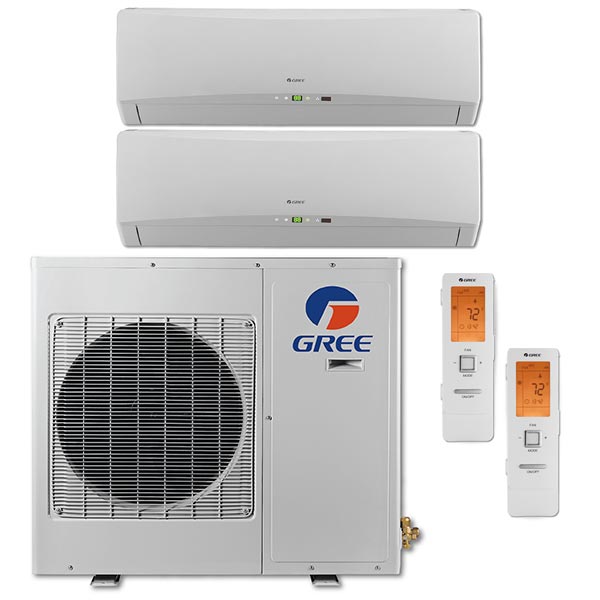
This Gree unit (which many here seem to stand by from experience, although its certainly the 'more economical' option) seems to carry a seer rating of 21.0. However it calls for a 30 amp breaker.
Per the manual, the Gree Multi30HP230v1BO specs at a max amp draw of 13.9 amps which is a power consumption of 3,206 watts, when the outdoor temp is 95°f, and the indoor temp is 80°f. ( AHRI test standard)
Lets compare a similar Mitsubishi unit.
http://www.ecomfort.com/Mitsubishi-M2H30W09240000-B/p56946.html $3,646
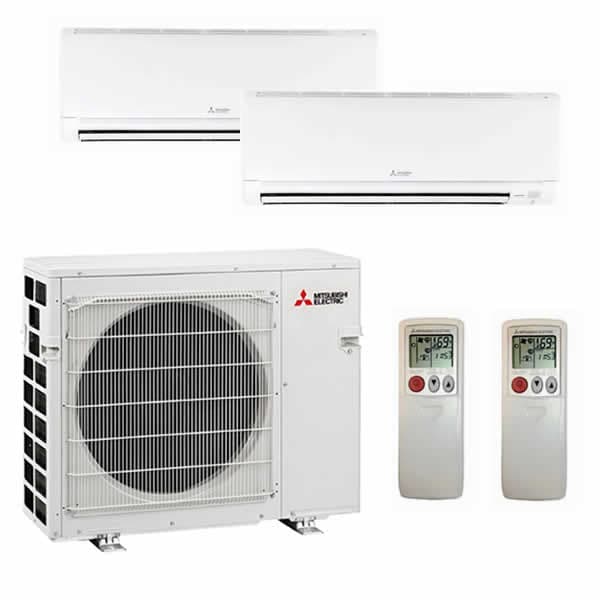
This Mitsu unit carries a seer rating of 17.6, and calls for a 25 amp breaker.
Per the manual for the MXZ-3C30NA, the unit specs out at a max amp draw of 11.65 amps, which is a power consumption of 2,680 watts at AHRI testing temp standard again of 95°f outside, 80°f inside.
In summary, the Mitsu unit uses 526 less watts of power(2.28a) at AHRI testing standards, yet is rated at 3.4 seer LESS(supposedly less efficient) than the more affordable Gree model.
So what gives. Are the manufacturers playing with numbers?
Ultimately i think i willl save $$ over the longer term with the Mitsu. The 526 less watts i'll be using, will ultimately save me the $625 price difference between the two units.
Just did the math. Lets assume that i only use the unit at full power for 30 days of the summer. Lets also assume that its under full power for 12 hours a day. The online calculation explains it like this.
526 watts x 12h = 6.312 kwh.
6.312kwh per day x 30 days= 189.66 kwh in a high use month.
My power company National Grid charges $1.58 per kwh within the last few months. It varies, so... 189.36x$1.58= $299.19
This calculation is faulty as its linear. It's not possible to do a perfect calculation unless i have a summers usage with either unit to determine exactly how much i used the unit. It's rough, but helps get an idea of how long it will take me to save the difference in cost of units.
Please keep in mind, i will be using one of these units 95% of the time for cooling only. I already have NG hot water baseboard heat, and i burn wood in the wood stove all winter long. So heating is NOT a factor in these calculations.
What do you all think? Thanks !
I have a question about Seer ratings for a well known brand and other lesser known or 'more economical' brands efficiency/seer comparisons.
I need a 2 zone unit. A 9k and a 24k btu. So i'm shopping on our well known on line vendors website that i have read about so much here over the past and came across 11 options per the vendors website. I have narrowed my options down to two. Either a very well known Mitsubishi unit, or a lesser known, economical model Gree. I made this decision in two parts.
1. Either i'm going to spend the extra and get a well known Mitsu unit and be happy, and then spend another $600 in linesets, covers, parts, etc.
2. Or I'm going to follow other users experiences, save myself $600 on the unit, and spend that $$ on linesets, covers, parts, etc.
So.
http://www.ecomfort.com/Gree-G2H30T09240000/p63300.html $3,021
This Gree unit (which many here seem to stand by from experience, although its certainly the 'more economical' option) seems to carry a seer rating of 21.0. However it calls for a 30 amp breaker.
Per the manual, the Gree Multi30HP230v1BO specs at a max amp draw of 13.9 amps which is a power consumption of 3,206 watts, when the outdoor temp is 95°f, and the indoor temp is 80°f. ( AHRI test standard)
Lets compare a similar Mitsubishi unit.
http://www.ecomfort.com/Mitsubishi-M2H30W09240000-B/p56946.html $3,646
This Mitsu unit carries a seer rating of 17.6, and calls for a 25 amp breaker.
Per the manual for the MXZ-3C30NA, the unit specs out at a max amp draw of 11.65 amps, which is a power consumption of 2,680 watts at AHRI testing temp standard again of 95°f outside, 80°f inside.
In summary, the Mitsu unit uses 526 less watts of power(2.28a) at AHRI testing standards, yet is rated at 3.4 seer LESS(supposedly less efficient) than the more affordable Gree model.
So what gives. Are the manufacturers playing with numbers?
Ultimately i think i willl save $$ over the longer term with the Mitsu. The 526 less watts i'll be using, will ultimately save me the $625 price difference between the two units.
Just did the math. Lets assume that i only use the unit at full power for 30 days of the summer. Lets also assume that its under full power for 12 hours a day. The online calculation explains it like this.
526 watts x 12h = 6.312 kwh.
6.312kwh per day x 30 days= 189.66 kwh in a high use month.
My power company National Grid charges $1.58 per kwh within the last few months. It varies, so... 189.36x$1.58= $299.19
This calculation is faulty as its linear. It's not possible to do a perfect calculation unless i have a summers usage with either unit to determine exactly how much i used the unit. It's rough, but helps get an idea of how long it will take me to save the difference in cost of units.
Please keep in mind, i will be using one of these units 95% of the time for cooling only. I already have NG hot water baseboard heat, and i burn wood in the wood stove all winter long. So heating is NOT a factor in these calculations.
What do you all think? Thanks !
Last edited:
 That changes his math quite a bit...