
You are using an out of date browser. It may not display this or other websites correctly.
You should upgrade or use an alternative browser.
You should upgrade or use an alternative browser.
Dunlap tools & boxes
- Thread starter HeelSpur
- Start date

RTM
Well-known member
Here is a partial set of Dunlap wrenches from a garage sale toolbox. Looking at the sets posted upthread (around here) by D42Jeep and macduf, this is not a complete set, missing at least 2. Seems to be some different sizes in the other sets shown. Cool little size, and looking good with the black finish. If someone needs them to complete a set, just holler, yours for postage.

Oregon rock crusher
Well-known member
I noticed this little hip roof box a couple weeks ago and thought about it several times since. When it was still in that small coastal shop this afternoon at half price I decided to snag it. It's not so much just the box that seduced me but the Boeing sticker and PO's name stenciled on it as well. The winged totem sticker dates to the 30's and also has the PO's name, Lester Sterkson, handwritten on it. A decent Dunlap sticker and tray inside sealed the deal. I'm not sure what the 79866 stenciled on in the third pic is for...maybe the boxes part number?
Attachments


Lesserstore
Well-known member
I found this pair of 10" nippers in my family's old general store which is my profile pic. It was rusted and very loose so I put in evaporust, which turned it all black with a few spots of paint left, then I tightened it using a hydraulic press, and finally I wire brushed it. It's coded AM, and it looks a lot like a Champion DeArment with the handle design.
Attachments


Private Lugnutz
Well-known member
Neither of these items are overly vintage, but I spent some time cleaning them up, so I am going to post them, dammit! 
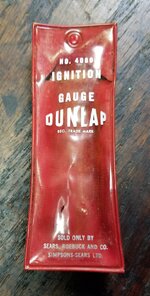
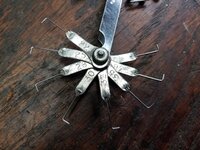
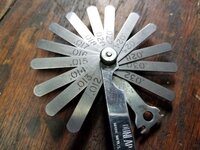
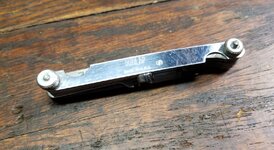
The DUNLAP feeler gauge belongs here, momentarily, a least, until it picks up the homing signal and starts making it way to Albany or Lake Tahoe...
(I'll tell you what, I don't know who Sears "(S)" code is, but they made a dang nice feeler gauge - and I even like the clever pouch.)
The DUNLAP feeler gauge belongs here, momentarily, a least, until it picks up the homing signal and starts making it way to Albany or Lake Tahoe...
(I'll tell you what, I don't know who Sears "(S)" code is, but they made a dang nice feeler gauge - and I even like the clever pouch.)
Attachments





four.cycle
Well-known member
according to Mr. Lauver's list:
S PR = Pratt Read, ca. 2007 - 2008
I mentioned here somewhere that Kastar was OEM for a whole mess of different companies, particularly feeler gauges.
(Kastar was one of the lines I peddled when I was doing outside sales as an independent agent.) But Kastar didn't put those nice fancy knurled nuts on their stuff - your sample is too fancy.
Was Pratt-Read in the feeler gauge making business?
Starrett? (seems a stretch)
S PR = Pratt Read, ca. 2007 - 2008
I mentioned here somewhere that Kastar was OEM for a whole mess of different companies, particularly feeler gauges.
(Kastar was one of the lines I peddled when I was doing outside sales as an independent agent.) But Kastar didn't put those nice fancy knurled nuts on their stuff - your sample is too fancy.
Was Pratt-Read in the feeler gauge making business?
Starrett? (seems a stretch)
Private Lugnutz
Well-known member
That feeler is way older than 2007, 4.c. I think Dunlap only goes through the 60's. Don will know.
I forgot to post the Kromedge file, found together in the same compartment in the same old box, which is just along for the ride...
I forgot to post the Kromedge file, found together in the same compartment in the same old box, which is just along for the ride...
Attachments


d42jeep
Well-known member
Dunlap ended in 1960, of course there are no absolutes with Sears. I think generally the feelers and gappers are coded S.
-Don
-Don
Last edited:
four.cycle
Well-known member
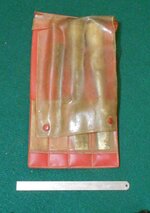

Dunlap 3-pc chisel set
Mintgrun
Well-known member
Posts 85, 360 and 363 show this same style box, but this is the only one with the orange logo. I'm guessing this one is newer. It's new to me, as of yesterday.

I paid $8 in spite of the missing handle and one of the tray supports was gone. I made a temporary handle using cardboard and a stapler, just to make it easier to move around (empty) and added a new support. Since the spot welds were still there, I used tape to take a pattern, and then stuck that onto the support, to align three holes to weld through.
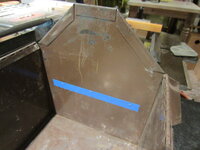

Clamping it was a little tricky, but the hardest part was trying to get my helmet in a place where I could see what I was doing.

( 1/4" aluminum backer )

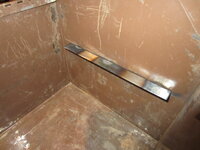
I managed to stick it on there without blowing through the box and the goobered spot welds are hiding in the shadow. It was a little more difficult than I'd anticipated. I'm glad I stuck with it.


I paid $8 in spite of the missing handle and one of the tray supports was gone. I made a temporary handle using cardboard and a stapler, just to make it easier to move around (empty) and added a new support. Since the spot welds were still there, I used tape to take a pattern, and then stuck that onto the support, to align three holes to weld through.
Clamping it was a little tricky, but the hardest part was trying to get my helmet in a place where I could see what I was doing.
( 1/4" aluminum backer )
I managed to stick it on there without blowing through the box and the goobered spot welds are hiding in the shadow. It was a little more difficult than I'd anticipated. I'm glad I stuck with it.
d42jeep
Well-known member
Nice work on the tray support. I had to do that repair on a GMTK box that was missing the support a few years ago.
My similar box is not nearly in the nice condition that yours is and the hasp is different in appearance.
-Don
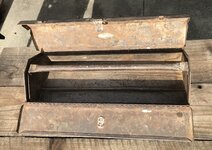

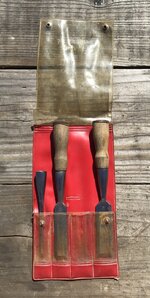
four.cycle sent me the wood chisels he posted above and I gave them the evaporust and clean up treatment. Now I need my buddy to make one replacement handle.


My similar box is not nearly in the nice condition that yours is and the hasp is different in appearance.
-Don
four.cycle sent me the wood chisels he posted above and I gave them the evaporust and clean up treatment. Now I need my buddy to make one replacement handle.
Last edited:
RTM
Well-known member
four.cycle sent me the wood chisels he posted above and I gave them the evaporust and clean up treatment. Now I need my buddy to make one replacement handle.
Don
I may have the 1/2” chisel to match that set, tho it needs a bit of work. See the orange one second from bottom here. I imagine it looks just like the 1” brother below it.

d42jeep
Well-known member
It would by great to complete the set. The orange paint shouldn’t be a problem. Let me know what you would need for it. I’ll measure the sizes of the ones I have just to confirm that its the one I need. Thanks!
-Don
-Don
four.cycle
Well-known member
^ those things look like new, Don. 
Mintgrun
Well-known member
I'd like to change my guess above and say that I think the orange logo may be earlier than the others. It is painted on, as opposed to being a decal. Googling for more orange ones wasn't very productive, but I did find one more example on a machinist's box that the seller put a "1930s" date on.
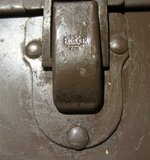
Repairing the hasp seems like a good idea and a fun little project, but I totally trust the two latches to hold the lid shut. The hasp isn't doing any of the lifting, due to an 1/8" gap at the slot/tab.

The latches are very well built, with nice thick "flippers" and a solid steel nub. The ones on this box are marked "USA EXCELSIOR Stamford Conn." and the springs inside are quite strong.

I like the way they laid out the tote, with sockets on one side and a second divider on the other. It seems like a good way to balance the weight of the sockets and keep tools from sliding around.

The hasp for the lock is gone, and that might need repair, as I'm not sure how much I trust those two little latches to hold it closed under load.
Repairing the hasp seems like a good idea and a fun little project, but I totally trust the two latches to hold the lid shut. The hasp isn't doing any of the lifting, due to an 1/8" gap at the slot/tab.
The latches are very well built, with nice thick "flippers" and a solid steel nub. The ones on this box are marked "USA EXCELSIOR Stamford Conn." and the springs inside are quite strong.
I like the way they laid out the tote, with sockets on one side and a second divider on the other. It seems like a good way to balance the weight of the sockets and keep tools from sliding around.

d42jeep
Well-known member
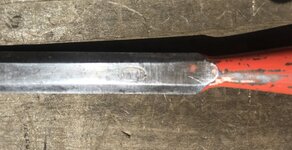
RTM generously sent me his rather orange Dunlap chisel missing from my set from four.cycle. I spent a little time removing as much orange as possible to have it blend in with the others. I will hand off the example handle to my buddy later today so he can fabricate a duplicate to complete the set. Thanks to four.cycle and RTM for their generosity.
-Don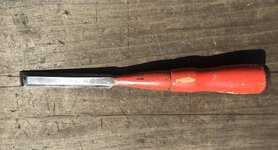
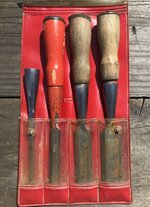


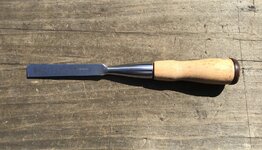
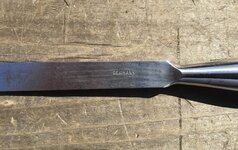


-Don
four.cycle
Well-known member
wow! quite a bit different now!
d42jeep
Well-known member
I cleaned the pouch and chisels up a bit more since my buddy was coming over to grab the handle to duplicate.
-Don
-Don
d42jeep
Well-known member
I finally got my Dunlap hex sets in some kind of order to have on display. Some of the duplicates went back into the main Dunlap toolbox.
-Don

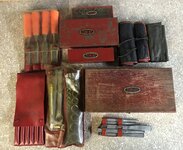
-Don
d42jeep
Well-known member
I found a Dunlap hand drill at a local estate sale yesterday.
-Don
-Don
d42jeep
Well-known member
We stopped by and picked up the Dunlap chisel handle replacement on Monday. My buddy did a great job. Here are some pictures of the completed set.
-Don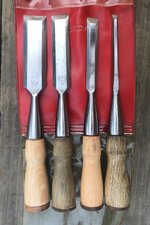


-Don
d42jeep
Well-known member
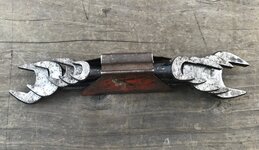
One of the rusty treasures I recently received from Tin Medic was this wrench holder. I checked the patent info and found it was used with Dunlap wrenches so I went ahead and filled it up.


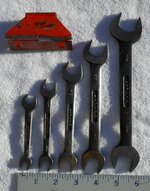
While I was in the Dunlap wrench drawer, I pulled out a slightly newer DOE set for a picture. Then they all went back into the drawer.

-Don
While I was in the Dunlap wrench drawer, I pulled out a slightly newer DOE set for a picture. Then they all went back into the drawer.
-Don
four.cycle
Well-known member
^ Pretty fabulous job on that chisel set, Don. Hard to believe it's the same one I sent down there. I think the set of Dunlap open-ends I have is a match to your newly-found holder there. Not sure where it is at the moment, but I do not think mine has a patent number stamped on it. 
Attachments

d42jeep
Well-known member
I found these DBE Dunlap wrenches at an El Cerrito, CA garage sale today. These were sourced from Lectrolite.
-Don
-Don
Mintgrun
Well-known member
I felt kind of sorry for this one, so I brought it home to soak in Simple Green. It came out nice and clean.
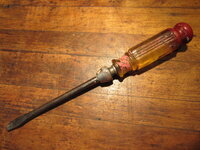
Do the opaque vs. translucent ends indicate which of the two is older?

Do the opaque vs. translucent ends indicate which of the two is older?
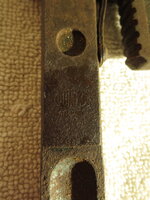
Picked up this No. 14 Stillson wrench last weekend in Fort Myers from some of the tools my father had left behind. I don't think this was a wrench he purchased new but probably belonged to my namesake great-uncle on my mom's side of the family. My dad would have inherited it after my Uncle Mike passed away in the summer of 1962. Uncle Mike had been a machinist & tool & die maker for Hendey.
This Stillson style wrench needs much more clean-up and I'll get to that later this summer. All I did this afternoon was rub away some surface rust to kind of make out the brand as Dunlap in an oval; under it is "Germany".
I appreciate the info in this thread as I did not know much about this tool company/brand until coming here a short while ago, and more to learn. Thanks.
This Stillson style wrench needs much more clean-up and I'll get to that later this summer. All I did this afternoon was rub away some surface rust to kind of make out the brand as Dunlap in an oval; under it is "Germany".
I appreciate the info in this thread as I did not know much about this tool company/brand until coming here a short while ago, and more to learn. Thanks.
Attachments


Username already in use
Well-known member


d42jeep
Well-known member
Well…… I only have one. You probably sent it to me.
 -Don
-Don
I only have one. You probably sent it to me.-DonPrivate Lugnutz
Well-known member
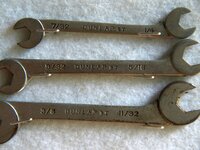
Hey what's up with the " 3/8" x 6 " on the adjustable? Is the "3/8" the jaw opening, or thickness of the head, or... ?
The only thing that I can think of is the 3/8” might be the thickness of the jaws. It is a 6” adjustable.
I'm pretty sure I solved this riddle, guys, with the help of a Q&A up on the General board's 'Old World' thread.It's a German (and perhaps a European) thing that I only became aware of myself in December 2019 when I found this Miltex 1/4 x 4" adjustable crescent-type wrench, as reported and discussed on the Garage Sale thread.
Believe it or not, it looks like the fraction might be the maximum capacity of the jaws expressed in Whitworth standard. Similar to the way US mfgrs would stamp the U.S.S., Hex Cap, or S.A.E. bolt size on the face of a DOE wrench instead of the milled opening size.
I know, I know, a little strange, even for the Germans, for a wrench whose whole, implicit, and intentional point is to be wrapped around nuts and bolts of many different sizes. But if you picture a slew of them hanging side by side on a rack from smallest to largest, I guess it kinda sorta makes sense to see its maximum jaw opening on the shank and knowing you could work down from there.
Why Whitworth? I'm assuming they were aimed primarily at the UK market.
My 1/4 x 4" has a 9/16" max capacity, which does fit a 1/4W.
Your 3/8 x 6" should have a 3/4" (3/8W) max capacity, Don.
And your 5/8 x 10" should have a 1-1/8" (5/8W) max capacity.
Too impatient to wait until October and your annual trek from your cabin to the Dunlap shrine in the Den of Dandy Delights in your main domicile, I got a brainstorm. Based on the premise that by the 1940's and 1950's the adjustable wrench would have settled into a globally appropriated optimal design, I measured a bunch of my 6- and 10-inchers made by several different mfgrs.
Sure enough, they are all 3/4" and 1-1/8" max capacity respectively.


RTM
Well-known member
Argh, misinterpreted what someone else said, and posted this in the Indestro thread, but more likely belongs here.
Here is something that's been kicking around for a while, and I never looked at it real hard. Thanks to @four.cycle for posting these way back in thread post #653. I recently got a new set of Indestro something, and while sorting through my others I realize I have a good chunk of a Whitworth set, but MADE IN U.S.A. All unmarked as to brand, but the double cross hatch bands look really close to 4.c's pix.
L-R Top to botton
4BA, 3BA, 2BA, 1BA, 0BA
1/8W, 3/16W (All 1/4" Drive and 6pt above here) 3/16W, 1/4W
5/16W, 3/8W, 7/16W
1/2W. 9/16W, 5/8W (1.09" AF) (1/2" ones all 12pt
 View attachment 1742297
The size difference in these 2 3/16W sockets at 6 pt and 12 pt in 1/4" and 1/2" hex drive is substantial, and fooled me early on.
 View attachment 1742298
These two may have come with them, the ratchet is marked Made in USA also. The drive plug / screwdriver is unmarked, but I am going to go out on a limb based on the pix linked, and say they are part of the kit.
 View attachment 1742299
No emotional attachment to these, so if someone needs them, holler. IF not, they're going to an antique flea in the future.
Here is something that's been kicking around for a while, and I never looked at it real hard. Thanks to @four.cycle for posting these way back in thread post #653. I recently got a new set of Indestro something, and while sorting through my others I realize I have a good chunk of a Whitworth set, but MADE IN U.S.A. All unmarked as to brand, but the double cross hatch bands look really close to 4.c's pix.
L-R Top to botton
4BA, 3BA, 2BA, 1BA, 0BA
1/8W, 3/16W (All 1/4" Drive and 6pt above here) 3/16W, 1/4W
5/16W, 3/8W, 7/16W
1/2W. 9/16W, 5/8W (1.09" AF) (1/2" ones all 12pt
View attachment 1742297The size difference in these 2 3/16W sockets at 6 pt and 12 pt in 1/4" and 1/2" hex drive is substantial, and fooled me early on.
View attachment 1742298These two may have come with them, the ratchet is marked Made in USA also. The drive plug / screwdriver is unmarked, but I am going to go out on a limb based on the pix linked, and say they are part of the kit.
View attachment 1742299No emotional attachment to these, so if someone needs them, holler. IF not, they're going to an antique flea in the future.
four.cycle
Well-known member
^ THAT ratchet was manufactured by New Britain Machine Co.
The sockets marked "Made in U.S.A." were manufactured by Dunlap, G.M. Mfg. Co., and SOME by Walden.
I've never seen any G.M. or Walden Whitworth, which leaves either Dunlap (or Sears brand). That post of mine you cited (#653 in the Duro/Indestro thread) shows a Whitworth set for comparison. I'll tack it on here as well.
They are the source of MUCH confusion here.
The sockets marked "Made in U.S.A." were manufactured by Dunlap, G.M. Mfg. Co., and SOME by Walden.
I've never seen any G.M. or Walden Whitworth, which leaves either Dunlap (or Sears brand). That post of mine you cited (#653 in the Duro/Indestro thread) shows a Whitworth set for comparison. I'll tack it on here as well.
They are the source of MUCH confusion here.
Attachments
-
 Dunlap 46276 1.4 & 1.2 hex drive WHITWORTH socket set (Ebay 192708951389 03).jpg328 KB · Views: 6
 -
 Dunlap 46276 1.4 & 1.2 hex drive WHITWORTH socket set (Ebay 192708951389 04).jpg178.4 KB · Views: 5
 -
 Dunlap 46276 1.4 & 1.2 hex drive WHITWORTH socket set (Ebay 192708951389 05).jpg272 KB · Views: 5
 -
 Dunlap 46276 1.4 & 1.2 hex drive WHITWORTH socket set (Ebay 192708951389 06).jpg204 KB · Views: 6
 -
 Dunlap 46276 1.4 & 1.2 hex drive WHITWORTH socket set (Ebay 192708951389 07).jpg255.8 KB · Views: 8
four.cycle
Well-known member
just a note:
there's a Japan-made knock-off of that N/B ratchet you posted above (post #393) - except that the Japan-made knock-off isn't stamped "Made in U.S.A." and it lacks that little dimple at the bottom end (which is what the N/B sets use as a holding point for the clip that holds the set together.)
they come in plated finish in a red holder (similar to the Indestro 1454) AND plated in a red holder kinda-sorta like your 1351/1451 set.
there's a Japan-made knock-off of that N/B ratchet you posted above (post #393) - except that the Japan-made knock-off isn't stamped "Made in U.S.A." and it lacks that little dimple at the bottom end (which is what the N/B sets use as a holding point for the clip that holds the set together.)
they come in plated finish in a red holder (similar to the Indestro 1454) AND plated in a red holder kinda-sorta like your 1351/1451 set.
d42jeep
Well-known member
Metric and Whitworth shown in 1960 in the Sears catalog.
-Don
My metric sockets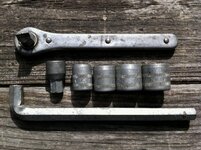
-Don
My metric sockets
Was Dunlop only a Sears brand or were they a standalone brand as well?
Were they considered a B line to Craftsman (like Companion) or what?
We had a few Dunlop tools when I was a kid. I think one was a nice stationary scroll/jig saw. My dad would glue pages from coloring book on scrap door-skin or Masonite and let us cut them out and paint them.
Were they considered a B line to Craftsman (like Companion) or what?
We had a few Dunlop tools when I was a kid. I think one was a nice stationary scroll/jig saw. My dad would glue pages from coloring book on scrap door-skin or Masonite and let us cut them out and paint them.
Oldtuleguy
Well-known member
- Joined
- Nov 4, 2017
- Messages
- 10,486
Sears Economy line. Was preceded by fulton.

