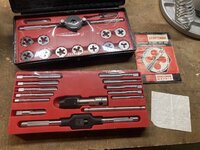
The material being threaded/repaired doesn't seem to be mentioned, nor does the size. They both should be considered. Tapping/repairing mild steel, brass, or plastic are less problematic than tapping/repairing something in SS, cast iron, or heat treated steel. SS can be a PITA to work with due to work hardening, type of SS, and/or the condition the existing threads are in. I don't attempt making/repairing threads in anything less than HSS, plain carbon steel may/may not work. That's just my experience and my opinion. Size of tap/die can make a difference as well. For threads smaller than 1/4 it's quite easy to snap off a tap, larger taps made from plain carbon steel may work ok for repair.
From the video posted above even 3 holes started producing wear characteristics on many of the taps. The question is just how many repairs will you do before your taps start getting dull and risk breaking off in the next hole? Won't offer comment on the re-threading varieties, never use them. A full plain carbon steel set may be ok for occasional re-threading jobs, it may let you down one day. It's up to individual choice. Buying a few common higher quality HSS taps/dies is a good choice too. It depends upon what the buyer expects. A machinist has an opinion based upon expectations for work performance just like anybody else. To flatly state that opinion is "bad advice" is uninformed nonsense. Buy what suits your budget, expectations, and are aware of the limitations of your choice. There is no single choice that fits everybody's requirements.
I prefer using HSS for new/repairing threads because that hole is usually too important to take unnecessary risks, any threading job is already risky enough. I use what gives me a good chance at the results I want. This is just my experience and my opinion. What I choose to do may not be suitable for you. Almost everybody here has offered what I consider good advice, the choice is up to you and what you consider important.