Farmall450
Well-known member
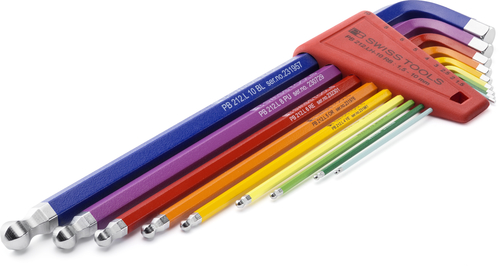
It's a set of cheap USA hex keys, not an engagement ring.The blister pack isn't doing their image any favors. If they had an image in the first place.


It's a set of cheap USA hex keys, not an engagement ring.The blister pack isn't doing their image any favors. If they had an image in the first place.
Have that same set and the blue metric counterpart.Sad news, I use their stuff daily!

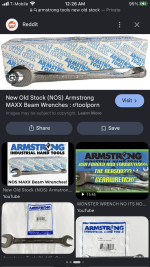
In case you are unfamiliar with Industrial tools, made for actual industrial use, many come in the most underwhelming packaging possible.The blister pack isn't doing their image any favors. If they had an image in the first place.
That's kind of my point. No packaging would be better.In case you are unfamiliar with Industrial tools, made for actual industrial use, many come in the most underwhelming packaging possible.
Porter Cable, back before the Black & Decker purchase, when Porter Cable where considered the “Industrial” power tool brand for woodwork use, and usually with a higher price than their competitors, typically just came in white or brown cardboard boxes, that Porter Cable, with a bit of colored printing.
It was usually cheap tools for homeowner use that had full color packaging, with photos on the packaging.
The same mundane packaging was also the case for Milwaukee, Black & Decker’s Industrial line, and Fein.
For hand tools, Armstrong just had boxes that said “Armstrong” with a label on the side.
Plenty of decent hand tool brands, whether Estwing, or Vaughan, that are sold around the globe, simply come in bulk packaging, maybe with a plastic sleeve or bag over the tool.
There are weird exceptions. But decent tool manufacturers usually just focus on the tool, and packaging that gets the tool to the user.
Baaic Hardware stores probably wanted some sort of hanging clear packaging, several decades ago.That's kind of my point. No packaging would be better.
The blister pack makes it like a cowboy and indians play set at dollar tree.
Most hand tools are just hanging on a peg plain.
I get it it's just pretty cheesy looking for hand tools.Baaic Hardware stores probably wanted some sort of hanging clear packaging, several decades ago.
Eklind designed, or probably paid someone to design and make the packaging, and they have been using the same packaging ever since, because it fits the requirements of the customer, and Eklind doesn’t want or feel the need to spend more money to change things.
I've found the shear cut to be slightly beneficial on shallow BHCS. Chamfered ends are cosmetically appealing and can help with engagement, but also cause a small percentage of contact loss because of the standoff void when bottomed out.Bondhus has nice chamfered ends. Eklind always looked like they came fresh off the shear.
The form, allows the tool to function better by make it easier to engage with the screw. Helpful when you're trying to engage with a screw deep inside the belly of a machine. Especially helpful on flat head hex screws that often have no lead in chamfer.-Nice chamfered ends may be visual appeal but is form over function. Pick your priority. How "clean" the sheared end are is from die clearance and how sharp the parting station tooling is. It's adjustable.
A good number of FHSHCS have lead in. I would say more do than dont.The form, allows the tool to function better by make it easier to engage with the screw. Helpful when you're trying to engage with a screw deep inside the belly of a machine. Especially helpful on flat head hex screws that often have no lead in chamfer.
I find the non chamfered ends ****.I've found the shear cut to be slightly beneficial on shallow BHCS. Chamfered ends are cosmetically appealing and can help with engagement, but also cause a small percentage of contact loss because of the standoff void when bottomed out.
Again minor, but worth noting.
Eh, I’ve not noticed much a difference between the two. Sometimes if the sheared end is a bit crooked it will screw stuff up but overall it’s a wash for me.I find the non chamfered ends ****.
Be like SO. Add grip teeth and call it a whole new product.It's not a great feeling to loose a plant making things or the people that know how.
But a business needs to be innovative to succeed. You can't just keep making something that was innovative (ball end hex keys) forever and expect to keep making money 30 years later. Now you could redo marketing over the life of the product or make tweaks to the design or materials. But a ball end hex key is a pretty simple tool. Only so much you can do.
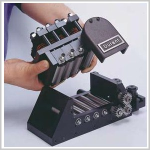
-I'm going to suggest this as a possible reason. The hex stock is coiled at the mill that gets fed into the stamping presses. This would create an embedded stress or pre-conditioned curvature to the stock. What is standard procedure for almost any stock coming off a coil (flat or otherwise) is to go through a device that straightens the stock, thereby removing most of the curvature. It's SOP for wire, flat, and bar stock whether it's a stamping press or a 4-slide. Eklind used to use them on every press when I was there and a banana shaped key was an indicator that the die-setter didn't do his job. I believe that this is the source of the problem, it takes some time and knowledge to set a straightener up. Some die-setters may be skipping the process entirely, haven't set the device correctly, or management has decided to eliminate the process they don't understand for faster set-up times. Hard to say. I suppose it's even possible for the stock to have so much internal stress it can't all be removed. The curvature from stress appears after heat treating. It can be unpredictable and unnoticed before heat treating. Example of straightener belowWhat I cannot understand is how Wiha, Wera, and PB Swiss can manufacture straight hex keys but Bondhus and Eklind cannot.
 www.pbswisstools.com
-Well that was an interesting video. They work off straight bar stock and not a coil, have multiple extra operations, several stations where people are needed, and a mix of robotics and humans. It's no wonder they're so expensive by comparison to other brands. Thanks for posting this, I found it entertaining.Sneak peak into PB Swiss production, video is in English language:
How It's Made – Hex Key L-Wrenches – PB Swiss Tools
Movie from Sciene Channel, published on January 4th, 2017
Kind regards,
Olli
I was surprised at 0:35 to see the guy sitting there feeding rods into the machine and pressing a pedal to cut it. Likewise the printing of the holders at 4:20 and then filling the holders with the keys. The rest of the process is very automated with no human handling of individual wrenches aside from quality control (crookedness check, sizing check). I guess it's a matter of cost of automation vs. a person.several stations where people are needed
Being in one of the most expensive countries in the world can't help either.It's no wonder they're so expensive by comparison to other brands.
-Yes, it appears that they are. This is the process that was developed for ball drivers at Eklind, but a different cutter head and insert was used. The process had been around for some time but nobody had applied it to ball driver hex keys. Bondhus didn't use it, they relied on an opposing broach process. I was rather involved with the project and I've posted about it in other threads.At 1:03 with the rod in the lathe making the ball end, it seems they're rotating both the rod and the tool in a synchronised pattern to preserve the hex shape so it doesn't become round like a doorknob.
-That was how Eklind did it too, Howard Eklind was told by some of his confidants that hex stock couldn't be run off a coil so 10-12 foot lengths were advanced into the press by hand. A few of us proved that you could run hex stock off a coil and that those claiming it couldn't happen didn't know what they were talking about.I was surprised at 0:35 to see the guy sitting there feeding rods into the machine and pressing a pedal to cut it.
-Some of the processes they use have a baked-in level of human vs. automation. They certainly have more steps in the entire process.Likewise the printing of the holders at 4:20 and then filling the holders with the keys. The rest of the process is very automated with no human handling of individual wrenches aside from quality control (crookedness check, sizing check). I guess it's a matter of cost of automation vs. a person.
-Would agreeBeing in one of the most expensive countries in the world can't help either.
That's bizarre. I used to work for a company that made essentially all of McMaster-Carr's hex stand-offs (like for electronics or whatever). They had Eubama rotary transfer machines and ran hex coil stock on them. The machines had integrated straightener rollers and hydraulic shears that fed hex chunks into the inner workings of the machine. They'd be doing that since at least the mid 80s.-That was how Eklind did it too, Howard Eklind was told by some of his confidants that hex stock couldn't be run off a coil so 10-12 foot lengths were advanced into the press by hand. A few of us proved that you could run hex stock off a coil and that those claiming it couldn't happen didn't know what they were talking about.
Rods vs. coils aside, why not automate the feed of rods to hit the length stop and trigger the cut?-That was how Eklind did it too, Howard Eklind was told by some of his confidants that hex stock couldn't be run off a coil so 10-12 foot lengths were advanced into the press by hand. A few of us proved that you could run hex stock off a coil and that those claiming it couldn't happen didn't know what they were talking about.
Baked in in what sense? That they used to do it a certain way and it's difficult to change now?-Some of the processes they use have a baked-in level of human vs. automation.
Well f it. Just ordered almost $200 of Eklind stuff from Bowers. Wanted a complete set of ball end drivers and try their control screwdrivers since I use them more days then not.in an email from Nelson Bowers earlier today:
Eklind will end operations come Early to mid August. When inventory is gone it's gone forever.
https://www.ebay.com/str/bowerstool...at=43247751011&_trksid=p4429486.m3561.l161211
But- don't buy Bowers on ebay. Buy it on HIS website and go for the "free tools" deals.
07/10/26 15:52 PDT
-What's "bizarre" about it?That's bizarre.
-Automation is the purpose of feeding the press from a coil. You can't just go fully automated with every aspect of manufacturing. Turning a machine on and just letting it go is a recipe for disaster to occur. A lot of manufacturing has been using devices (prox sensors, tonnage monitors, buckle detect, part out screens, IR, vision verification, etc.) to verify things are going as they should but the cost/practicality of those devices comes into play. Eklind basically used a 3 step method for "L" keys once the die has been set.Rods vs. coils aside, why not automate the feed of rods to hit the length stop and trigger the cut?
-Every time a person has to touch, transfer, load/unload, or use compressed air on the product is what I'm getting at. There's a few times in that video where you don't see a person but one was there before, during, or after the footage was taken. The extra steps PB has decided to take mean a person has to facilitate that process whether you see one or not. They do make use of robotics but not all steps use one. The Swiss are not haphazard about how they do things and every step was examined, evaluated, and decided beforehand. They have a clear reason for the product they make and how it's made. Your questions are valid and ok to ask. Unless I see the costs and tour the factory I'm not qualified to criticize their methods. Nor is anybody else qualified that's an armchair quarterback.Baked in in what sense? That they used to do it a certain way and it's difficult to change now?
Thanks for your insights here and many a time previously.Your questions are valid and ok to ask. Unless I see the costs and tour the factory I'm not qualified to criticize their methods. Nor is anybody else qualified that's an armchair quarterback.
-You're welcome to what little I know, I'm glad to help most others as I've been helpedThanks for your insights here and many a time previously.
-That's why I don't mind answering your questions or others just wanting to know. There's a couple of others only interested in being contrary or are needing the attention they aren't getting elsewhere.Yes my questions are to understand rather than implied criticism.
It's bizarre that someone would think you couldn't run a shearing and press operation from coiled hex stock.-What's "bizarre" about it?
-I don't know a lot but the few things I do know or have experienced mean very little unless I share that knowledge/experience with others to help them as I was once helped.I enjoy to read & learn from your insights & and the resulting conversations @RoninB4 !
Kind regards,
Olli
-Howard Eklind had taken bad advice from his confidants. He may have been a degreed structural engineer (bridges) but he wasn't taught the ability to be creative or to innovate. Education, or the lack of it, doesn't seem to correlate the level of creativity either. I've met:It's bizarre that someone would think you couldn't run a shearing and press operation from coiled hex stock.




Mitutoyo outsources the production of some items, and those outsources products are not necessarily made to the same standards as dome of the Mitutoyo “flagship” tools, such as their digital calipers.The reality is that you can make a set of hex keys, combo wrenches.... in China for 30% of the US cost due to steel and labor costs; and you can do it for even less in Vietnam since labor costs less. It's not 1970 anymore and we have competition; innovate or die, as said. I am actually surprised that Channellock is still in business. Companies like Wiha, Wera, PB Swiss.... all make a premium product and price it accordingly; chasing the lower cost market at US labor and steel costs is a losing battle selling simple widgets in a global economy.
Edit- starrett makes, or made, fantastic punches. But their metrology equipment was just stupid expensive in comparison to Mitutoyo- and Mitutoyo isn't junk, it's used in probably every Japanese factory. Starrett wouldn't even make metric pin punches for some reason.
-There's likely another reason besides brand that Japanese tooling is used in Japanese factories. A vertically integrated business model (Zaibatsu) seems to be commonplace from my limited exposure. When I contracted at Denso (Nippon-Denso) in the design dept. (American location) we were allowed/encouraged to order all components from one Japanese supplier (Misumi) even though minor things like fasteners could be sourced faster/cheaper locally. Ordering from anywhere else would require greater hierarchy approval. The approved vendor list keeps the money in the family sort of thing.Mitutoyo isn't junk, it's used in probably every Japanese factory.