To avoid these ads, REGISTER NOW!

electrical ferrules

dcg9381

Well-known member
Joined
Jun 20, 2018
Messages
11,627
Location
Austin, TX
I didn't know what these were. I'm doing a project with a Victron MultiPlus-II 48/3000, building a bug-out trailer.
The Victron has a crappy clamp system for AC input and output and requires ferrules with stranded wire. Finding the right size (length), uninsulated, and right gauge, I've had to spend about $50 to get AWG sizes for these little boogers.

My question is - I HATE crimping things. I don't mind doing it, but I don't think crimps are not as reliable as solder. So I've soldered these to 8 AWG copper (stranded).

Am I doing it wrong?

1726158490850.png
 
To avoid these ads, REGISTER NOW!

mike93lx

ALLIANCE MEMBER
Joined
Dec 9, 2013
Messages
37,334
Location
Richmond, VA
Genuine question, in what way is a properly done crimp unreliable?

I dont think I would be soldering connectors that are designed for crimping. No idea how strong that bond will really be, nor how good the fitment is
 

BrandonV

Well-known member
Joined
Jun 9, 2023
Messages
4,030
Location
Arizona
FAA, NASA, etc. all prefer crimps where possible. As long as you're using quality terminals with a quality crimping tool designed for the terminal you should be good.

I find most crimping problems are a result of using poor terminals with low quality crimping tools.
 

PCustoms

Well-known member
Joined
Jul 23, 2011
Messages
22,191
Location
VT
I don't think crimps are not as reliable as solder.

:headscrat

So you think crimps are as reliable as solder?

Double negative aside, I think we just had this thread last week. Crimps are an industry standard, get the right terminal, the right crimps and follow correct workmanship and you won't have an issue.
 

manwithtools

ALLIANCE MEMBER
Joined
Aug 24, 2015
Messages
13,639
Location
Lebanon, TN
Proper ferrules and the proper matting crimp tool will create a high quality long lasting termination. Much better solder in my opinion. We use them by the ten's of thousands every month.

Ferrules Direct is a great place to get them from.
 

cvairwerks

Well-known member
Joined
Aug 12, 2016
Messages
7,182
Location
Within hearing distance of Texas Motor Speedway
Solder is as good as proper crimps, with one caveat......You must design the wiring installation for solder connections. Not taking this into account during design and you are headed for trouble over the life of the equipment. Improperly supported wiring with solder terminations will be much more susceptible to movement induced failures.
 

rlitman

Well-known member
Joined
Oct 18, 2010
Messages
24,576
Location
Long Island
Solder is as good as proper crimps...
In a splice, sure. Under a screw terminal as the OP shows, solder is ABSOLUTELY NOT acceptable. The solder will cold flow under the screw, releasing the compression over time.

...
The Victron has a crappy clamp system for AC input and output and requires ferrules with stranded wire. Finding the right size (length), uninsulated, and right gauge, I've had to spend about $50 to get AWG sizes for these little boogers.
...
Am I doing it wrong?
Yes. For starters, bootlace fittings in those cord connectors aren't buying you much (I'll come back to that).

As to crimping bootlace ferrules meant to be used on stranded wire under screw terminals, I get that you want an uninsulated ferrule, because the insulated ferrules either aren't big enough for rubber insulation, or are too big to fit into the holes in that plastic. But you can easily buy a super cheap insulated ferrule kit, and press the ferrule into the plastic insulator. One little squeeze and it falls through, and viola, you have an uninsulated ferrule. Toss out the plastic, and you've saved a bundle.

As for the right size ferrules, again, you've got it wrong. You want a ferrule that's the same length as the wire strip length gauge. For that power inlet, it's probably 1/2". This $20 ferrule AND crimper kit has ferrules that are plenty long for the job. In most cases, I find myself trimming the ferrule length after crimping, because they're easy to cut back when they're too long.

As for crimping, bootlace ferrules do not require high pressure crimps that cold-flow the copper together inside into an oxygen sealed package. They don't work like a typical electrical crimp, so if you find yourself using regular crimping tools on them, I see your frustration. What you want is a 6-sided tool (my link is to a 4-jaw; more on that below) that crushes the ferrule into a tightly packed with copper dimpled square (or hex) that doesn't fall off the wire. After that, the screw terminal exerts the final pressure to compress everything into that oxygen tight zone, and the ferrule provides tension under the screw to keep all the strands together.

There are 4-sided and 6-sided versions of these, but since I tend to use these in smaller sizes that generally fit into square holes, I prefer the 4-sided crimper, because it allows me to pack the maximum amount of copper under a small screw (think green terminal blocks).
phoenix-contact-pluggable-terminal-blocks-pre-printed-with-numbered-positions-200.jpg

These terminal blocks have a screw that closes a clamp which pinches the square between the top and bottom.

In your application with round holes, these cord connector fittings are designed to accept fine stranded wire, so the screw pulls a saddle against a plate, compressing the pack of strands together. Much like this connector where the wires do not go directly under the screw:
22-677.jpg
That saddle usually doesn't have a flat bottom, so a square bootlace crimp will get kind of crushed by it, but more importantly, that style connector isn't really helped by bootlace ferrules. I don't think they'll hurt, and they can make clean assembly easier, but I don't see much help from a bootlace here.
 

dogdog

Well-known member
Joined
Nov 15, 2011
Messages
12,711
side question... Anyone know a kit that supports 6AWG lol... not sure why all of the kits on amazon says 28-7awg and no body have one that specify 6 awg..

***its weird I was about to ask about the ferrule question ...
 

BrandonV

Well-known member
Joined
Jun 9, 2023
Messages
4,030
Location
Arizona
side question... Anyone know a kit that supports 6AWG lol... not sure why all of the kits on amazon says 28-7awg and no body have one that specify 6 awg..

***its weird I was about to ask about the ferrule question ...

I'm partial to Panduit and other industrial brands (expensive tooling) but you could squeeze by with the McMaster-Carr offerings.


u2slow

Well-known member
Joined
Nov 20, 2011
Messages
3,583
Location
BC
I use the ferrules in post #11, but really only find the need with fine-stranded. IME, the coarser strandings hold up on their own under a terminal or set-screw.

Another idea is to use a #6 ring lug and cut the ring off it.
 

mm08822

Well-known member
Joined
Jan 13, 2012
Messages
5,839
Location
NJ
side question... Anyone know a kit that supports 6AWG lol... not sure why all of the kits on amazon says 28-7awg and no body have one that specify 6 awg..

***its weird I was about to ask about the ferrule question ...
probably the ferrule equivalent wire range in mm2
 
To avoid these ads, REGISTER NOW!

rlitman

Well-known member
Joined
Oct 18, 2010
Messages
24,576
Location
Long Island
This. Ferrules are a metric thing. To get a perfect match to awg, you have to get specific ferrules and a different crimper

Just trim some strands to fit /s
Trim strands, LOL. FWIW, every ferrule I've seen is oversized. So long as the strands fit in the tube, you're good to go. It can be difficult to fit fine stranded wires into the next downsized tube, but it usually works if your strands are all straight and well packed and you have some patience. As I said above, they expect the ferrule to be crushed by the screw.
 
OP
D

dcg9381

Well-known member
Joined
Jun 20, 2018
Messages
11,627
Location
Austin, TX
:headscrat

So you think crimps are as reliable as solder?
I guess my experience seeing so many "crimped" fittings in other people's electrical work (mainly 12V DC) which have been ****.. Course, most of those are > 10 AWG and not made with a real crimper.
I have never had a solder joint fail personally. I tend to solder and heat shrink everything DC power. Everything. Even GM Weatherpack, I solder and crimp.

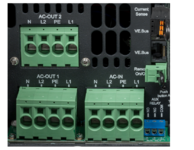
Never seen ferrules like this. What does the device look like that the wire is going into?
1726169412009.png


In a splice, sure. Under a screw terminal as the OP shows, solder is ABSOLUTELY NOT acceptable. The solder will cold flow under the screw, releasing the compression over time.
Not screw in. Some sort of spring loaded deal with a pressure release. Not a fan of this connection type.
As for the right size ferrules, again, you've got it wrong. You want a ferrule that's the same length as the wire strip length gauge. For that power inlet, it's probably 1/2". This $20 ferrule AND crimper kit has ferrules that are plenty long for the job. In most cases, I find myself trimming the ferrule length after crimping, because they're easy to cut back when they're too long.
I think I have it close, Victron specifies 3/4" stripped wire, which is 19 mm, so I'm 6 mm over. I'll trim, that's no problem.

As for crimping, bootlace ferrules do not require high pressure crimps that cold-flow the copper together inside into an oxygen sealed package. They don't work like a typical electrical crimp, so if you find yourself using regular crimping tools on them, I see your frustration. What you want is a 6-sided tool (my link is to a 4-jaw; more on that below) that crushes the ferrule into a tightly packed with copper dimpled square (or hex) that doesn't fall off the wire.
Thank you. Let me confirm that my crimping tools support this AWG and are 6-sided. I believe they do. Any objection to crimp AND solder?
 
OP
D

dcg9381

Well-known member
Joined
Jun 20, 2018
Messages
11,627
Location
Austin, TX
This. Ferrules are a metric thing. To get a perfect match to awg, you have to get specific ferrules and a different crimper
These fit perfectly for stranded AWG and I mean perfectly. I got one strand of wire that I had to re-work, but no problem. For $25/set, darn straight they should fit.

I need to open my tool box on crimpers, gotta see what's in there. This is a 30A input that I'm running 8AWG wire, less than 10 feet to the inverter.
 

PCustoms

Well-known member
Joined
Jul 23, 2011
Messages
22,191
Location
VT
Link to what terminals you bought?

These should be very cheap, $25/set sounds nuts
 
OP
D

dcg9381

Well-known member
Joined
Jun 20, 2018
Messages
11,627
Location
Austin, TX
Link to what terminals you bought?
Sure. 25mm, 6AWG:

Yea, I was off on that $35 per AWG shipped..

The issue is you can't get them in this length typically. This seems to be what the guys using stranded wire with Victron recommend if they aren't going to "hack it.
 

PCustoms

Well-known member
Joined
Jul 23, 2011
Messages
22,191
Location
VT
Sure. 25mm, 6AWG:

Yea, I was off on that $35 per AWG shipped..

That's a bag of 250pcs for $35....

You could have bought them individually for $0.74 or less from digikey.

Panduit F84-25-7
Weidmuller 9004150000
 

mm08822

Well-known member
Joined
Jan 13, 2012
Messages
5,839
Location
NJ
Ferrules are spec'd for wire guage and pin length. (also insulated, non-insulated, singles/duallies.)
The pin length is determined by the depth that the receiving component is spec'd for.
Then the conductor strip length is determined by the pin length.
 
OP
D

dcg9381

Well-known member
Joined
Jun 20, 2018
Messages
11,627
Location
Austin, TX
You could have bought them individually for $0.74 or less from digikey.

Panduit F84-25-7
Weidmuller 9004150000
Thanks.. couldn't find 25mm and appreciate the link. Not my bag of tea, but at least I have a bunch in 6-8AWG now.
 

mm08822

Well-known member
Joined
Jan 13, 2012
Messages
5,839
Location
NJ
side question... Anyone know a kit that supports 6AWG lol... not sure why all of the kits on amazon says 28-7awg and no body have one that specify 6 awg..

***its weird I was about to ask about the ferrule question ...
They are available at least up to 150mm2 = 300mcm. That crimper must be $$$$!!!
 

mike93lx

ALLIANCE MEMBER
Joined
Dec 9, 2013
Messages
37,334
Location
Richmond, VA
I can't imagine thinking that I need to reengineer something that a company as reputable as victron does day in and day out.

If they say bare wire, Its fine. If they say crimp, it's fine
 

Lorydr

Well-known member
Joined
Sep 10, 2015
Messages
637
Location
Piqua, oHIo
At my work we have ferrules from 24 awg up to 350 mcm. Anything 18awg and smaller gets crimped twice. All wires that are customer spec'd for ferrules are crimped with a proper size crimping tool before they are landed. Our hi-end customers would poop red clay if their wire had strands cut off. We avoid that as much as possible. A few strands here & there, and then.

My tip is when you strip the insulation off of the problem size wire, tightly wrap a simple rubber band from the insulation, about 2 turns towards the end of the wire. The strands will remain twisted nicely. Then as you insert the wire into a ferrule or lug, let go of the rubber band and the wire will keep it's shape as it's inserted. This works well for larger wires.

If our customers don't spec ferrules, we have a policy to always use a ferrule under ANY set screw type connection where the actual screw smashes into the wire. It's a good policy.
 

rlitman

Well-known member
Joined
Oct 18, 2010
Messages
24,576
Location
Long Island
...If our customers don't spec ferrules, we have a policy to always use a ferrule under ANY set screw type connection where the actual screw smashes into the wire. It's a good policy.
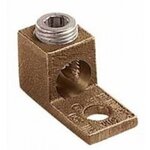
Pretty much agreed, though that only tends to matter on the smaller stuff, because of how the set screws normally work. On small stuff, the screw threads through a plate, and there's room (ideally not much) for strands to go around the screw, so ferrules truly save the day. On the larger terminals I regularly inspect (probably good for 350MCM), the 1/2" insert hex set screw threads are larger in ID than the cross-bore the wire goes into, so the sides of the wire hole slightly engage almost all the way under the balled end of the screw bottoms out. It's not a saddle connector like I show above, but more like this (note the visible partial threading all the way down):
PAND%20PNL-1.0-L.jpg
I still don't think I'd use something like that with fine stranded battery or welding cable without a ferrule, but a ferrule wouldn't help coarse stranded wire.
 
OP
D

dcg9381

Well-known member
Joined
Jun 20, 2018
Messages
11,627
Location
Austin, TX
I can't imagine thinking that I need to reengineer something that a company as reputable as victron does day in and day out.
I'm getting this from Victron's own documentation, as well as from people who have used this equipment with non-solid wire. I don't like "pressure plate" terminals, I prefer screw, technically these are "optional".

1726245001531.png

If they say bare wire, Its fine. If they say crimp, it's fine
It's stranded wire for the input, using 8 AWG from a marine-grade exterior connector.
I actually used ferrules on the screw down input connector, consistent pressure over the ferrule. Trying to decide if I'm a fan or not.

1726245139777.png
 

Lorydr

Well-known member
Joined
Sep 10, 2015
Messages
637
Location
Piqua, oHIo
Pretty much agreed, though that only tends to matter on the smaller stuff, because of how the set screws normally work. On small stuff, the screw threads through a plate, and there's room (ideally not much) for strands to go around the screw, so ferrules truly save the day. On the larger terminals I regularly inspect (probably good for 350MCM), the 1/2" insert hex set screw threads are larger in ID than the cross-bore the wire goes into, so the sides of the wire hole slightly engage almost all the way under the balled end of the screw bottoms out. It's not a saddle connector like I show above, but more like this (note the visible partial threading all the way down):
PAND%20PNL-1.0-L.jpg
I still don't think I'd use something like that with fine stranded battery or welding cable without a ferrule, but a ferrule wouldn't help coarse stranded wire.
We only use DLO finer strand wire hi-flex in the shop, except for a couple gauge sizes. So strands sneak out where they can. Ferrules keep them in check. There are so many machining burrs in those lugs that prevent strands from staying uniform.

There are many lugs that are just **** when the hex screw passes through the threads of the lug, and the hex screw is too short to get a proper torque on just a couple threads, and strips. Sorry, off track. The GJ way.
 
To avoid these ads, REGISTER NOW!
Top Bottom