
You are using an out of date browser. It may not display this or other websites correctly.
You should upgrade or use an alternative browser.
You should upgrade or use an alternative browser.
EMT - Manual?
- Thread starter yeldogt
- Start date
matt_i
Well-known member
The SLP acronymn escapes me...
Other than the conduit bender manual, I've not seen it. You have to think of it as a raceway thru which multiple circuits can be pulled rather than a "1 tube per device". So you can plan an EMT run as a "trunk line" more or less which goes to many devices and has tees for the switchgear.
Attach as many straight pieces as you can with 1 or 2 hole straps. Then have to start bending (offsets, 90s, saddles) to connect the boxes to the straight pieces. Thats probably oversimplifying it.
Other than the conduit bender manual, I've not seen it. You have to think of it as a raceway thru which multiple circuits can be pulled rather than a "1 tube per device". So you can plan an EMT run as a "trunk line" more or less which goes to many devices and has tees for the switchgear.
Attach as many straight pieces as you can with 1 or 2 hole straps. Then have to start bending (offsets, 90s, saddles) to connect the boxes to the straight pieces. Thats probably oversimplifying it.
ard
Well-known member
S**I**P perhaps?
youtube
google
?
youtube
?
kd3pc
Well-known member
everything you need to know is on the bender...where the start point is, and how much the bender takes up. I start at the panel and work outwards, others start at the first needed spot and head towards the panel, the important part is that you have a path scoped out and material to get there.
hangers and support as needed and code, level as I can get it.
the rest took 6 months of hands on as an apprentice.
hangers and support as needed and code, level as I can get it.
the rest took 6 months of hands on as an apprentice.
Sorry -- SIP . I keep doing that ...
Yes .. structural Insulated panels. The previous owner put the building up. Only has lights.
It was attached to the door end of a large garage. Naturally the sub-panel is in the far corner of the old garage. My plan was to run a feeder wire through the old garage and place another sub-panel on the far wall of the SIP. I want the normal amount of 110v an 22v outlets -- and it needs exterior lights and outlets.
Yes .. structural Insulated panels. The previous owner put the building up. Only has lights.
It was attached to the door end of a large garage. Naturally the sub-panel is in the far corner of the old garage. My plan was to run a feeder wire through the old garage and place another sub-panel on the far wall of the SIP. I want the normal amount of 110v an 22v outlets -- and it needs exterior lights and outlets.
Last edited:
kd3pc
Well-known member
You might scope out how the lights are run...often/sometimes there are chases in the SIPs to at least get from one end to the other on each side...
If you can get a manufacturer name or info from one of the SIPs, it would be worth a call to them to see what they included in their process, if anything.
Else EMT or MC or raceway/wiremold.
best of luck.
If you can get a manufacturer name or info from one of the SIPs, it would be worth a call to them to see what they included in their process, if anything.
Else EMT or MC or raceway/wiremold.
best of luck.
nsula_country
Well-known member
Conduit bender manufacture websites usually have a bending guide. That is all that is needed. Plus patience and a few extra joints for uh-ohs.
Its not rocket science.
When in a commercial environment (restaurants, stores, ect) look at the exposed conduits for ideas.
CT
Its not rocket science.
When in a commercial environment (restaurants, stores, ect) look at the exposed conduits for ideas.
CT
zmaxmotorsports
Well-known member
Jack benfield.
The building is about 20 years old -- it's just straight panels w drywall. No cuts or routings -- it's a utility building .... like working inside a cooler.
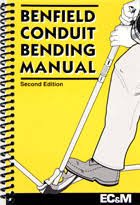
Have an old bender that I used a long time ago for some odd jobs -- I'm going to order the Benfield book. I remember bending had a learning curve.
I just don't know any of the codes -- how many bends . wires in conduit -- attachment.
Can you mount the box and just run pipe to the next box w/o bending it -- or do you have to bend it so it's flush against the wall?
Have an old bender that I used a long time ago for some odd jobs -- I'm going to order the Benfield book. I remember bending had a learning curve.
I just don't know any of the codes -- how many bends . wires in conduit -- attachment.
Can you mount the box and just run pipe to the next box w/o bending it -- or do you have to bend it so it's flush against the wall?
Last edited:
everything you need to know is on the bender...where the start point is, and how much the bender takes up. I start at the panel and work outwards, others start at the first needed spot and head towards the panel, the important part is that you have a path scoped out and material to get there.
hangers and support as needed and code, level as I can get it.
the rest took 6 months of hands on as an apprentice.
My plan was to get the panel placed and go from there -- Thanks.
zmaxmotorsports
Well-known member
malibu101
Well-known member
You can run it "straight".The building is about 20 years old -- it's just straight panels w drywall. No cuts or routings -- it's a utility building .... like working inside a cooler.
Have an old bender that I used a long time ago for some odd jobs -- I'm going to order the Benfield book. I remember bending had a learning curve.
I just don't know any of the codes -- how many bends . wires in conduit -- attachment.
Can you mount the box and just run pipe to the next box w/o bending it -- or do you have to bend it so it's flush against the wall?
Google minerallac strap. It will space the conduit so you don't need offsets at the boxes.
An example- https://www.google.com/search?q=min...=HzI7Wd2BOMPp-AH6xaDgBg#imgrc=arSzX5oNCqlITM:
And no more than 360 degrees of bends between pull points.
Jack benfield.
The father of emt.
I ordered it ... thanks,
You can run it "straight".
Google minerallac strap. It will space the conduit so you don't need offsets at the boxes.
An example- https://www.google.com/search? And ... any pipe (or wire) is suitable for a hanger.
You don't need no damn book. Let's start with 1/2" emt. If you look on the bender it'll list the deduct value. So 1/2" to the arrow is normally 5". 3/4" is normally 6", 1" is 8"
Let's start with a stub bend. Such as leaving a box and running upwards to the ceiling. Let's say that is 48". From the end of the pipe (where it connects to the box) you'll measure that 48" and if you are going to bend that end towards you you'll deduct 5" from the 48 (another words 43") place the arrow of the bender and bend it towards you.
Now if for some reason you need to bend the stub the opposite direction (where you are facing away from the stub) you only need to add 1/2 the amount of deduct which would be 2.5". Another words mark your 48" add 2.5". (50.5") and facing away from your stub bend it up.
If you need to do an offset always stick with 30 degree bends. The reason being its the easiest formula to remember. Let's say you need a 6" offset (center to center, so don't forget to add or subtract for the diameter of the pipe). Make a mark then double the distance of the offset make another mark. Another words, 12" apart. Keep your bender always facing the same direction. Bend to the 30 degree mark, then slide it to the next mark and roll the pipe 180 degrees and bend to the 30 degree mark.
Get a few pieces the practice with and always double check you studs so you'll understand where you're making mistakes. Also foot pressure is the key to not kinking the pipe.
Not go practice young sky walker and you'll be a master in no time flat.
Let's start with a stub bend. Such as leaving a box and running upwards to the ceiling. Let's say that is 48". From the end of the pipe (where it connects to the box) you'll measure that 48" and if you are going to bend that end towards you you'll deduct 5" from the 48 (another words 43") place the arrow of the bender and bend it towards you.
Now if for some reason you need to bend the stub the opposite direction (where you are facing away from the stub) you only need to add 1/2 the amount of deduct which would be 2.5". Another words mark your 48" add 2.5". (50.5") and facing away from your stub bend it up.
If you need to do an offset always stick with 30 degree bends. The reason being its the easiest formula to remember. Let's say you need a 6" offset (center to center, so don't forget to add or subtract for the diameter of the pipe). Make a mark then double the distance of the offset make another mark. Another words, 12" apart. Keep your bender always facing the same direction. Bend to the 30 degree mark, then slide it to the next mark and roll the pipe 180 degrees and bend to the 30 degree mark.
Get a few pieces the practice with and always double check you studs so you'll understand where you're making mistakes. Also foot pressure is the key to not kinking the pipe.
Not go practice young sky walker and you'll be a master in no time flat.
Last edited:
ard
Well-known member
Sounds like it isnt the bending of the EMT he is looking for a book...he wants to lay out the whole deal- how to design the whole thing.
This could turn into a 8 page thread here...
This could turn into a 8 page thread here...
Sounds like it isnt the bending of the EMT he is looking for a book...he wants to lay out the whole deal- how to design the whole thing.
This could turn into a 8 page thread here...
Maybe a bit of both???
BTW Y, no more than 360 degrees worth of bends between pulling points. Pulling points means junction boxes and conduit bodies. As far as fill, instead of us guessing at what you want to do. How about drawing out your lay out and what ampacity you need where (voltage too) and we can help you with the circuitry and conduit fill
Mmmmmaaaybe ard's is right, this will be 8 pages before its done.
Marctrees
Well-known member
I am going to add to matti's #2 post mental picture, and say it is like a tree.
Largest conduit w most wires exiting panel, then branching smaller as less wires needed, then to smallest branches, usually 1/2" to final locations.
You really need to get a code book, and read the chapter about running EMT.
Does not have to be a current $90 book, can even be a 20 yr old one, I do not believe that section has changed much.
May not be available online for free, may have to give an electrician a 12 pack to copy one of his old dust gathering books.
You will need to know maximum number of wires per conduit size, without having to wade through scores of tables in the code.
Wylie or someone can point you to that basic simple end result info.
Yes, it is true using the Minerallac standoff straps WAY faster than screwing around trying to make hand bent offsets when a weekend newbie.
Link below show how it stands pipe away from wall eliminating offsets into boxes.
AND much stronger than one hole straps.
Available at all big box home stores.
There are tricks like.. if you need a 90 a certain distance from a box, bend it overlength, than measure off a straightedge and hacksaw off excess.
Not for a pro, but for you a totally fine way to do it.
A whole new learning experience.
Will take... ahemm....... a bit longer than you think to do. Marc
Marc
https://www.zoro.com/value-brand-conduit-hanger-steel-34in-conduit-pk100-6xc38/i/G0580763/
Largest conduit w most wires exiting panel, then branching smaller as less wires needed, then to smallest branches, usually 1/2" to final locations.
You really need to get a code book, and read the chapter about running EMT.
Does not have to be a current $90 book, can even be a 20 yr old one, I do not believe that section has changed much.
May not be available online for free, may have to give an electrician a 12 pack to copy one of his old dust gathering books.
You will need to know maximum number of wires per conduit size, without having to wade through scores of tables in the code.
Wylie or someone can point you to that basic simple end result info.
Yes, it is true using the Minerallac standoff straps WAY faster than screwing around trying to make hand bent offsets when a weekend newbie.
Link below show how it stands pipe away from wall eliminating offsets into boxes.
AND much stronger than one hole straps.
Available at all big box home stores.
There are tricks like.. if you need a 90 a certain distance from a box, bend it overlength, than measure off a straightedge and hacksaw off excess.
Not for a pro, but for you a totally fine way to do it.
A whole new learning experience.
Will take... ahemm....... a bit longer than you think to do.
Marchttps://www.zoro.com/value-brand-conduit-hanger-steel-34in-conduit-pk100-6xc38/i/G0580763/
Last edited:
Marctrees
Well-known member
https://www.google.com/search?q=EMT...d=chrome&ie=UTF-8#q=EMT+conduit+work+++basics
AND...... "Images" for that link. Marc
AND...... "Images" for that link. Marc
Marctrees
Well-known member
You REALLY may want to consider using "Flexible Metallic Tubing".
Flex, or old trade term "Greenfield".
Just like EMT - different sizes, you pull in the conductors.
Will need more straps, some sagging here and there aesthetically, but WAY WAYYYY faster than EMT for a Newb. Marc
Flex, or old trade term "Greenfield".
Just like EMT - different sizes, you pull in the conductors.
Will need more straps, some sagging here and there aesthetically, but WAY WAYYYY faster than EMT for a Newb. Marc
Marctrees
Well-known member
One more comment - When you buy your square steel junction boxes, ALWAYS get the deepest ones, only the shallower for dead ends, and then still doesnt hurt to get the deepest ones.
And, for closer to the tree "root", rather than 4" sq boxes, buy the "4 11/16" bit bigger deep boxes.
In either case, you get appropriate one or two device "gang" "Mud rings".
ALSO - Do not use "Industrial covers", but rather regular stainless metal flat plates on devices mounted to the mud ring.
WAY more durable.
See, w the "Industrial cover", a duplex receptacle is ONLY supported by the central cover screw.
On the Mud ring option, receptacle strap fully bears, is firmly seated/ supported by the mud ring, then the central screw ONLY holds the cover on.
Very different, even though both are approved.
If you get to any point and have questions, we will help here.
We WILL be here, least I can promise it. Marc
And, for closer to the tree "root", rather than 4" sq boxes, buy the "4 11/16" bit bigger deep boxes.
In either case, you get appropriate one or two device "gang" "Mud rings".
ALSO - Do not use "Industrial covers", but rather regular stainless metal flat plates on devices mounted to the mud ring.
WAY more durable.
See, w the "Industrial cover", a duplex receptacle is ONLY supported by the central cover screw.
On the Mud ring option, receptacle strap fully bears, is firmly seated/ supported by the mud ring, then the central screw ONLY holds the cover on.
Very different, even though both are approved.
If you get to any point and have questions, we will help here.
We WILL be here, least I can promise it. Marc
Last edited:
Marctrees
Well-known member
LX - Good explanation, but for a newbie, I think it will make his head explode if not commit suicide.
Not at all cutting down what you said, just saying the learning curve here is not so simple.
Ya I know it's not quite rocket science, BUT, apprentices toss dozens of messed up sticks to the sub apprentice to salvage w a hacksaw, where I worked anyway.
. Marc
Not at all cutting down what you said, just saying the learning curve here is not so simple.
Ya I know it's not quite rocket science, BUT, apprentices toss dozens of messed up sticks to the sub apprentice to salvage w a hacksaw, where I worked anyway.
. Marc
Last edited:
LX - Good explanation, but for a newbie, I think it will make his head explode if not commit suicide.
Not at all cutting down what you said, just saying the learning curve here is not so simple.
Ya I know it's not quite rocket science, BUT, apprentices toss dozens of messed up sticks to the sub apprentice to salvage w a hacksaw, where I worked anyway.
. Marc
He said he'd done it before so we'll be using the riding a bicycle anology here.
alfredeneuman
Well-known member
ALSO - Do not use "Industrial covers", but rather regular stainless metal flat plates on devices mounted to the mud ring.
See, w the "Industrial cover", a duplex receptacle is ONLY supported by the central cover screw.
Marc
You'd be hard pressed to find any new industrial covers with only the central screw, because they are no longer produced.
All of them come with 3 holes, along with the mounting screws and hexnuts.
Marctrees
Well-known member
LX - I'll play nice and say - I worked as an Electrician full time in MN for about 18 yrs.
After trade school, at Dunwoody Institute, in Industrial maintenance and troubleshooting, not much "new" work" if so , in Rigid w a Power bender, in a North MN Taconite plant for 2 yrs, till the young guys were layed off in a very cyclical business.
Really wanted to live there , so waited for 1 1/2 yrs, then sold house and moved to Mpls. area.
Then for 3 residential contractors over 4 yrs, then my Master, then about 12 yrs self employed w partner from the Mine doing primarily res higher end remodel, for goofy people that would spend like 75K for a new kitchen back in late 80's into 90's.
Did occasional light commercial EMT work, but minimal.
Never got great at it.
Fishing "impossible" jobs in fancy finished homes was my specialty.
Then I left the trade and let my license go for whatever.
NOT because I was not good, other reasons.
I always loved adhering to the Code , AND thoroughly studying it.
But that all ended in around early - mid 90's.
Haven't purchased or cracked open a book since, not in the trade.
Ya, and still can ride a Bicycle, Thanks. Marc
After trade school, at Dunwoody Institute, in Industrial maintenance and troubleshooting, not much "new" work" if so , in Rigid w a Power bender, in a North MN Taconite plant for 2 yrs, till the young guys were layed off in a very cyclical business.
Really wanted to live there , so waited for 1 1/2 yrs, then sold house and moved to Mpls. area.
Then for 3 residential contractors over 4 yrs, then my Master, then about 12 yrs self employed w partner from the Mine doing primarily res higher end remodel, for goofy people that would spend like 75K for a new kitchen back in late 80's into 90's.
Did occasional light commercial EMT work, but minimal.
Never got great at it.
Fishing "impossible" jobs in fancy finished homes was my specialty.
Then I left the trade and let my license go for whatever.
NOT because I was not good, other reasons.
I always loved adhering to the Code , AND thoroughly studying it.
But that all ended in around early - mid 90's.
Haven't purchased or cracked open a book since, not in the trade.
Ya, and still can ride a Bicycle, Thanks. Marc
Last edited:
Marctrees
Well-known member
Alfred - read my above post, that will explain my ignorance of your info. Marc
zmaxmotorsports
Well-known member
Just say no to greenfield.You REALLY may want to consider using "Flexible Metallic Tubing".
Flex, or old trade term "Greenfield".
Just like EMT - different sizes, you pull in the conductors.
Will need more straps, some sagging here and there aesthetically, but WAY WAYYYY faster than EMT for a Newb. Marc
Nothing screams non skilled louder than green field for conduit or Trac pipe for running gas in my book.
Marctrees
Well-known member
zmax - I agree w you, but just trying to save OP from nervous breakdown.
specially if he attempts numerous hand bender done offsets as a newb.
And obviously, for his size of job, he's not gonna spend $600+ for 1/2 and 3/4 offset benders. Marc
specially if he attempts numerous hand bender done offsets as a newb.
And obviously, for his size of job, he's not gonna spend $600+ for 1/2 and 3/4 offset benders. Marc
Last edited:
Marctrees
Well-known member
And, he needs to learn how to use his Knee and /or nearby hard floor and his body for small corrections, but HOW does one explain that???? Marc
Last edited:
zmaxmotorsports
Well-known member
He can buy a lot of pipe to practice on for that kind of money.zmax - I agree w you, but just trying to save OP from nervous breakdown.
specially if he attempts numerous hand bender done offsets as a newb.
And obviously, for his size of job, he's not gonna spend $600+ for 1/2 and 3/4 offset benders. Marc
My step-dad is a retired electrician from GE and he always told me...
"Make the hole fit the conduit, don't make the conduit fit the hole."
Anybody else ever hear that before ?
"Make the hole fit the conduit, don't make the conduit fit the hole."
Anybody else ever hear that before ?
AffableCurmudgeon
Well-known member
Is there a source or manual available for installing EMT? -- most of what I have found is rather basic.
I'm going to wire my never wired SLP building that's going to be my new studio.
I think you may be overthinking it. Just map out the routes for emt, get emt and fittings and a bender. Make a few practice bends, plenty of articles and videos on how to do that.
Practice a bit on basic bends, you will be fine as long has you have thought out the layout.
Marctrees
Well-known member
If he starts w 3/4, then moves down to 1/2" as he moves away, it will be fine.
ONLY - UNLESS he has oddball large loads for a typical res shop, ...probably not the case.
Probably - worst he will have is compressor like true 5HP, and a welder.
So, not that complex, if a "regular" one or two worker shop.
Just talking here about pipe size, still need to bend all and assemble neatly and to Code. Marc
ONLY - UNLESS he has oddball large loads for a typical res shop, ...probably not the case.
Probably - worst he will have is compressor like true 5HP, and a welder.
So, not that complex, if a "regular" one or two worker shop.
Just talking here about pipe size, still need to bend all and assemble neatly and to Code. Marc
zmaxmotorsports
Well-known member
Some times that's not an option in the real world.My step-dad is a retired electrician from GE and he always told me...
"Make the hole fit the conduit, don't make the conduit fit the hole."
Anybody else ever hear that before ?
Well **** Marctres if we're checking the length of our swinging dicks here I got ya beat by a long shot in the electrical trade if that's all you've done. But what does that have to do with helping the OP in this instance?.
He said he had previous experience bending pipe and all I did was give him the reminders he needed.
He said he had previous experience bending pipe and all I did was give him the reminders he needed.
One more comment - When you buy your square steel junction boxes, ALWAYS get the deepest ones, only the shallower for dead ends, and then still doesnt hurt to get the deepest ones.
And, for closer to the tree "root", rather than 4" sq boxes, buy the "4 11/16" bit bigger deep boxes.
In either case, you get appropriate one or two device "gang" "Mud rings".
ALSO - Do not use "Industrial covers", but rather regular stainless metal flat plates on devices mounted to the mud ring.
WAY more durable.
See, w the "Industrial cover", a duplex receptacle is ONLY supported by the central cover screw.
On the Mud ring option, receptacle strap fully bears, is firmly seated/ supported by the mud ring, then the central screw ONLY holds the cover on.
Very different, even though both are approved.
If you get to any point and have questions, we will help here.
We WILL be here, least I can promise it. Marc
The raised covers have not had a single screw to mount them in decades, at least 2 screws are included in the package to properly mount each duplex receptacle, a ring & plate on a surface mount box looks like it was cobbled together with junk.
Marctrees
Well-known member
I tried to help the OP, but am apparently a Dinosaur.
I will back off, and allow the more currently educated to speak.
God Bless you all. Marc
I will back off, and allow the more currently educated to speak.
God Bless you all. Marc
Marctrees
Well-known member
Lx - Your ***** is qualified as longer than mine from now on.
A much better Man than myself.
I need to keep that in mind for future due respect.
Note to self - "Large ***** - LX". Marc
A much better Man than myself.
I need to keep that in mind for future due respect.
Note to self - "Large ***** - LX". Marc
Lx - Your ***** is qualified as longer than mine from now on.
A much better Man than myself.
I need to keep that in mind for future due respect.
Note to self - "Large ***** - LX". Marc
Well now that's a damn shame. They don't call me belly button for nothing.

Marc, for whatever reason you decided to toss out your qualifications at a point there was no need too. Well unless you honestly feel your the only sparky that cruises this board. You also took what was nothing more than friendly advice to the OP and turned it into something confrontational, and your reasoning for doing so was unjustified as the OP said he had bent pipe before. So unless there was some flaw in my instructions I can't for the life of me figure out why you made a big deal about it.
In 22 years of running my electrical contracting business I taught a hell of a lot of guys how to bend pipe, it sure ain't rocket science. You'll never see me argue or discuss residential construction on this board because it's not what I did as a tradesman. I'll be the first to admit I've roped a few homes, hung my share of ceiling fans too but it was not my trade. Now you wanna talk commercial, industrial or mission critical systems and after putting in over 30years in that arena and you'll get my interest.
Have a nice day

Thanks for the info -- I need to reread this thread again .. Twice
Do need to spend some time thinking about what I need. The 100amp panel in the older part has a few 220v outlets that I am using now. The old part is my wood/clay studio and the SIP is going to be for my cars/ metal .. I do have a small welder.
I have to run outside lighting and I need some exterior outlets -- remember this is a SIP building. My thought was a box on the inside -- drill to the outside and surface mount the electric (Midwest backyard power box) -- Guess it needs conduit through the wall? For the lights I'm going to have to cut into the shiplap siding and mount a recessed box.
Do need to spend some time thinking about what I need. The 100amp panel in the older part has a few 220v outlets that I am using now. The old part is my wood/clay studio and the SIP is going to be for my cars/ metal .. I do have a small welder.
I have to run outside lighting and I need some exterior outlets -- remember this is a SIP building. My thought was a box on the inside -- drill to the outside and surface mount the electric (Midwest backyard power box) -- Guess it needs conduit through the wall? For the lights I'm going to have to cut into the shiplap siding and mount a recessed box.
Last edited: