To avoid these ads, REGISTER NOW!

EMT surface mount outlet plan

To avoid these ads, REGISTER NOW!
OP
G

GirlnAgarage

Well-known member
Joined
Jan 21, 2011
Messages
4,668
Location
Texas
Got started today. I do have a question though about the ceiling outlet setup.

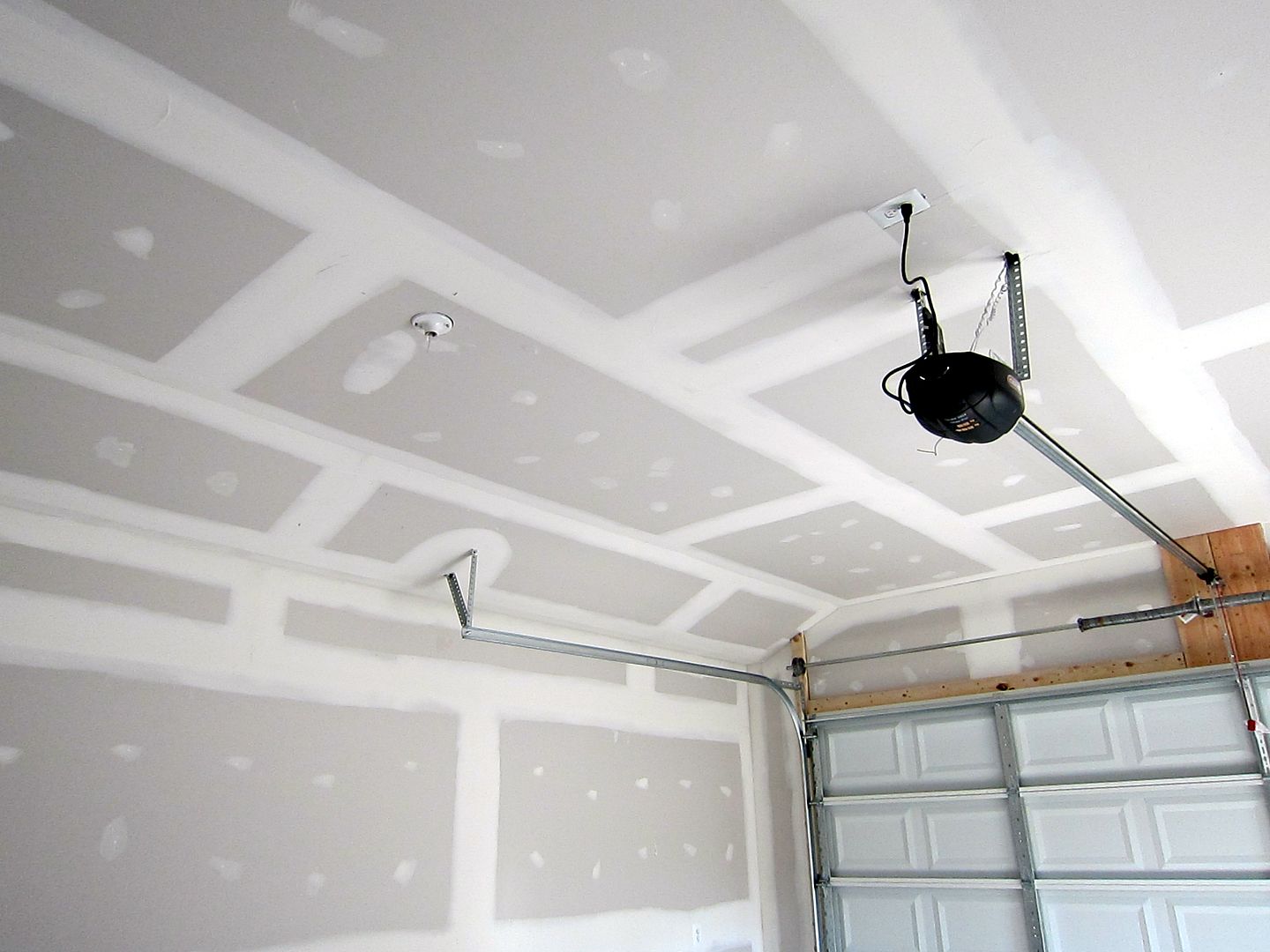
Is this setup going to be a problem? Wasn't quiet sure how to tackle that without room to mount a 4x4 box. I put a 4x2x1-7/8 instead. Without the mud ring the gaps in the sheetrock to gang box is very noticeable.

ceilingoutlet3.jpg


If this won't work, what are my alternatives?
 

klhitman

Well-known member
Joined
Sep 17, 2010
Messages
1,016
Location
pewee valley
Got started today. I do have a question though about the ceiling outlet setup.

Is this setup going to be a problem? Wasn't quiet sure how to tackle that without room to mount a 4x4 box. I put a 4x2x1-7/8 instead. Without the mud ring the gaps in the sheetrock to gang box is very noticeable.

ceilingoutlet3.jpg


If this won't work, what are my alternatives?

i have never seen anything like that
 
OP
G

GirlnAgarage

Well-known member
Joined
Jan 21, 2011
Messages
4,668
Location
Texas
i have never seen anything like that

Yea, not really certain what I need to do or can do here with that outlet location. Next thing that comes to mind is moving to the side to have enough room to mount the 4x4 box. Cut a hole big enough to pull the incoming wires through and start from there. Patch the original outlet or put a cover plate.

Actually that doesn't sound half bad. It'll look better too.
 

71flh

Banned
Joined
Jun 15, 2011
Messages
379
X2! That's pretty ugly. (Response to post 43)

From th elooks of things, I'd guess there's a bit-o-romex sticking out of a garage ceiling by a garage door opener.

Get a 4x4 metal box, use a box clamp for the romex in from the ceiling. and come out w/ plain 1/2 EMT fittings where the weird fittings are on the 2x4 box in the pic.

Or, since a garage is almost always accessible, do the wiring more correctly and inconspicuously as usual in a residential setting...
 
OP
G

GirlnAgarage

Well-known member
Joined
Jan 21, 2011
Messages
4,668
Location
Texas
X2! That's pretty ugly. (Response to post 43)

From th elooks of things, I'd guess there's a bit-o-romex sticking out of a garage ceiling by a garage door opener.

Get a 4x4 metal box, use a box clamp for the romex in from the ceiling. and come out w/ plain 1/2 EMT fittings where the weird fittings are on the 2x4 box in the pic.

Or, since a garage is almost always accessible, do the wiring more correctly and inconspicuously as usual in a residential setting...


Yup a 4x4 was the original plan but it won't fit. Here's the 4x4 mud ring.

ceilingoutlet5.jpg


Here's the 4x2. That gap is what concerns me.
ceilingoutlet4.jpg


I'll be keeping the 'weird fittings'. They're the offset couplings to hold the conduit against the surface.
 
Last edited:

machine_punk

Well-known member
Joined
May 14, 2011
Messages
2,540
Location
Napa Valley, California
Based on the pictures, it looks like you could take a pair of vice grips and bend the lip of that garage door hangar (the one across the ceiling, the one 'in the way,') OUT of your way. If anything, bending down the lip would stiffen that piece across the ceiling (making it a 'C' channel, instead of an "L"). I would just start bending it from the center of where it is covering the box, then move out, one vice-grip-pliers-jaw-width at a time, until it is out of the way.

View media item 15079
The more-complex, and probably 'right' way to get that out of your way is to get a couple of more pieces of that L Brace (available at Home Depot...near the EMT and strut), or, even better, a couple of pieces of strut (see my recent posts, about mounting the Reconfigurable Tool Rack), about 24" long...

Use those 24" pieces of strut to go the OTHER way on both ends and support the weight of the garage door opener on 4 joists, instead of two, leaving the space between that joist free for the quad box, or whatever you need.
View media item 15078
On another note, I don't see any reason the quad box below the ceiling (what you have as a double, metal box now) has to be 'centered' on the quad box below. There are lotsa different knock-outs on those boxes--and as long as the box below the ceiling is securely mounted, I don't see why it has be centered.

I hope this helps. I am definitely looking forward to seeing the progress on this project...this is something my garage desperately needs.

M_P
 
Last edited:
OP
G

GirlnAgarage

Well-known member
Joined
Jan 21, 2011
Messages
4,668
Location
Texas
The more-complex, and probably 'right' way to get that out of your way is to get a couple of more pieces of that L Brace (available at Home Depot...near the EMT and strut), or, even better, a couple of pieces of strut (see my recent posts, about mounting the Reconfigurable Tool Rack), about 24" long...

Use those 24" pieces of strut to go the OTHER way on both ends and support the weight of the garage door opener on 4 joists, instead of two, leaving the space between that joist free for the quad box, or whatever you need.


This might be the cleaner way to go. That brace is already bent all over the place. It seems like an after thought. We think the POs of the house did get up into the garage ceiling for some plumbing issues (forcing temporary removal of the gdoor motor and track mounts on the side. That's ugly too). The mud/seam on the ceiling drywall looks terrible. Put two and two together, you know?

Is dropping that motor from the supports as easy as unbolting it from the old and rebolting to the new? It won't mess with the door tension or anything will it?

On another note, I don't see any reason the quad box below the ceiling (what you have as a double, metal box now) has to be 'centered' on the quad box below. There are lotsa different knock-outs on those boxes--and as long as the box below the ceiling is securely mounted, I don't see why it has be centered.
M_P

With what I'm. working with now, I don't have access to the stud (covered by the angle bracket of the gdoor. I'm forced to rely on the existing box as the mounting point for the new box.


That bracket is the root of the problem. If I get it out of the way I can put the 4x4 box in like I want. Initially I didn't want to mess with it (seems when I start one project I have to fix something else before I can work on the original project). But in order to have a tidy, non attention getting outlet, it'll have to be done.

I feel better about the outlet already. Appreciate the input. I don't like what I had.
 

machine_punk

Well-known member
Joined
May 14, 2011
Messages
2,540
Location
Napa Valley, California
I put more pics of my ideas above...see previous post again.

You don't have to 'drop' that motor all the way...even the garage door installers put them on the top of a six-foot ladder, when they want them near the ceiling for the install. Use the ladder the brace the weight of the motor while you work on the ceiling.

There is no reason you couldn't have your new pieces in place BEFORE you drop the motor (then switch one leg at a time). Back the new mounting points up directly behind the current points (the L bracket facing the other way, with the L-that-sticks-up backed right up to each other, or very close.

Using the top of the ladder, with blocks and other items, you could let the motor drop just a couple of inches and I don't believe that would bother anything. I have installed a couple of garage door openers in my life, and seen a couple of others installed. It's been a while, but I don't remember anything in particular that would be messed up (the 'tension' stays the same...same distance between motor and sprocket, as long as you don't detach the motor from the track).

Even I would probably want an extra pair of hands around while trying this, though. Be careful.
 
Last edited:

machine_punk

Well-known member
Joined
May 14, 2011
Messages
2,540
Location
Napa Valley, California
That brace is already bent all over the place. It seems like an after thought. We think the POs of the house did get up into the garage ceiling for some plumbing issues

The part that makes me think that brace was put up by an amateur is that there is no 'triangulation.' If you are going to change the brace anyway, I'd seriously consider forming a couple of triangles in the process. (I'll be at work tomorrow, but I'll try to get a pic of my garage door opener install (professionally done about 4 years ago).

- one of the triangles should resist 'side to side' load. With the way you are planning to solve your previous problem, that will be easy. Just add a diagonal piece on one side of the new brace.

- one of the triangles should resist 'front to back' load (force in the same direction as the garage door opener track). Build a triangle of brace material in that direction (you may have to install another between-the-joist brace, about a foot backwards or forwards from the current brace, to accomplish this) You will end up with a much more solid garage door install (you may even have to readjust the end point on the downward cycle...if your garage door opener moves now at all at the end of the closing cycle.
 
OP
G

GirlnAgarage

Well-known member
Joined
Jan 21, 2011
Messages
4,668
Location
Texas
Yeah, I noticed that too. The vertical piece of angle just hangs off the ceiling mounted piece. It was pulled and curved and bent every which way to get it just long enough to fit together. Its no wonder or door jams and rattles. I could use pics of proper triangulation. But that can wait until the morning. I better get some rest or I'll be useless tomorrow. Appreciate the help :)
 

PRH44

Well-known member
Joined
Dec 25, 2009
Messages
563
Location
Indiana
GirlnAgarage I do give you an "A" for creativity on your original configuration.
Stay after it !:thumbup:
 
OP
G

GirlnAgarage

Well-known member
Joined
Jan 21, 2011
Messages
4,668
Location
Texas
GirlnAgarage I do give you an "A" for creativity on your original configuration.
Stay after it !:thumbup:


Thanks. Ended up moving the box over so I could put it on the stud. I left the gdoor mounts alone for the time being. Got there in a round about way, but got there.


The rest of my progress on the outlets I'll be putting in my garage thread. I appreciate all the help yall :beer: Hitting a hot shower now. My body is unhappy with me standing on a ladder while working overhead.
 

Charles (in GA)

Well-known member
Joined
Jan 11, 2006
Messages
12,489
Location
50 mi south of Atlanta
The quality of a wire mold receptacle in a strip is nothing to compare with the quality of a good name brand receptacle. I have had the wire mold strips before and the contacts in the receptacles wore out real quick, and they have cheesy crimps where the wire attaches to the back of each receptacle.

EDIT: I was typing while you were posting, I see you moved the ceiling box.... wasn't sure if you had access to the top side or not (second floor or attic)

Actually, I kinda liked the original ceiling box setup that was shown. The flat 4x4 mudring covered all the excess opening and would have been about invisible if painted to match the ceiling, and you have a good amount of box to make the wire junctions in.

My suggestion was only slightly different, take the flat 4x4 mud ring with the single box opening, the one in the pics, and screw and lock nut it to the back of a 4x4 extension box (put the screw heads on the back, locknuts in the box, so only the screw heads protrude on the back). Screw this to the box in the ceiling. It would not hurt to overlap the edge of the door opener mounting angle, or you could trim it slightly to make the box lay flat.

My reasoning for the larger 4x4 box is working room for the wires that have to pass out the conduits on each side and still have room for the receptacle protruding inside.

You are not altering any parts, just a little creative in the way you put them together. After it is covered with the cover and receptacle, no one will ever know what the box or hole above it looks like.

Then put a single receptacle cover on it. You do not want a GFCI receptacle in the ceiling, if it trips, you need a ladder to reset it. If everything has to be GFCI just install a GFCI breaker. If the opener does not need to be GFCI, then use two GFCI receptacles, one on each wall at the "T" box.

Charles
 
Last edited:

machine_punk

Well-known member
Joined
May 14, 2011
Messages
2,540
Location
Napa Valley, California
I figured you would be past this before I got the pictures, but here they are, anyway, in case you decide to bolster the garage door opener mount eventually...

This was a professional installation (i.e. I paid a garage door company to install it, along with the new, insulated, multi-panel door. I've done this before myself, but the install price of $100 for the door and the opener together was too good to pass up. Here is the side-to-side triangulation on the garage door opener mount...)
View media item 15111
From the opposite (garage door end) direction. Please don't mind my temporary air line crossing the door opener. I plan to install copper pipe, once that hits the top of the priority list...)
View media item 15112
A view from the side...
View media item 15112
And a view looking down the opener arm, for good measure...
View media item 15113
Sounds like you are doing great at figuring out other options 'on the fly.' I was just about to suggest to you last night, "So, why don't you just move the box next to a convenient joist, if it's in the wrong place?" But that brings its own side project, fixing the drywall.

I want to encourage you in how well you are doing. Most of us with the use of both arms would struggle with some of the projects you take on. I keep thinking to myself, "How did she do that, single-handedly?" Of course, I just have to look at my own work, where I'd like to have 3 or 4 hands to do certain things...you make fixtures and brackets and figure out ways to hold things still, while you work on them with however many hands you have available at the time. You are an encouragement to us all! Keep up the great work! We are all watching and interested in seeing what you are going to do next.
 
Last edited:

JimVonBaden

Well-known member
Joined
Dec 2, 2011
Messages
15,716
Location
Northern Virginia
Wow, you guys made me look at my garage door opener, just installed. Crappy install now that I think about it, especially since it is now entombed with drywall.

GaragedoneinteriorDWdone3.jpg


I'm going to have to do something about this too.

Thanks,

Jim :cool:
 
OP
G

GirlnAgarage

Well-known member
Joined
Jan 21, 2011
Messages
4,668
Location
Texas
MP, I appreciate the pictures, they help. The gdoor will need some attention soon anyway. I'll get this electrical out of the way and then work on the door another day. DH mentioned another issue with it he wants to fix so it needs its own day.

Stuart, yes I'll have to use my step stool to reset the outlet if it trips. This might be the only time I'm glad my ceiling is an 8' :eek: The impression I got from reading prior to starting the work was that once I got into any old work I'd have to bring it up to current requirements. Since all outlets in the garage are now required to be GFCI, the outlet I was tapping off did need to be upgraded to GFCI. Also, the outlet was rated at 15A :shocking: After a brief panic attack I took my dial calipers to the bare wire (afraid I'd find they left 14ga in there and stupidly dropped a 20A breaker on the panel). Much to my relief the wire measured out at .080" which is 12ga according to online charts. Still think I had a mini heart attack though :Twitch:


Gosh, what's frustrating is I did my homework. I planned. I measured. I calculated. I pulled a permit. I'm going by the book. Yet the project is not as smooth as it should be. There are things hiding in the walls just waiting to derail me. I'm trying to do everything right but seems like everything goes wrong. That's so deflating. Anyway, that's my pity party for the day. I'm over it now. I'll be out there running conduit and boxes once my jeans get out of the dryer. Someone didn't do her laundry over the weekend :bitchslap
 
OP
G

GirlnAgarage

Well-known member
Joined
Jan 21, 2011
Messages
4,668
Location
Texas
Quick question - I bought a pack of ground wire pigtails (since they came with screws and I needed screws anyway) but I just noticed the wire is 12ga stranded. Can I used 12ga stranded or do I need to go to a solid wire?
 

Charles (in GA)

Well-known member
Joined
Jan 11, 2006
Messages
12,489
Location
50 mi south of Atlanta
Quick question - I bought a pack of ground wire pigtails (since they came with screws and I needed screws anyway) but I just noticed the wire is 12ga stranded. Can I used 12ga stranded or do I need to go to a solid wire?

I assume they have ends crimped on them anyhow. There is no issue with using stranded wire. These are made stranded to allow for more flex when stuffing everything in the box to put the face on.

Charles
 
To avoid these ads, REGISTER NOW!
OP
G

GirlnAgarage

Well-known member
Joined
Jan 21, 2011
Messages
4,668
Location
Texas
I assume they have ends crimped on them anyhow. There is no issue with using stranded wire. These are made stranded to allow for more flex when stuffing everything in the box to put the face on.

Charles

Yes, ends are crimped to a "U" shaped connector
 

Charles (in GA)

Well-known member
Joined
Jan 11, 2006
Messages
12,489
Location
50 mi south of Atlanta
Also, the outlet was rated at 15A :shocking: After a brief panic attack I took my dial calipers to the bare wire (afraid I'd find they left 14ga in there and stupidly dropped a 20A breaker on the panel). Much to my relief the wire measured out at .080" which is 12ga according to online charts. Still think I had a mini heart attack though

A standard duplex receptacle is considered TWO receptacles. Code says that if there is more than one receptacle, then the use of 15 amp rated receptacles on 12 gauge wire/20 amp breaker is legal.

If you take a good quality receptacle, such as a Leviton Pro Grade, and peer into the slots of a 15 amp and a 20 amp, you will see that the exact same contacts are installed inside, just that one the 15 amp, part of the contact (for the horizontal blade of the 20 amp plug) is covered by the plastic. Which tells me that the manufacturer used the exact same innards, with a different face plate.

Charles
 
OP
G

GirlnAgarage

Well-known member
Joined
Jan 21, 2011
Messages
4,668
Location
Texas
Instead of using the ground pigtails looped the ground wire around the box screw then led it out to the receptacle ground screw. Is that an acceptable method?

endreceptacle.jpg


Also, getting ready to wire the double outlet box. I've looked at my books but I don't get the exact diagram I need. How would I do this?

Edit: My plan is to twist each set of wires together (white to whites, blacks to blacks) and twist them up the respective pigtail off each receptacle. That gives me 5 wires in the twist cap, the maximum. I'm a little stumped on the ground wire though. If I use the same method I'll have 6 wires (a pigtail to the boxscrew is the 6th). So, I need to find a way to use one ground wire twice....oh, wait, think I just got it. I'll strip one down, twist around the box screw then take the end up to the twist cap. That keeps the wires in the cap to 5.


doubleduplex.jpg
 
Last edited:
OP
G

GirlnAgarage

Well-known member
Joined
Jan 21, 2011
Messages
4,668
Location
Texas
Also, how do I need to present for inspection? Do I leave the box covers on? Off?

Edit: got info that I'll wire everything up and leave the cover off so the inspector can check the wire job (GFCI and polarity). Also have the cover there to show I have a cover.
 
Last edited:

MoonRise

Well-known member
Joined
Nov 5, 2010
Messages
4,028
Location
NJ
Electrical inspection is usually done in two stages/steps: rough-in and final.

Rough-in is wires into box and from panel but no devices in box. Inspector can thus check for the clamps and overall 'workmanship'.

Final is outlets/devices in place and covers on. Inspector may or may not pull a cover off (or ask you to do so).

YMMV, depending on the inspector and local 'customs'. Just ask the inspector how they want it done.

IIRC, now the "neutrals" (white wire in a standard US 120V system) have to be "continuous" and not rely on continuity through a device (outlet, switch, whatever) or 'pass-thru' a device. Thus the neutral wires all get wire-nutted together and pigtails go to the devices (outlet, switch, whatever). So if you have a box with one outlet in it and said outlet is in the middle of a circuit run, you have

white-in + white-out + white-pigtail-to-outlet (three wires in the wire nut)

If the outlet is the end-of-the-line in the circuit, then just white-in goes right to the outlet (no white-out wire and no pigtail needed).

Same with the hots (black/red wires).

For switches, you aren't switching the neutral (or you better not be!), so just wire-nut all the white wires together in the box.

(used to be, you could use the multiple connector 'spots' on a typical duplex outlet for feeding and connecting ins-n-outs. Way less wire nuts needed that way. Except if a device (outlet) went bad or was removed and the neutral wire previously used the device as the connection/pass-thru, you then had an "open neutral" and BadThings could happen. Hence the wiring method change IIRC.)
 

Charles (in GA)

Well-known member
Joined
Jan 11, 2006
Messages
12,489
Location
50 mi south of Atlanta
IIRC, now the "neutrals" (white wire in a standard US 120V system) have to be "continuous" and not rely on continuity through a device (outlet, switch, whatever) or 'pass-thru' a device. Thus the neutral wires all get wire-nutted together and pigtails go to the devices (outlet, switch, whatever).

While I agree that this is better, it is not required by NEC, except for Multi Wire Branch Circuits, which this is not.

Charles
 

Charles (in GA)

Well-known member
Joined
Jan 11, 2006
Messages
12,489
Location
50 mi south of Atlanta
Instead of using the ground pigtails looped the ground wire around the box screw then led it out to the receptacle ground screw. Is that an acceptable method?

Thats what I do most of the time. Sometimes I combine all the grounds under a greenie wire nut and leave one passing out thru the hole in the greenie.

You can have multiple ground jumpers if needed, from each receptacle to the box. Those holes in the sides of the box, they thread nicely for 10-32. I even found one of these (six in one tapping tool) at the flea market (new) to make it easier.

627-20_ICON.JPG


Charles
 
OP
G

GirlnAgarage

Well-known member
Joined
Jan 21, 2011
Messages
4,668
Location
Texas
Thanks yall. Got the GFCI outlet done and buttoned up. I decided to tackle that first. Tomorrow I'll connect the last two boxes. Have the pigtails on the receptacles so they're ready to rock.

Ok, having dinner with hubby. A few margaritas and I'm out...from posting electrical updates for the evening.
 
OP
G

GirlnAgarage

Well-known member
Joined
Jan 21, 2011
Messages
4,668
Location
Texas
This afternoon I wrapped it all up. Got power on and the GFCI tested out good. I'll be calling the inspector tomorrow to schedule my inspection.

Thank yall for the guidance.
 

tool_enthusiast

Well-known member
Joined
Mar 1, 2011
Messages
138
Thats what I do most of the time. Sometimes I combine all the grounds under a greenie wire nut and leave one passing out thru the hole in the greenie.

You can have multiple ground jumpers if needed, from each receptacle to the box. Those holes in the sides of the box, they thread nicely for 10-32. I even found one of these (six in one tapping tool) at the flea market (new) to make it easier.

627-20_ICON.JPG


Charles

Hey Charles, thanks for posting great info; it's been very informative. I have a couple of questions that come to mind. If a GFCI outlet is installed properly, is there really a need to be so stringent on the grounding since GFCI is supposed to protect you anyway? Or is it because in case the GFCI fails, you need ground protection as backup? Also, do you really need to ground each receptacle to the box (i.e. wire attached from the green nut on the receptacle to another green nut on the metal box)? The receptacle is already screwed into the box cover, which activates the ground. I opened up one of the boxes in my garage and found no ground wire (just black and white), yet the ground prong works due to receptacle being screwed into the box. This box was installed by a contractor back in 2003, so was just wondering if NEC code permits this. If not, I'll simply attach some ground wire just to be safe.

Thanks.
 

Gregishome

Well-known member
Joined
Dec 29, 2011
Messages
811
Hey Charles, thanks for posting great info; it's been very informative. I have a couple of questions that come to mind. If a GFCI outlet is installed properly, is there really a need to be so stringent on the grounding since GFCI is supposed to protect you anyway? Or is it because in case the GFCI fails, you need ground protection as backup? Also, do you really need to ground each receptacle to the box (i.e. wire attached from the green nut on the receptacle to another green nut on the metal box)? The receptacle is already screwed into the box cover, which activates the ground. I opened up one of the boxes in my garage and found no ground wire (just black and white), yet the ground prong works due to receptacle being screwed into the box. This box was installed by a contractor back in 2003, so was just wondering if NEC code permits this. If not, I'll simply attach some ground wire just to be safe.

Thanks.


BUMP for Charles ! :)
 
OP
G

GirlnAgarage

Well-known member
Joined
Jan 21, 2011
Messages
4,668
Location
Texas
Hey Charles, thanks for posting great info; it's been very informative. I have a couple of questions that come to mind. If a GFCI outlet is installed properly, is there really a need to be so stringent on the grounding since GFCI is supposed to protect you anyway? Or is it because in case the GFCI fails, you need ground protection as backup? Also, do you really need to ground each receptacle to the box (i.e. wire attached from the green nut on the receptacle to another green nut on the metal box)? The receptacle is already screwed into the box cover, which activates the ground. I opened up one of the boxes in my garage and found no ground wire (just black and white), yet the ground prong works due to receptacle being screwed into the box. This box was installed by a contractor back in 2003, so was just wondering if NEC code permits this. If not, I'll simply attach some ground wire just to be safe.

Thanks.


I'm wondering if it has anything to do with the ability/need to ground outlets downstream of the GFCI?

Anyway, I'm curious too.
 

rabidsquirrel

Well-known member
Joined
Jul 17, 2010
Messages
397
Location
SE Pennsylvania
If you use a self grounding outlet, a metal box and tile ring and the box is grounded, you do not need to take a ground wire to the receptacle. It has nothing to do with the GFCI.
 

Charles (in GA)

Well-known member
Joined
Jan 11, 2006
Messages
12,489
Location
50 mi south of Atlanta
BUMP for Charles ! :)

Missed this earlier......................

My reading of the code is not the same as some people (and I'm not a professional electrician) but many people will tell you that you must have a grounding jumper from the receptacle to the box, even on those metal face plate, 4x4 box setups like GnG used. In most of my installations, I ran the ground wire to the receptacle, and do not have a jumper to the box. the receptacles have a little clip on on one of the mounting screws that is an approved bonding when everything is installed, and I figure the conduit is grounded also.

You can buy packs of the ground jumpers with the U terminal ends crimped on them, and you can always tap extra holes in the box to put ground screws in.

As far at the GFCI, it doesn't use the ground for anything so it will function without a ground at all. Code allows them to be used in two wire systems without a ground and labeled "no ground".

Charles
 
OP
G

GirlnAgarage

Well-known member
Joined
Jan 21, 2011
Messages
4,668
Location
Texas
How would the box/conduit be grounded if it is added on the surface of the walls? (assuming it's a two wire system from the panel?).
 

tool_enthusiast

Well-known member
Joined
Mar 1, 2011
Messages
138
How would the box/conduit be grounded if it is added on the surface of the walls? (assuming it's a two wire system from the panel?).

It depends on how you started this conduit run. When you added the metal box at the ceiling, did you make a ground connection to the box? If you did, and the conduit run was properly inter-connected with the right fittings, then the entire conduit run should be grounded. Did you test for ground after the install?

Or if at any of the outlet boxes downstream, you connected a jumper from the receptacle to the box (which is connected to the conduit run), it will serve as a path to ground for the conduit.
 
Last edited:
To avoid these ads, REGISTER NOW!
Top Bottom