To avoid these ads, REGISTER NOW!

Epoxy Floor - Best Approach

Amanos

New member
Joined
May 9, 2021
Messages
2
Location
Minnesota
Hey everyone.

Our garage floor is pretty evenly pitted throughout the entire surface. I like the look of the epoxy flooring options.

I am still in the research phase of the project, but what is the best way to approach this pitting prior to applying epoxy?

- Should I use a concrete resurfacing product to resurface the floor prior to the epoxy coat, followed by some grinding to smooth the surface over? Is that typically the best approach?

- Instead, could I just rent a grinder and smooth the existing pitting over with that? My only fear is that a lot of the pits are ~1/8" deep so I would need to take off quite a bit of material.

- I assume that this pitting would show through if I applied the epoxy coat directly.

What is the best approach to get the floor ready for an epoxy coat?
 
To avoid these ads, REGISTER NOW!
OP
A

Amanos

New member
Joined
May 9, 2021
Messages
2
Location
Minnesota
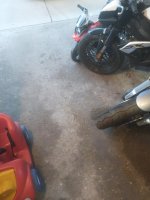
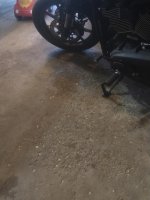
Here are a few images. Sorry they are a bit dark, I was losing daylight. Tried to show the pitting that is present on most of the floor.

Assuming I can't epoxy over it as is, and it is pretty deep to grind off.

Would a concrete resurfacing option be my best bet?

In the end I would like to put an epoxy finish over it.
 

Attachments

  • IMG_20210509_200330816.jpg
    IMG_20210509_200330816.jpg
    125.4 KB · Views: 83
  • IMG_20210509_200339031.jpg
    IMG_20210509_200339031.jpg
    77.6 KB · Views: 67
  • IMG_20210509_200354000.jpg
    IMG_20210509_200354000.jpg
    71.9 KB · Views: 64

benwah

Well-known member
Joined
May 21, 2014
Messages
985
Location
Lakewood, Colorado
Amanos,

This is what I would recommend for a proper fix.

- THOROUGHLY degrease (by mechanical abrasion) floor, wet vac and dispose of waste.

- Shotblast floor to an icri-csp 3 or 4.

- Fill joints and cracks with 100% solids epoxy and sand.

- Trowel on 100% solids oil stop epoxy slurry @ ~100 sq ft / gal, with 60-80 mesh silica sand. (This coverage rate could really be 80-150 sq ft / gal depending on how much surface area the actual pitting occurs.) Mix ratio 2.5 parts epoxy to 1 part sand - or 5 quarts of sand per 3 gallon batch. Pour onto floor immediately after mixing. I'd recommend spiked shoes, a 24" rigid rubber squeegee, and apply with a pulling method, rather than pushing.

Epoxy and sand slurry should fill the low spots and self-level. If any low spots are noticable during application, address those areas with a little extra product. I like to keep a margin trowel in my back pocket for this.

- Grind slurry grout coat 24 hours later to an even-ish consistancy.

- Apply 100% solids epoxy prime coat @ ~150 sq ft / gallon with squeegee. Backroll.

~ Apply second light gray pigmented 100% solids body epoxy coat @ 80 sq ft /gallon. You could probably get away with 100, but I like 80 better. The thicker the coat the more self-leveling properties and impact resistance you'll have, so keep that in mind.

- Here I'd like to give the floor a scuff, but if not doable, Apply 1-2 coats of gray polyurethane, polyurea, or polyaspartic, with the first coat being inside the epoxy recoat window. I like to scuff in between poly coats, but if not doable adhere to recoat windows. If slip resistance is required, mix in to your final coat.

Seems like a lot, and it is. You may ask yourself why I recommend an epoxy slurry coat rather then a cementitious skim coat to fill voids and level out the floor. The reasoning is because the epoxy is going to be much stronger due to the sand aggregate and bond better with the lower viscosity oil stop primer. Also, we are keeping the process simple, and not mixing in different unnecessary products.
 
To avoid these ads, REGISTER NOW!

Garage Flooring

ALLIANCE MEMBER
Joined
May 21, 2011
Messages
5,288
Location
Grand Junction, CO
Amanos,

This is what I would recommend for a proper fix.

- THOROUGHLY degrease (by mechanical abrasion) floor, wet vac and dispose of waste.

- Shotblast floor to an icri-csp 3 or 4.

- Fill joints and cracks with 100% solids epoxy and sand.

- Trowel on 100% solids oil stop epoxy slurry @ ~100 sq ft / gal, with 60-80 mesh silica sand. (This coverage rate could really be 80-150 sq ft / gal depending on how much surface area the actual pitting occurs.) Mix ratio 2.5 parts epoxy to 1 part sand - or 5 quarts of sand per 3 gallon batch. Pour onto floor immediately after mixing. I'd recommend spiked shoes, a 24" rigid rubber squeegee, and apply with a pulling method, rather than pushing.

Epoxy and sand slurry should fill the low spots and self-level. If any low spots are noticable during application, address those areas with a little extra product. I like to keep a margin trowel in my back pocket for this.

- Grind slurry grout coat 24 hours later to an even-ish consistancy.

- Apply 100% solids epoxy prime coat @ ~150 sq ft / gallon with squeegee. Backroll.

~ Apply second light gray pigmented 100% solids body epoxy coat @ 80 sq ft /gallon. You could probably get away with 100, but I like 80 better. The thicker the coat the more self-leveling properties and impact resistance you'll have, so keep that in mind.

- Here I'd like to give the floor a scuff, but if not doable, Apply 1-2 coats of gray polyurethane, polyurea, or polyaspartic, with the first coat being inside the epoxy recoat window. I like to scuff in between poly coats, but if not doable adhere to recoat windows. If slip resistance is required, mix in to your final coat.

Seems like a lot, and it is. You may ask yourself why I recommend an epoxy slurry coat rather then a cementitious skim coat to fill voids and level out the floor. The reasoning is because the epoxy is going to be much stronger due to the sand aggregate and bond better with the lower viscosity oil stop primer. Also, we are keeping the process simple, and not mixing in different unnecessary products.

This is 100% the right way to go about the project and how a professional should handle it.

We have had people cheat.' Rarely do they get perfection and its a risk. Prep is still key. https://www.garageflooringllc.com/2020/05/31/toms-epoxy-project-amazing-concrete-crack-repair/

To be clear if you have any questions on where I stand reread my first sentence. If it was my own garage, the suggested approach is very similar to what I would do.
 

benwah

Well-known member
Joined
May 21, 2014
Messages
985
Location
Lakewood, Colorado
To avoid these ads, REGISTER NOW!
Top Bottom