History of our small portion of the world, S-K’s equipment really was antiquated. It didn’t look like they had a capital equipment budget in decades. I was surprised they bothered to move it this last time around and maybe they didn’t. Williamsport has a lot to see if anyone can get there and peek thru a window.


You are using an out of date browser. It may not display this or other websites correctly.
You should upgrade or use an alternative browser.
You should upgrade or use an alternative browser.
Epstein's Tool Gossip : Channellock's New Locking Pliers
- Thread starter jsackin
- Start date
Tell us more about the slip joint adjustable locking pliers. I didn't know I needed them, until now!
What you are seeing are Facom locking pliers, the highest quality lp on the market currently and a huge range of models to choose from.
Not cheap, but also excellent- Facom 500 series


Jbullfrog
ALLIANCE MEMBER
Are they available anywhere other than Amazon?
Tooltime22
Well-known member
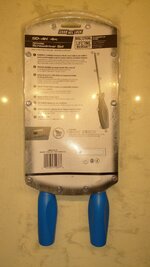
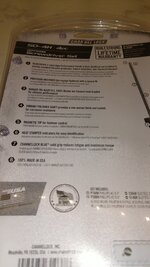
I stopped by my local Tractor supply today and saw a few sets of these priced at 36.99 for the pack. Look and feel great and have markings on the ends to tell you the size and style of blade.have you heard anything about the new made in the USA Screwdrivers from Channellock or Mayhew?

Attachments


I wouldn't waste my $$ on any current manufacturer of locking pliers.........IMO Malco are the best, and you can still get them new on HJE or ebay. You are limited to 11" Clamps and 10WR, 7WR types ... NOS Petersen Vise Grips are all over ebay. Thay can be expensive, but IMO are second only to the Malco. I have one set of Grip on and they are nothing special. I have looked in stores are other brands (Irwin Chinesiums, Milwaukie, etc), and they seem very cheaply made. They don;t look like they are even useful for scrap metal.... In summary snap up new Malcos and NOS Petersens while you still can.I’d love to see more USA made tools, but they need to have a corporate cultural reset and realise why they can’t make domestic manufacturing work yet other high quality European and Japanese manufacturers can in their countries. I bet it will all point back to that street in NYC.
Regarding locking pliers and c-clamps and what not. Who without question makes the best of the best today? I know about Malco but if they aren’t producing purchasable product they aren’t worth mentioning.
I wouldn't waste my $$ on any current manufacturer of locking pliers.........IMO Malco are the best, and you can still get them new on HJE or ebay. You are limited to 11" Clamps and 10WR, 7WR types ... NOS Petersen Vise Grips are all over ebay. Thay can be expensive, but IMO are second only to the Malco. I have one set of Grip on and they are nothing special. I have looked in stores are other brands (Irwin Chinesiums, Milwaukie, etc), and they seem very cheaply made. They don;t look like they are even useful for scrap metal.... In summary snap up new Malcos and NOS Petersens while you still can.
Malcos new Senior Chief Marketing Manager finally weighs in ^^^^
I am a mechanical engineer in the semiconductor industry, so I have no skin in the game. But telling you my career did hand you some fodder to insult the usefulness of my input.Malcos new Senior Chief Marketing Manager finally weighs in ^^^^
Interesting and cool. It is odd that I can't find these on the Channellock website.I stopped by my local Tractor supply today and saw a few sets of these priced at 36.99 for the pack. Look and feel great and have markings on the ends to tell you the size and style of blade.
I am a mechanical engineer in the semiconductor industry, so I have no skin in the game. But telling you my career did hand you some fodder to insult the usefulness of my input.
I'm kidding, but you're doing a better job then they ever did

four.cycle
Well-known member
Harry Epstein still has some of these in stock:
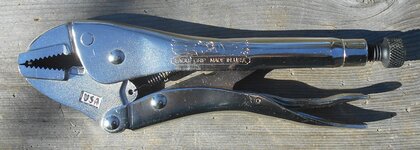
hurry before it's too late.
don't say you weren't warned.
hurry before it's too late.
don't say you weren't warned.
Tariffs and other trade barriers are the number one reason why Europe is still stamping out slabs of iron. A 20% tariff is pretty standard because the value-added-tax (VAT) is 20%. I've heard the paper work is not insignificant either. Then there is shipping costs.I’d love to see more USA made tools, but they need to have a corporate cultural reset and realise why they can’t make domestic manufacturing work yet other high quality European and Japanese manufacturers can in their countries. I bet it will all point back to that street in NYC.
Look at German ratchets; big heads, coarse teeth, few flex-head options, but they are still being made even though US and Taiwanese options are better. German wrenches; no anti-slip? No problem! You can still charge as much as Proto, Wright, maybe even Snap-on without offering anything new. Wera screwdrivers look great, but if Klein wasn't paying a 20% tariff to import to the EU, I bet more Europeans would be slinging Klein screwdrivers.
The Cold War deal that the US offered Europe, Japan and Korea was "we will help you rebuild and open our markets to you, and you do not have to reciprocate. BUT we all fight the commies together." The US government did not really seek to change that arrangement until Trump went around and got more equal trade terms.
William Payne
Well-known member
Tariffs and other trade barriers are the number one reason why Europe is still stamping out slabs of iron. A 20% tariff is pretty standard because the value-added-tax (VAT) is 20%. I've heard the paper work is not insignificant either. Then there is shipping costs.
Look at German ratchets; big heads, coarse teeth, few flex-head options, but they are still being made even though US and Taiwanese options are better. German wrenches; no anti-slip? No problem! You can still charge as much as Proto, Wright, maybe even Snap-on without offering anything new. Wera screwdrivers look great, but if Klein wasn't paying a 20% tariff to import to the EU, I bet more Europeans would be slinging Klein screwdrivers.
The Cold War deal that the US offered Europe, Japan and Korea was "we will help you rebuild and open our markets to you, and you do not have to reciprocate. BUT we all fight the commies together." The US government did not really seek to change that arrangement until Trump went around and got more equal trade terms.
Germans have fine tooth options. Germans fix cars everyday and they can be far harder to work on than American stuff. Also regarding Europeans using klein screwdrivers that would be a big no. We have both here in New Zealand and every electrician I have ever met has German screwdrivers. They really are better. The Kleins compared to European stuff look like something you would find in a bargain bin. In fact Klein doesn't really get used much here in the electrical world. Its all fluke meters, European insulated screwdrivers and European insulated pliers.
For pliers they use either Knipex or NWS and for Screwdrivers mostly Wera, Wiha, or equivalent.
neophyte
Well-known member
Plenty of German and other European companies innovate as far as tools are concerned.Tariffs and other trade barriers are the number one reason why Europe is still stamping out slabs of iron. A 20% tariff is pretty standard because the value-added-tax (VAT) is 20%. I've heard the paper work is not insignificant either. Then there is shipping costs.
Look at German ratchets; big heads, coarse teeth, few flex-head options, but they are still being made even though US and Taiwanese options are better. German wrenches; no anti-slip? No problem! You can still charge as much as Proto, Wright, maybe even Snap-on without offering anything new. Wera screwdrivers look great, but if Klein wasn't paying a 20% tariff to import to the EU, I bet more Europeans would be slinging Klein screwdrivers.
The Cold War deal that the US offered Europe, Japan and Korea was "we will help you rebuild and open our markets to you, and you do not have to reciprocate. BUT we all fight the commies together." The US government did not really seek to change that arrangement until Trump went around and got more equal trade terms.
Knipex is a pretty hood example of a plier manufacturer coming out with new designs that improve tools.
VBW owned by Stahlwille is another example, although probably not quite as innovative.
Facom from France has been innovating with a large chunk of their tool lineup since they started.
There were also a number of innovative tool manufacturers in Britain, although a bunch of that sector seems to have died, or gone the niche industrial route maybe starting in the 1970s.
Stahlwille and Hazet both offer fine toothed ratchets now (80 & 90 teeth i think).
The other thing I’ve noticed with a lot of European tool manufacturers, is that niche tool designs continue to be manufactured and offered by a large number of European professional brands, decades after being designed.
This negates the necessity for “new” designs, that are mostly just reintroductions of tool designs from 50-120 years ago.
A large proportion of the higher end US screwdriver market has been taken over by manufacturers from Europe (Wiha, Wera, Facom, etc.) because those companies bothered to make screwdrivers with ergonomic handles, and precisely machined tips, and those screwdrivers wound up widely distributed from Industrial tool sources, as well as at stores like Sears.
This all happened while much of the US tool industry was still offering screwdrivers that didn’t look much different from each other, with turned acetate handles, and tips that in many cases were wanting as far as grip.
It’s not that there weren’t quality screwdrivers available from manufacturers like Snap-On, Williams, Zephyr, Proto and Apex, it’s that those were niche brands most hardware stores didn’t carry, so even people who wanted quality ergonomic screwdrivers were unaware of the better US brands.
As far as European tariffs vs US tariffs, that is an issue, although US manufactured tools do get sold in Europe.
Channellock, Estwing, Vaughan hammers, etc. all get exported to Europe.
Take a look at the prices on amazon.de for multi-bit screw drivers. A Klein is 38 euros. A Wera is 33 euros.
So the Klein is not as nice and is more than 10% more expensive. Of course people will buy something that is not as nice if it is cheaper (Chinese imports in US or EU). But American products face steeper barriers to trade in foreign markets and therefore offer less value. No one is saying that Europe can't produce top quality stuff, but look at Malco's EagleGrips. The value wasn't there so EagleGrips are dead. I think if European countries (and Japan) were more stingy with their subsidies and less steep with their tariffs, their manufacturers would have a harder time competing, similar to US manufacturers. We haven't had a level playing field since before WW1. This was a political decision that is subject to change.
So the Klein is not as nice and is more than 10% more expensive. Of course people will buy something that is not as nice if it is cheaper (Chinese imports in US or EU). But American products face steeper barriers to trade in foreign markets and therefore offer less value. No one is saying that Europe can't produce top quality stuff, but look at Malco's EagleGrips. The value wasn't there so EagleGrips are dead. I think if European countries (and Japan) were more stingy with their subsidies and less steep with their tariffs, their manufacturers would have a harder time competing, similar to US manufacturers. We haven't had a level playing field since before WW1. This was a political decision that is subject to change.
four.cycle
Well-known member
^ "Value" is 100% subjective and more often than not more influenced by brand loyalty and tribalism than reality.
In respect to the "Malco Eagle Grip" - they're about $45-$50 bucks a pair. They are the best locking pliers on the market. Full stop.
You can save a few bucks and go with a "Grip-on" or any number of other competitive brands, but unfortunately the reality is that they simply do not measure up to the original Dewitt design that Malco improved significantly.
The failure of the Malco Eagle Grip, notwithstanding all unfounded speculation and conjecture, is solely the result of the failure of their marketing people to get it out into the faces of the American consumer - that is 100% on them, and nobody else. Has diddly squat to do with price.
The reason people are going for European and Japanese screwdrivers is really pretty simple: they're making better screwdrivers.
Invest ten bucks on a nice Vessel #2 phillips. You will never look back. That acetate-handled stuff from Pratt-Read and Western Forge is going the way of the wooden bucket.
In respect to the "Malco Eagle Grip" - they're about $45-$50 bucks a pair. They are the best locking pliers on the market. Full stop.
You can save a few bucks and go with a "Grip-on" or any number of other competitive brands, but unfortunately the reality is that they simply do not measure up to the original Dewitt design that Malco improved significantly.
The failure of the Malco Eagle Grip, notwithstanding all unfounded speculation and conjecture, is solely the result of the failure of their marketing people to get it out into the faces of the American consumer - that is 100% on them, and nobody else. Has diddly squat to do with price.
The reason people are going for European and Japanese screwdrivers is really pretty simple: they're making better screwdrivers.
Invest ten bucks on a nice Vessel #2 phillips. You will never look back. That acetate-handled stuff from Pratt-Read and Western Forge is going the way of the wooden bucket.
There is a lot of truth in this.The reason people are going for European and Japanese screwdrivers is really pretty simple: they're making better screwdrivers.
If you compete on quality, tariffs are less relevant. I don’t know how much of Knipex’s sales are in its home market, but it is obvious they can command a premium globally because of what they produce, and that more than anything is what protects them from competition from low cost producers.
I am not a trade economist, and don’t know all of the nuances of tariffs. But I do work with both the finished goods and materials industries, and I would observe that tariffs seemed to me to favour certain raw materials industries, not the manufactured goods producers. As a raw material consumer and finished goods producer, my company wasn’t thrilled about that. But I’d also observe that although our competitors that have imported and relied on chasing cost advantage are handicapped because they only focus on cost not on the rest of the picture.
(also, VAT is a sales tax - afaik it is levied on both domestic and foreign goods in Europe)
four.cycle
Well-known member
^ and again:
It's a myth that price is the end-all and the sole determining factor at point of sale. If that were true everyone would be buying "Chicago Electric" from Harbor Freight instead of Makita.
It's a myth that price is the end-all and the sole determining factor at point of sale. If that were true everyone would be buying "Chicago Electric" from Harbor Freight instead of Makita.
bubinga
Well-known member
Are you affiliated with channel lock?Just heard Channellock is going to launch a locking pliers line. It'll be made in Spain from Grip-On. I told them to buy Malco and do a US made line of pliers but we'll give these a shot if the price is right.
bubinga
Well-known member
Do you know how they are? Are they good vice grips?
dutchgray
Well-known member
You have no clue what VAT is or how it worksTariffs and other trade barriers are the number one reason why Europe is still stamping out slabs of iron. A 20% tariff is pretty standard because the value-added-tax (VAT) is 20%. I've heard the paper work is not insignificant either. Then there is shipping costs.
Look at German ratchets; big heads, coarse teeth, few flex-head options, but they are still being made even though US and Taiwanese options are better. German wrenches; no anti-slip? No problem! You can still charge as much as Proto, Wright, maybe even Snap-on without offering anything new. Wera screwdrivers look great, but if Klein wasn't paying a 20% tariff to import to the EU, I bet more Europeans would be slinging Klein screwdrivers.
The Cold War deal that the US offered Europe, Japan and Korea was "we will help you rebuild and open our markets to you, and you do not have to reciprocate. BUT we all fight the commies together." The US government did not really seek to change that arrangement until Trump went around and got more equal trade terms.
Go do some research before spouting nonsense on the Internet.
mobiledynamics
Well-known member
 Thanx to this thread - enablers. Ordered me up a long nose Facom
dnschmidt
Well-known member
For that much cash I'm going Vessel.I stopped by my local Tractor supply today and saw a few sets of these priced at 36.99 for the pack. Look and feel great and have markings on the ends to tell you the size and style of blade.
I was able to check these out this past weekend at TS. While I liked the shape, the handles seemed too "slippery" to me.I stopped by my local Tractor supply today and saw a few sets of these priced at 36.99 for the pack. Look and feel great and have markings on the ends to tell you the size and style of blade.
They look similar to the Tekton hard handle screwdrivers. I haven’t seen any in the wild yet though.I was able to check these out this past weekend at TS. While I liked the shape, the handles seemed too "slippery" to me.
bubinga
Well-known member
Do you guys feel the straight jaw or the curved jaw is more useful?Not sure I would pay $70 for this application, but Amazon still has them.
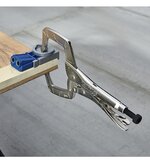
I don’t own any Malcos, but IMO curved jaw locking pliers all the way. Real question is 7” or 10” - which probably depends on what you use them for.Do you guys feel the straight jaw or the curved jaw is more useful?
bubinga
Well-known member
Thanks! I know, I can't decide on 7" or 10 either. This is GJ right "get them both" right?I don’t own any Malcos, but IMO curved jaw locking pliers all the way. Real question is 7” or 10” - which probably depends on what you use them for.
Hate to keep spending too much money too though?
bubinga
Well-known member
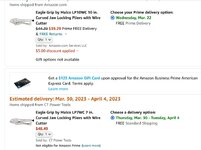
Got these two. Amazon was actually a little cheaper than Epstein's.Thanks! I know, I can't decide on 7" or 10 either. This is GJ right "get them both" right?
Hate to keep spending too much money too though?
l called Amazon about the battery charger price change a day later, she gave me a $5.00 "gift card"
Wakefield
Well-known member
Do most of the curved jaw models have a wire cutter slot,while the straight jaw jobs don't ?I don’t own any Malcos, but IMO curved jaw locking pliers all the way. Real question is 7” or 10” - which probably depends on what you use them for.
I’ve never seen straight with wire cutter.
Malco only made curved jaw with wire cutter.
Petersen (and now Irwin) offered models without wire cutter (7CR for example) and with (like 7WR). Same goes for Grip-On.
I like mine with wire cutters. I often used Vise Grips to twist heavy gauge galvanized wire for temporarily holding things. No harm to having the wire cutter there. But I also find the curved jaw profile much more useful.
Malco only made curved jaw with wire cutter.
Petersen (and now Irwin) offered models without wire cutter (7CR for example) and with (like 7WR). Same goes for Grip-On.
I like mine with wire cutters. I often used Vise Grips to twist heavy gauge galvanized wire for temporarily holding things. No harm to having the wire cutter there. But I also find the curved jaw profile much more useful.
We should all understand that Amazon is the eye of Sauron.Got these two. Amazon was actually a little cheaper than Epstein's.
l called Amazon about the battery charger price change a day later, she gave me a $5.00 "gift card"
FYI. What's happening with price on the Eagle Grips is that when the factory shut down there was a significant increase in demand since a lot of companies wanted to hop into the market and so the competition drove down the price on platforms like Amazon. We didn't change our price as there's a limited supply of these things and when they're gone, they're gone, which means we also won't adjust our price after the well runs dry and the scarcity inevitably ratchets it up. At this point it's a matter of when you want to sell them and for how much and I just don't see much reason to race to the bottom.
Wakefield
Well-known member
I would rather pay a little more from a dedicated tool place like HJE that can give first person advice rather than buying from a giant online marketer which probably just has robots that know nothing about tools and also might have a higher risk of passing along counterfeited goods
I would think "price go up!" rather than down as scarcity develops and word gets around to the masses (including the Craftsman collectors) that these (EagleGrip) are the descendant of the original USA Vice Grip and also probably higher quality than the Chinese production from those who bought out Petersen's
"Tool bear" (or is it "Den of Tools") has a video on his You Tube about the history of Petersen Vice Grip and the locking (compound lever action?) plier
I would think "price go up!" rather than down as scarcity develops and word gets around to the masses (including the Craftsman collectors) that these (EagleGrip) are the descendant of the original USA Vice Grip and also probably higher quality than the Chinese production from those who bought out Petersen's
"Tool bear" (or is it "Den of Tools") has a video on his You Tube about the history of Petersen Vice Grip and the locking (compound lever action?) plier
bubinga
Well-known member
I know. It wasn't a big deal. But $5.00 or $10.00 is $5.00 or $10.00 I get to use for something else.FYI. What's happening with price on the Eagle Grips is that when the factory shut down there was a significant increase in demand since a lot of companies wanted to hop into the market and so the competition drove down the price on platforms like Amazon. We didn't change our price as there's a limited supply of these things and when they're gone, they're gone, which means we also won't adjust our price after the well runs dry and the scarcity inevitably ratchets it up. At this point it's a matter of when you want to sell them and for how much and I just don't see much reason to race to the bottom.
I don't have a lot of money.
I did buy 2 Knipex items from epsteins.
What brand are the green ones at the top left, and the raspberry lollypop colored ones on the left side of the middle rail?and ANOTHER handle style for channey drivers. the 9th, it seems.
i dont have the wall space for another style!
metaldad
Well-known member
the greens on top left are diamond (tool and horseshoe). the other brand on the top rail are roscoeWhat brand are the green ones at the top left, and the raspberry lollypop colored ones on the left side of the middle rail?
bottom 2 rails are all channey. they did make some green, and black.