To avoid these ads, REGISTER NOW!

Epxoy bubble fix?

atpalmer

Active member
Joined
Jul 1, 2011
Messages
32
Location
So cal
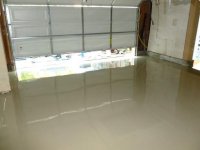
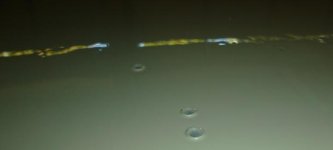
I just finished epoxying my garage floor this morning. Unfortunately i had some bubbles that didn't pop right away. I will be doing the clear coat tomorrow morning. I have a couple ounces of base coat left that I might be able to use for patching. What's the best way to fix the bubbling and still clear coat tomorrow morning?
 

Attachments

  • Picture 001.jpg
    Picture 001.jpg
    34.6 KB · Views: 84
  • Picture 003.jpg
    Picture 003.jpg
    18.6 KB · Views: 96
  • Picture 004.jpg
    Picture 004.jpg
    20.5 KB · Views: 81
Last edited:
To avoid these ads, REGISTER NOW!

synik

Well-known member
Joined
Jan 5, 2010
Messages
192
Off subject, but what type/brand of epoxy is this? Looks good btw, hope you get them bubbles fixed. :thumbup:
 

Edger

Well-known member
Joined
May 18, 2011
Messages
623
Location
Melbourne Australia
Try sanding gently to get them dead flat then using a steel trowel on its edge to smooth/scrape a tiny amount of epoxy into the holes. Be very accurate with A:B ratio and proper mixing.
 

thegarageguy

Well-known member
Joined
Oct 24, 2007
Messages
1,489
Location
NJ
Try sanding gently to get them dead flat then using a steel trowel on its edge to smooth/scrape a tiny amount of epoxy into the holes. Be very accurate with A:B ratio and proper mixing.

It'll still bubble...you need a thickening agent to fill or patch it....don't know any DIY remedy but if you can somehow score a bit of cabosil, your set...

Maybe mix a batch and let it set up a bit, then patch. If its too viscous, it'll seep in the hole and bubble again on you.
 
OP
A

atpalmer

Active member
Joined
Jul 1, 2011
Messages
32
Location
So cal
thanks for the tips.

What the theory behind the bubbles?
What is the source of gas?
I diamond ground the floor on saturday and rinsed.
I did some touch up grinding on sunday then swept, vacuumed, leaf blower.
I swept, leaf blower again Monday Morning then I coated early Monday morning while the temps were still under 85F
 

munkey

Well-known member
Joined
Jun 1, 2010
Messages
129
Location
Louisville, KY
if you can somehow score a bit of cabosil, your set...
"Cabosil" being a brand name for fumed silica, correct? You can get that at Woodcraft for about $5/quart (or less if you buy the big package). I used some last month to thicken one of Legacy Industrial's epoxies so I could apply it on a vertical surface without it being too runny. It might be overkill to hunt for it down just to patch those little bubbles, though...
 
OP
A

atpalmer

Active member
Joined
Jul 1, 2011
Messages
32
Location
So cal
Another choice would be to use bondo, sand flush, then pigment your top coat

What would it take to pigment my topcoat? Something I could buy locally before 10am? The clock is ticking... and i want to avoid sanding the whole floor for the topcoat.
 

Edger

Well-known member
Joined
May 18, 2011
Messages
623
Location
Melbourne Australia
The gas is just air that is contained in pockets throughout the slab. When you diamond grind you cut the top surface that was covering the holes over and they are then exposed. You put the epoxy down and if there is any heat about it will expand the air causing a bubble to appear which eventually breaks leaving the tiny hole again, this time like a volcano.

Another thing to try, but it is probably too late now is to use caulk to fill the tiny hole, scrape it just below the surface and trowel a small amount of epoxy over the top before your final top coating. I did that a couple of times now that it is coming back to me.
 

pd59

Active member
Joined
Aug 24, 2011
Messages
31
Location
Texas
What would it take to pigment my topcoat? Something I could buy locally before 10am? The clock is ticking... and i want to avoid sanding the whole floor for the topcoat.

Don't use bondo to patch your floor. It isn't a good idea for a number of reasons. The best option would be to locate some Cabosil (yes, it is fumed silica to answer munkey's question) like someone else already said and mix it into your leftover basecoat epoxy and patch the bubbles. Make sure you take a flat razorblade and scrape the ridges of the popped bubbles flat first. Mix enough cabosil to make a gel or paste-like consistency, usually 1.5-2 parts or more cabosil to 1 part mixed epoxy.

Don't be surprised if you still see where the bubbles were in your topcoat, though. There's just not much you can do to completley cover it up. But know that this will not compromise the strength and durability of your floor.
 

thegarageguy

Well-known member
Joined
Oct 24, 2007
Messages
1,489
Location
NJ
You may want to locate an industrial Sherwin Williams store...I know they sell universal pigments for epoxies...maybe they have something for urethanes...
 

slickgt1

Well-known member
Joined
Oct 11, 2010
Messages
1,674
Glad this doesn't happen with tiles. LOL, just messing. Don't kill me.

Sorry for your troubles atpalmer.
 

thegarageguy

Well-known member
Joined
Oct 24, 2007
Messages
1,489
Location
NJ
Glad this doesn't happen with tiles. LOL, just messing. Don't kill me.
Sorry for your troubles atpalmer.

No, they usually just crack and the grout gets full of gunk... ;)

IMAG0307.jpg
 

slickgt1

Well-known member
Joined
Oct 11, 2010
Messages
1,674
Thank god that doesn't happen mine. Epoxy grout, porcelain tiles. And the cracked ones are easier to fix than mixing jello or bondo, and hoping for the best. I can Guarantee you that if I break a tile, I can make it look like it never happened.

Why did that happen anyway? On my mission to select flooring, I have seen this before.
 

MrMark

Well-known member
Joined
Jan 25, 2010
Messages
4,626
Location
Southern Cal.
Is this bubbling common with expoxy-coat?

Is it strictly caused by high temperatures?

How is it prevented?


Do the bubbles come up right away or do they come up later, like overnight, when you are in no position to deal with them?

And how is it dealt with if it happens during coating? Step on them with the golf shoes?


Christine, would you definitively address these questions as I am getting ready to do the epoxy-coat and I need to be prepared.
 

pd59

Active member
Joined
Aug 24, 2011
Messages
31
Location
Texas
Is this bubbling common with expoxy-coat?

Is it strictly caused by high temperatures?

How is it prevented?


Do the bubbles come up right away or do they come up later, like overnight, when you are in no position to deal with them?

And how is it dealt with if it happens during coating? Step on them with the golf shoes?


Christine, would you definitively address these questions as I am getting ready to do the epoxy-coat and I need to be prepared.

Bubbling has nothing to do with a certian brand of epoxy and everything to do with your existing slab. It is caused by excessive vapor transmission through the concrete. If your slab was properly installed with a vapor barrier it wont be a problem. Green concrete that hasnt fully cured will also cause this. To test for vapor transmission grind a small area of your floor and stick a piece of thick mil plastic on it with a bead of caulking around the edge and check it 24 hrs later. If its dry then you are good. If not look for a moisture barrier epoxy primer.
 

LegacyIndustrial

ALLIANCE MEMBER
Joined
Jun 7, 2010
Messages
7,994
Location
deerfield, IL
This will happen from over aggressive acid etching as well. This why we like grinding better as a prep. Medium.

The pros will run an air release roller over the epoxy to subvert this.

Who's product was it anyway?
 

thegarageguy

Well-known member
Joined
Oct 24, 2007
Messages
1,489
Location
NJ
In this case, in my humble opinion, this happened because the slab wasn't primed well or at all.
 
To avoid these ads, REGISTER NOW!

MrMark

Well-known member
Joined
Jan 25, 2010
Messages
4,626
Location
Southern Cal.
Bubbling has nothing to do with a certian brand of epoxy and everything to do with your existing slab. It is caused by excessive vapor transmission through the concrete. If your slab was properly installed with a vapor barrier it wont be a problem. Green concrete that hasnt fully cured will also cause this. To test for vapor transmission grind a small area of your floor and stick a piece of thick mil plastic on it with a bead of caulking around the edge and check it 24 hrs later. If its dry then you are good. If not look for a moisture barrier epoxy primer.

OK, and I would certainly do that test, but it seems to me from reading on here that this comes up all the time and I have to assume that most of these newer slabs have vapor barriers and that they passed that test. This leads me to believe that something else is going on other than slabs that can't pass the moisture vapor pressure test with the plastic square.


So the vapor test has to be done after grinding or etching? I've not heard this before.
 

Edger

Well-known member
Joined
May 18, 2011
Messages
623
Location
Melbourne Australia
Is this bubbling common with expoxy-coat?

Is it strictly caused by high temperatures?
How is it prevented?
Do the bubbles come up right away or do they come up later, like overnight, when you are in no position to deal with them?
And how is it dealt with if it happens during coating? Step on them with the golf shoes?
Christine, would you definitively address these questions as I am getting ready to do the epoxy-coat and I need to be prepared.

I am not Christine so I cannot tell you about Epoxy-Coat, but in my experience it only happened in hot weather and only on diamond ground slabs and badly worn slabs. Acid etching does not open the top surface enough to expose the holes, but diamond grinding does remove the top layer easily which has been covering over the holes.

When concreters do the finishing they leave a sealed surface, but as the concrete dries it shrinks and opens tiny air pockets underneath the top layer of paste. Porous slabs that are either softer than normal or have not been vibrated or settled are the worst.

I had been assured that double priming solves the problem which was no good to me because I used to put down two coat systems in the main without a primer.

I tried many ways to stop the bubbles while coating and failed to find a solution. It seems to happen a couple of hours after the coating has been applied. I am not speaking of new concrete here, these were slabs ranging from 10 years to 60 years old.
 
Last edited:
OP
A

atpalmer

Active member
Joined
Jul 1, 2011
Messages
32
Location
So cal
Is this bubbling common with expoxy-coat?

Do the bubbles come up right away or do they come up later, like overnight, when you are in no position to deal with them?

And how is it dealt with if it happens during coating? Step on them with the golf shoes?

The bubbles came up within a few minutes while the epoxy was till wet. If you pop them they will auto level but the bubbles would reappear after a while.

Last night I sanded the bubbles down and refilled them with a drop of epoxy. About a third of the filled bubbles started to re-bubble. I kept popping them and a some just kept on re-bubbling. I finally gave up and called it a night.

In the end it's not that bad. I'll see it tonight after the clear coat cures. I was hoping for a more pristine look. I see now why so many recommend the flakes. They would hide the issue very well.

I don't blame the epoxy manufacturer as any liquid will bubble with a pressure source. That's why I don't want to name my source. It was a 100% solids 2-part epoxy.
 

thegarageguy

Well-known member
Joined
Oct 24, 2007
Messages
1,489
Location
NJ
It'll still bubble...you need a thickening agent to fill or patch it....don't know any DIY remedy but if you can somehow score a bit of cabosil, your set...If its too viscous, it'll seep in the hole and bubble again on you.

I'm not the type to say I told you so....;p
 

pd59

Active member
Joined
Aug 24, 2011
Messages
31
Location
Texas
OK, and I would certainly do that test, but it seems to me from reading on here that this comes up all the time and I have to assume that most of these newer slabs have vapor barriers and that they passed that test. This leads me to believe that something else is going on other than slabs that can't pass the moisture vapor pressure test with the plastic square.


So the vapor test has to be done after grinding or etching? I've not heard this before.

If I just assumed that all of the concrete that i've laid floors on were properly installed and cured, then I would have screwed up a lot of floors by now, and lost tons of money. Point being, one cannot just assume everything was done right by the previous guy, or you're opening youself up to potential problems. Unfortunately, there are some shady builders that will cut corners on things like proper underslab waterproofing of garage slabs to save costs. How can you be sure that all the people that have complained about bubbles on this forum have done these tests?

I have had one floor that bubbled due to excessive heat in the slab. It was in a truck repair shop,and it bubbled by the roll up door facing the sun. In El Paso. In July. A double primer coat would have saved me from this, or coating at night, which we did after the one section bubbled, and that solved our problem. It takes a fairly significant heating cycle to get the concrete to outgas like that.

The reason you grind the patch first is because you want to replicate the surface your floor is going on to. You're not installing the floor on the tightly troweled surface, are you? No. So you have to grind it in order to get more accurate results out of your tests.
 
OP
A

atpalmer

Active member
Joined
Jul 1, 2011
Messages
32
Location
So cal
I'm not the type to say I told you so....;p

but you did anyway!

I've used fumed silica before in an industrial application. I think it would have increased the chance of success. But I was on a short time line and had to just go for it.

I don't think the problem was due to concrete heat up though. The initial application was during the morning heat up but the patching was done after midnight and I still saw bubbles.

I wanted to do a primer coat but $$$ were adding up. I'll live with it.

The good thing about the blemishes is that i'll be less upset when i get weld splatter or drop an engine block on it.:beer:
 

mrobins297aaa

Well-known member
Joined
Sep 20, 2010
Messages
3,283
Location
south east michigan
OK, and I would certainly do that test, but it seems to me from reading on here that this comes up all the time and I have to assume that most of these newer slabs have vapor barriers and that they passed that test. This leads me to believe that something else is going on other than slabs that can't pass the moisture vapor pressure test with the plastic square.


So the vapor test has to be done after grinding or etching? I've not heard this before.

I don't think anybody really knows what causes the bubbles. I did the moisture test in three different spots on my slab even left it down for days and it was dry as a bone...............still got the bubbles. (my slab was about 7 months old)

they show up with in about 30 minutes after the first roll and then again after you do the 2nd roll. the way I dealt with it is with a gas leaf blower and spiked shoes I just kept going over it with the blower but at some point in time the spike shoes start leaving marks because the epoxy is setting up so at that point you just have to get off of it.
 

MrMark

Well-known member
Joined
Jan 25, 2010
Messages
4,626
Location
Southern Cal.
Thanks a lot guys and especially mrobins and edger. I am going to grind and the slab is from around 1980 and it will be hot here in CA. I am thinking of doing it at night because of this. I don't think anyone knows what causes the bubbles either, just hope for the best and use a lot of flakes.
 

knight

Member
Joined
Aug 18, 2011
Messages
19
The problem with doing it at night is that's when the critters and bugs come out. You're trading the possibility of bubbles for the possibility of cockroaches and moths and spiders getting stuck on the floor....

I think 6am is the best time to start; or else wait for cooler weather
 

knight

Member
Joined
Aug 18, 2011
Messages
19
3 days before coating my floor I will spread insecticidal flakes around the permiter of the house to kill the bugs that hide in the expansion joints and crevices of the foundation. They come out at night and crawl all over the place
 

AlphaGarage

Well-known member
Joined
Apr 16, 2008
Messages
1,298
Location
Every Garage, AnyTown, USA
Applying the initial coat when the slab temp is cooling, say in the evening, will help mitigate possible air bubbles. Yes, that might be the time when bugs are attracted, but I think generally the bugs bumps will be easier smooth out before applying the next layer than getting rid of a lot of air bubbles.

If it's a primer coat, and the bubbled aren't pronounced enough that you feel them when running your hand over them, then don't worry about 'em.

Of course you can also get bubbles from mixing or back rolling too vigorously.

Speaking of bugs & epoxy...

spiderzp.jpg
 
Last edited:

bRIZZAd

Well-known member
Joined
Jul 18, 2011
Messages
69
It's like bugs are attracted to epoxy somehow, this just happened to me...UUUHG!

I would agree! Rarely saw bugs in my garage until the epoxy was down. 3 daddy-long-legs succumbed to the trap. Had the door open the other night inspecting the floor & a nasty beetle of some sort scurried into the garage. I swept him out onto the road. A cool day today, and I walk up to the garage door after getting off of work, and he was waiting there to get in. :scared:
 
To avoid these ads, REGISTER NOW!
Top Bottom