Private Lugnutz
Well-known member
Ye Olde Honey Hole!

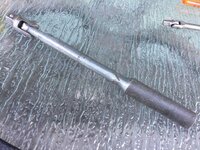
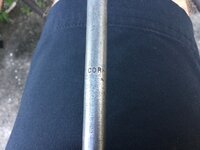
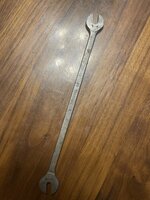
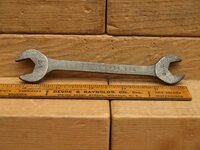
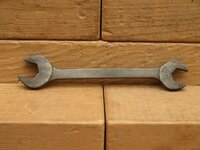
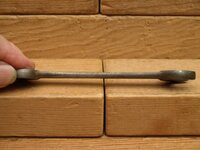
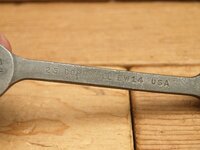
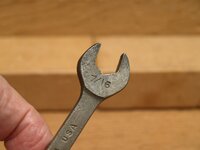
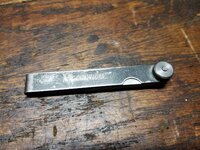
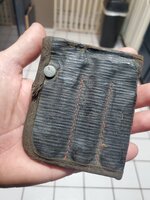
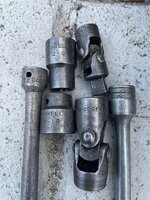
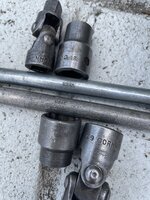
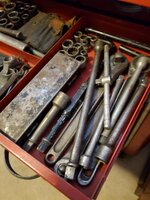
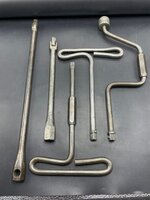
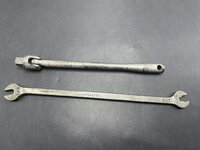
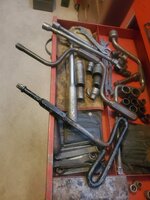
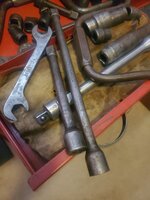
Chit! I realized I left half a dozen good tools I got at the same $1.00 sale out of that group pic. Here’s one.Ye Olde Honey Hole!
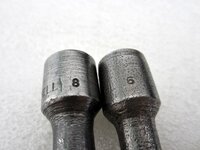
For "Opening." That's the only one that follows the modern and current convention of displaying the size of the actual milled opening.
Hahaha as usual super helpful (and you got me lookin deeper into sizes before we standardized) it just seemed too easy so I jumped past the idea, now to find an excuse to use em XDFor "Opening." That's the only one that follows the modern and current convention of displaying the size of the actual milled opening.

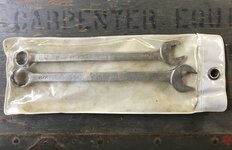

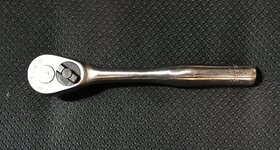


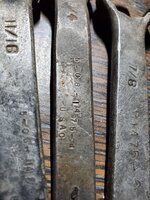
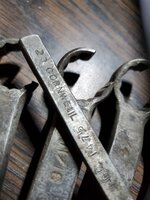
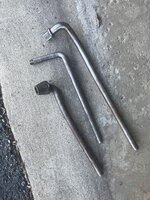
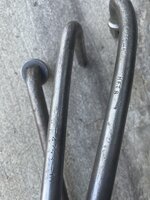
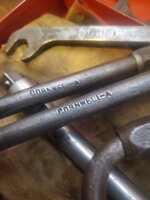
Looks like Air Corps and Henry Ford Trade School.Someone cut up these cornwell combos, now they are short flare nut wrenches. Some numbers stamped on them, also USAC.
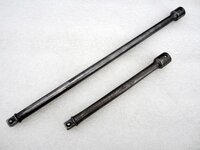
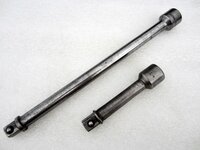
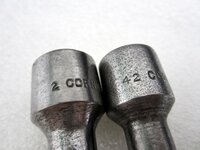
Cornwell extensions converted to Ford L wrenches.Someone cut up these cornwell combos, now they are short flare nut wrenches. Some numbers stamped on them, also USAC.
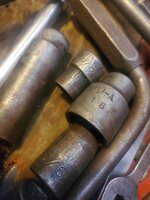
3/8" drive sockets with B date codes (before they were introduced). same thing with 12 point 5/8" drive sockets. I don't think the "A" code breakers in my picture were being offered in 1927 . I understand the S.A.E.? U.S.S. sizing convention 1927 changeover theory but the Cornwell Catalogs still use the old S.A.E sizes til 32 so I'm not sure it's a lock that "B" codes with "across flats" sizes started in 1927 and in that case would throw the whole timeline off. I also understand that the original theory has to take the letter system from 27 up to 1935ish? when they started with model #'s but I think you could do the same thing by changing the start year for letters and then not limiting yourself to a straight 1 letter= 1 year restriction. I don't know,..... just throwing chit at the wall.I have not really looked into it. Did you find some discrepancies?
I don't know anything at all about Cornwell, MR.X.simply a case of AA not having enough examples on hand when originally hypothesizing the code.
Hi. Yeah, frankly, A lot of people like to simultaneously stand on Bill's shoulders and piss on him at the same time. As someone who has lived in the NW, SW, SE, NE and dead center Midwest I have somewhat of a better sample size / variety than the average Joe to observe just how much early to mid 20th Century mechanic tool knowledge improved after the establishment of that site. I do, however obviously see the issue with all the guys doing great research on this site, for example, attempting to come to reasonable consensus based on intelligence, initiative, and often times newly available info and then being frustrated at not having a site/ location to dump it all, with references, so that there's one place with all the updated information. I have neither the actual technical competency to run a site like that or am anywhere close to being wired for that kind of endeavor so.....anyway, I have no illusion that anything I do or "solve" here will have any permanence so I'm basically just....yeah,... I don't know what I'm doing.I don't know anything at all about Cornwell, MR.X.
What I do know is that the site administrator at AA has some rather unusual (and not, in my opinion, very reliable) methods in which he establishes "date ranges" on some items.
What is on his website is limited to what he has in his own collection, and his date findings are based on what he is able to find in printed material (usually catalogs), notwithstanding evidence to the contrary - empirical, anecdotal, or otherwise.
I thought I had chosen my words very carefully there, and there's no intention to piss on anyone.Hi. Yeah, frankly, A lot of people like to simultaneously stand on Bill's shoulders and piss on him at the same time.
^ No argument on that point, sir. What he has done has been a gift to the tool collecting community.how much early to mid 20th Century mechanic tool knowledge improved after the establishment of that site
The contributors do an excellent job on this site. There’s no actual point of official summary of course….or filing of said summary or consensus under an easy to navigate system. I can't even imagine what the mechanics of that would look like…. Or how not fun that would end up being.^ No argument on that point, sir. What he has done has been a gift to the tool collecting community.
Unfortunately it's not always 100% accurate.
The "system" used here - kind of an ad hoc "peer review" system - seems to work quite well in sussing out the little nuances that exist (like the differing shapes of PLOMB 1/2" drive speeders) or looking to outside sources to ascertain correct dates on catalogs and patents.
It's not perfect, but it strives for absolute accuracy; gray areas are not filled with conjecture and speculation. You will not find "we believe" on GarageJournal.com. (Although you'll find a LOT of "I believe" in my own posts, because I have no difficulty admitting I don't know everything.
Gerstner and Kennedy, from some., do any of the Ohio companies get much love?
 www.garagejournal.com


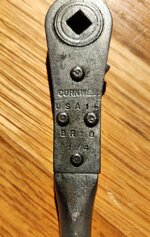

1919-1926
- The Cornwell name and hardware standard (U.S.S., S.A.E., etc) sizes, not milled opening sizes
1927-1932
- The Cornwell name with a letter (e.g., A through F) and hardware standard sizes
1933-1934
- Unknown one- or two-digit numbers (e.g., 17, 24, etc), the Cornwell name, one- or two-digit model numbers, NO letter, and the switch to milled opening sizes
1935->
- Unknown one- or two-digit numbers (e.g., 17, 24, etc), the Cornwell name, an alphanumeric model number with a functional phonetic prefix (e.g., AW for Angle Wrench, TW for Tappet Wrench, etc) followed by a number (e.g., 6, 12, etc) and NO "USA"
Later in the 30's through the 40's and into 50's
- Unknown one- or two-digit numbers (e.g., 17, 24, etc), the Cornwell name, the alphanumeric model number, and "USA"
Later still (and AA says 1954->)
- Unknown one- or two-digit numbers (e.g., 17, 24, etc), the Cornwell name, the alphanumeric model number with the prefix where the model number (e.g., 1814) now corresponds to milled opening size(s) in 32/nds, and "USA"