To avoid these ads, REGISTER NOW!

EV Charger Plug

bad_idea

Well-known member
Joined
Jun 11, 2011
Messages
4,334
Location
Pasquotank, NC
Planning to install a 50 amp rv receptacle on the side of the house to charge an electric car. The main panel is a combo unit on the side of the house that has the meter, main breaker, and breaker slots. Want to install the receptacle 28' away, down the side of the house.

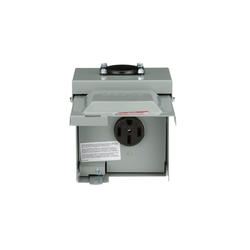
Receptacle - Anyone have experience with this one? Better options?
 
To avoid these ads, REGISTER NOW!

nadogail

Well-known member
Joined
Jan 23, 2009
Messages
31,961
Location
Coronado, CA
I installed an EV Charging Receptacle in my garage, personally I found the job to be a "piece of cake". but i have considerable experience in doing Electrical Work.
 
OP
B

bad_idea

Well-known member
Joined
Jun 11, 2011
Messages
4,334
Location
Pasquotank, NC
I would rather use the charger that came with the car. It is a Chevy Bolt and they do not charge particularly fast, so I don't see a need to upgrade to a faster charger. I would also like the option to use the socket for welding out in the driveway.
 

BroncoAZ

Well-known member
Joined
Jun 23, 2018
Messages
2,668
Location
MA
I would recommend upgrading the 50a plug to a Hubble or similar. There have been some issues with cheapie 50a plugs not lasting with EV’s. I’ve done three EV chargers, one plug in 50a, one 50a hard wired and my current 60a hard wired Tesla charger. I usually turn it down to 32 amps anyway, but I wanted the overhead on the latest one.
 

dave*99

Well-known member
Joined
May 5, 2009
Messages
4,268
Location
Coastal NJ
Is there an enclosure that includes the Hubbell receptacle?
I bought the Hubbell 9450A for about $50. No enclosure.


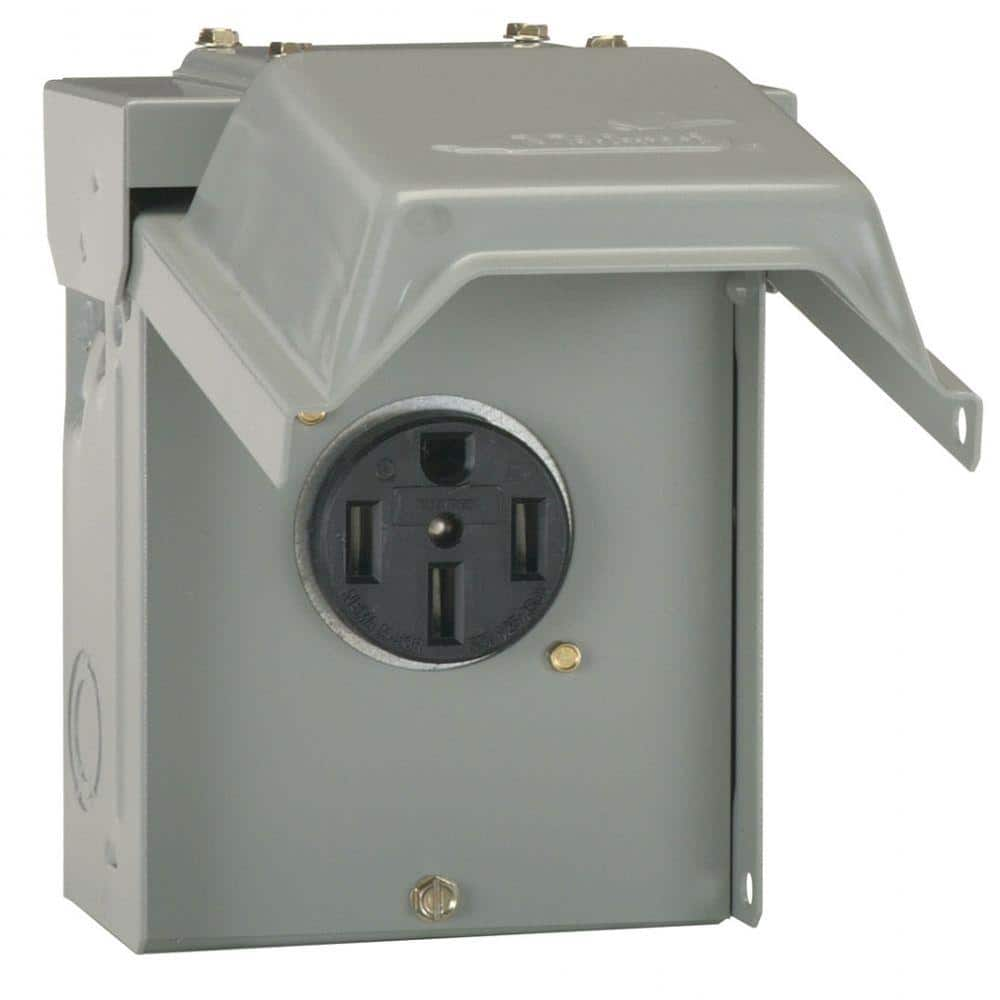
You may find it simplest to buy something like this and swap out the receptacle.


Or buy an in use cover and an outdoor box for the Hubbell.
 

mike93lx

ALLIANCE MEMBER
Joined
Dec 9, 2013
Messages
37,575
Location
Richmond, VA
I would rather use the charger that came with the car. It is a Chevy Bolt and they do not charge particularly fast, so I don't see a need to upgrade to a faster charger. I would also like the option to use the socket for welding out in the driveway.
You'll have to get an adaptor or change the plug on your welder, as well

What is the charge rate on your bolt? 7.2kw?
 

Denwood

Well-known member
Joined
Sep 22, 2014
Messages
4,191
Location
Thunder Bay, Ontario, Canada
Check on the requirement for GFCi for that receptacle. These in turn can cause issues for some OEM chargers. If you factor in the added cost, it may make more sense to install a dedicated charger as they incorporate GFCI.

I did install a 50amp outdoor receptacle, but fuse limited to 40amp as my charger maxes out at 30 amps. It was not a big deal with about 20 feet of tech cable and water tight connections. I used this box which is ETL listed: https://www.amazon.ca/WEBANG-Weatherproof-Electrical-Receptacle-Motorhome/dp/B08SPZND71/

With these high time/load circuits, I charge for about an hour and check all connections at the panel and receptacle with an infrared gun. Had a weird fuse issue at the panel with a garage 20 amp circuit for the EVs which turned out to be a poor connection (overheating after 30-40 min) for the garage sub panel supply via the house panel. Nothing in your home generally pulls this amount of current, for this length of time.
 

Norcal

Well-known member
Joined
Mar 16, 2008
Messages
13,758
Check on the requirement for GFCi for that receptacle. These in turn can cause issues for some OEM chargers. If you factor in the added cost, it may make more sense to install a dedicated charger as they incorporate GFCI.

I did install a 50amp outdoor receptacle, but fuse limited to 40amp as my charger maxes out at 30 amps. It was not a big deal with about 20 feet of tech cable and water tight connections. I used this box which is ETL listed: https://www.amazon.ca/WEBANG-Weatherproof-Electrical-Receptacle-Motorhome/dp/B08SPZND71/

With these high time/load circuits, I charge for about an hour and check all connections at the panel and receptacle with an infrared gun. Had a weird fuse issue at the panel with a garage 20 amp circuit for the EVs which turned out to be a poor connection (overheating after 30-40 min) for the garage sub panel supply via the house panel. Nothing in your home generally pulls this amount of current, for this length of time.
The Midwest is a better choice then a ChiCom power outlet, nothing more untrustworthy then ChiCom produced food or electrical products.
 

75gmck25

Well-known member
Joined
Jul 21, 2014
Messages
1,325
Location
Alexandria, VA
I started out with the same plan, and after further analysis I ended up installing a hardwired EV charger on a 50 amp breaker with 6 gauge copper wiring.

- Remember that the actual charger is part of your car, and the "smarts" in the wall unit are just there convert voltage, and for some simple negotiation on charge rates and other data. You can't buy a bigger charger and get faster charging unless the vehicle supports a higher charge rate.

- Hardwired chargers have the GFCI built in. Plug-in chargers that are subject to moisture must have a GFCI breaker, but the EV charger companies don't recommend using a GFCI breaker. Catch 22 if you don't have a garage, and its why I hardwired my charger.

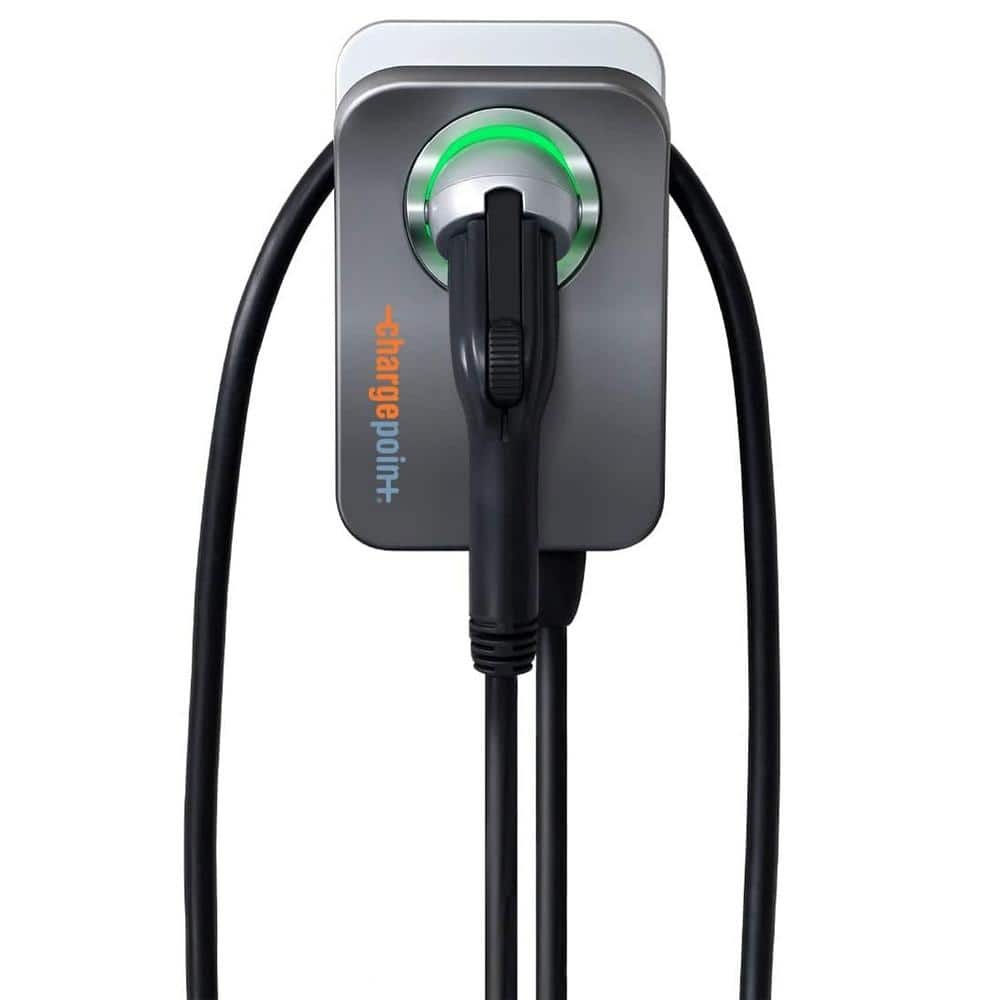
- The Chargepoint unit I purchased (max 80 amps) was on the local POCO list, so it qualified for a rebate. It was expensive ($500), so I didn't really save any money in the long run, but it's very well supported. Total rebates were $120 now and $40/year for 3 years.

- Mine is configured by logging into an installation app and setting it up for the vehicle and the charging rate. My RAV4 Prime maxes at 32 amps, so IIRC my charger is set to 32 amps (or maybe 40 amps max?). I can usually do a full charge (add range of about 47-49 miles on electric) in about 2+ hours.
I can view and download all usage, and it uses the POCO rate to calculate and display the cost of each charge. I can also use the app to pay for public chargers while on the road, but I've never done that since my PHEV just switches to the ICE engine when it runs out of electric power.

Installation quirks

- Maximum cable length from the charger to the vehicle is 22-25 feet, so make sure you can park and get access. Some folks do buy and install a longer cable, I have been told that then the code requirement is to have a "cable management system". However, I've found no definition of what they mean.

- Max distance from a 240 volt receptacle to the charger is about 12"-18" for most current plug-in chargers. This short cable length is apparently how they justify not using a GFCI breaker inside a garage. However, it does not give you much flexibility for where you locate the charger.
 
Last edited:

mm08822

Well-known member
Joined
Jan 13, 2012
Messages
5,941
Location
NJ
- The Chargepoint unit I purchased (max 80 amps) was on the local POCO list, so it qualified for rebate. It was expensive ($500), so I didn't really save any money in the long run, but it's very well supported. Total rebates were $120 now and $40/year for 3 years.

- Mine is configured by logging into an installation app and setting it up for the vehicle and the charging rate. My RAV4 Prime maxes at 32 amps, so IIRC my charger is set to 32 amps (or maybe 40 amps max?). I can usually do a full charge (range of about 47-49 miles on electric) in about 2+ hours.
I can view and download all usage, and it uses the POCO rate to calculate the cost of each charge. I can also use the app to pay for public chargers while on the road, but I've never done that since my SUV just switches to the ICE engine when it runs out of electric power.

Installation quirks

- Maximum cable length from the charger to the vehicle is 22-25 feet, so make sure you can park and get access. Some folks do buy and install a longer cable, I have been told that then the code requirement is to have a "cable management system". I've found no definition of what they mean.

- Max distance from a 240 volt receptacle to the charger is about 12"-18" foot for most current plug-in chargers. This short cable length is apparently how they justify not using a GFCI breaker inside a garage. However, it does not give you much flexibility for where you locate the charger.
Why buy an 80A unit and charge at 32/40?

Best way to help determine evs location is to use a garden hose to reach the car(s) charge port locations.

2023 code makes no exception for gfci receptacle requirement in garage in article 210. Even 625.60 explicitly states GFCI is required for evse recepts. (and there is no relief provision other than hard-wiring if the gfci protection causes conflicts.)
 

Packard V8

Well-known member
Joined
Mar 16, 2009
Messages
7,380
Location
Spokane, WA
The 230-volt-capable Electric Vehicle Supply Equipment which comes with the Bolt is a 32-amp capacity unit.

FWIW, the first few years of Bolt production, the ESVE came with only a 115-volt plug. The Bolt's screen could be set to receive either 8 or 12 amps. Later Bolts came with an adapter which allowed the same ESVE to be plugged into 230-volts and then the Bolt can be charged at 32 amps. From this, we learned the earlier units can be shadetree adapted to also accept 230-volts for faster charging.

As to GFCI, YMMV. The subcontractor from the local utility installed our plug-in ESVE in our garage without a GFCI. I specifically asked and was told, "Not required." The city electrical inspector confirmed this when he signed off on it.

jack vines
 
Last edited:

mm08822

Well-known member
Joined
Jan 13, 2012
Messages
5,941
Location
NJ
I just saw that Leviton now has an evse rated 14-50 recept. No alum connections permitted just like the other mfrs.

So if the mfrs have locked on to 14-50 upgraded recepts, I expect the 6-50 evse plug versions may die off.
 

WisJim

Well-known member
Joined
Dec 20, 2010
Messages
2,282
Location
Menomonie, WI
I put an Eaton 50 amp on the outside of my garage, but my regular car charger is on a different circuit inside, wardwired. $53 before the Menards 11% rebate which ends Thanksgiving.
 

mm08822

Well-known member
Joined
Jan 13, 2012
Messages
5,941
Location
NJ
I put an Eaton 50 amp on the outside of my garage, but my regular car charger is on a different circuit inside, wardwired. $53 before the Menards 11% rebate which ends Thanksgiving.
I don't see any reference to evse applications. Eaton's website only has standard grade 14-50s. Not to say it won't work but may become a problem later. A lot depends on the charge rate.

Same for the Midwest product mentioned earlier.
 

WisJim

Well-known member
Joined
Dec 20, 2010
Messages
2,282
Location
Menomonie, WI
When I installed the Eaton no one had evse ratings or references. That's all new propaganda. I looked at a lot of receptacles and I liked the Eaton as it was readily available and all copper and the contacts looked heavier than other brands.
And I used a big box store Leviton in our previous garage for 8 years charging our Leaf (6.6kw charger) with no problems.
 
Last edited:

mm08822

Well-known member
Joined
Jan 13, 2012
Messages
5,941
Location
NJ
When I installed the Eaton no one had evse ratings or references. That's all new propaganda. I looked at a lot of receptacles and I liked the Eaton as it was readily available and all copper and the contacts looked heavier than other brands.
And I used a big box store Leviton in our previous garage for 8 years charging our Leaf (6.6kw charger) with no problems.
I think it is learning that the industry as a whole has done over the last few years. Amount of current, duration, number of charge cycles, insertion/removals, conductor material and torque for evse applications using the "standard" recepts are showing issues that an oven/stove/range application rarely sees.

I'm sure there is a level of use in evse applications that is safe for these recepts for a very long time but who has the data and time to worry about it when you can just throw a couple more $$ at it for higher use quality and be done.

If the mfr's hadn't come out with evse rated hardware, who knows, maybe the standard hardware would be fine if further derating was applied. (That would be a simple code book change vs. another way to make $$$.)
 
To avoid these ads, REGISTER NOW!

BreeStephany

ALLIANCE MEMBER
Joined
May 19, 2012
Messages
851
Location
Oregon
I've been doing a fair amount of EV receptacles and chargers over the last couple of years, both in multi-family housing projects and in homes.
My suggestion would be to use a standard 50A 125/250V Nema 14-50R receptacle with a deep metal in-use cover, use a deep 2G bell box with a 2G bell box extension, run 3/4" EMT with raintight compression fittings from your meter main combo to the receptacle location. Run a #6 THHN black (L1), red (L2) and white (N) with a #10 green (ground) between the breaker and receptacle. If you are using a receptacle, use a 2P 50A GFCI breaker at your meter main.

If you have a EV charger that can be hard wired, skip the bell box, receptacle and in-use cover and just hard wire the charger. Many, but not all, EV chargers have integral GFCI protection, so you skip the GFCI breaker and use a regular 2P 50A breaker.

Just my two cents.
 
Last edited:

Denwood

Well-known member
Joined
Sep 22, 2014
Messages
4,191
Location
Thunder Bay, Ontario, Canada
The Midwest is a better choice then a ChiCom power outlet, nothing more untrustworthy then ChiCom produced food or electrical products.
ETL and Intertek are good enough for me. I did specifically check the receptacle and connections with an infrared gun after an hour of use, with just marginal temp increases at 32 amps. Midwest is owned by ABB which is a global company with a presence in China…so like most things I would not be surprised at the origin of these parts….just saying. If you review ETL for the box I linked to (I did) you find it listed under quite a few brands.

To be honest, after reviewing code etc and the cost of 240V@50A GFCI, a direct wire charger is not that much more expensive than the parts cost with all things considered.
 

mm08822

Well-known member
Joined
Jan 13, 2012
Messages
5,941
Location
NJ
ETL and Intertek are good enough for me. I did specifically check the receptacle and connections with an infrared gun after an hour of use, with just marginal temp increases at 32 amps. Midwest is owned by ABB which is a global company with a presence in China…so like most things I would not be surprised at the origin of these parts….just saying. If you review ETL for the box I linked to (I did) you find it listed under quite a few brands.

To be honest, after reviewing code etc and the cost of 240V@50A GFCI, a direct wire charger is not that much more expensive than the parts cost with all things considered.
Actually I found it another way........much less in parts and labor for direct wire. Leaves enough savings to consider a second evse portable unit for the trunk.
 

75gmck25

Well-known member
Joined
Jul 21, 2014
Messages
1,325
Location
Alexandria, VA
In post #14 I was asked "Why buy an 80A unit and charge at 32/40?" 80amps is the MAX charge rate for this unit, but the breaker size and the rating of the charger built into the car will determine the actual amperage used.

In the future I may have a different vehicle, with different charging parameters. It's kind of like asking "why buy a 200amp panel when you only currently have 100 amps when you add up all the breakers?"

The charge rate is determined by negotiation of the wall charger with the built-in vehicle charger, and it will not be the same for every vehicle. In my case Toyota uses a 6.6KW charger (in the vehicle) and it supports a max rate of 32 amps at 240 volts. My wall charger is configurable to multiple charge rates, and at install I set it to 32 amps. I will be able to change it if I switch vehicles.

Older Toyota PHEV's used only a 3.3KW charger. The Ford Lightning advertises a max rate of 155KW. Quite a big difference.

The best charge rate for newer vehicles would be a direct DC fast charger and a vehicle that supports it, but I'm not sure what it would take to install one at home.
 
Last edited:

rlitman

Well-known member
Joined
Oct 18, 2010
Messages
24,609
Location
Long Island
...The Ford Lightning advertises a max rate of 155KW. Quite a big difference.

The best charge rate for newer vehicles would be a direct DC fast charger and a vehicle that supports it, but I'm not sure what it would take to install one at home.
There's no way any Ford is charging at that rate off a Level 2 EVSE, which means that's strictly DC fast charging. Lots of vehicles DC fast charge much faster than that, so 155kW is nothing special.

DC fast charging isn't something feasible at home. The only way to make it make sense is with rectified 3-phase, and 480VAC at a minimum at that. Higher rates call for more voltage, and the top charging rates are at 1000VDC.

There's no absolute industry standard on Level 2 (AC charging with an on-board charger), and while everyone seems to support 32A 240V charging, where you go up from there depends a lot on the vehicle. Tesla for example seems to be an exception and accept 277V, which makes lots of sense for charging in hotels and convention centers, and commercial locations. 80A 240V chargers are out there, but few vehicles can push them to their limits. And commercial fleet vehicles have had 3-phase plugs and chargers for some time now, but nothing residential is setup to take that.

...Midwest is owned by ABB which is a global company with a presence in China…so like most things I would not be surprised at the origin of these parts….just saying...
If only you heard me cursing ABB last week. A Swedish made contactor of theirs with a Swedish and French made aux contacts that've got a design defect keeping me up at night. I'd be happier with the Chicom ****. At least I could set my expectations lower. When I google the part number, I find "a high-quality product designed for industrial applications where reliability and performance are paramount". <barf>
 

mike93lx

ALLIANCE MEMBER
Joined
Dec 9, 2013
Messages
37,575
Location
Richmond, VA
In post #24 I was asked "Why buy an 80A unit and charge at 32/40?" 80amps is the MAX charge rate for this unit, but the breaker size and the rating of the charger built into the car will determine the actual amperage used.

In the future I may have a different vehicle, with different charging parameters. It's kind of like asking "why buy a 200amp panel when you only currently have 100 amps when you add up all the breakers?"

The charge rate is determined by negotiation of the wall charger with the built-in vehicle charger, and it will not be the same for every vehicle. In my case Toyota uses a 6.6KW charger (in the vehicle) and it supports a max rate of 32 amps at 240 volts. My wall charger is configurable to multiple charge rates, and at install I set it to 32 amps. I will be able to change it if I switch vehicles.

Older Toyota PHEV's used only a 3.3KW charger. The Ford Lightning advertises a max rate of 155KW. Quite a big difference.

The best charge rate for newer vehicles would be a direct DC fast charger and a vehicle that supports it, but I'm not sure what it would take to install one at home.
To be fair, home charging is generally about maintenence... Replacing the energy from today's commute overnight... And even 16a pretty much always get that done. My father has commuted almost 100 miles daily for the last year in a kona with just a 16a charger at home.

Charging slower is better for the battery, so even if we could fast charge at home, it generally wouldn't be beneficial. 150kw charging would require 625 amp at 240v service... Not happening without a complete grid over haul, which means its not happening. Even 50kw would require the entire electrical service of most houses.

We just installed a 60a evse at my folk's new house, which is kind of silly now that my father is working from home... That aside, the old evse was nicer in that the cable was a ton thinner and lighter. Handling a cable that can support 80a when you only really need a quarter of that is kind of annoying
 

75gmck25

Well-known member
Joined
Jul 21, 2014
Messages
1,325
Location
Alexandria, VA
I think the discussion is still getting confused over what can be done vs. what you may want. I bought this charger, which is advertised as a 20 to 80 amp charger. I installed it with 6 gauge wiring and a 50 amp breaker because that seemed like a good middle-ground choice. However, my car maxes out at 32 amps, so during setup I set the charger for 32 amps.

I did not need 80 amps, so I didn't wire it for 80 amps, but with the right wiring it could handle a higher rate.

On other forums I've found discussions about DC fast charging, and it involves big changes in electrical service. However, if you search this forum it's also not unusual to have someone ask about how to get commercial 3 phase power for a special machine they bought and want to use in a home shop. Even here, where project overkill is typical, they usually get the same answer - at this point it's a bridge too far in a residential neighborhood.
 

mike93lx

ALLIANCE MEMBER
Joined
Dec 9, 2013
Messages
37,575
Location
Richmond, VA
I think the discussion is still getting confused over what can be done vs. what you may want. I bought this charger, which is advertised as a 20 to 80 amp charger. I installed it with 6 gauge wiring and a 50 amp breaker because that seemed like a good middle-ground choice. However, my car maxes out at 32 amps, so during setup I set the charger for 32 amps.

I did not need 80 amps, so I didn't wire it for 80 amps, but with the right wiring it could handle a higher rate.

On other forums I've found discussions about DC fast charging, and it involves big changes in electrical service. However, if you search this forum it's also not unusual to have someone ask about how to get commercial 3 phase power for a special machine they bought and want to use in a home shop. Even here, where project overkill is typical, they usually get the same answer - at this point it's a bridge too far in a residential neighborhood.
But because you used an 80a rated charger, the cable is a lot heavier than if you have used a charger rated for 32a. That's the downsize with buying an oversized evse

I bet 32a charging will be sufficient for the vast majority of users forever. We won't need faster charging, especially as cars get more efficient.

3 phase power for a machine is a completely different animal than what is used for DC fast charging. I am confident that we will never have that level of power to our homes. It would be ungodly expensive and will never be needed
 

jkeyser14

Well-known member
Joined
Dec 19, 2008
Messages
1,819
Location
(rural) Maryland
I would not use a regular NEMA 14-50 (or 6-50) receptacle and plug for an EV. They can have issues. Get an EV rated receptacle and plug.
I have been using regular NEMA 14-50's charging at 32A for 6 years and my wife charging on hers for 3 years. There are no issues if the terminal screws were properly torqued. No voltage sag, no issues being exposed and outdoors in Maryland rain and snow, no hiccups whatsoever.
 

mike93lx

ALLIANCE MEMBER
Joined
Dec 9, 2013
Messages
37,575
Location
Richmond, VA
I have been using regular NEMA 14-50's charging at 32A for 6 years and my wife charging on hers for 3 years. There are no issues if the terminal screws were properly torqued. No voltage sag, no issues being exposed and outdoors in Maryland rain and snow, no hiccups whatsoever.
There are definitely ****** receptacles out there. Not all are equal
 

BrandonV

Well-known member
Joined
Jun 9, 2023
Messages
4,030
Location
Arizona
There are definitely ****** receptacles out there. Not all are equal

I always assumed it was the insertion cycles that did the cheaper 14-50s in. They're all UL 498 listed which means they should have no issues with 80% continuous draw of a charger (assuming the conductors were landed correctly on the receptacle in the first place).

I don't think UL tests or has any standards around how many insertions a receptacle is good for. I know some people with a portable style charger would plug in and out daily if they had multiple vehicles in the garage and were using one charger for both. That's a lot of insertion cycles on a cheap 14-50 that probably was intended for a stove. You're looking at over a lifetime of insertions in probably a week.
 

mike93lx

ALLIANCE MEMBER
Joined
Dec 9, 2013
Messages
37,575
Location
Richmond, VA
I always assumed it was the insertion cycles that did the cheaper 14-50s in. They're all UL 498 listed which means they should have no issues with 80% continuous draw of a charger (assuming the conductors were landed correctly on the receptacle in the first place).

I don't think UL tests or has any standards around how many insertions a receptacle is good for. I know some people with a portable style charger would plug in and out daily if they had multiple vehicles in the garage and were using one charger for both. That's a lot of insertion cycles on a cheap 14-50 that probably was intended for a stove. You're looking at over a lifetime of insertions in probably a week.
You're probably right
 

wyliesdiesels

Well-known member
Joined
Aug 14, 2012
Messages
20,021
Location
Modesto, CA
I have been using regular NEMA 14-50's charging at 32A for 6 years and my wife charging on hers for 3 years. There are no issues if the terminal screws were properly torqued. No voltage sag, no issues being exposed and outdoors in Maryland rain and snow, no hiccups whatsoever.
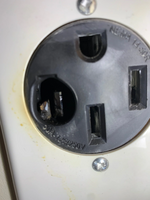
the issue isnt with the terminal screws. its with the tangs in the receptacle.
 

dave*99

Well-known member
Joined
May 5, 2009
Messages
4,268
Location
Coastal NJ
^ Yup. I bought the Hubbell after seeing a number of photos just like this. Also note the Hubbell has some serious cable clamping mechanisms.

1733270954952.png

1733271059359.png
 
Last edited:

aggie113

Well-known member
Joined
Jul 22, 2015
Messages
473
Location
San Antonio, TX
A NEMA 14-50 plug is a great idea for letting others charge up if needed. One of my sister's has a garage with this on an outside wall and it's very nice to plug in for a bit when visiting with my portable 220v Tesla charger. However, if you plan on using it regularly, you should also do a junction to a dedicate 220v connection for your vehicles fixed charger. This won't suffer from the issue of the tangs being overused like the NEMA plug would, and if it applies to your area you could get a discount on electrical use by buying a smart charger that can communicate with the local electrical company and charge during hours they prefer.
 
Last edited:

mike93lx

ALLIANCE MEMBER
Joined
Dec 9, 2013
Messages
37,575
Location
Richmond, VA
A NEMA 14-50 plug is a great idea for letting others charge up if needed. One of my sister's has a garage with this on an outside wall and it's very nice to plug in for a bit when visiting with my portable 220v Tesla charger. However, if you plan on using it regularly, you should also do a junction to a dedicate 220v connection for your vehicles fixed charger. This won't suffer from the issue of the tangs being overused like the NEMA plug would, and if it applies to your area you could get a discount on electrical use by buying a smart charger that can communicate with the local electrical company and charge during hours they prefer.
If you already have an evse, an adapter is a lot more useful than adding a receptacle. A j1772 to Tesla is pretty cheap
 

reader2580

Well-known member
Joined
Dec 31, 2014
Messages
14,545
Location
Minneapolis, MN
Aren't most level 2 chargers just plugged into the receptacle and left plugged in? I don't understand why the need for a receptacle that can handle more insertions. Better terminals and tangs is certainly a good thing, but many of us have an electric stove that can get used for hours when baking with the same style of receptacle that isn't heavy duty.
 
To avoid these ads, REGISTER NOW!
Top Bottom