To avoid these ads, REGISTER NOW!

Excessive cracking ??

Xception

Active member
Joined
Feb 20, 2012
Messages
30
Location
Western Washington
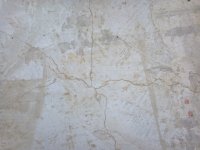
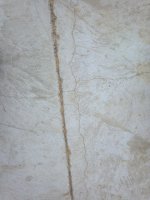
I poured my slab on 5-29 and even before we got to finishing it off with a power trowel we started to see spider cracks. :( I figured oh well at least I don't have to worry about a crack ruining my day sometime in the future.

Before anyone ask's I will just say that yes I compacted and soaked the ten loads of snow sand that were used for fill. Site was excavated to well below grade and refilled with moocho snow sand. If you haven't heard of this before it is what they use to put on the roads in the winter time and it packs like concrete. Tractor tires would'nt even hardly leave a mark in it after the plate compacter was run over it.

I used black plastic on top of the rock and had #4 rebar every 18 inches each direction. We poured thirty yards on a day that was around 65 degrees and a light wind. I ordered a 5 and a half sack mix from a local supplier and and was on a will call as the weather here had been iffy. First load showed up by 8:30 and we were done pouring by 11 am or so. I kept the slab wet for a week. And as I stated before we had cracking before we started power troweling.

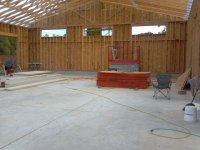
My question is do you think this es excessive cracking? and should I complain to my supplier ? These spider cracks seem to be getting worse. This slab is 44' by 48'. You can't tell from the pics but are a minimum of 9 cracks running across the slab on the far side of the building picture down the length before the first paralell expansion joint cut.

I used a green blade early entry saw the morning after the pour. There are four control joints every 10 or eleven feet each direction that are at least an inch deep. Slab is 5 inches deep. The concrete torched off when it was poured even though we tried to pour a 5 or 6 slump. We ended up having to use some water to get the power trowel to work because it was setting up so fast.
 

Attachments

  • crete1.jpg
    crete1.jpg
    141.9 KB · Views: 66
  • crete2.jpg
    crete2.jpg
    113.3 KB · Views: 71
  • crete3.jpg
    crete3.jpg
    111.1 KB · Views: 73
  • crete4.jpg
    crete4.jpg
    106.6 KB · Views: 69
  • crete5.jpg
    crete5.jpg
    107.6 KB · Views: 65
  • shop1.jpg
    shop1.jpg
    118.2 KB · Views: 76
To avoid these ads, REGISTER NOW!

joes169

Well-known member
Joined
Sep 19, 2011
Messages
663
Location
WI
Without a doubt, that is excessive random cracking. I can't say I've ever seen eradic cracking like this BEFORE even getting the trowel on, and I do this for a living. There are a few hings that could add to this though, like: Did you have air entrainment added to the load? Are you sure you only poured at a 5-6" slump? Who determined the slump? How windy, and how low was the humidity? I understand you had the first concrete on site at 8:30 and finished pouring at 11, but when did you take the final passes on the floor?
 

p_mori7

Well-known member
Joined
Mar 23, 2010
Messages
3,340
Location
Montreal, QC., Canada
Wow... mine was poured last year, wet it for 3 days... then built on top... no cracks at all in mine...and it's been thru a winter too.
 
OP
X

Xception

Active member
Joined
Feb 20, 2012
Messages
30
Location
Western Washington
Without a doubt, that is excessive random cracking. I can't say I've ever seen eradic cracking like this BEFORE even getting the trowel on, and I do this for a living. There are a few hings that could add to this though, like: Did you have air entrainment added to the load? Are you sure you only poured at a 5-6" slump? Who determined the slump? How windy, and how low was the humidity? I understand you had the first concrete on site at 8:30 and finished pouring at 11, but when did you take the final passes on the floor?

Heck I can't hardly remember what I had for breakfast let alone know what time it was when we got finished. :eek: Must have been around 12:30 as we were no longer able to use the power trowel on it. It was doing more harm than good. I never asked for any air entrainment but I did use a pumper truck and the driver of that is who was telling them how much water to put in. I'm pretty much a concrete newb and would have done some things different if I had it to do over. There wasn't much wind that day but there was plenty of humidity as it had been raining a few days prior to the pour. I think I am going to call the supplier tomorrow and ask them to send a rep out to look at it. Realy don't expect them to do too much about it but what can I do ? I should have complained the day after the pour but I thought a few cracks were part of the norm for concrete but this is getting redicoulous.
 

darkk

Well-known member
Joined
Dec 24, 2009
Messages
3,361
Location
Willimantic, Ct.
I'd try to get the company rep from the concrete supplier and the company that did the actual concrete job. Let then fight it out. It sure ain't right....
 
OP
X

Xception

Active member
Joined
Feb 20, 2012
Messages
30
Location
Western Washington
It was just me and 4 other guys of which two didn't know squat about concrete. In fact one of them was swimming in the mud trying to push it around. LOL .. Until the lime started burning him. I gotta give him an "A" for effort.
 

dcs Inc

Well-known member
Joined
Dec 13, 2010
Messages
803
Location
Indianapolis, Indiana
The humidity got ya. Pouring it on top of a vapor barrier only allows the concrete to dry from the top. Without high or midrange water reducer additive and the fact it had to be at a pretty high slump to push through a pumper truck, the excess moisture in the slab caused spider cracking on the surface. When the surface dries too quickly, wind, humidity, heat, something has to give when the water leaves the surface quicker than the concrete can shrink. Surface cracks appear. Now lets throw water on the surface, mix it into the surface paste to get a finish. This weakens the surface and causes more shrinkage cracks. These surface cracks can become full blown cracks if they become deep. Installing expansion cuts too late into a slab wont help any. The concrete has already decided where it's going to crack.

This can be fixed by the way but requires someone that has the ability to do correct crack remediation and then an overlay or a resinous topical applied.... or both.
 
OP
X

Xception

Active member
Joined
Feb 20, 2012
Messages
30
Location
Western Washington
The humidity got ya. Pouring it on top of a vapor barrier only allows the concrete to dry from the top. Without high or midrange water reducer additive and the fact it had to be at a pretty high slump to push through a pumper truck, the excess moisture in the slab caused spider cracking on the surface. When the surface dries too quickly, wind, humidity, heat, something has to give when the water leaves the surface quicker than the concrete can shrink. Surface cracks appear. Now lets throw water on the surface, mix it into the surface paste to get a finish. This weakens the surface and causes more shrinkage cracks. These surface cracks can become full blown cracks if they become deep. Installing expansion cuts too late into a slab wont help any. The concrete has already decided where it's going to crack.

This can be fixed by the way but requires someone that has the ability to do correct crack remediation and then an overlay or a resinous topical applied.... or both.


Thanks for your reply DCS. Had I known about the vapor barrier making it set up quicker I would not have used it. Seems that there is just too much misinformation out there on what and what not to do when pouring concrete.
Funny thing about this pour was the first bay (where the majority of the cracks are) was the driest part of the pour and the last bay has the least cracks and was the wettest by far. Kind of reminded me of a cow in the pasture doing her thing if you know what I mean. :D
 

dcs Inc

Well-known member
Joined
Dec 13, 2010
Messages
803
Location
Indianapolis, Indiana
Normally if the humidity levels are low or lower it's no problem. The additives to lower the water content but keep if fluid enough to place are a good thing to use when applying over plastic.

Excessive water in concrete on top of plastic can cause major headaches when the surface is drying faster than the main body. It crusts and starts to shrink quicker than the rest of the concrete. Surface shrinkage cracks are the results.
 
OP
X

Xception

Active member
Joined
Feb 20, 2012
Messages
30
Location
Western Washington
So what do you think it would cost approx to remedy these cracks ? Need I worry about them ? Will a floor coating cover them for good ? Do you think I should even bother calling the concrete suppler.

Your opinion's are greatly appreciated.

Chris
 

ConCretin

Well-known member
Joined
Jan 20, 2011
Messages
3,381
Location
Central Maine
I generally agree with dcs inc. You indicated you placed the concrete at a 5-6" slump. I assume you didn't actually test the slump so it could have been even higher. In any case a 5-6" slump is quite high for a mix with no water reducers.

Your cracks are primarily at the surface resulted from shrinkage due to excessive water and/or crusting. Crusting occurs when the surface appears ready to finish but the underlying material has not set enough to support the weight of the finishers. This often occurs in warm windy conditions.

I don't think you'll have any luck with your ready mix supplier. if you added enough water to get a 5-6" slump, you own the mix. His mix design is probably based on enough water to get a 4" slump.

With that said, I wouldn't worry too much about it. You have cracks at the bottom of your saw cuts too. You have plenty of rebar to hold everything together.
 
Last edited:
To avoid these ads, REGISTER NOW!

joes169

Well-known member
Joined
Sep 19, 2011
Messages
663
Location
WI
Normally if the humidity levels are low or lower it's no problem. The additives to lower the water content but keep if fluid enough to place are a good thing to use when applying over plastic.

Excessive water in concrete on top of plastic can cause major headaches when the surface is drying faster than the main body. It crusts and starts to shrink quicker than the rest of the concrete. Surface shrinkage cracks are the results.

Personally, professionally actually, I've found the exact opposite to be true when it comes to humidity. Concrete is far more likely to bleed out of the surface with foam or vapor barrier below and higher humidity will undoubtedly increase the rate of bleed.

Also, I'm not real sure that this is simply plastic shrinkage, as it sounds like they're getting more severe and rampant months after placement. I think you very well could have a very mix finished concrete, but getting the supplier to "eat the cost" is going to be tough. As LLWillysfan stated, you went over and beyond the maximum slump and water allowed per the mix design, which is why I asked you originally if you actually measured the slump, or just guessed. The reason I think this is in question is that I've found through a number of years that everyone has a differing "opinion" on what a slump actually is, and unless you test, or witness testing, of slump on a regular basis, you're merely guessing at it, and could be off by an inch or 2, which can have substantial effects on the shrinkage and strength of the concrete........
 
OP
X

Xception

Active member
Joined
Feb 20, 2012
Messages
30
Location
Western Washington
You guys are right, I just guessed at what the slump was and was going by what the driver of the pumper truck was saying. I know the first truck to arrive is where most of the cracks have occured. I can live with it. . Like Willysfan said there is plenty of rebar to hold it together. The last truck load we added enough water that the mud was splashing in my glasses from dropping 12" out of the hose and that is the side with the least cracks. I probably wouldn't even have asked the question if I hadn't heard from a competitor that said company was having trouble with cracking in the last six month's. I won't name said company publicly but if you want to know you can pm me. They are a major supplier and up and down the west coast.
 

dcs Inc

Well-known member
Joined
Dec 13, 2010
Messages
803
Location
Indianapolis, Indiana
Did they supply the pumper truck or was that an independent company? Do you have anything stating the amount of water added? Get a copy of the load ticket and it should tell you load time, delivery and amount of water added. If the load was hot then that can add to the problem. (driver stopping for lunch before arriving) A core sample and break test will tell you the compressive strength. Depending on the size of the pumper, they often want to see a smaller agg mix and higher water ratio so it flows easy.

Too high of a fly ash content will cause you problems. Thats a cheap substitute for cement.
 

jordan369

Well-known member
Joined
May 8, 2012
Messages
154
That looks like really old concrete. Whoever poured it should be on the hook for the fix.

Mike
 

ConCretin

Well-known member
Joined
Jan 20, 2011
Messages
3,381
Location
Central Maine
Too high of a fly ash content will cause you problems. Thats a cheap substitute for cement.

Gotta add a little to this. Fly ash and its cousin ground slag aren't aren't a cheap substitute for cement. While there used to be a slight cost advantage, its about a wash now.

In fact there are real advantages to using these products including higher ultimate compressive strength and improved permeability. They do tend to retard initial set and strength gain, which can be a benefit or a problem depending on the application.

I didn't want people to be left with the impression that their concrete supplier was cheating if he's using these products.
 
Last edited:

dcs Inc

Well-known member
Joined
Dec 13, 2010
Messages
803
Location
Indianapolis, Indiana
llwillysfan, Wasn't suggesting fly ash was a bad product substitute for cement. I never cared for it because of discoloring issues. I had a batch years ago that I couldn't get closed. It pulled and tore. Felt as if there was no raw cement in it. Found they had screwed up the batch and had a ton of fly ash in the mix. It also surface cracked badly. The plant paid to have it replaced. This reminded me of that. Fly ash slows the bleed rate and if the evaporation rates exceeds the bleed rate you have problems.

I've poured on really hot and humid days with the concrete surface drying quicker (crusting) with the result of surface cracking. (I've buried trowel machines because of this.) So there's a lot of hard knocks in this business.

As far as cost savings with fly ash, I'm not that active in placement anymore so I really don't know. I really think there's different grades or purities of fly ash. I've had some trash years ago. Blotchy discoloration on the finish. I switched to straight bag mix because of having to replace a huge residential driveway because it wasn't consistently "white". Ambering (yellow blotches). That was my introduction to fly ash some 30 years ago.

As far as my statement on high or low humidity levels. It would seem that the surface water would bleed off sooner on a low humid day and that is more than likely correct. I've found myself in more trouble on hot humid days. Add some wind and that complicated it even more. Nothing worse than stamping a project and watch the surface tears.
 

Full Size 66

Well-known member
Joined
Jan 1, 2009
Messages
298
Location
Wa.
Hey this thread got me thinking. I poured 8/2011 most circumstances were the same and western WA. is the place. My floor is the same and is going to be polished within a few weeks. I wonder what the actual mix was and where he got it. I know it was a year later but I wonder if there is bogus mixing, contamination, or some sort of mis information going on localy? I know the correction for me is going to be costly and I do not think the finishers are totally at fault. I have worked concrete before and although not an expert the mix did not look like what I had seen on the job.....
 

stealman

Well-known member
Joined
Mar 17, 2011
Messages
114
Hey this thread got me thinking. I poured 8/2011 most circumstances were the same and western WA. is the place. My floor is the same and is going to be polished within a few weeks. I wonder what the actual mix was and where he got it. I know it was a year later but I wonder if there is bogus mixing, contamination, or some sort of mis information going on localy? I know the correction for me is going to be costly and I do not think the finishers are totally at fault. I have worked concrete before and although not an expert the mix did not look like what I had seen on the job.....

I have a floor that is cracking more than I would like as well. I would like to know what your fix is? I can live with some cracks. I just hope it doesnt get worse. Will a densifier help prevent more cracking and seal the small surface cracks?
 

Full Size 66

Well-known member
Joined
Jan 1, 2009
Messages
298
Location
Wa.
The cracking I could have handled. The first 1/16th of an inch is also coming off in many areas, otherwise it looks exactly like the pictures from the OP. I have bids for grinding and polishing. There is no way to fix an imperfect finish as I see it. If you skim coat it will eventually fail, the coatings would only be a band-aid and many are not suitable for welding and fabrication applications. The way I see it the grind and polish gets the floor back to soild surface instead of adding to the possible failure of a coating because of the substrate it is applied to.... Yes it is expensive but it works for my situation.
 

dcs Inc

Well-known member
Joined
Dec 13, 2010
Messages
803
Location
Indianapolis, Indiana
Any overlay installation company should remove EVERYTHING that is loose on the surface and rebuild from there. Going over a poor surface relates to a poor finish. It's like painting over loose paint. Often it takes a scabbler or scarifier to chip off the weak surface. This isn't a big deal for some one in the business. It's not for the diy unless you are taught how to properly do it. I'll be having another class on this and many other applications coming up on Sept. 20-21 in Indy if anyones is interested. www.elitecreteindiana.com
 
Last edited:
To avoid these ads, REGISTER NOW!
Top Bottom