To avoid these ads, REGISTER NOW!

Fabricating things from conduit

jmarkwolf

Well-known member
Joined
Jan 15, 2013
Messages
1,809
Location
Southeast Michigan
I want to build a triangulated out-rigger of sorts as a video camera mount on an aircraft. Similar to the supports at the top and bottom of big truck mirrors.

What I have in mind is to flatten the ends of 1/2" conduit, then bend the flat parts to various angles.

Can anyone advise if conduit is soft enough to do this, or will it fatigue and break?
 
To avoid these ads, REGISTER NOW!

Mike007

Well-known member
Joined
Dec 4, 2010
Messages
2,590
Yes you can flatten it and bend it.
 

Attachments

  • Garage AC.jpg
    Garage AC.jpg
    87.7 KB · Views: 302

tractordude

Well-known member
Joined
Nov 16, 2009
Messages
2,226
Location
WI
You will get a weak spot at the bend, at least in the stuff I fabricated with the same intent. Maybe a little heat before bending??
 

Jere

Well-known member
Joined
Oct 26, 2011
Messages
708
Yeah it will definitely work, that stuff is really versitle. It bends cold around a form nicely. Some people use sheet metal screws to fasten it. You. An weld it too but clean all the galvanizing off with a grinder. Heated that galv paint will make you all kinds of sick. And you can't weld to it either.


Here is a 9 dollar roof basket in progress I made a few years ago.
100_8185-1_zpsb7ebf121.jpg


100_8188_zps5d21464b.jpg
 
Last edited:

nine4gmc

Well-known member
Joined
Mar 24, 2012
Messages
14,357
Location
Dallas
I made simulated burglar bars for my old car stereo shop storefront windows with conduit. Certainly not burglar proof but they were inside the glass and from outside, you could not tell how strong they were. No burglaries in the few years they were up so they did what they were designed to do and for a fraction of what it would have cost for actual bars....
 

NitroShark

Well-known member
Joined
Jan 8, 2010
Messages
518
Location
Greenville, SC
Conduit has no business on any type of aircraft.

Better to use thin wall 4130 Cr moly (light and strong). Tig weld it also if you need any welding on your design. Any race shop will sell you 4130. You could use mild steel but it will need to be thicker than Cr Moly. And hence heavier, but anybody could fabricate with it.


Shawn
 

JerryB

Well-known member
Joined
Mar 22, 2007
Messages
132
Location
North Coast, CA
What NitroShark wrote!!

I am both a materials engineer and pilot, with over 50 years of aircraft ownership and operation.

While conduit is a great material for simple non-critical fabrications, it is also very prone to fatigue cracking in areas that have been formed, especially flattened and drilled. You certainly do not want a bracket to crack where the material has been flattened, as this could result in interference with some other part of the aircraft. Helicopters are especially prone to vibrations of the type that could cause such cracking.

Please use aircraft approved materials (4130 Cr moly is great) and fabrication techniques (Tig welding) for this type of item. A little more difficult, and slightly more expensive, but that will keep your name out of the news, as well as preventing the premature need for funeral expenses.
 

gorilla

Well-known member
Joined
Dec 13, 2007
Messages
1,649
What NitroShark wrote!!

I am both a materials engineer and pilot, with over 50 years of aircraft ownership and operation.

While conduit is a great material for simple non-critical fabrications, it is also very prone to fatigue cracking in areas that have been formed, especially flattened and drilled. You certainly do not want a bracket to crack where the material has been flattened, as this could result in interference with some other part of the aircraft. Helicopters are especially prone to vibrations of the type that could cause such cracking.

Please use aircraft approved materials (4130 Cr moly is great) and fabrication techniques (Tig welding) for this type of item. A little more difficult, and slightly more expensive, but that will keep your name out of the news, as well as preventing the premature need for funeral expenses.

I'm under the impression that 4130 was invented for airframe use and OA welding was the preferred method of welding. If you TIG 4130 it needs to be stress relieved after welding. Is this incorrect?
 

ambenz

Well-known member
Joined
Dec 12, 2010
Messages
4,236
Location
NW Chicago Suburbs
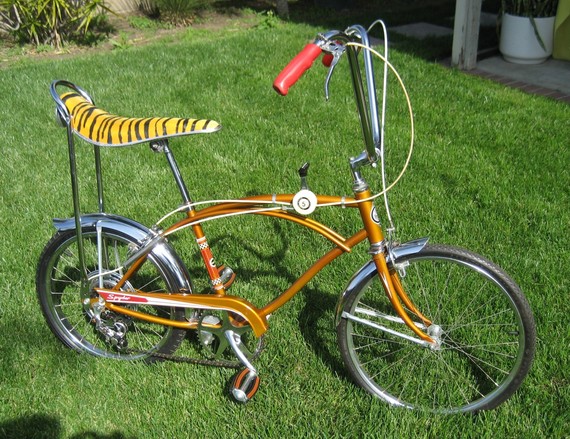
I once used 1/2" conduit to extend the forks on my Spider Bicycle....a lot of us in the late 60's did that!
I had one like this...

825267d5a66ff44518c92b9dff8c4765bd36d0cd_r.jpg


I use 1/2" 10 footers in the basement laundry area to hang clothes on clothes hangers to dry.

I have made curtain rods out of them,

c69d73231dfd6c15953658b58c887eaa.jpg


Balusters for the deck....

be55bf62f35a6fe76ef128f8fd9cb052.jpg


....canopy frame and a bike rack.
 

wdm004

New member
Joined
Jun 16, 2014
Messages
2
Location
Minneapolis area
FAA Advisory Circular 43.13.2B http://www.faa.gov/documentLibrary/media/Advisory_Circular/AC 43.13-2B.pdf provides some guidance in Chapter 1 on acceptable methods, techniques, and practices for aircraft alterations.

Outlined is a process;
-determining load factors
-estimating the resulting loads
-distributing the loads over the aircraft structure
-determining the material, size, and shape of the part
-calculate the resulting stresses in the part
-compare these stresses with the maximum allowable for the material used
-resize the part as necessary

Then it discusses the types of loads and stresses, static loads, structural sizing and analysis, static tests, materials and workmanship, material strength properties and design values, fasteners, protection of structure, accessibility, affects on weight and balance, affects on safe operation, controls and indicators, and placarding. Finally it presents example worksheets for determining static test loads.

Might be worth looking it over for guidance. Even if your aircraft is experimental, these are the types of guidelines that an examiner would be using to evaluate the airframe mods. Either before or after an incident.
 

JerryB

Well-known member
Joined
Mar 22, 2007
Messages
132
Location
North Coast, CA
Oxy-Acetelyene welding was historically the preferred joining method for 4130, but the fact is that there are fewer and fewer shops where OA welding is done.

Conversely, there are lots of TIG welders around. Many of those are even competent!!

Without looking it up (or talking to my neighbor who is an aircraft / aerospace fabricator) I am not certain about the heat treating requirements: If I were building or making repairs to an aircraft frame (think Piper Cub here), I would definitely look into the materials and heat treating requirements. Stress and (especially) vibration are among the deciding factors.

For a small bracket like the OP is proposing, I would think torch annealing would suffice. Of course, if you find someone competent with an OA torch, you might just have them go ahead and weld it in the first place.

Thin wall 4130 (TIG or OA welded & annealed or not) is still many times better than the proposed electrical conduit!

The conduit constructions the other posters showed above are really cool. Primary differences are that those are relatively low stress and (especially) low vibration applications. Also, a joint failure will not cause a piece of material along with the attached camera to go through a rotor blade!
 
Last edited:
To avoid these ads, REGISTER NOW!

Jere

Well-known member
Joined
Oct 26, 2011
Messages
708
Here is a oxy/ace kit with instructional DVD that onced learned would come in handy for other stuff like this with 4130. https://www.tinmantech.com/html/kits_4130.php

I can vouch for the meco midget torch in that kit, its a great little torch for welding. I have a Harris torch that was designed for aircraft welding and it just can't do what the meco can. Anyway just a thought.
 
OP
J

jmarkwolf

Well-known member
Joined
Jan 15, 2013
Messages
1,809
Location
Southeast Michigan
Thanks for the input everybody. The point about chromalloy vs conduit is well taken.

I'm wanting to take some airborne video with a GoPro camera from my helicopter. The camera weighs less than 5 ounces, so the proposed mounting structure doesn't need to be strong enough to stand on.

A triangulated structure, even made from conduit, will be much stronger than any of the stock plastic mounting "hardware" available for the camera.

I've tried a couple combinations of this "stock" mounting hardware and it just "whips" and "resonates", with obvious results in the video quality.

The idea is to securely fasten two horizontal members of the triangulated frame to the bottom edge of the open door frame (see avatar) with AN-3 aircraft hardware, with a third vertical member attached to the side of the body. The common point would be unitized with a 1/4 - 20 stud with a RamMount 1" ball.

Each member of this "structure" would be straight (except for flattened and bent ends), no welding required, and on the order of 8, maybe 10 inches long or so. I'm inclined to believe such a structure would be plenty "stout" for a 5 ounce camera.

The camera will be tethered to the structure, and I also plan to mount the structure on the opposite side of the aircraft from the tail rotor, so little to no risk there. No low-G manuevers will assure the structure can't get into my main rotor!
 
Last edited:

sberry

Banned
Joined
Jun 18, 2005
Messages
35,747
Location
Brethren, Michigan
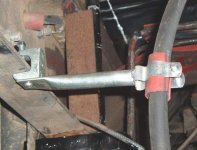
Its used in fabrication all the time. The galv is super thin, I rarely clean it.
Fly over here on Saturday and we will build it.
 

Attachments

  • bench3a.jpg
    bench3a.jpg
    36.6 KB · Views: 87
  • hyd hose hanger.JPG
    hyd hose hanger.JPG
    37.1 KB · Views: 94
Last edited:

wdm004

New member
Joined
Jun 16, 2014
Messages
2
Location
Minneapolis area
Vibration isolation in aircraft is a challenge for taking airborne video. The strength of materials considerations pale in comparison to the need for dampening. You might do well to include some form of vibration decoupling in the design of your mount.
 
OP
J

jmarkwolf

Well-known member
Joined
Jan 15, 2013
Messages
1,809
Location
Southeast Michigan
Vibration isolation in aircraft is a challenge for taking airborne video. The strength of materials considerations pale in comparison to the need for dampening. You might do well to include some form of vibration decoupling in the design of your mount.

Agreed.
 

Walterchang

Well-known member
Joined
Feb 10, 2010
Messages
769
Location
Santa Clarita Valley
Might want to try and get a little gyro stabilized gimbal and mount that on the helicopter. I've done gopros on helicopters quite a few times. My best success was to use a sticky mount on the nose and use the little white bushing thing gopro supplies. That or do time lapse.
 

sberry

Banned
Joined
Jun 18, 2005
Messages
35,747
Location
Brethren, Michigan
I like to fly, don't know a thing about it other than its a pia to get much done.
I worked for an outfit that had a plane and we worked on some airport equipment. We would have been there and back with the tools in a pickup truck even with a lunch stop.
 

600SL

Well-known member
Joined
Apr 26, 2012
Messages
1,794
Location
Connecticut
See my compressor cage in the background. Dip ends to be welded into muriatic acid to remove coating prior to welding. Be carful of fumes from both Muriatic acid or welding near galvanized coatings.
 

Attachments

  • PC170003.jpg
    PC170003.jpg
    139.2 KB · Views: 53
To avoid these ads, REGISTER NOW!
Top Bottom