To avoid these ads, REGISTER NOW!

Favorite spark plug tools

bluewater23t

Member
Joined
Dec 5, 2012
Messages
22
They fit just perfectly.

What I was trying to say, was that although they call these a 16mm (presumably because metric types can’t understand fractions) it’s specifically a spark plug socket, and is probably sized to 5/8 anyway.

I don’t think a 5/8 would fit any better, and you lose the spring clips and insulator protector that work so well.

I gave up using generic deep sockets for plugs years ago, as the KoKen are so much nicer. (Old British plugs with BSW hex sizes being the exception…)
Thanks Dave. Hence why I contacted Koken for further insight, and surprised they couldn't tell me for sure. But first hand user experience is as good as it gets, so thanks for confirming.
 
To avoid these ads, REGISTER NOW!

freudianfloyd

Well-known member
Joined
Feb 12, 2015
Messages
3,426
Location
Nowhere
This is probably my most used spark plug tool. I paid $1 at a yard sale, and you could easily make one out of a piece of rubber tubing. It comes in handy for starting plugs on overhead cam engines, or removing spark plugs if you don't have the proper spark plug socket size.
Capture.JPG
 

bluewater23t

Member
Joined
Dec 5, 2012
Messages
22
w
They fit just perfectly.

What I was trying to say, was that although they call these a 16mm (presumably because metric types can’t understand fractions) it’s specifically a spark plug socket, and is probably sized to 5/8 anyway.

I don’t think a 5/8 would fit any better, and you lose the spring clips and insulator protector that work so well.

I gave up using generic deep sockets for plugs years ago, as the KoKen are so much nicer. (Old British plugs with BSW hex sizes being the exception…)
Ordered directly from Koken USA. Showed up on my doorstep 4 days later. Can confirm, they fit my 5/8" plugs perfectly. And the spring clip feature is sweet.

Ko-ken 3300C.250-16 | 3/8" Sq. Drive Spark Plug Sockets with Spring Clips​


Two Speed

Well-known member
Joined
Sep 20, 2014
Messages
1,273
Location
Ontario Canada
My goto is a fixed head 3/8" ratchet. I have a bent handle flex head, really never got into using it. Most everything I have is easily done with a fixed handle.
My 4.6 ford made me give the magnetic socket with permanently attached extension a go, as I was leaving either the rubber insert down the hole, or the socket would pull free from the extension, then its a fishing expedition. Magnet socket just much easier and faster.
For the sbc's, its just an extra deep socket and a 3" extension if I need to clear something. If its got hedders, #1 is just easier to do with an open end wrench. =-)
 

kelpaso1

MEMBER EMERITUS
Joined
Sep 28, 2009
Messages
3,962
Location
New Brunswick
My goto is a fixed head 3/8" ratchet. I have a bent handle flex head, really never got into using it. Most everything I have is easily done with a fixed handle.
My 4.6 ford made me give the magnetic socket with permanently attached extension a go, as I was leaving either the rubber insert down the hole, or the socket would pull free from the extension, then its a fishing expedition. Magnet socket just much easier and faster.
For the sbc's, its just an extra deep socket and a 3" extension if I need to clear something. If its got hedders, #1 is just easier to do with an open end wrench. =-)
I laugh when my friends try to use my bent handle flex head ratchet. They just don't get the concept of how to use it properly because of the flex head just screws them up. I don't even own a fixed head ratchet.
 

Coach James

Well-known member
Joined
Jun 24, 2005
Messages
8,932
Location
Sandhills of North Carolina
For my Dakota and John Deere, I still use the Great Neck 13/16 rubber insert socket I bought 30+ years ago. For my other vehicles, I gave up on rubber inserts. Now I use magnetic sockets with the permanently attached extension. At least one is Duralast, and I am not sure of the others.

Coach
 

M6erfan

Well-known member
Joined
Dec 6, 2014
Messages
10,170
Location
'Merica!
w

Ordered directly from Koken USA. Showed up on my doorstep 4 days later. Can confirm, they fit my 5/8" plugs perfectly. And the spring clip feature is sweet.

Ko-ken 3300C.250-16 | 3/8" Sq. Drive Spark Plug Sockets with Spring Clips​


Great choice. I've had one of these for years and it is excellent. I originally bought the Gearwrench long swivel SP socket but it would not fit down the SP well in our M54. That Ko-ken has no such issue.
 

bwringer

Well-known member
Joined
Jan 1, 2013
Messages
10,253
Location
Indianapolis
Magnetic sockets were THE game changer for me. I found a very nice Taiwan-made set at a motorcycle shoppe, sold under the "Bikemaster" name. I also have an extra-long extra-thin socket that is the ONLY thing that works on some motorcycle engines.

In many applications, locking extensions are essential. And in others, you need a wobble, a swivel, a pure heart, and/or the wee paws of a three year old to reach the damn things.
 

ericm

Well-known member
Joined
Apr 17, 2016
Messages
1,963
Location
Southern Oregon
I only recently discovered that they make magnetic sockets and locking extensions. All the years doing it the dumb way. It's no fun when the socket's rubber grip loses the plug deep in the engine or the socket comes out of the extension.

Any recommendations for sockets and extensions? So far I'm leaning towards HF locking extensions and OEMTools sockets. I have some of their sockets and they are well made for the price. I like the idea of a socket firmly attached to the extension rather than on a swivel, so it's easier to get the plug started correctly. But my engines are mostly in-line where access is straight, if in a deep hole.

If I get my Golf R tuned the tuner recommends these crazy $45 racing plugs. I think my normal method of setting the gap with needlenose pliers or tapping the ground electrode on the floor is kinda primitive for expensive modern plugs. Any recommendations for better plug gapping tools?

Thx.
 
Last edited:

bwringer

Well-known member
Joined
Jan 1, 2013
Messages
10,253
Location
Indianapolis
If I get my Golf R tuned the tuner recommends these crazy $45 racing plugs. I think my normal method of setting the gap with needlenose pliers or tapping the ground electrode on the floor is kinda primitive for expensive modern plugs. Any recommendations for better plug gapping tools?
You don't gap plugs these days, or even check the gap.

With the "exotic metals" fine tip plugs (iridium, rhodium, platinum, mithril, etc.) you're not even supposed to check the gap because even that slight contact with metal tools can damage the tip. Just eyeball the electrodes first to make sure they haven't been dropped and squashed, and screw 'em in.

Even the conventional plugs I use in my vintage bikes arrive with bang on gaps. I've stopped bothering to even check.

Besides, spark plug gap pretty much hasn't made the slightest actual difference since we got past ****** points and weak sparks in the '70s. Any halfway functioning electronic ignition will easily throw a spark half an inch.

I have heard of people using special washers of different thicknesses to orient the electrodes in a specific direction. Whether that actually makes any difference at all I don't know, but it's remotely conceivable.
 

bwringer

Well-known member
Joined
Jan 1, 2013
Messages
10,253
Location
Indianapolis
Which raises the question for me, how do you torque a spark plug down in a tube?
Carefully, holding everything as straight as you can. On some engines you have good access, but on lots of other engines, you're working at an angle with a socket on a wobble or u-joint, so there's just no way to get any sort of accurate torque reading.

However, there's usually a little diagram on the box specifying an angle, not a torque spec. You screw them in until contact, then tighten some additional amount. If the plug has a washer, this is usually 1/2-2/3 turn (depending on thread pitch) to get the right crush on the washer; if it's a taper seat, then this is about 1/16 turn.
 

techkelly

Well-known member
Joined
Feb 7, 2009
Messages
305
Location
Midland Texas
I have heard of people using special washers of different thicknesses to orient the electrodes in a specific direction. Whether that actually makes any difference at all I don't know, but it's remotely conceivable.
You are supposed to orient the plug so that it is facing the intake valve. I worked for Jacobs Electronics in the early 90s
and they had a kit with different thickness washers. Unless you had access to a dyno you would never see any difference
in performance.
 

Gurp

Well-known member
Joined
Jun 12, 2014
Messages
366
Location
So.Ohio
My go to is a old thin "socket" out of a motorcycle's tool kit. I didn't like turning it with a screwdriver so I hammered a Challenger socket on the back of it when I was about 20. Still have it and still use it. Fits my old SOHC4 Hondas perfect.
 

AJHD

Well-known member
Joined
Jan 4, 2020
Messages
3,005
Location
AZ
Which raises the question for me, how do you torque a spark plug down in a tube?

Honestly, you don't need to. I guess it's something you "learn to feel" over time, but you don't need to put any significant amount of force onto a spark plug. Just go until it's tight and then maybe a bit more, especially if there is a washer or crush washer. Keep in mind we're often talking about aluminum heads with aluminum threads that can strip out very easily and tapping a stripped out spark plug hole really *****. I once had a stripped out bolt on an idler pulley break off the front of the block and grenade under the hood damaging the timing cover, coolant reservoir, shredding the belt and other components.


You don't gap plugs these days, or even check the gap.

With the "exotic metals" fine tip plugs (iridium, rhodium, platinum, mithril, etc.) you're not even supposed to check the gap because even that slight contact with metal tools can damage the tip. Just eyeball the electrodes first to make sure they haven't been dropped and squashed, and screw 'em in.

I'm not going to disagree, I know most manufactures these days like NGK don't recommend you gap their plugs at all.

But it's still a good idea to at least check. Beyond any obvious damage (like a dropped plug), I can't eyeball the difference between say .030" and .040" but it could mean the difference in how the spark plug functions/performs. I also know most plugs these days have cardboard sleeves over the end to help prevent damage even if the box is dropped or something heavy is put on top of it.

I don't see how gently sliding the plug over or onto a gap tool until it's tight would cause any damage. I say just don't be a stupid 200lb gorilla about it or otherwise try to force it. But that's just me.


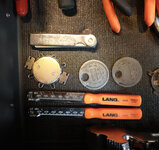
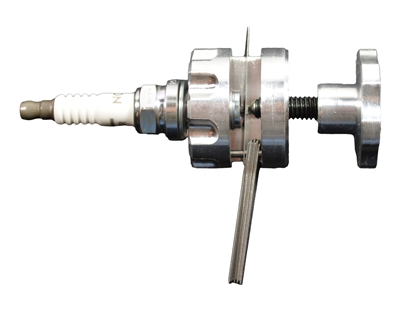
EDIT: Aside from the older styles that use wire or looks like a coin, or even a feeler gauge, I like this style...

 

bubinga

Well-known member
Joined
Jul 26, 2014
Messages
12,744
Location
Bridgeport Ohio. (Across River From Wheeling WV)
Honestly, you don't need to. I guess it's something you "learn to feel" over time, but you don't need to put any significant amount of force onto a spark plug. Just go until it's tight and then maybe a bit more, especially if there is a washer or crush washer. Keep in mind we're often talking about aluminum heads with aluminum threads that can strip out very easily and tapping a stripped out spark plug hole really *****. I once had a stripped out bolt on an idler pulley break off the front of the block and grenade under the hood damaging the timing cover, coolant reservoir, shredding the belt and other components.


I'm not going to disagree, I know most manufactures these days like NGK don't recommend you gap their plugs at all.

But it's still a good idea to at least check. Beyond any obvious damage (like a dropped plug), I can't eyeball the difference between say .030" and .040" but it could mean the difference in how the spark plug functions/performs. I also know most plugs these days have cardboard sleeves over the end to help prevent damage even if the box is dropped or something heavy is put on top of it.

I don't see how gently sliding the plug over or onto a gap tool until it's tight would cause any damage. I say just don't be a stupid 200lb gorilla about it or otherwise try to force it. But that's just me.


EDIT: Aside from the older styles that use wire or looks like a coin, or even a feeler gauge, I like this style...
Use a piece of cardboard or paper the proper thickness.
 
To avoid these ads, REGISTER NOW!

WWheeler

Well-known member
Joined
Jun 23, 2015
Messages
4,105
Location
Middleofnowhere USA
You know, I really like that idea. I wonder if anyone sells books of tear-off cardboard or paper feeler gauges for delicate applications? Or maybe plastic?
Try measuring the thickness of cut strips from plastic bottles and containers (preferably with a ball micrometer, but calipers will get you close enough if the edges aren't burred) and you're bound to find a suitable thickness.

The same strip from a gal milk container is what I've used for I couldn't estimate how many years to set the gap on any small engine magneto coil armature. Since at least 1990.

FWIW small engine plugs with old-school electrodes are the only thing I check/set the gap on any more and for those I use traditional gapping tools. For that I tend to prefer the Lang tool but it really doesn't matter. They all work.

gappers.jpg
 
Last edited:

wafrederick

Well-known member
Joined
Jul 3, 2010
Messages
6,044
Location
Holton,Mi
These newer plugs,leave the gap alone since they are pre gapped.Will break the little tip off.Also NGK has a tsb on their spark plugs,no anti seize on them.Have an anti corrosion coating on them.Put anti seize on them,inhibits the spark plug to ground,adds extra friction when torqueing them down.Results in overtorqueing them breaking the plug off.
 

Steve_P

Well-known member
Joined
Sep 15, 2010
Messages
5,181
Regardless of what NGK says, I still use a light coat of anti-seize. Just a little. When plugs stay in for 100k miles they don't come out easily and it makes me nervous. A dab of anti-seize and they come out. The "anti-corrosion" coating on plugs is just the same zinc plating that's been used for 50+ years by almost every spark plug manufacturer. The "issue" with anti-seize isn't spark grounding, it's supposedly heat transfer from the plug to the cylinder head. Which I've never witnessed, and I have a turbocharged car, 20+ PSI. And anti-seize reduces friction, not adds extra friction.

As far as spark plug sockets, I have the SK master set, and a bunch more, but also picked up a few Kokens with the spring clips- they're awesome. I use them with locking extensions if necessary.
 

WWheeler

Well-known member
Joined
Jun 23, 2015
Messages
4,105
Location
Middleofnowhere USA
These newer plugs,leave the gap alone since they are pre gapped.Will break the little tip off.

I guess it depends on what you're working on. if you're talking platinum, iridium, titanium, etc plugs for vehicles these days, then you're correct, but if you're also working on chainsaws and mowers and trimmers and blowers etc plugs don't always come pregapped for everything you're working on to where you really ought to have some feelers or better yet a gap gauge of some sort to make sure they're right.

Just for example, according to NGK these 6578s are supposed to come pregapped about 0.8mm / 0.031 in but you better check them because I buy them by the dozen and the gaps are all over the place. Rarely will I find one is close enough for my tastes to the .028 or .030 my manuals call for this plug to be that I don't correct the gap on them before installing.

ngk.jpg
 

corn chip

Well-known member
Joined
Jul 15, 2021
Messages
672
Which raises the question for me, how do you torque a spark plug down in a tube?

forget about a torq wrench on many engines. theres hoses ,pipes ,ducts, steering shafts and brake boosters in your way. if you want to know how much to tighten it just check the torq listed in the service manual. usually 13-16 lb or there abouts . get a piece of scrap material then drill and tap threads put the scrap puece in your vice and torq to what your book says. take note where the wrench clicks in relation to the washer being fully crushed. example if its 1/16 past crushed then you can easily put them in this same way with ratchet
 

bonneyman

Well-known member
Joined
Apr 22, 2010
Messages
8,767
Location
Desert SW
Extra long snap on 1/4 converted to 3/8 with a snap on flex Socket. I don't like the universal joint ones they seem to wind up on themselves when you apply torque at angles. The ball and pin style seem to work alot better for me.
Holy smokes, that looks like something you'd need a chiropractor to fix! :ROFLMAO:
 

dnschmidt

Well-known member
Joined
Oct 3, 2014
Messages
7,265
Location
Phoenix, AZ
With Iridium plugs you don't mess with the gaps as they come pre-gapped or at least NGK and Denso do. These are too fragile (and expensive) to be bending with a gapping tool. If you're screwing with your lawn mower that's another story.
 

WWheeler

Well-known member
Joined
Jun 23, 2015
Messages
4,105
Location
Middleofnowhere USA
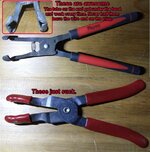
Changing spark plugs on the zero turn made me recall another favorite tool, and a hated one, for anyone who ever still deals with spark plug wires on anything ...

spark plug boot pullers.jpg
 

Outahere

Well-known member
Joined
Mar 13, 2021
Messages
871
Location
Idaho
....What I was trying to say, was that although they call these a 16mm (presumably because metric types can’t understand fractions) it’s specifically a spark plug socket, and is probably sized to 5/8 anyway.

I don’t think a 5/8 would fit any better, and you lose the spring clips and insulator protector that work so well....
I measured my new Koken 6-point 16mm spark plug socket (spring clip style) and it is 16.20mm between the hex flats. I also measured my old, but lightly used, Snap-on 5/8" magnetic spark plug socket and it is 16.05mm. The hex on my new NGK spark plug measures at 15.87mm (5/8" = 15.875mm). I think Snap-on should relabel their spark plug socket as 16mm. ;)
 

bubinga

Well-known member
Joined
Jul 26, 2014
Messages
12,744
Location
Bridgeport Ohio. (Across River From Wheeling WV)
I measured my new Koken 6-point 16mm spark plug socket (spring clip style) and it is 16.20mm between the hex flats. I also measured my old, but lightly used, Snap-on 5/8" magnetic spark plug socket and it is 16.05mm. The hex on my new NGK spark plug measures at 15.87mm (5/8" = 15.875mm). I think Snap-on should relabel their spark plug socket as 16mm. ;)
Manfacturing tolerance's factor in too!
 

ChevyEFI

Well-known member
Joined
Sep 2, 2012
Messages
8,704
Location
Phoenix, AZ
Changing spark plugs on the zero turn made me recall another favorite tool, and a hated one, for anyone who ever still deals with spark plug wires on anything ...

spark plug boot pullers.jpg
I agree, the 2nd pair *****.

I found the long straight boots on my GM Gen IV V8 truck were a little tough to pull off the plugs.

After pulling the angled coil ends, the spark plug ends were much easier to wiggle and they popped off.
 
To avoid these ads, REGISTER NOW!
Top Bottom