If the wrench does not turn the fastener, you can click it 1000 times after and nothing happens aside from cycling/wearing the torque wrench. Once static friction needs overcome, it no longer matters. That's why people on GJ say they have M12x1.5 lug nuts torqued to 600ft/lb, they confuse install torque with removal torque, as removal involves overcoming static torque plus any corrosion. The torque to over come and rotate a fixed fastener which is stationary is more than application torque.
Set the wrench to 80 ft/lb, let's say you snugged it up to 60. Wrench rotates, overcomes friction of a static fastener, 70, 71, 72, 73, 74, 75, 76, 77, 78, 79, 80, torque increases until CLICK and you release. You can click the wrench over and over, it's not going to add any torque.
Your lug nut method is correct BTW, which is why many gasket surfaces tell you to go over twice, or have a sequence of increasing torque. On those 1st few bolts, they alone are trying to crush the entire gasket, and their torque spec cannot properly compress this 18" long valve cover. So they meet the tension/force requirement to make the wrench click, but once all 20 other bolts are now helping to compress the gasket we find the center bolts are actually loose. Thus, two passes.
If you go back to lug 1 after tightening all of them, and it rotates, the wheel wasn't flush. That's the reason wheels typically fall off, goober forgets to gun them on or there's a mass of corrosion on the wheel and a torque stick can't crush the wheel flat against the hub. Click click click click click, wrench applied 80ft/lb, but there's still 3/8" of stud showing between the wheel and hub, wheel falls off. If you're torquing wheels, always re-check the lug nut you started with. Tire shops will have two and sometimes 3 people all torque the wheels, sometimes all of those people doing the pattern twice. That's up to 6 torque cycles, and it proves nothing as far as the wheel being installed properly. Looks good to know-nothing legal dept people though.
I double-click sometimes, it's a compulsive thing, it does nothing. Nothing aside from minuscule wear/cycles on the wrench. Which for most of us, is not a relevant amount versus our lifetime use of a tool.
Nope, you still need wobbles, extensions, crows feet, torque adapters, etc. The difference is you don't break off that petrified vacuum hose or bang into the subframe over and over while torquing things. You can often get more degrees per swing as well, as the wrench doesn't contact an obstruction that would make you have to ratchet it backwards.




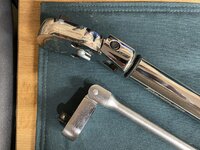


 . On lugs, I don't think that matters much.