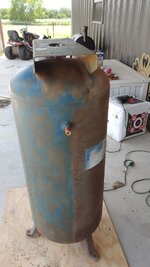
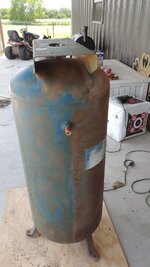
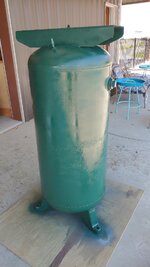
Yep..everyone on this forum thinks every compressor tank is some giant bomb waiting to go off. In reality, a rusty tank typically develops a pin hole and a minute air leak when it lets go. Even then, you can weld a patch on it and rock for years.
Sorry, I strongly disagree. SOMETIMES they will develop a pin hole leak first ... but sometimes they won't. Please read the following from the Iowa State Agriculture Extension service:
“… air-compressor equipment manuals usually contain warning notices or procedural steps alerting operators that failure to remove condensation will cause the tank to rust prematurely.
“Draining the moisture from the tank may be viewed as an unnecessary task,” said Charles Schwab, Iowa State University professor and extension specialist in agricultural and biosystems engineering. “Unfortunately, if these manual procedures are not followed, there is a serious potential for injury.” With the case of the air-compressor tank, the moisture in the tank will cause it to rust.
Schwab acknowledges that over time, internal rusting weakens the structural integrity of the tank, potentially creating a violent explosion.
“When under pressure, pieces or the tank itself will become projectiles that can inflict injuries or cause damage,” said Schwab. “No one can predict when a rust-weakened tank will explode and where the projectiles will fly.”

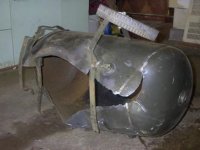


Don't be a fool. Protect yourself, your family, your friends, and your shop.
You most likely have NO idea about the maintenance or operating history of this tank you are considering. Nor, do you have any idea what the INTERNAL condition of the tank may be. Be smart, perform a static hydrotest on the tank before you use it that is at least 1.5 times the maximum operating pressure that you plan to run the tank pressure.
And, also make sure it has a functional safety pressure relief valve.
If it passes your test, and you put it into service, make sure you blow down all tank condensation at least once per day.




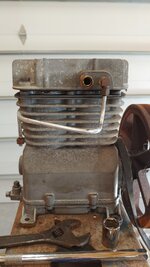


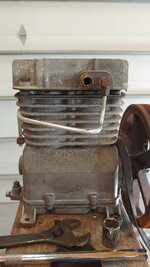

 i did it after reading another members thread here .