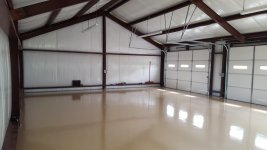
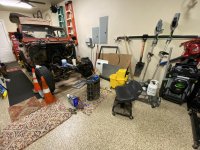
You may want to spend a little time investigating this further in our flooring section.
I've been hem-hawing around on a garage floor type for awhile. I probably like the idea of epoxy with the main concern being that many epoxy floors have lift off due to poor prep and/or hot tires from parking your car after driving home from wherever.
A few things I've noted about epoxy floors:
- Cure time is critical. Most concrete reaches full strength within 30 days (or should); however, it seems 60-120 days is what I've heard as the minimum wait time after a new slab is poured. This is more about getting all the moisture out of the slab so the epoxy gets a good chemical bond with the concrete.
- If you are building, make sure you talk over the sealers/cure agents your builder plans to use on your floor. Many are just cures that are supposed to dissipate (evaporate w/ time) and others are a cure/sealer combo type that remains and seals your floor. FYI, I built a sporting events center several years back and had multiple concrete subs. Anyhow, the cure/sealer used was approved by the engineer; however, about half was done with a cure only. The other was an approved cure/sealer combo. Additionally the specs called for terrazzo in select lobby areas and sealed & polished floors elsewhere. It turned into a huge ordeal when it came time do the floors as sealed & polished means a different layer of seal goes on the concrete and is then polished/buffed out for shine. Although both products were within spec, the end result was the floor guy had to diamond grind all the areas where the combo agent was used and the owner/engineer got to pay a hefty change order amount since this was no fault of any contractors. My point here is simple -- make damn sure you know what chemicals are going on the floor during the cure process, and make sure it's compatible and ideal for the type of flooring you intend to install afterwards. If you decide on Epoxy X then call Epoxy X manufacturer and visit with them PRIOR to constructing. Otherwise, plan on grinding.
- Speaking of grinding -- floor prep is key. Even after only 4-5 months, you will need to properly prep your floor to receive the epoxy. Again, remember, this is all about chemical adhesion. At the very least there are chemical strippers you apply to your concrete to ready the surface. From what I've seen, there is a debate rather this works or not. Some guys say yes, some say no. The best way to ensure it adheres properly is to do all your crack/prep work and then diamond grind the floor and clean the dust out.
- For epoxy products, there are several flooring providers on this forum. They all work with GJ members and can help get you the best products and pricing for the materials. From my research I've determined this include a cleaner/stripper product, the epoxy, chips (if you want for texturing) and then a clear top coat.
- Some people complain about the top coat yellowing due to exposure to the sun, etc. Some manufacturers state they have a better product than others at combating this problem. Again, you need to research it.
All in all, when I was doing my research I was left with the conclusion that while epoxy materials aren't expensive, the prep work was more intense that I'd like and very expensive you hire it out to be done. It seems to get the best long-term epoxy product you need the prep work which I think makes it one of the more expensive solutions overall. That said, some of the floors I've seen I like the best are epoxy based. So it's a catch 22. As such, I still have plain concrete floors and I'm not changing them as I plan on moving soon for a new job relocate.