Is your alarm/horn line voltage or low voltage (24VAC?)
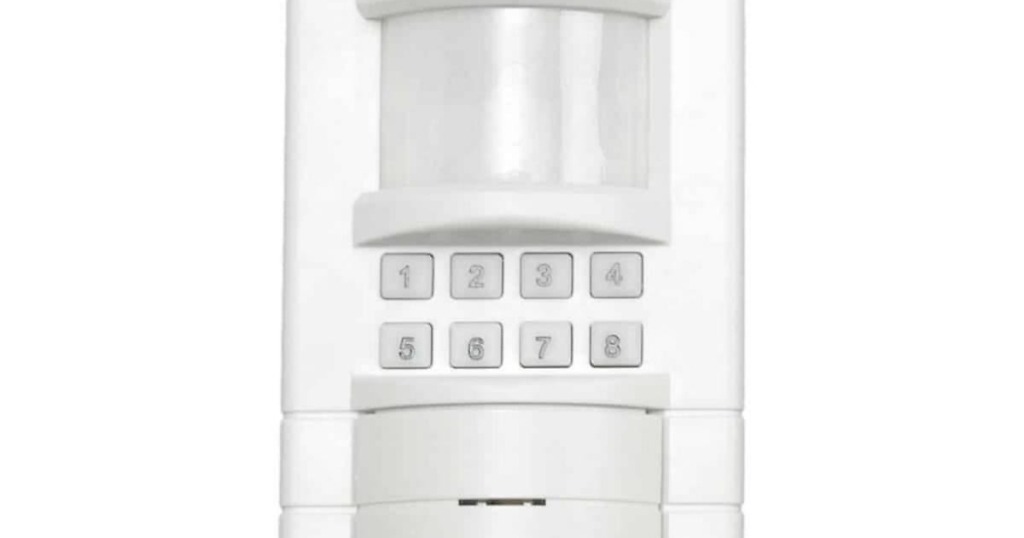
A cheap DIY unmonitored alarm system could solve your problem, but you could also have a motion sensor or multiple motion sensors wired in parallel trigger and power on an adjustable timer relay with a normally closed and normally open contact and then wire a low dB "beeper alarm" to the NC relay and your horn alarm to the NO relay.
Most timer relays I've worked with get signal / trigger voltage to the timer, which then engages the timer delay to count down before closing the NO contact, but once the timer is triggered, do not reset the contact until signal has been lost, thus the alarm would continue to sound until the circuit was "disarmed" / reset.
The relay and circuit for the the low dB "beeper alarm" and horn alarm would not be powered until one or more of the motion sensors were triggered, at which time the timer relay gets powered and provides power to the "beeper alarm". Once the set time period is reached, the relay closes, turning off power to the "beeper" and turning on power to the horn.
Your "alarm bypass" would basically be a switch (or a cheap keypad that once a code is entered opens (disarms) / closes (arms) its own relay which acts as the switch) which disables / enables power to the timer relay.
This is essentially how a basic alarm system works.
Modern monitored alarms are essentially a small, programable logic controller which monitors inputs and based on the signal from those inputs, opens / closes internal relays to trigger alarms, turn on lights, send a script to a monitoring company that the alarm has been triggered, reports point of trigger, etc.
Just my two cents.