harvero
Well-known member
So why is that 90° elbows are not used in some gas runs turns. Why do I have these these Tees?


 .
.Top picture is an illegal installation, valve is supposed to be at a height of 30" next to heater, valve is required to be ahead of the drip leg. In the event the gas valve was compromised you would not be able to put your hand into the fire ball to turn off the gas. Your home would burn down. Cap at drip bottom is a violation, it is non malleable.
You do realize the code structure varies by state and in some states it varies by town? I can assure you if he is in NJ there is no violations in that picture.
You do realize the code structure varies by state and in some states it varies by town? I can assure you if he is in NJ there is no violations in that picture.
I can assure you that by the provisions of the national gas code and the National Fire and Safety code that this installation is both illegal and hazardous nationwide and in the event of a fire his insurance may be compromised. If he installed it as a contractor and it results in death or injury he would be tried for a criminal act of negligence. No code allows the gas shut off valve to be installed this close to the gas control valve. This safety lapse is negligent by the installer and should be red tagged and locked out immediately and corrected. It does not matter where it is installed, correct it so it does not harm you or your loved ones.
In Chicago and any part of Northern Illinois serviced by NI Gas it would be locked out by any trained and diligent inspector. I would have a difficult time believing that the jurisdictions that provide public safety to The Greater New Jersey area are so negligent as to allow this. If so, the inspectional services are not serving the basic safety needs and are in need of reform. One can not clear the drip leg with out shutting off the entire service to the home, or would one jeopardize the home by doing it on the fly? In the event of a gas control failure and flame up, one can not turn the valve off without placing one's hands in the flame to do so. Absolutely negligent, Absolutely indefensible.
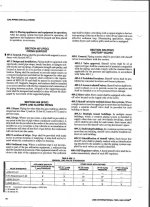
Once again Frank, I'm not debating whether it's right, wrong, safe or unsafe. I'm not in the code writing field. I only read them and abide by them. You told the OP his installation is in violation. I'm telling you you are wrong. Here is what the IFGC says about gas shut offs. This is all I could find, thats it. See section 409.
Looks like Frank is right.....
408.4 says the sediment trap shall be located "Downstream" from the shut off valve.
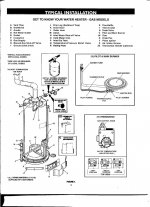
I am a certified AO Smith installation contractor. "H" is the gas valve.
Suffice it to say that just about every one has turned on the news at some point in their lives and seen a story and coverage of a home that has been completely smack flat leveled by a natural gas explosion. Every one in the home dead, half of each of the neighbors homes gone. In almost every one of these cases you will find that even the most basic of safety requirements were not met. Now, I have pointed out to you why exactly there are issues with this installation and I have given you all of your worst case scenarios. If you are a professional installer and this is your method of a favorable and preferred installation, examine your practices, if you are a home owner and you have a similar installation you may be the wiser to investigate it and perhaps correct it. The fact is this, even the home owner could have corrected this install and provided proper safety to his home in the time it takes to read this thread to this point. Why not correct it and ensure the safety? Why promote unsafe installation and negligence?
Looks like the D-Dawg is wrong. Here, right out of the installation manual of my AO Smith water heater. Does the location of the shut off valve look: "valve is supposed to be at a height of 30" next to heater" ? I'm telling you guys, Ive pulled 100's of permits in NJ every year. If it was a violation I would not see it pass over and over again. There are some jurisdictions I work in that it's almost impossible to have a job pass inspection first time no matter what you do. If it was even remotely against code they would not pass it.
Notice the "*"? "Install per local codes". Also notice the valve is before the drip leg?
I can see where most inspectors might pass an installation if the valve is not at least 30" high.....but the valve being after the drip leg.....nope....should not pass.....
"valve is required to be ahead of the drip leg"Top picture is an illegal installation, valve is supposed to be at a height of 30" next to heater, valve is required to be ahead of the drip leg. In the event the gas valve was compromised you would not be able to put your hand into the fire ball to turn off the gas. Your home would burn down. Cap at drip bottom is a violation, it is non malleable.
Drip leg is required because there is water in the gas, oil, scale etc. Tee should be full sized as well. A swing joint is not required, there should not be any deflection from expansion on this application.
Second drip leg is also in violation of national gas code if used as a drip, should have a valve between bottom of tee and cap.
"valve is required to be ahead of the drip leg"
Hmmm, been to an installation training seminar lately? You know, with these new heaters and the protective devices that have been mandated, there are a lot of things needed to know about them. Minimum negative flue pressures, cleaning of the flame arrestor mesh, replacement of the fuel vapor sensors, placement of the flame ignition systems, voltage testing the gas controls. This bull smack we are talking about here is like the 1979 sort of BS, the new heaters are a lot more technical.

I guess having a discussion with you is futile Frank. You are one of those people who simply will not be wrong. With zero knowledge of the code structure in NJ, you tell a homeowner in NJ something is "Illegal and in violation".
Sadly, non enforcement of good practice and policy does not make it right. So if the vent discharges and Grandma is sitting there smoking a cigarette in the home with the window open she's gone. Terrible.
New York and Chicago plumbers tend to believe their codes should be universally followed and that any less stringent code is rubbish to be ignored. It's something I have observed numerous times. Doesn't make 'em bad. It just is. And it does provide needed balance to the "any homeowner can do gas" crowd.
We have rats in our city, not unlike many other cities, rats eat our wires, our homes are 3 feet apart, in many neighborhoods all frame construction, our city has a negative feeling towards fire as most of it was burned to the ground, thus the conduit.I don't know jack **** about plumbing, but I can speak to you about electrical code IN YOUR AREA, and as I said to you on another thread your opinion of "best practice" and "safest practice" is just that - an opinion. You're clearly very knowledgeable about plumbing and code in your area, and based on everything you have said I wouldn't hesitate for a second to have you plumb gas or water/drain, but not every area follows the uniform plumbing code, international plumbing code, etc. and you need to respect that without assuming they're jeopardizing lives or performing substandard work.
In Chicago, it's basically "believed" that the only way to SAFELY do electric work is to do some in steel conduit. There are lots of reasons you can come up with to say why this is safer. For example, I can say if someone drives a nail by hand, they won't drive it into an electrical wire, either shorting and causing a potential fire, or making the nail "hot" for someone to touch. This is true.
Fortunately, the rest of the world is living quite safely with a "less safe" NM cable ("Romex") installation at a far cheaper cost. It's not that we don't want to spend the extra bucks to do so, it's just that it's not necessary. If making things safe was the only object, we probably wouldn't have electricity nor gas in our homes. For a while, it was common practice with commercial installs around here to install outlets with the ground up, because if the plug was away from the wall and something metallic fell on it, it would likely land on the ground and not the hot. A great theory, but just that - in practice, this happens so infrequently it's better to just leave them the way they are designed to be.
So, even though this doesn't qualify as your idea, it is still safe in practice even not in theory. Existing gas installations in your home, even without meeting all the new various codes, are still a million times safer than hopping in your car and driving to the store for a gallon of milk.
Yes, per the manufacturers instructions. Sorry to have turned your thread into such a mess. Please check the condition of your flue piping and ensure you have a clear and proper draft up the chimney as well. Thanks.Thanks for the plenty replies.
The heater was installed in 1998. I'm going to be replacing it soon Should I add another shutoff on the down pipe before the drip leg?
Yes, per the manufacturers instructions. Sorry to have turned your thread into such a mess. Please check the condition of your flue piping and ensure you have a clear and proper draft up the chimney as well. Thanks.
A less stringent code is perfectly acceptable. If the code is still providing proper protection for the consumer, a consumer who places their trust in the guidance of that code.
I'm wondering if you read this whole thread Rifle, the pictured installation is not up to the water heater manufacturers recommendations either. You must also realize that as I live in a different state I also live under a different legal system. In my state, I would be prosecuted for an improper installation that caused harm or property damage. If it can be proven that my installation was negligent, my insurance can be voided. Given that scenario I am sure you can understand why we are so adamant to ensure that we provide a quality install. I can loose my home and go to prison for negligence.