To avoid these ads, REGISTER NOW!

Gas pipe thread sealant...

mowkep

Well-known member
Joined
May 7, 2017
Messages
471
Location
Stow, Ohio
I had a home energy audit performed. They found a slight leak of natural gas by the furnace. Right at the union pipes. The furnace is at least 10 years old and been serviced more than a few times. No one ever noticed the leak. What thread sealant is best?
 
To avoid these ads, REGISTER NOW!

csp

Well-known member
Joined
Mar 23, 2010
Messages
5,719
Location
Franktown, CO
It's splitting hairs to find the "best". Any pipe dope will work if applied correctly with the threads tightened correctly.

A leak is most likely operator error from the person who installed it, not a failure of sealant.
 

flat350

Well-known member
Joined
Jan 1, 2009
Messages
1,006
Location
illinois
Rectorseal #5 or Bluemonster,put a very small amount where the 2 faces of the union meet too along with the threaded connections.
 
OP
M

mowkep

Well-known member
Joined
May 7, 2017
Messages
471
Location
Stow, Ohio
The company that installed sold his business. It's a Rheam furnace. They were part of the Rheam team contractors. They guy checked it with a meter yesterday. You get a slight whiff of it, if you are right on top of it. I wish I had recourse but it'll be a self fix
 

Firebrick43

Well-known member
Joined
May 12, 2015
Messages
13,989
Location
West central Indiana
Any more with the crappy Chinese pipe and fittings I now use rector seal #5 (gasoila is just as good) and then a layer of blue monster tape. I have not had a leak since starting this but it’s ridiculous that the Chinese **** is foisted upon us. I can still buy the ward fittings but it’s damn hard to get the USA pipe any more. I save sections of old pipe I take out if it’s nice now!

If I get some nice USA pipe that threads nice and some ward fittings the will seal just with the cutting oil I think.
 

matt_i

Well-known member
Joined
Mar 14, 2008
Messages
10,722
Location
SE Michigan
Seems like an extra poor job if the 1/4 psi NG is leaking...

But I trust Loctite 592 for all nature of tapered pipe thread fittings.
 

Disney

Well-known member
Joined
Dec 20, 2010
Messages
304
Location
Murfreesboro, TN
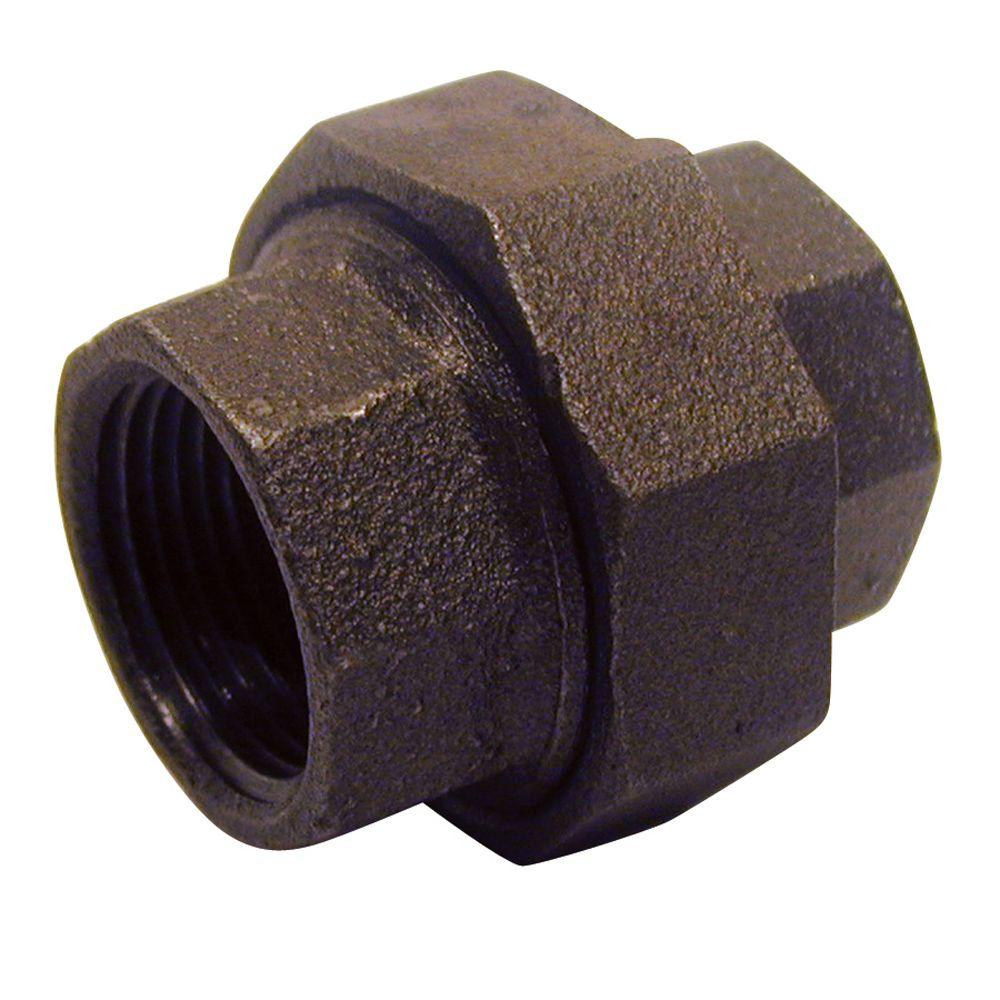
You said it's at a union? Does it look like this?
black-black-pipe-fittings-521-703hn-64_1000.jpg
If so, that it sealed by an interference between the tapers of the union ends, not by the threads. It might just need to be tightened, or taken apart and the ends cleaned up and re installed.
 
OP
M

mowkep

Well-known member
Joined
May 7, 2017
Messages
471
Location
Stow, Ohio
You said it's at a union? Does it look like this?
black-black-pipe-fittings-521-703hn-64_1000.jpg
If so, that it sealed by an interference between the tapers of the union ends, not by the threads. It might just need to be tightened, or taken apart and the ends cleaned up and re installed.

I had it apart. I applied some pipe dope with the ptfe? (Oatey). Reinstalled. I can faintly smell gas on either side. I bought a new union tonight figuring that may be the solution. I will go back tomorrow and get the yellow canister teflon tape and start from scratch. All of the older pipes look like they have the thicker pipe dope (whatever they used back when).
 
OP
M

mowkep

Well-known member
Joined
May 7, 2017
Messages
471
Location
Stow, Ohio
We are pipe doping and teflon taping the threads. I know not to touch the union connections themselves....although I should check for a raised edge or burr
 

spudley

Well-known member
Joined
Dec 27, 2016
Messages
702
Location
Northeast Wisconsin
I know not to touch anything but the threads too but after going through several of those junk Chinese unions while running the gas line to my garage heater, I skimmed some Rector Seal dope across the machined (and that's a very generous term) faces and voila, no leak.

Otherwise find a USA made union. You'll sleep better at night.
 

rlitman

Well-known member
Joined
Oct 18, 2010
Messages
24,579
Location
Long Island
You said it's at a union? Does it look like this?
black-black-pipe-fittings-521-703hn-64_1000.jpg
If so, that it sealed by an interference between the tapers of the union ends, not by the threads. It might just need to be tightened, or taken apart and the ends cleaned up and re installed.

The union seals at the metal to metal interface, so the threads on the collar are not part of the seal, but it is possible for the pipe threads to be leaking. This is a job for...

to check for a gas leak just mix some dish detergent and water leak will bubble like crazy

Yep, bubbles. Gotta soap it up to see the source of the leak.

I was scrolling the thread to see if someone would say it....

Aren't you Not supposed to put anything on the face of the union

Ok, so if it's leaking out the sides, then the NPT pipe threads may simply need to be tightened (unless it's a crack in the fitting, or the fitting turns out to be porous). However, if it is taken apart, it will need more dope to be applied.

If it is leaking out of the collar, it is leaking from the ground metal to metal seat of the union. This should not get pipe dope applied to it, but can be coated in grease or oil (Nylog comes to mind). More likely than not, it too just needs tightening, as cheap unions can take a surprising amount of force to seal.
 
To avoid these ads, REGISTER NOW!
OP
M

mowkep

Well-known member
Joined
May 7, 2017
Messages
471
Location
Stow, Ohio
I'm guessing the union isn't a good one. I can smell a hint of gas on either side of the threads. I've got everything pretty tight. I bought a new union, different sealant and I'll get some yellow tape and give it a whirl.
 

BD1

Well-known member
Joined
Mar 18, 2007
Messages
4,602
Location
north side
We always use never seize on union faces and on male threads were colar tightens.
This makes huge difference, especially on box store import fittings.
Use two wrenches when working on pipe and fittings.


Sent from my iPhone using Tapatalk
 
OP
M

mowkep

Well-known member
Joined
May 7, 2017
Messages
471
Location
Stow, Ohio
I had the same thing happen a few years ago. This is what was recommended:

Thanks for recommending this. Bought this and a new union. Definitely think it was a seating issue with the old union. Thoughts
 

Attachments

  • IMG_20201219_095250521 (1).jpg
    IMG_20201219_095250521 (1).jpg
    48.6 KB · Views: 87

Joemctag

Well-known member
Joined
Aug 11, 2017
Messages
813
Location
Outside raleigh nc
To add to what Disney said: While you’re there with your tools and everything, you should undo both of the union halves from their respective pipes, apply pipe sealant to the male threads and retighten. Don’t forget to slide the large union nut onto the pipe first. Don’t overtighten. The sealant will seal it. Gas is like 0.5 psi.
Now, like Disney said, when you join the union together with the large nut, it’s the special metal surfaces on the two ends that seal, even if the pipes aren’t perfectly aligned. Don’t use sealant on the large nut. It won’t hurt, but those are not “pipe threads” and aren’t there to make a seal.
Another poster says a little sealant on the mating surfaces is good and that sounds like a good idea, even though it’s not needed, supposedly. Your leak was probably extremely small and harmless.
 

Joemctag

Well-known member
Joined
Aug 11, 2017
Messages
813
Location
Outside raleigh nc
Yeah, and what BDI says about using two wrenches: It’s that if you inadvertently loosen a joint anywhere, you’re supposed to completely undo, reapply sealant and tighten that joint again, something to be avoided. As with a lot of things, you can take the trouble to do it right and be sure, or do it otherwise because nobody’s watching. Since it’s your house, I’m sure you’re the former. Good luck.
 

59 wagon man

Well-known member
Joined
Oct 25, 2010
Messages
1,589
Location
hollywood fla
ive had several home inspectors give my customers reports stating a leak here or a leak there. even had a customer who recently bought a house and the home inspector didn't say anything about the kitchen cabinets other than remodeled kitchen except last month the upper cabinets rippped of the wall and disintegrated. bottom line before you go nuts spray the union with soapy water and you will see where the leak is
 

BD1

Well-known member
Joined
Mar 18, 2007
Messages
4,602
Location
north side
All the import fittings are hit and miss, especially unions.
Here's a real made in USA standard 150 union. Excellent machined surfaces with a brass beveled ring for seating.


IMG_4759.jpg


Sent from my iPhone using Tapatalk
 

matt_i

Well-known member
Joined
Mar 14, 2008
Messages
10,722
Location
SE Michigan
Get a union made for gas
they meet a tighter spec

Curious what you have on this as far as spec? I have always used Ward Mfg fittings, "black" Sch 40 pipe. The gas pressure is less than 0.5psi....However would like to learn.
 

BD1

Well-known member
Joined
Mar 18, 2007
Messages
4,602
Location
north side
Curious what you have on this as far as spec? I have always used Ward Mfg fittings, "black" Sch 40 pipe. The gas pressure is less than 0.5psi....However would like to learn.


Fittings and valves are catorized WOG.
Water, Oil, or Gas use.
Standard fittings are rated 150 PSI and increase from their.
Look at the union that was posted,and compare that to the made in USA one I posted.


https://s3.us-east-1.amazonaws.com/anvilintl.com-prod/resources/literature/Pipe_Fittings.pdf


Sent from my iPhone using Tapatalk
 

johninct

Well-known member
Joined
Dec 21, 2010
Messages
2,592
Yeah, and what BDI says about using two wrenches: It’s that if you inadvertently loosen a joint anywhere, you’re supposed to completely undo, reapply sealant and tighten that joint again, something to be avoided. As with a lot of things, you can take the trouble to do it right and be sure, or do it otherwise because nobody’s watching. Since it’s your house, I’m sure you’re the former. Good luck.

I hate when that happens and all of the necessary extra work to redo every joint.
 

David C

Well-known member
Joined
Mar 10, 2014
Messages
157
Location
Northern California
Teflon tape and pipe dope do not seal pipe threads.

The purpose of these materials is to reduce friction between the pipe threads and fitting so that the joint can be adequately tightened.

Pipe threads are tapered and the seal is accomplished by interference of pipe and fitting. This is why the pipe thread length, the length the die travels from the end of the pipe, should be limited to that specified in pipe fitting codes.
 

rlitman

Well-known member
Joined
Oct 18, 2010
Messages
24,579
Location
Long Island
Teflon tape and pipe dope do not seal pipe threads.

The purpose of these materials is to reduce friction between the pipe threads and fitting so that the joint can be adequately tightened.

Pipe threads are tapered and the seal is accomplished by interference of pipe and fitting. This is why the pipe thread length, the length the die travels from the end of the pipe, should be limited to that specified in pipe fitting codes.

This misnomer comes up over and over, year after year.

NPT pipe threads do not form an interference fit. There is a permanent helical leak path that must be sealed with some additional material.

NPTF pipe threads (which are only made in brass to the best of my knowledge, and cannot be made from steel) do form an interference fit, but also deform upon tightening, making them often a single-use part.
 

David C

Well-known member
Joined
Mar 10, 2014
Messages
157
Location
Northern California
HTML:
[I]This misnomer comes up over and over, year after year.

NPT pipe threads do not form an interference fit. There is a permanent helical leak path that must be sealed with some additional material.[/I]

rlitner

This is what I have

From Piping Handbook 5th edition

"Pipe threads are necessarily somewhat imperfect. Some form of compound is used to insure thightness as well as to lubricate threads while the the joint is being screwed together. If the threads are well made a light oil such as linseed oil is sometimes a sufficient Lubricant."

and

"Dryseal pipe threads are also employed for pressure tight joints particularly where the presence of a lubricant and or sealer would contaminate the flow medium."

and this from plant engineering.com

"Teflon Tape. The purpose of this white, nonsticking tape is to serve as a lubricant when threaded parts of a piping system are being assembled. The inherent slipperiness of the material makes assembly easier. Strickly speaking, Teflon tape is not a thread sealant. The tape may have the effiect of clogging the thread path, but it does not actually adhere to the surfaces as a true sealant should.

Teflon tape does not adhere to thread flanks, and does not provide a secure seal."

This above does not completely belie your opinion as noted in your post but it does suggest you might be wrong. For example if light oil is sufficient to provide a pressure type seal and there is no sealant what keeps the pipe joint from leaking. Same goes for teflon tape.

Could your statement be limited to certain types of pipe joints as it appears that thread sealant is not always required and the interference fit does hold pressure?

Could you provide some reference to your statement? If I am wrong I like to be corrected and informed on the subject.

Thanks
 

rlitman

Well-known member
Joined
Oct 18, 2010
Messages
24,579
Location
Long Island
...and

"Dryseal pipe threads are also employed for pressure tight joints particularly where the presence of a lubricant and or sealer would contaminate the flow medium."...

A little knowledge is a dangerous thing. "Dryseal pipe threads" refers to NPTF and NPSM. Yes, such fittings do exist, but it is NOT the same thing as NPT, which is the pipe thread everyone here is talking about with gas pipe.
 

David C

Well-known member
Joined
Mar 10, 2014
Messages
157
Location
Northern California
Rlitner,

Your most recent post, while informative, did not really answer the questions.

What seals a pipe joint when only a thread lubricant and not a sealant is used? If it is not an interference fit then what is the sealing mechanism.

Why does an extra 1/2 turn on a pipe joint during assembly stop a leak? If your theory is correct the helical gap remains so what stops the assembly from leaking?

Can you provide a one or more written references to your opinion? If you are correct your statement is not solely of your own making.

On this forum posters often take offense and subsequent posts are often contentious. This is not my intent. Consider that I am asking to be educated and reply as such.
 

rlitman

Well-known member
Joined
Oct 18, 2010
Messages
24,579
Location
Long Island
I'm not offended. I DID however answer your questions.

Here, read it from a manufacturer:
https://www.natool.com/national-pipe-taper-vs-national-pipe-taper-fuel/

"NPT threads are dimensioned so that the crests and roots, when assembled “hand tight “, result in a space at the tops and bottoms of the threads and contact with the thread flanks. After wrenching, the threads will reduce this space but will not eliminate it entirely. This space at the crest and root spiral along the thread from the beginning to the end of the assembled fitting. If a sealant is not used, whatever is flowing through the pipe will leak from the pipe and fitting, therefore a sealant is needed to prevent this.

NPTF threads, on the other hand, are dimensioned so the crests and roots, when assembled “hand tight “, come in contact with each other and results in a space between the internal and external thread flanks. When wrenching the threads, the crests and roots are crushed together till the thread flanks come together forming a seal around the entire thread form, eliminating the need for sealant, thus the name Dryseal."


HAND-WRENCH-4-1024x683.jpg
 

p00p

Well-known member
Joined
Nov 23, 2019
Messages
1,997
Location
42.4974° N, 82.8964° W
could be worse. had to cut off a gas line union as it appeared there was jb weld used as an attempt to "mend" a leak...

so much had to be done to address that one leak with a new fittings.
 
OP
M

mowkep

Well-known member
Joined
May 7, 2017
Messages
471
Location
Stow, Ohio
could be worse. had to cut off a gas line union as it appeared there was jb weld used as an attempt to "mend" a leak...

so much had to be done to address that one leak with a new fittings.

I got lucky so to speak that it was an under $15 fix. Too bad that when they installed the $3K furnace, they couldn't have used a better union and check their work for leaks!!
 
To avoid these ads, REGISTER NOW!
Top Bottom