To avoid these ads, REGISTER NOW!

Gel Connectors

Dave455

Well-known member
Joined
Mar 19, 2013
Messages
5,800
Location
Sussex, England
Well, I learned something useful today. Folks may know about these, especially if they get involved with telephones or data cables, but I didn’t.

I was repairing the drivers seat in a Citroen, and broke the connector to the weight sensor. These were relatively thin wires so I couldn’t crimp them. I was going to do something with solder and heatshrink, but the seat was back in so it was going to be a pain.

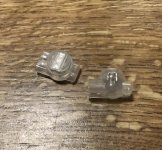
I looked into what the telecoms guys use, and it’s these Gel Connectors. All I can say is “Wow”! How come I didn’t know about these before?

They’re tiny little things, and you just poke the wires in (with insulation) which pierces a gel membrane. You then crimp them (well, squeeze them) which joins and clamps the wires. The gel prevents oxidisation of the bare wires, and keeps moisture out.

I didn’t believe these things would work so well and so easily, but they do! The ones I got work down to 26 Gauge.

Just thought I’d share this around!
 

Attachments

  • 7E2E6324-1308-4720-96DB-5A2A8D0CB310.jpg
    7E2E6324-1308-4720-96DB-5A2A8D0CB310.jpg
    152.6 KB · Views: 165
  • C088A11F-49BA-4DD0-8C88-A49EBEAADE9F.jpg
    C088A11F-49BA-4DD0-8C88-A49EBEAADE9F.jpg
    141.4 KB · Views: 165
  • FA4092DF-8F62-4139-9F2B-189946B468DF.jpg
    FA4092DF-8F62-4139-9F2B-189946B468DF.jpg
    117.5 KB · Views: 144
To avoid these ads, REGISTER NOW!

rlitman

Well-known member
Joined
Oct 18, 2010
Messages
24,589
Location
Long Island
Scotchlock IDC connectors are pure evil. Gel filled ones are quite a bit less evil. Remember that you really need to be using the correct gauge wires on any insulation displacing connector like this. Too thin, and no contact. Too thick, and the steel breaks the wire. The usable range is very narrow.
 

Firebrick43

Well-known member
Joined
May 12, 2015
Messages
14,003
Location
West central Indiana
And they are meant for applications with no vibration. They are marginally better than a scotchlok connector, and that is not saying much.

Dont understand why you couldnt splice it??? Strip the insulation full length of the **** connector off each wire, twist, fold over wire on end doubling it, and use an uninsulated 18-22ga splice with proper ratcheting crimpers and a piece of heat shrink over it(foam adhesive lined in wet environment)
 

tym

Well-known member
Joined
Mar 5, 2016
Messages
2,429
Location
MA
Those also don't look like they can carry much current.
 
Last edited:
OP
D

Dave455

Well-known member
Joined
Mar 19, 2013
Messages
5,800
Location
Sussex, England
And they are meant for applications with no vibration. They are marginally better than a scotchlok connector, and that is not saying much.

Dont understand why you couldnt splice it??? Strip the insulation full length of the **** connector off each wire, twist, fold over wire on end doubling it, and use an uninsulated 18-22ga splice with proper ratcheting crimpers and a piece of heat shrink over it(foam adhesive lined in wet environment)

I could have spliced it, but it was a very thin wire, and I would have been working with fingertips in a confined space, so I took the easy option.

These connectors seem to be used widely in the U.K. telecoms world of late, and they don’t seem to have many issues. I know they’re not designed for vehicles, so we’ll find out how well they hold up!
 
Last edited:
OP
D

Dave455

Well-known member
Joined
Mar 19, 2013
Messages
5,800
Location
Sussex, England
Those also don't look like that can carry much current.

Much like the Wago or Ideal connectors used in the electrical trade, I assume they will be rated for the max current that the thickest wire they hold can carry.

I’ve seen test footage of the Wago connectors being tested to destruction, and the wires they carry burn out before the connectors.
 
Last edited:

Gummi Bear

Well-known member
Joined
Nov 5, 2006
Messages
524
Location
Sunset, Texas
I’ve used those, and what the guys are saying is absolutely true. Make sure you have the right size for the wire you’re splicing. I’ve boogered wire using the wrong size more than once.


I also used to use “string bean” connectors. Does anyone still use them?


dfe4d322c39ebf5298e29edc3ab25dcb.jpg


I went to the woods because I wished to live deliberately...

Henry David Thoreau
 

Firebrick43

Well-known member
Joined
May 12, 2015
Messages
14,003
Location
West central Indiana
I could have spliced it, but it was a very thin wire, and I would have been working with fingertips in a confined space, so I took the easy option.

These connectors seem to be used widely in the U.K. telecoms world of late, and they don’t seem to have many issues. I know they’re not designed for vehicles, so we’ll find out how well they hold up!

They have been in use in the telecom industry in the US for 25 plus years, and yes they are pretty much trouble free in that use, but the type of connection(gullotine) is bad for vibration in mobile uses.

Just as the edge joint of wago and back stab receptacles/switches are a bad joint for carrying current long term, but people still use them. And now code is mandating expensive and trouble prone arc fault breakers to protect from crappy cheap but fast wiring methods.
 
To avoid these ads, REGISTER NOW!

no704

Well-known member
Joined
Apr 27, 2016
Messages
5,208
Also called dolphin connectors. Come packed w/grease to seal. Used a lot in alarm and door systems for low voltage connections.
 
OP
D

Dave455

Well-known member
Joined
Mar 19, 2013
Messages
5,800
Location
Sussex, England
They have been in use in the telecom industry in the US for 25 plus years, and yes they are pretty much trouble free in that use, but the type of connection(gullotine) is bad for vibration in mobile uses.

Just as the edge joint of wago and back stab receptacles/switches are a bad joint for carrying current long term, but people still use them. And now code is mandating expensive and trouble prone arc fault breakers to protect from crappy cheap but fast wiring methods.

I suspect they’ve been in use for a good while here too, but the telecoms industry isn’t my industry so I don’t know what goes on generally.

Yes, with you on the Wago connectors. They’re acceptable here, but I too have concerns about long term and wouldn’t install them in my own property. I’m used to junction boxes and like them. If some large firm is wiring a new build though, they use what’s quickest.

The only things I’ve wired of late are workshops, and that suits my way of working. In fact, if I was re wiring my own house I’d probably install 32amp industrial sockets all round, just to keep my options open...
 

rlitman

Well-known member
Joined
Oct 18, 2010
Messages
24,589
Location
Long Island
I’ve used those, and what the guys are saying is absolutely true. Make sure you have the right size for the wire you’re splicing. I’ve boogered wire using the wrong size more than once.


I also used to use “string bean” connectors. Does anyone still use them?


dfe4d322c39ebf5298e29edc3ab25dcb.jpg

Those are called "B connects", or Dolphins. The white ones **** for wire connections even more than Scotchlok, because they don't really do much more than keep twisted wires twisted. I use the white ones on bicycle cable ends to keep them from unraveling. I have blue ones that are gel filled that I use from time to time, but even these have let me down.
 

SarcasticDwarf

Well-known member
Joined
Dec 30, 2009
Messages
236
Location
North Dakota
I had bought a bunch of the Del City Cool-Seal **** connectors a year or two ago. I store them in the garage and found all of them to have melted? inside.
 

rlitman

Well-known member
Joined
Oct 18, 2010
Messages
24,589
Location
Long Island
My irrigation guy uses gel filled wire nuts. They have an outer membrane that snaps shut around the gel and connected wires.

Those are AMAZING! I've used them for my irrigation solenoids, and have had many things fail, but never because of them.
 
To avoid these ads, REGISTER NOW!
Top Bottom