To avoid these ads, REGISTER NOW!

Generator question

threeputt

Well-known member
Joined
May 18, 2012
Messages
608
Location
Next to a very busy 4 lane
How can I tell if the generator I bought at a sale runs off propane or natural gas ? I know it runs off one of these fuels but don't know how to tell. Anyone know how I can check this. Thanks
 
To avoid these ads, REGISTER NOW!

PelicanPines

ALLIANCE MEMBER
Joined
Apr 30, 2014
Messages
38,214
Location
New Jersey, USA, Earth, My own reality
As far as I know... You only need to adjust something on the big round regulator to switch back and forth from Propane and NG... Sorry it's been a while since I watched the Youtube video.

You do have that big round regulator right? Is it part of the generator or is it separate?
 

infinkc

Well-known member
Joined
Jan 19, 2012
Messages
862
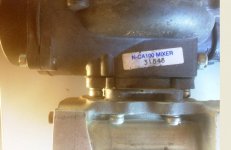
I didn't see one but can look closer. The mixer is n-CA100 MIXER 31848 but not sure that will tell me anything.
So I really shouldn't worry about it being propane or natural gas ? I think it was on propane .
i guess what model generator is it, it should have something in the manual for it on how to identify the gas type , or call that manufacturer.
 

PelicanPines

ALLIANCE MEMBER
Joined
Apr 30, 2014
Messages
38,214
Location
New Jersey, USA, Earth, My own reality
I tried that and could not come up with much. I went ahead and started it on propane. It seemed to run good but I only ran it for like a minute. I would assume it is set up for propane if it ran good ???

Yes... if it was setup for NG... it would not sound right under propane. Same is so the other way around. If propane... it would sound bad on NG.

My generator Honda EU2200i can be adapted with a Propane/NG regulator modification. It's just a simple adjustment to switch between the two gasses.
 

nadogail

Well-known member
Joined
Jan 23, 2009
Messages
32,274
Location
Coronado, CA
Now that you have started it, the next step is a load test.

My "load bank" is 6 porcelain lamp sockets wired in parallel. I test my generator with my ARC Welder.
 
OP
T

threeputt

Well-known member
Joined
May 18, 2012
Messages
608
Location
Next to a very busy 4 lane
Now that you have started it, the next step is a load test.

My "load bank" is 6 porcelain lamp sockets wired in parallel. I test my generator with my ARC Welder.

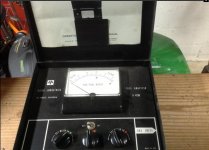
Maybe I should bring this old meter out and see how the fuel is burning under a load ? I tried it a few years ago after finding it under an old workbench when cleaning up my old shop. It probably was there for over 40 years but it still worked after I put new batteries in it. What ya think ?
I can find something to put it under a load like you mentioned. Good tip.
 

Attachments

  • engine fuel analizer .jpg
    engine fuel analizer .jpg
    78.8 KB · Views: 66

TractorJeff

Well-known member
Joined
Dec 8, 2013
Messages
3,309
Location
Elkhorn, WI
Not sure how your Fuel Analyzer works but if it uses "Chemical Cells" to analyze the Exhaust chances are it will give inaccurate readings. Most small 4 stroke engines put out tons of pollutants. Not having the manufacturers spec for the exhaust emissions an analysis will be worthless.
Is it a "Vaporizer Regulator" on a Water Cooled engine or just a "Regulator" on Air Cooled engine?
A forklift type of propane tank that puts liquid gas into the vaporizer to keep up with engine demand or an Air Cooled that uses a BBQ type tank that uses strictly gas vapor? If it is the second case, then you may need to go to a 30lb tank to keep the vaporization rate high enough for the demand.
As far as Loading, electric space heaters make great loadbanks!
 
Last edited:
OP
T

threeputt

Well-known member
Joined
May 18, 2012
Messages
608
Location
Next to a very busy 4 lane
I will find out about the tank. I am really not sure. I see nowhere on the regulator where you connect a liquid line. I will try and get a picture uploaded here so maybe someone can tell me exactly what I have got and what tank I need to use.
 
To avoid these ads, REGISTER NOW!
OP
T

threeputt

Well-known member
Joined
May 18, 2012
Messages
608
Location
Next to a very busy 4 lane
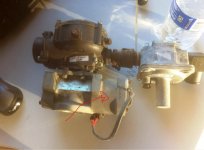
Here is what it looks like
Not sure what the part I have the red line on is called ? Its got an electrical wiring plug in on it.
Today I started it using a tank that came off a forklift. Not sure how much was in tank but it ran on forklift.
I laid the tank on floor horizontal like it bolted on forklift. It don't idle every good. Hunting I think would be the term. Not sure about the tank I used. Should I have just used a propane tank from a cooker ?
As seem in one of these pictures there is a spring someone zip tied to this part. Not sure why but someone meant not to lose it.

Maybe someone can explain exactly what I got by these pictures and which propane tank I need to use. THANKS
 

Attachments

  • propane 1.jpg
    propane 1.jpg
    94.9 KB · Views: 63
  • propane 2.jpg
    propane 2.jpg
    74.6 KB · Views: 59
  • propane 3.jpg
    propane 3.jpg
    96 KB · Views: 52
Last edited:
OP
T

threeputt

Well-known member
Joined
May 18, 2012
Messages
608
Location
Next to a very busy 4 lane
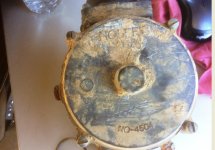
No markings on the regulator?
Yes
I should have cleaned it up a little better but maybe someone can tell me from this picture what I got. Also what sort of tank should I use ? maybe just a bottle like I use on my cooker ? THANKS for the help on any of this. I am learning
 

Attachments

  • propane4.jpg
    propane4.jpg
    115.2 KB · Views: 34

Firebrick43

Well-known member
Joined
May 12, 2015
Messages
14,423
Location
West central Indiana
How many hp on the generators engine?? A 20lbs grill bottle is going to be to small for many generators as it will have to fast of a withdraw rate. If you remove to much gas to fast the liquid can’t boil to a gas fast enough. A 33lbs or 40lbs tank would be big enough for most 10-12 hp generators or hook two 20lbs together.
 
OP
T

threeputt

Well-known member
Joined
May 18, 2012
Messages
608
Location
Next to a very busy 4 lane
How many hp on the generators engine?? A 20lbs grill bottle is going to be to small for many generators as it will have to fast of a withdraw rate. If you remove to much gas to fast the liquid can’t boil to a gas fast enough. A 33lbs or 40lbs tank would be big enough for most 10-12 hp generators or hook two 20lbs together.
This is a commercial generator with a 3.0 GM engine. GS25 TAYLOR GENERATOR 120/240 volt
Generator model number is BC 184E
I was told it was last run in 2009
https://www.taylorpowergenerators.com/brochures/DS_GS Models General Brochure.pdf
I called the company. They told me to put the spring back in regulator and run it off natural gas if I could. I do have that option. The tech also said if I wanted to run it off propane it had to be vapor and a large tank like people use for home heat would be what I have to use. Something like a 250 gallon.
Did he tell me right ?
 
Last edited:

redmondjp

Well-known member
Joined
Nov 25, 2014
Messages
2,318
Location
Redmond, WA
Here is what it looks like
Not sure what the part I have the red line on is called ? Its got an electrical wiring plug in on it.
Today I started it using a tank that came off a forklift. Not sure how much was in tank but it ran on forklift.
I laid the tank on floor horizontal like it bolted on forklift. It don't idle every good. Hunting I think would be the term. Not sure about the tank I used. Should I have just used a propane tank from a cooker ?
As seem in one of these pictures there is a spring someone zip tied to this part. Not sure why but someone meant not to lose it.

Maybe someone can explain exactly what I got by these pictures and which propane tank I need to use. THANKS

Whoa there! Propane tanks for forklifts deliver liquid propane to the vaporizer unit which allows the gas to expand first. You definitely don't have a setup for liquid there - what you have must have low-pressure vapor fed to it.

There is a ton of online reading that you can do on this - I have been doing so myself to learn about this very topic. Here are just a few links to start with:

http://www.propane-generators.com/lp_gas.php

https://www.uscarburetion.com/portable-propane.htm

http://www.engineeringradio.us/blog/2010/10/care-and-feeding-of-propane-fueled-generators/
 

Firebrick43

Well-known member
Joined
May 12, 2015
Messages
14,423
Location
West central Indiana
This is a commercial generator with a 3.0 GM engine. GS25 TAYLOR GENERATOR 120/240 volt
Generator model number is BC 184E
I was told it was last run in 2009
https://www.taylorpowergenerators.com/brochures/DS_GS Models General Brochure.pdf
I called the company. They told me to put the spring back in regulator and run it off natural gas if I could. I do have that option. The tech also said if I wanted to run it off propane it had to be vapor and a large tank like people use for home heat would be what I have to use. Something like a 250 gallon.
Did he tell me right ?

Yes, without a vaporizer you need a large tank. 250 gallon is a starting place. I thought originally we were talking about a small aircooled engine generator. Forklifts and such have a vaporizer that uses engine coolant heat to turn the liquid to a gas. A large tank has enough surface area to do so. Also most lp lines off the tank are only sized for 250,000 BTu’s per hour heat rate which would be about 2 gallon per hour. A 25kw Generator is going to burn around 4 gallon per hour at full load or approx 400,000 btus. That means at least 1” diameter line if you stay under 75’ length or 1 1/4 if longer.

Seeing that your engine didn’t have a vaporizer I highly doubt it was run on lp and will need tuning.

Natural gas if available would be ideal and much cheaper to run. The only advantage to lp is if the natural gas line get disabled which is pretty rare for the most part but does happen in earthquakes or major floods if the compression facility is inundated. Remember natural gas will need probably even large pipes for the supply line.
 
OP
T

threeputt

Well-known member
Joined
May 18, 2012
Messages
608
Location
Next to a very busy 4 lane
Yes, without a vaporizer you need a large tank. 250 gallon is a starting place. I thought originally we were talking about a small aircooled engine generator. Forklifts and such have a vaporizer that uses engine coolant heat to turn the liquid to a gas. A large tank has enough surface area to do so. Also most lp lines off the tank are only sized for 250,000 BTu’s per hour heat rate which would be about 2 gallon per hour. A 25kw Generator is going to burn around 4 gallon per hour at full load or approx 400,000 btus. That means at least 1” diameter line if you stay under 75’ length or 1 1/4 if longer.

Seeing that your engine didn’t have a vaporizer I highly doubt it was run on lp and will need tuning.

Natural gas if available would be ideal and much cheaper to run. The only advantage to lp is if the natural gas line get disabled which is pretty rare for the most part but does happen in earthquakes or major floods if the compression facility is inundated. Remember natural gas will need probably even large pipes for the supply line.
Thanks for this information. Written where I can understand it. :D
Here is the part that had the spring zip tied to it.
 

Attachments

  • IMG_2007[1].jpg
    IMG_2007[1].jpg
    84.9 KB · Views: 27

Firebrick43

Well-known member
Joined
May 12, 2015
Messages
14,423
Location
West central Indiana
That is a regulator to control the gas pressure. "Typical" NG pressure is 7" WC or water column and is about .25 psi.

Typical LP pressures are 11" WC (.40 psi) but there are more variations but it's recommended to stay under 14".

Also LP is nearly twice as dense (amount of btu per volume) compared to NG.

It's my assumption, as I have never used or read the manual on that regulator, one of the major changes switching between fuel is the regulator setting and are doing so by different weight springs. The stronger the spring the higher the pressure will be past the regulator.

Some regulators are adjustable, some are not
The spring would go under the cap in the middle of the regulator. There is probably a screw disk to make small adjustments. Turn in to raise, out to lower. You would hook a manometer to measure the WC past the regulator. The spring change out would give you gross adjustments when switching between fuels and would be under the screw disk.

That is a regulator to control the gas pressure. "Typical" NG pressure is 7" WC or water column and is about .25 psi.

Typical LP pressures are 11" WC (.40 psi) but there are more variations but it's recommended to stay under 14".

Also LP is nearly twice as dense (amount of btu per volume) compared to NG.

It's my assumption, as I have never used or read the manual on that specific regulator, one of the major changes switching between fuel is the regulator setting and are doing so by different weight springs. The stronger the spring the higher the pressure will be past the regulator.

Some regulators are adjustable, some are not
The spring would go under the cap in the middle of the regulator. There is probably a screw disk to make small adjustments. Turn in to raise, out to lower. You would hook a manometer to measure the WC past the regulator. The spring change out would give you gross adjustments when switching between fuels and would be under the screw disk.

I could not find much in the way of es401 other than it is a modified rv-52-3/4 regulator and discontinued. How modded I don't know. But for an rv52 an orange spring is 4-8" WC, a blue one 5-12" WC and a plated one is 3-6.
 
Last edited:
OP
T

threeputt

Well-known member
Joined
May 18, 2012
Messages
608
Location
Next to a very busy 4 lane
That is a regulator to control the gas pressure. "Typical" NG pressure is 7" WC or water column and is about .25 psi.

Typical LP pressures are 11" WC (.40 psi) but there are more variations but it's recommended to stay under 14".

Also LP is nearly twice as dense (amount of btu per volume) compared to NG.

It's my assumption, as I have never used or read the manual on that regulator, one of the major changes switching between fuel is the regulator setting and are doing so by different weight springs. The stronger the spring the higher the pressure will be past the regulator.

Some regulators are adjustable, some are not
The spring would go under the cap in the middle of the regulator. There is probably a screw disk to make small adjustments. Turn in to raise, out to lower. You would hook a manometer to measure the WC past the regulator. The spring change out would give you gross adjustments when switching between fuels and would be under the screw disk.

Anyway to adjust without a meter ? I just want to connect this generator to my home using natural gas to use when power is out, which has been a lot this year.
 

Firebrick43

Well-known member
Joined
May 12, 2015
Messages
14,423
Location
West central Indiana
A manometer is not a gage in the sense that most think about them. While sensitive at low pressures and there are commercial available and digital equivalents, they can be made at home in a few minutes for under 5$. They are nothing more than a piece of clear vinyl tubing attached to a board and filled with colored water(or Mercury for higher pressures).

Commercial versions have a magnet and a scale behind them but attaching the tubing to a board and using a ruler works just as well.

here is a how to
 
OP
T

threeputt

Well-known member
Joined
May 18, 2012
Messages
608
Location
Next to a very busy 4 lane
That is a regulator to control the gas pressure. "Typical" NG pressure is 7" WC or water column and is about .25 psi.

Typical LP pressures are 11" WC (.40 psi) but there are more variations but it's recommended to stay under 14".

Also LP is nearly twice as dense (amount of btu per volume) compared to NG.

It's my assumption, as I have never used or read the manual on that regulator, one of the major changes switching between fuel is the regulator setting and are doing so by different weight springs. The stronger the spring the higher the pressure will be past the regulator.

Some regulators are adjustable, some are not
The spring would go under the cap in the middle of the regulator. There is probably a screw disk to make small adjustments. Turn in to raise, out to lower. You would hook a manometer to measure the WC past the regulator. The spring change out would give you gross adjustments when switching between fuels and would be under the screw disk.

That is a regulator to control the gas pressure. "Typical" NG pressure is 7" WC or water column and is about .25 psi.

Typical LP pressures are 11" WC (.40 psi) but there are more variations but it's recommended to stay under 14".

Also LP is nearly twice as dense (amount of btu per volume) compared to NG.

It's my assumption, as I have never used or read the manual on that specific regulator, one of the major changes switching between fuel is the regulator setting and are doing so by different weight springs. The stronger the spring the higher the pressure will be past the regulator.

Some regulators are adjustable, some are not
The spring would go under the cap in the middle of the regulator. There is probably a screw disk to make small adjustments. Turn in to raise, out to lower. You would hook a manometer to measure the WC past the regulator. The spring change out would give you gross adjustments when switching between fuels and would be under the screw disk.

I could not find much in the way of es401 other than it is a modified rv-52-3/4 regulator and discontinued. How modded I don't know. But for an rv52 an orange spring is 4-8" WC, a blue one 5-12" WC and a plated one is 3-6.
Thanks again for this very useful information. Not sure if I will mess with the manometer when I connect it to natural gas. I may try it if I find the time. Thanks for that link. It should run just fine. I hope I never need this generator but I will have it if I do.
 
Last edited:
To avoid these ads, REGISTER NOW!
Top Bottom