I managed to procure some raw materials for my attempt at a pH-neutral derusting solution, so was able to give this a shot this weekend.
I obtained 1kg each of tetrasodium EDTA, sodium gluconate and citric acid. The solubility of these is pretty high but most commercial products seem to contain around 5% by weight of the chelating agent. Besides, this isn't giveaway cheap when you buy it like me from an industrial chemical supplier and I'm at the experimenting stage, so don't want to blow the lot on my first outing.

For test pieces, I found a nicely rusted mild steel faceplate that I made in my teens and had spent 20+ years in an outside shed. My mother in law's garage also had a large cast iron vise that was wonderfully rusted. And I found a brass bar that was heavily tarnished after years of handling. Game on.
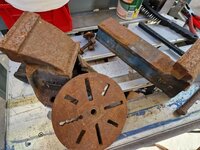
I started with 2 litres of warm water and added 100g each of the EDTA and gluconate, then used some universal indicator paper to neutralise the pH with citric acid. I added 10ml or so of dish washing liquid to provide some surfactant action. Then in with the test pieces.
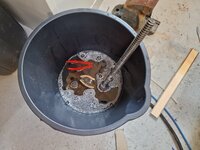
I came back next day after ~20h to check up on progress. The faceplate didn't look startlingly good but I found simply brushing it with a paint brush loosened the surface crud, leaving the faceplate remarkably clear of rust. I wasn't expecting such an improvement and it didn't look as if I could improve it any further, so out it came.


There is some residual rust in the slots but this is simply where I didn't get the paint brush in. Apart from the fact that this is a rust remover, not a miracle metal polishing product, this is about as good as I might have hoped.
The brass bar lost a lot of its tarnish, although I'm fairly certain it has some form of lacquer or varnish protection, so some of the surface was unaffected. Either way, it's worth bearing in mind that these solutions are good for other materials than iron and steel. It would probably polish up nicely now.

As for the cast iron vise parts and the vise handle, the rust there was much heavier and although initial results seemed fairly underwhelming, the surface rust came off pretty quickly with a sanding pad and only a little effort. There is some rust left but I'm expecting that will be gone after another 5h or so.

Due to the shallowness of the liquid in my bucket, I was only able to immerse 1-2" of the samples, hence only the jaws were treated here.
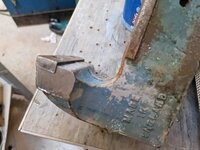

Not a bad result then. I will report back when the vise handle has come out again but I'm already pretty pleased with the results.
In terms of the cost, this works out about 1/3 of the cost of EvapoRust, despite having bought the chemicals from an industrial supplier. Over here in the UK, EvapoRust is about £35 for 5 litres (£7 per litre) and this stuff has come in at ~£2 per litre.
I've not attempted to do a scientific side-by-side comparison here but on the face of it, this looks fairly encouraging. If I get really carried away, I may attempt to do a direct comparison with EvapoRust.
Hope this is of interest!

