To avoid these ads, REGISTER NOW!

Getting into HVAC, need tool suggestions!

Smitherines

Well-known member
Joined
Oct 21, 2011
Messages
53
Hello folks! Getting out of the automotive field after a bittersweet 10 years. I'm starting into the family HVACR business, and I want to start off on the right foot. I need tool suggestions from people who are in the business. With most of my automotive tools being SO, I want to make sure I get quality tools that will last me for years in this field as well.

Setting the foundation, I'm starting with a Veto Pro Pac XL bag. Help me fill it!

Bag: http://www.amazon.com/dp/B00DYRFEJI/ref=wl_it_dp_o_pC_nS_ttl?_encoding=UTF8&colid=2LDQ19DXPTBJM&coliid=I2XTI1QNEJI8PS

Also have my meter picked out already, going with the Fluke 28 II, and I'm going to pick up a Fieldpiece SMAN460 for gauges and superheat and subcooling calcs.

Let's get the show on the road!

EDIT: I will be doing mostly residential service, with some installation thrown in when the install guys need help. I know we're getting into commercial at some point, so I'd like to be prepared for that. (Commercial guys, what software do you use to connect to the control units?)
 
Last edited:
To avoid these ads, REGISTER NOW!

rockwithjason

Well-known member
Joined
Jan 8, 2006
Messages
2,633
Location
Las Vegas
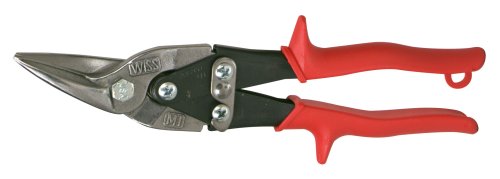
good snips will be a life saver. for down and dirty construction i like the wiss snips. klein screw drivers and pliers are still my go to. a good tool belt with shoulder straps will be handy too
 

littletoes

Well-known member
Joined
Nov 9, 2010
Messages
1,244
Location
NE Washington
Nut drivers-metric/SAE
Ratcheting Wrenches
Wire Strippers
Wire Crimpers
Multi-driver screwdriver
Adjustable wrenches, 6" to 12" for daily carry-bigger in the truck
A good hammer! 16 ounce is a bit small for me
Small screwdrivers
JUMPERS!!!!
Gauges
Pipe dope
anti-seize
two sizes of needle nose pliers (I even carry an insulated pair)
knipex pliers
inspection mirror
Good Glasses!
Notepad
10" pipe wrench
several varieties of AG fuses!
crimp connectors
I know I've forgotten some stuff....
 

1950mercury

Well-known member
Joined
Mar 26, 2013
Messages
2,246
Location
metro detroit
Service, installer, residential , commercial etc a little more info would help. . I Do hvac com, Industrial service and ddc/plc. Sometimes all i need is a laptop?
 

jeremy v

Banned
Joined
Jul 26, 2011
Messages
784
Malco stuff is all good, but what you need will depend on what type of HVAC work you will be doing. I am not a HVAC tech by trade, but I have done quite a bit of it and I worked with and around commercial HVAC techs for a number of years. In terms of Malco tools I have Malco 3" and 6" seamers, 3" offset seamers, a couple different snap lock punch tools, a couple different sheet metal hammers, duct crimpers, a flex duct zip tie tensioning tool, and a few other things. A duct stretcher is also a pretty important tool to have.

Most of my snips are Midwest brand, because they are a little easier than Malco to find at good prices. I use the red and green handled offset snips 90% of the time.

Also look into Klenk tools, they are very good.
 

wild cowboy

Banned
Joined
Mar 11, 2014
Messages
1,650
Location
Birmingham
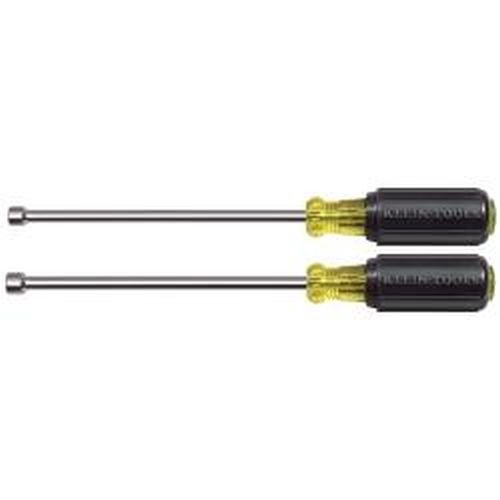
I would start with this set of magnetic long Kleins
www.amazon.com/Klein-Tools-646M-Magnetic-Cushion-Grip/dp/B000936QV0

31IGxUZPoOL.jpg


and next I would buy this 850 lumen headlamp (screw flashlights that rob you of a hand!):
www.fasttech.com/products/1602/10007455/1628300


1628300-6.jpg


and then these if you are right handed:

31VATS4H08L.jpg


and a set of these Yellow Jackets with the big dials

42004-High-Res.jpg


and the 8cfm version of this pump:

93560.jpg
 
Last edited:

Triple macs

Well-known member
Joined
Feb 13, 2014
Messages
67
Location
SF Bay Area
Pocket screwdriver
Electrical tape
Thermometers
1/4" impact driver
Nut setters
Cable ties
Flashlight
Magnetic pick up tool
Schraeder cores and removal tool
More jumpers!
Vice grips
Tape measure
Gloves
Utility knife/pocket knife/multi tool
Sharpie
 

Pumpman1968

Well-known member
Joined
Oct 21, 2012
Messages
1,520
Location
Upstate, NY
Apparently, you guys haven't done a lot of sheetmetal/ductwork (no offense) . If you had, at the top of every list would be gloves and Band-aids!
 
OP
S

Smitherines

Well-known member
Joined
Oct 21, 2011
Messages
53
Sorry guys, I edited the first post to reflect my initial duties.

"I will be doing mostly residential service, with some installation thrown in when the install guys need help. I know we're getting into commercial at some point, so I'd like to be prepared for that. (Commercial guys, what software do you use to connect to the control units?)"

Thanks for all the suggestions so far! Keep 'em coming!

EDIT: Also speaking of headlamps, are there any rechargeable units? With 10hr days six days a week I'm going to be going through batteries like crazy.
 
Last edited:

theoldwizard1

Well-known member
Joined
Feb 22, 2011
Messages
43,077
Location
SE MI
Add the Yellow Jacket 60163 Tube Deburring Tool and the Yellow Jacket 60278 Deluxe Flaring Tool.

You will need a torch for brazing/soldering. You can;t beat a TurboTorch ! They also sell nitogen regulators for purging a system.
 

wild cowboy

Banned
Joined
Mar 11, 2014
Messages
1,650
Location
Birmingham
on torches, I have found there is no reason to ever need oxy/acet in HVAC, oxy/propane will do anything you need to do (cutting/brazing/soldering) and oxy/propane is much safer - for that matter a TS8000 or TS4000 MAPP gas mini torch will do 90% of jobs. (everything but brazing a cracked compressor)
 
Last edited:

Boyd

Well-known member
Joined
Dec 16, 2009
Messages
866
Location
Forney, TX
Smitherines - I was in similar shoes about 2 years ago. One thought on your gauge choice...you absolutely can't go wrong with Fieldpiece's SMan gauge sets, I love my SMAN4. However, I would recommend using a basic gauge set (like the Yellowjacket set pictured above) for the first 6-12 months.

When I began assembling my HVAC arsenal 2 years ago I was very tempted to buy a "smart gauge" manifold as my first gauge set, but after giving it some thought I decided it made more sense for me to get comfortable using a basic set and doing my own sub cool/super heat calcs before going "smart". I'm very glad I made that choice. It allowed me to get very proficient with a basic set and trained me to be more focused/observant/aware during troubleshooting, as opposed to just connecting hoses and clamps and staring at a screen. It also allowed me to spend more money on quality hand tools up front.

Either way, good luck in your new career. I know I'm glad I got into it.
 

ambenz

Well-known member
Joined
Dec 12, 2010
Messages
4,236
Location
NW Chicago Suburbs
I am a commercial HVAC automation service tech, working with actuated dampers, duel temp valve actuators, intergrating boilers, chillers, roof top units, commanding frequency drives and monitoring and controlling duct pressure, return air, mixed air, and supply air temps, sending setpoints, controlling air handlers, hot water coil pumps...there is a lot to know.
Your gonna need a Magnehelic gauge for 0-5"wc,
Magnehelic_Front.jpg


...and everything mentioned by our other members.
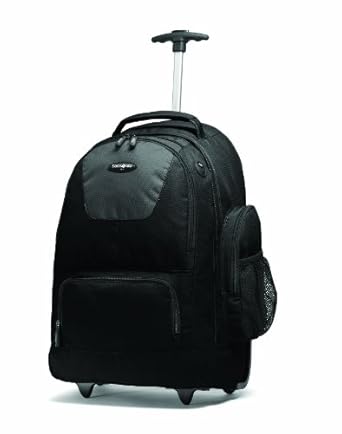
I put my tools in a wheeled backpack, it about 60+ lbs and your gonna love having wheels!
41MY0g%2BoJ7L._SX342_.jpg


I carry 2 PC's once with windows XP and one with Windows 7 because customers who automate their commercial buildings have various versions of automation programs...from Tridum, Honeywell, Siemans, Automatedlogic, KMC, and Realible.
You'll need to know how to IP in to your customers site so you can troubleshoot electrical components...stroking actuators, verifying inputs, tuning PID loops, recommissioning units....making your head spin yet??? LOL!
It's a demanding industry, you might feel like turning wrenches again after about a year of dealing with the commercial industry and demanding/under the gun/ building engineers!
 

JackDiddly

Well-known member
Joined
Oct 6, 2014
Messages
185
Location
SE WI
You should also check out HVAC-talk.com. It is a forum similar to this one dedicated to the field. Also a suggestion on the choice of meter, have you considered the Field-piece meters there are all types of accessory heads that will be useful for service and I have heard a lot of good things? And if your taking votes for snips I vote Midwest.
also:
Micron gauge
manometer (fieldpiece head?)
 

Malczewski

Banned
Joined
Jan 28, 2015
Messages
141
Location
Naples/all over the planet
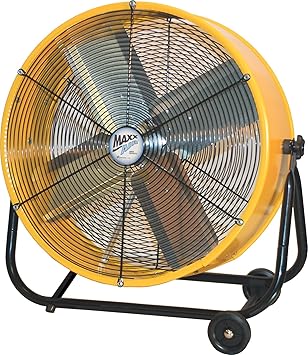
One of these.Light weight. Low amps-HP. Hurricane force. Made in USA.
Remember spring-summer is almost here.
"Help ! My AC don't woik".
It's always in a closet.Down a dark hall. Not a window in site.:sad:
Look at the other guys bags too. They've already asked what you're now asking here and bought the best stuff for the equipment this company works with the most.

81K3eclz3qL._SY355_.jpg

http://www.bvc.com/tiltfans.html
 
Last edited:
To avoid these ads, REGISTER NOW!

mikebaker1129

Well-known member
Joined
Oct 16, 2014
Messages
1,575
Location
Huffman,TX
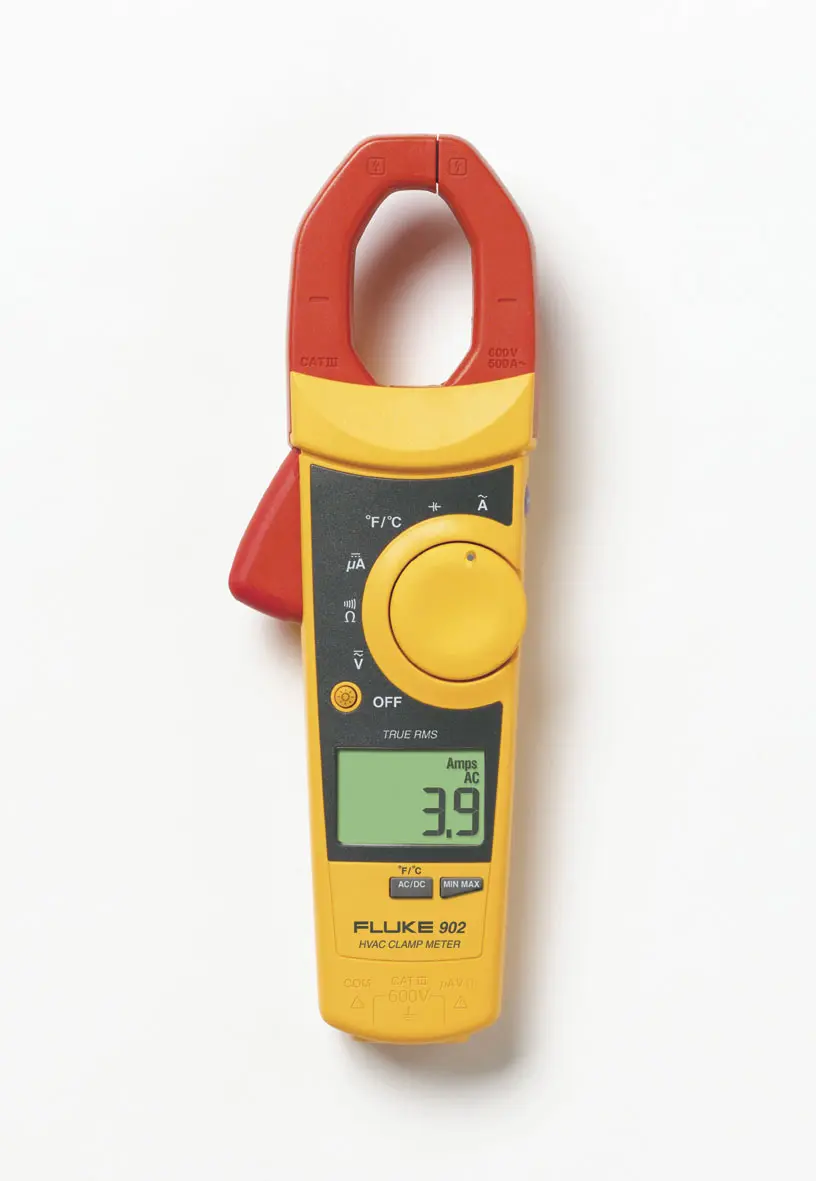
Having been in the HVAC business my entire life, a must is a good meter. I work maintenance at a facility doing heavy commercial light industrial work now and my older body has changed. I go for lighter and multi use these days. 95 % of the time I get by with a Fluke 336 clap meter,sometimes I need to break out the fluke 87.
You will need a capacitor tester ,supco makes a decent one for the $. Swaying tools for copper,inspection mirror(craftsman) for the warranty,5cfm vaccum pump at least,recovery cylinders,recovery machine,Schroeder core removal tool,digital scale for weighing in charges,terminal crimping tools (t&b and klein) both make good crimpers, a mag jumper comes in handy at times also.
I will refrain from listing some already mentioned items that were good also.
I forgot a good valve wrench.
 

bonneyman

Well-known member
Joined
Apr 22, 2010
Messages
8,758
Location
Desert SW
Been in HVAC for over 25 years. Your basic tools from your auto days will be just fine for starters.
I would advise against getting into debt will all the latest digital "toys". I prefer old school meters, gauges, testers, and thermometers. They get the job done, don't depend on batteries, and can take more abuse than their digital counterparts. After having batteries go dead/leak/explode, I'm switching away from electronic tools whenever I can.

Brands to consider:
http://www.yellowjacket.com/
http://www.robinair.com/products/hvac/field_category/HVAC-100
http://www.marshbellofram.com/marsh/

I'd recommend you get a set of Flank Drive (or similar) flare nut wrenches, and a valve removal tool is a necessity. If I save one persons fingers from frostbite, I've done my job.
http://www.yellowjacket.com/node/714
 

maintguy

Well-known member
Joined
Nov 20, 2014
Messages
393
Location
North central Indiana
Learn the basic residential side. Before you worry about commercial controls.

Also ask the guys at the shop what they use. Every part of the country is different. No need to buy hundreds of dollars worth of oil tools. To only find out there isn't oil fired units on your service area.

Also get familiar with electricity single and three phase.

Learn how to todo sub cooling and super heat calcs off of old dial guages.
 

littletoes

Well-known member
Joined
Nov 9, 2010
Messages
1,244
Location
NE Washington
Wow! Didn't realize there were so many on here! Cool.

I do HVAC and a bit more....was running 3" pipe yesterday, going to be running 5" next week.

The tools I carry in my bag are not the same as what I carry in the truck.

The benders, torches, big pipe wrenches with the large socket sets and big combo wrenches are in the truck...depending upon what I find on the site, or what the call was.
 

william.m.hamilton2

Well-known member
Joined
Apr 23, 2014
Messages
117
Location
lafayette, in
Good set of gloves. They do not have to be insulated. I had my boss turn a valave of my storage tank, he wasnt qualified, but had a pay grade on me. Took almost a month for the blisters from the frost bite to finally disappear. I'm not an OSHA nazi, in fact I stand by the quote that you can't stop stupid, only engineer around it. But, accidents and stupid happen- keep your gloves and glasses on with pressurized systems. A craftsman is only as good as his hands and eyes allow him- and refrigerant is notoriously bad for both.

Just my .02
 
OP
S

Smitherines

Well-known member
Joined
Oct 21, 2011
Messages
53
This is awesome guys, I'm soaking all of this up. And there are gas and oil burners in my area. Such good information to mull over! Anything else?
 

bonneyman

Well-known member
Joined
Apr 22, 2010
Messages
8,758
Location
Desert SW
As far as installation tools go, Malco always did good stuff. Although, of late they have been doing the outsourcing thing with some of their products. They used to make a pukey, orange colored handled screwdriver that was fantastic. The polycarbonate material was virtually indestructible. Now they are acetate jobbies like everyone else.
Was given a set of Lenox snips by a forum member - gotta say they are better than my Wiss and Midwest snips.

With the advent of high and super-high efficiency rated units, airflow becomes critical. I find many blowers and fans that are subpar - even from the factory - and have had to modify things to get units working right. Discovered that my long ignored fan pitch gauge has become vital to my troubleshooting. Not expensive, well worth having one.

http://fans.hornerfan.com/item/propeller-accessories/pitch-gauge/item-2084
 

DonPowers

Well-known member
Joined
Dec 7, 2014
Messages
4,398
Location
On The Hair At The End Of The Dog's Tail
Sorry guys, I edited the first post to reflect my initial duties.

"I will be doing mostly residential service, with some installation thrown in when the install guys need help. I know we're getting into commercial at some point, so I'd like to be prepared for that. (Commercial guys, what software do you use to connect to the control units?)"

Thanks for all the suggestions so far! Keep 'em coming!

EDIT: Also speaking of headlamps, are there any rechargeable units? With 10hr days six days a week I'm going to be going through batteries like crazy.

Most of the commercial DCS systems that I have messed with are vendor specific, like the Johnson Metasys. But that was a few years ago and things change. Some of the larger stand alone units with digital controls have built in diagnostics but you may need a copy of the vendor's software too tap into it with a laptop.
 
Last edited:

littletoes

Well-known member
Joined
Nov 9, 2010
Messages
1,244
Location
NE Washington
I think the biggest we work with is automated logic, with the least amount of problems. Siemens in a few buildings, and its causing problems-its not "as" compatible as AL with some of the components.

We shall see....

I think the biggest problem is having so many tech's mess with stuff, without reporting what they've done. You get a control valve not operating properly, and the reliefs start blowing on the boiler.

They're not opening, or leaving the valves open long enough while the boiler is firing...sheesh. Hot refractory.....well, lucky its not high pressure steam! Not as forgiving, for sure.
 

theoldwizard1

Well-known member
Joined
Feb 22, 2011
Messages
43,077
Location
SE MI
on torches, I have found there is no reason to ever need oxy/acet in HVAC, oxy/propane will do anything you need to do (cutting/brazing/soldering) and oxy/propane is much safer - for that matter a TS8000 or TS4000 MAPP gas mini torch will do 90% of jobs.
Just so that you know, (from Wikipedia)

In the spring of 2008, true MAPP gas production ended in North America when production was discontinued at the only remaining plant in North America that still manufactured it. Current products labeled "MAPP" are, in fact, MAPP substitutes. These versions are stabilized liquefied petroleum gas (LPG) with high levels of propylene.

Typically the are labeled "MAPP Pro" which is mostly propylene (a.k.a. propene). I have not been able to find definitive answers that I can reference, but the consensus seem to be that propylene (burn is air) is not as hot as the original MAPP. Closer in temp to propane.

Most HVAC guys use an acetylene/air torch for brazing.


Also, in my research I have found that LPG is not necessarily "pure" propane. Depending on the time of year and area of the country it may be combined with other combustible gases, such as butane. I'm not sure how this affects the flame temp OR BTUs/lb.
 

MattVa

Member
Joined
Dec 29, 2013
Messages
7
Al ot depends where you are and what you will service. I am in an area where where I can get heat pumps, LP gas or Oil furnaces. So your load out will vary slightly during heating season. Commercial refrigeration and HVAC is different animal again.

Its a good field and a GOOD tech can do well. Residential requires a good personality, an ability to explain the issue and a solution. Nothing like telling a customer that the unit leaks and it will be 1000 plus to put in a new evap., or a service call where they never changed the filter and it sucked it up into the evap, people can be funny and it needs tact.

Do it right the first time....Call backs will kill you, same as automotive.

You need to be part plumber and largely an electrician.
Most issues for me come down to electrical or leaks. Both are easy if done logically. Residential HVAC is VERY basic stuff.

I used to do commercial chiller plants and large ref systems.


Basic List (I'm sure i am forgetting a lot of stuff)
And I assume you have your EPA License...your auto license is not sufficient. I had to test for both MACS and EPA, of course that was in 95

Nitrogen tank, regulator.
Nitrogen purge/flow regulator. (NEVER NEVER Braze without N gas flow)
Quality Vacuum Pump.(Change oil frequently)
Several sets of gauges (Different oils, different gauges 22,410a).Hoses with ball valves only. ( Basic Yellow jacket gauges,no digital needed)
Micron gauge (Yellow Jacket ONLY).
Valve core removal tools (Yellow Jacket ONLY)
Scale
Quality thermometer set (thermistor)
Infared thermometer
Recovery tanks (tested DOT)
Stock of refrigerants
Leak detector (Bubbles and electronic, although I rarely use electronic)
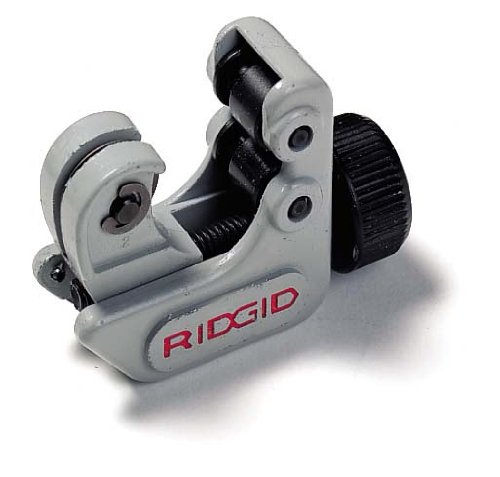
Flare Kit, swedges, a couple of good tubing cutters, de-burr tool
Quality tubing benders
Quality meter
clamp on ammeter
Blower Fan Hub Puller
Drill (Corded or cordless with extra batteries) Bits, etc
A rig to braze with
Heat gun
Test clips
5 amp atc fuses (Surprising how often you replace these)
FUSES....a selection of delay HVAC type, typically 20 amp and up.
Manometer
A good selection of quality crimp terminals.
Selection of wire nuts
A stock of assorted wiring, tapes, dope, thread sealer, flux, brazing rod, silfos, etc...basic supplies.

I can give you a very long list also for basic repair parts:
Selection of capacitors, including a multi-cap
Rescue motors


Basic hand tool sets. Line pliers, strippers, nut drivers, small flat heads, allen keys and so on


A Service tech rarely needs sheet metal tools, get them as you need them or if you get a job that requires them. Its a whole new list.
 
Last edited:

vga

Well-known member
Joined
Nov 21, 2011
Messages
302
Im coming to this thread very very late but the listed items in post 31 seem to just about cover it. I have just spent the past week working on 1200 ton and 1500 ton Carrier 19XR/ R 134 high pressure chillers that were not running correctly, tripping off on faults, not recovering oil, not loading , improper chill and condenser water flows ect ect and I walked away Friday with all 4 machines online and maintaining the loads as reqd. I also had to deliver the bad news that the 1500 ton low pressure R 123 Trane chiller has a leak in the evap tube bundle that will req more work to be repaired. It was a fun week for me.
Refrigeration can be a fun field to work in, take your time, never rush through the trouble shooting or you will over look a problem.
Welcome aboard and good luck out in the field..
 
Last edited:

Davefr

Well-known member
Joined
Jan 7, 2010
Messages
11,815
Location
OR
Get a 6 in one screwdriver and you can do 80% with just one tool.

Buy a case of dust masks. Breathing attic fiberglass is not fun.

Augment the LED headlight with a Larry Light. For the headlamp, I'd get a Zebralight. (warm/floody). More compact then some of the others.

thumbnail.asp


Buy the best test leads you can find. The Fluke TL81A is a nice set. Make sure it includes self piercing/self healing alligator clips.

Get some toilet spray for when nature calls and you're doing residential.

Learn the theory!!! It'll be the best tool you ever have and you'll stand out ahead of the majority in the trade that are "hacks". The Whitman books are excellent. (Modern Refrigeration and Refrigeration and Air Conditioning Technology are the bibles.)


P.S. I bet there are some really good HVAC related cell phone apps. Learn them.
 
Last edited:

bmwrd0

Well-known member
Joined
Nov 7, 2010
Messages
5,430
Location
Beaver Fever Oregon
Oh, one thing to get is a set of "De Minimus" gauges. If you don't have to hook up a full set of gauges, don't. Legally you would need to vacuum it down to 4 microns if there is any way to do it, and if you have a manifold on there you have a way. Probably wont get caught, but it aint cheap if you do. So set of a high side and a low side gauge with just 6-8" of hose and an adapter for schreader fittings at the end. Carry those with you, and you are good for doing checkups and eliminating pressure issues. If you do need to work on that part of the system, then you use a manifold and a vacuum.

Also, get a schreader valve repair kit, that will save you big time.
 

bonneyman

Well-known member
Joined
Apr 22, 2010
Messages
8,758
Location
Desert SW
Oh, one thing to get is a set of "De Minimus" gauges. If you don't have to hook up a full set of gauges, don't. Legally you would need to vacuum it down to 4 microns if there is any way to do it, and if you have a manifold on there you have a way. Probably wont get caught, but it aint cheap if you do. So set of a high side and a low side gauge with just 6-8" of hose and an adapter for schreader fittings at the end. Carry those with you, and you are good for doing checkups and eliminating pressure issues. If you do need to work on that part of the system, then you use a manifold and a vacuum.

Also, get a schreader valve repair kit, that will save you big time.

Plus, those Quik release ends save alot of freon burns on your fingers!

I use this valve core remover. If they ever wear out the guts, rebuild kits are available.
 
Last edited:
To avoid these ads, REGISTER NOW!
Top Bottom