I think it's kind of funny that most people on this forum swear by Snapon, and rightly so because they make arguably the best professional grade hand tools, but would even consider something like Harbor Freight. Hilti is the Snapon of power tools, Hands Down PERIOD! Harbor Freight is the dollar store wrench in the power tool arena. Just my observation.


You are using an out of date browser. It may not display this or other websites correctly.
You should upgrade or use an alternative browser.
You should upgrade or use an alternative browser.
harborfreight SDS hammer drill - go buy one!
- Thread starter mrb
- Start date
TheGrooveking
Well-known member
Even though I have 5 rotary hammers, Milwaukee and Makita, I bought one of these today, just had to for $59.99.
TheGrooveking
TheGrooveking
Teken
Well-known member
I wish people would simply base their comments based on actual usage, and hands on experience . . . Opposed to just writing off an entire country that produces almost all the things American's use and consume daily . . .
If I was to state that the big three automakers were complete **** since day one, and continue to be **** to this day, am I being honest and unbias?
I think not . . .
Bottom line yes there are allot of junk tools and accessories at HF, but in the same breath there are some rare items in the store that actually perform as advertised for a value that cannot be matched . . .
Now if we are talking about long term reliability, that is a whole different conversation. Lets just be real enough, honest enough, and unbiased enough to say that this item may be one of those items that actually perform . . .
Just my thoughts . . .
If I was to state that the big three automakers were complete **** since day one, and continue to be **** to this day, am I being honest and unbias?
I think not . . .
Bottom line yes there are allot of junk tools and accessories at HF, but in the same breath there are some rare items in the store that actually perform as advertised for a value that cannot be matched . . .
Now if we are talking about long term reliability, that is a whole different conversation. Lets just be real enough, honest enough, and unbiased enough to say that this item may be one of those items that actually perform . . .
Just my thoughts . . .
LoneGunman
Well-known member
I know a LARGE electrical contractor that uses the HF rotary drills, call them unprofessional and they'd laugh in your face. Their reasoning is for the price of the HF hammers they can have one on every truck. We use Hilti's at work, there are two large ones for 8 guys, I'd love to see them buy HF's and put them on every truck. They are thinking about it, and before you even think about calling us unprofessional, we are THE electrical contractor in the area that every other contractor wants to beat, not price wise, reputation. We do all of the county work, school district work, the inside work for the power company, we work in nuke plants, ETC ETC ETC.
Go ahead, call a dirtbag with pretty new Hiltis and don't hire the guy who made SMART business decisions. Personally, I LOVE my Hiltis, I have two of them but I am not going to use them on my employers jobs.
Go ahead, call a dirtbag with pretty new Hiltis and don't hire the guy who made SMART business decisions. Personally, I LOVE my Hiltis, I have two of them but I am not going to use them on my employers jobs.
unicron
New member
needed a hammer drill to bolt a couple safes down in my home. i could rent one, pay someone to do it...or buy this hammer drill for less or equal the cost (with 20% off coupon, it was like $50 out the door) and do it myself.
i picked one up yesterday and also some standard size sds bits for $10 @ HF. like someone mentioned earlier in this thread...the drill comes with metric size bits.
did my research before buying, and didn't read anything negative about it.
sure, if i was a contractor working on a remote/desolate site where the nearest hardware store was an hour + away, i would think about picking up a name brander. but i think for the occational home owner use, it will be fine.
i picked one up yesterday and also some standard size sds bits for $10 @ HF. like someone mentioned earlier in this thread...the drill comes with metric size bits.
did my research before buying, and didn't read anything negative about it.
sure, if i was a contractor working on a remote/desolate site where the nearest hardware store was an hour + away, i would think about picking up a name brander. but i think for the occational home owner use, it will be fine.
wbrian63
Well-known member
There is a tendency of people (and I mean all people - not singling any person out) to refer to things they don't like as "not good." If a meal is ordered at a restaurant, and it is properly prepared and served, yet the customer doesn't like it, that does not mean the meal wasn't good - it just means the customer didn't care for it.
I think what we should focus on to determine whether a tool is a "good tool" or a "substandard tool - aka boat anchor" is does the tool do what the user wants/needs at the time the tool is used. This "what the user wants/needs" is a highly variable quantity.
Looking a the original poster's requirements of the tool, the SDS drill in question was capable of doing what the user needed. MrB wanted some holes drilled in concrete, and the tool was up to the task. For MrB, the HF SDS drill is a good tool.
Even with that statement, there's room for adjustment, as attempting to get a function out of a tool that was never designed to provide that function is not reasonable. Buying a standard drill, fitting it with a 3/8" masonry bit and then saying it's not a good tool because it won't bore a 3/8" hole in 30 year-old concrete would be an example. Therefore, you can't say a tool isn't good if you're using for some purpose other than what it was designed for.
In general, with tools, "you get what you pay for". A user purchasing a HF SDS drill intending to bore 100 holes/day for 100 days is likely to be disappointed. That doesn't mean the tool isn't a good tool - it goes back to expecting more from the tool than it was designed to provide. This not saying it can't do it, it just seems unlikely - to me.
Some prefer to purchase only high-end tools because the demands of their work require reliable and durable performance. Others with the same work demands will still prefer the cheaper HF tool, considering it a disposable unit that's easily replaced when it wears out, gets abused or gets stolen.
Avoiding the term "professional", I'll offer that any individual that does work as a vocation (specific set of tasks performed on a regular recurring basis) and invests in consumer-level tools (which, in my opinion, includes most everything from HF) is eventually going to encounter a situation where that decision was not a good one.
The tool is going to encounter a situation that it cannot handle (there's a big difference in drilling 1 year old concrete and 20 year old concrete, all things being equal), and the user is going to be unable to complete the task at hand, or is going to take too long to complete the task, causing problems in other areas of the job.
If the tool craps out, then it will have to be replaced in order to complete the task at hand. The user may still decide to purchase the HF tool for one of two reasons (again, in my opinion) - 1) they're loathe to spend big $ on a seldom-used tool, or they're just flat cheap, or 2) they've done the economics and have figured out that the cheap tool did just fine for the use it saw, and therefore replacing like with like is a reasonable decision.
If the tool is simply under-designed for the task at hand, then a more suitable tool will have to be purchased. At that point, the same logic tree will probably come into play as for replacing a broken tool.
For me, I value time and loathe false economy. I'm not a "professional", but I won't spend money on something I don't believe will do what I need it to do. Any money spent on a tool designed to return a desired outcome that fails to do so is wasted money. I don't have enough of time or money to waste it.
Again - if the tool does what the user needs, it's a good tool - FOR THAT USER. That makes no judgment as to whether it will do that same task again - it is a that-time-that-place assessment.
Full disclosure - I own the Bosch SDS 11255VSR rotary hammer. I don't own any Snap-on tools - just Craftsman. I have several Harbor Freight electric hoists...
I think what we should focus on to determine whether a tool is a "good tool" or a "substandard tool - aka boat anchor" is does the tool do what the user wants/needs at the time the tool is used. This "what the user wants/needs" is a highly variable quantity.
Looking a the original poster's requirements of the tool, the SDS drill in question was capable of doing what the user needed. MrB wanted some holes drilled in concrete, and the tool was up to the task. For MrB, the HF SDS drill is a good tool.
Even with that statement, there's room for adjustment, as attempting to get a function out of a tool that was never designed to provide that function is not reasonable. Buying a standard drill, fitting it with a 3/8" masonry bit and then saying it's not a good tool because it won't bore a 3/8" hole in 30 year-old concrete would be an example. Therefore, you can't say a tool isn't good if you're using for some purpose other than what it was designed for.
In general, with tools, "you get what you pay for". A user purchasing a HF SDS drill intending to bore 100 holes/day for 100 days is likely to be disappointed. That doesn't mean the tool isn't a good tool - it goes back to expecting more from the tool than it was designed to provide. This not saying it can't do it, it just seems unlikely - to me.
Some prefer to purchase only high-end tools because the demands of their work require reliable and durable performance. Others with the same work demands will still prefer the cheaper HF tool, considering it a disposable unit that's easily replaced when it wears out, gets abused or gets stolen.
Avoiding the term "professional", I'll offer that any individual that does work as a vocation (specific set of tasks performed on a regular recurring basis) and invests in consumer-level tools (which, in my opinion, includes most everything from HF) is eventually going to encounter a situation where that decision was not a good one.
The tool is going to encounter a situation that it cannot handle (there's a big difference in drilling 1 year old concrete and 20 year old concrete, all things being equal), and the user is going to be unable to complete the task at hand, or is going to take too long to complete the task, causing problems in other areas of the job.
If the tool craps out, then it will have to be replaced in order to complete the task at hand. The user may still decide to purchase the HF tool for one of two reasons (again, in my opinion) - 1) they're loathe to spend big $ on a seldom-used tool, or they're just flat cheap, or 2) they've done the economics and have figured out that the cheap tool did just fine for the use it saw, and therefore replacing like with like is a reasonable decision.
If the tool is simply under-designed for the task at hand, then a more suitable tool will have to be purchased. At that point, the same logic tree will probably come into play as for replacing a broken tool.
For me, I value time and loathe false economy. I'm not a "professional", but I won't spend money on something I don't believe will do what I need it to do. Any money spent on a tool designed to return a desired outcome that fails to do so is wasted money. I don't have enough of time or money to waste it.
Again - if the tool does what the user needs, it's a good tool - FOR THAT USER. That makes no judgment as to whether it will do that same task again - it is a that-time-that-place assessment.
Full disclosure - I own the Bosch SDS 11255VSR rotary hammer. I don't own any Snap-on tools - just Craftsman. I have several Harbor Freight electric hoists...
Teken
Well-known member
There is a tendency of people (and I mean all people - not singling any person out) to refer to things they don't like as "not good." If a meal is ordered at a restaurant, and it is properly prepared and served, yet the customer doesn't like it, that does not mean the meal wasn't good - it just means the customer didn't care for it.
I think what we should focus on to determine whether a tool is a "good tool" or a "substandard tool - aka boat anchor" is does the tool do what the user wants/needs at the time the tool is used. This "what the user wants/needs" is a highly variable quantity.
Looking a the original poster's requirements of the tool, the SDS drill in question was capable of doing what the user needed. MrB wanted some holes drilled in concrete, and the tool was up to the task. For MrB, the HF SDS drill is a good tool.
Even with that statement, there's room for adjustment, as attempting to get a function out of a tool that was never designed to provide that function is not reasonable. Buying a standard drill, fitting it with a 3/8" masonry bit and then saying it's not a good tool because it won't bore a 3/8" hole in 30 year-old concrete would be an example. Therefore, you can't say a tool isn't good if you're using for some purpose other than what it was designed for.
In general, with tools, "you get what you pay for". A user purchasing a HF SDS drill intending to bore 100 holes/day for 100 days is likely to be disappointed. That doesn't mean the tool isn't a good tool - it goes back to expecting more from the tool than it was designed to provide. This not saying it can't do it, it just seems unlikely - to me.
Some prefer to purchase only high-end tools because the demands of their work require reliable and durable performance. Others with the same work demands will still prefer the cheaper HF tool, considering it a disposable unit that's easily replaced when it wears out, gets abused or gets stolen.
Avoiding the term "professional", I'll offer that any individual that does work as a vocation (specific set of tasks performed on a regular recurring basis) and invests in consumer-level tools (which, in my opinion, includes most everything from HF) is eventually going to encounter a situation where that decision was not a good one.
The tool is going to encounter a situation that it cannot handle (there's a big difference in drilling 1 year old concrete and 20 year old concrete, all things being equal), and the user is going to be unable to complete the task at hand, or is going to take too long to complete the task, causing problems in other areas of the job.
If the tool craps out, then it will have to be replaced in order to complete the task at hand. The user may still decide to purchase the HF tool for one of two reasons (again, in my opinion) - 1) they're loathe to spend big $ on a seldom-used tool, or they're just flat cheap, or 2) they've done the economics and have figured out that the cheap tool did just fine for the use it saw, and therefore replacing like with like is a reasonable decision.
If the tool is simply under-designed for the task at hand, then a more suitable tool will have to be purchased. At that point, the same logic tree will probably come into play as for replacing a broken tool.
For me, I value time and loathe false economy. I'm not a "professional", but I won't spend money on something I don't believe will do what I need it to do. Any money spent on a tool designed to return a desired outcome that fails to do so is wasted money. I don't have enough of time or money to waste it.
Again - if the tool does what the user needs, it's a good tool - FOR THAT USER. That makes no judgment as to whether it will do that same task again - it is a that-time-that-place assessment.
Full disclosure - I own the Bosch SDS 11255VSR rotary hammer. I don't own any Snap-on tools - just Craftsman. I have several Harbor Freight electric hoists...
That was a fantastic read, well stated and written . . .
Pleas Note: I only use DeWalt power tools . . .
mcdtommy23
Well-known member
No professional has HF tools. Period.
A "professional" wouldn't go out on a job with a tool that any reasonable person would know is of low quality and would likely let him down right in the middle of a job thereby jeopardizing his livelihood. When you make your living using a tool, you are telling me that you are going to trust a $59 Chinese rotohammer? We have almost no standards on what constitutes a professional these days, and comments like the above are a perfect example. In the popular lexicon, anyone who earns a living doing something is a "professional." Well, if that is your standard, I guess we shouldn't be surprised when that "professional" shows up with a HF miter saw and rotohammer and a Ryobi drill.
Tools are important. You need quality tools and skill and knowledge to do a good job. Rarely do you get any of the above. I find very few (almost none really) that can do any job properly, let alone "professionally" and if they cared about their job they wouldn't show up with junk tools. It would be like a lawyer dressing up in Sears suits and having out of date references and a crummy office.
O.K. ya. right. Your drilling a hole, not a major f***inging heart operation. If I need something for one or two jobs I usually cheap out. If it's something I use all the time, I get something a little better. I am a professional. If my employer cheaps out, so be it. If it fails, it's on him.
Like the cops that were true "professionals" that accidentally shot someone/themselves (there was a free parking thread about it). It's the user and how they do the job. The tool is merely a means to accomplish the job.
I'd rather see a pro show up with **** tools and get the job done correctly then some idiot with a box of snap-on/whatever

Last edited:
I own a Hilti hammerdrill and has worked for me for the past 13 years drilling over 10,000 3/8 holes.The one thing i have taken away from this thread is that I had no idea that my Hilti will never let me down on the job,EVER! MrMark thanks, I will never worry again and look forward to another 10,000 holes(not really but ....)
skamp
Well-known member
These are on sale now for $49.99. I bought one and used the 20% off coupon so walked out with it for 39.99.
http://www.harborfreight.com/3-in-1-1-inch-sds-rotary-hammer-97743.html
Steve
http://www.harborfreight.com/3-in-1-1-inch-sds-rotary-hammer-97743.html
Steve
As a former General contractor, I wish I had a buck for every sub who showed up with a Name brand tool that was used up/****. I remember a electical sub who was drilling a hole through a concrete wall (on MY personal house) whose Hilti broke. He had to leave and return the next day. We all have tools that have broken, and left us stuck. I admire people wanting to be a "professional". But a true craftsman's skill is in his hands. Tools make it easier, thats all.
On the job there are lots of "******* contest" who has the best tools. It sounds like there is a lot of this here.
If given the choice between picking the tool or the person to trust for any job, I will always choose the person. Just my 2c
On the job there are lots of "******* contest" who has the best tools. It sounds like there is a lot of this here.
If given the choice between picking the tool or the person to trust for any job, I will always choose the person. Just my 2c
While reading this thread I kept asking myself "What the heck does SDS stand for?"
SDS = Special Direct System. According to http://www.sds-hammer-drill.com/
Doesn't really mean anything, I guess.
SDS = Special Direct System. According to http://www.sds-hammer-drill.com/
Doesn't really mean anything, I guess.
Underdog
Well-known member
I bought the orange one to install my BendPak lift. Didn't use the bits, bought a German Bosh bit at HD. Worked Fine.
It appears that most (all?) of the positive posts of the HF ones are for the 1" ones, though maybe not, given some of the prices quoted. The links seemed to all go to 1", though. Any thoughts on 1/2" Chicago brand that HF has for $25? It will be for light duty.
american lockpicker
Banned
While reading this thread I kept asking myself "What the heck does SDS stand for?"
SDS = Special Direct System. According to http://www.sds-hammer-drill.com/
Doesn't really mean anything, I guess.
I think it has to do with this.
Attachments
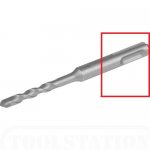
While reading this thread I kept asking myself "What the heck does SDS stand for?"
SDS = Special Direct System. According to http://www.sds-hammer-drill.com/
Doesn't really mean anything, I guess.
originally: "Steck, Dreh, Sitzt"
translation like: "plug, turn, fit"
Teken
Well-known member

"The mechanics on this board are all addicted to the credit on the tool trucks and they are tool junkies. They spend thousands upon thousands on expensive and high quality tools."
Truest part of the statement made.
Im not sure whats actually "True" about it but whatever. Now back to the Topic at Hand, Ive Never seen a Professional Contractor rocking any Harbor Freight Power tools. Before... the "Knee Jerk Reaction Posts" come out in Full force im not saying that they are Junk, It sounds like this SDS Drill is working for some Members and its priced less than what it would cost to "Rent" one. Thats Great.. If i can buy a tool that im confident will get the 1 time job done for less than what it costs to Rent... Sign me up. I think alot of the confusion here is actually associated with the "Professional" Claim. It appears there are a few Contractors here that have had good luck with the Drill and its obviously Cheaper than the Big competitors so kudos to you.. But... GJ doesnt represent the World and anyone that says 90+% of the Worlds contractors isnt Rocking Hilti's or Bosch is mis-representing thereself. I dont doubt there are some HF tools that work great and get the Job done, I do Seriously Doubt the Longevity of these tools and in my mind that is where the True Value is realized. You give me more than 1 guy, who knows a guy, who's cousins nephew has drilled over 10K holes with this HF SDS Drill and ill start listening. This thread is NO different than any other HF Bandwagon thread here, The first guy to actually replace a starter using his HF tools is deeming them better than any other Tool Manufacturer out there. Its takes Years of Use and Abuse to Truley define a Tool Company, Not Days Fellas.. It would be Great if the OP would keep the Members updated on any problems and accomplished jobs so we could get a More Detailed Honest review, And that goes for any Review whether regardless of COO.
Last edited:
Im not sure whats actually "True" about it but whatever. Now back to the Topic at Hand, Ive Never seen a Professional Contractor rocking any Harbor Freight Power tools. Before... the Retards come out in Full force im not saying that they are Junk, It sounds like this SDS Drill is working for some Members and its priced less than what it would cost to "Rent" one. .
I own a Bosch hammer drill but is it really necessary to call people who disagree with you retards? To me it makes GJ seem like 4th grade.
I own a Bosch hammer drill but is it really necessary to call people who disagree with you retards? To me it makes GJ seem like 4th grade.
Yeah.. IM not calling anyone Retards, and im not the Gospel, Everyone is entitled to there opinion and im just making it clear im not Imposing mine over yours/anyone elses. I have been around here long enough to know that People Jump to conclusions when they read something that even hints that that someone is bashing HF. So i wanted to Clarify my Statement... Obviously you missed that Section, So im sorry for failing you. I did change my wording as my "Initial" Word Used Honestly was not a Nice word. If i offended anyone, I do apologize.
Last edited:
suprised to see this thread still alive after more than a year. The drill is still working fine. Used it last to drill a couple holes for expanding bolt anchors (redheads?) in some columns of 40 year old high PSI concrete. (this was with a bosch bit)
suprised to see this thread still alive after more than a year. The drill is still working fine. Used it last to drill a couple holes for expanding bolt anchors (redheads?) in some columns of 40 year old high PSI concrete. (this was with a bosch bit)
Sounds like you got your Money out of it, I honestly didnt even realize the dates till after i posted. It makes these threads more informative when the OP's Update them as they go along with Good and Bad experiences. Thanks

Sounds like you got your Money out of it, I honestly didnt even realize the dates till after i posted. It makes these threads more informative when the OP's Update them as they go along with Good and Bad experiences. Thanks
got my money out of it the first time i used it, and its sure been nice to have since then. I dont use it enough to justify the cost of a hilti or whatever, for my needs this thing has been great.
Sounds like the drill works great in professional and non-professional use.
Just curious? How did you come to that conclusion? While i apreciate MrB's follow up he clearly states it only gets occasional use along with everyone except the Civil Engineers comment from the Contractor who he snickered at. Again.. It sounds like the Drill would work great for 99% of the GJ Members who would need it for some occasional Work. So lets review... We have some "occasional use" reviews that span over 1 year and that warrants a tool to be classified as "Professional Grade".

MrMark
Well-known member
O.K. ya. right. Your drilling a hole, not a major f***inging heart operation. If I need something for one or two jobs I usually cheap out. If it's something I use all the time, I get something a little better. I am a professional. If my employer cheaps out, so be it. If it fails, it's on him.
Like the cops that were true "professionals" that accidentally shot someone/themselves (there was a free parking thread about it). It's the user and how they do the job. The tool is merely a means to accomplish the job.
I'd rather see a pro show up with **** tools and get the job done correctly then some idiot with a box of snap-on/whatever
yada yada yada. What "pro" shows up with **** tools? What if the doctor you went to was dressed like a bum and his office was full of peeling paint and looked like hell and his X-Ray machine had a big fat MADE IN CHINA starring at you. Tools don't make a good mechanic but they make a good mechanics job easier and good mechanics, especially successful good mechanics don't have **** tools.
When I buy a tool it is a lifetime investment. If I can justify buying something because I am going to use it more than once or twice I am going to buy something that will be around when I die. I don't get off on going into Harbor Freight and thinking I am saving some big time money by buying some disposable one or two time use tools. I go for long term quality, not instant gratification and then disposal. Plus, I won't support China Others do as they please because I could not give a care.
Last edited:
american lockpicker
Banned
yada yada yada. What "pro" shows up with **** tools? What if the doctor you went to was dressed like a bum and his office was full of peeling paint and looked like hell and his X-Ray machine had a big fat MADE IN CHINA starring at you. Tools don't make a good mechanic but they make a good mechanics job easier and good mechanics, especially successful good mechanics don't have **** tools.
First thing I do when I go to an auto shop is look for a Snap-On box then I look for Mac and SO tools. If I seen HF tools I wouldn't spend money there.
Teken
Well-known member
Just curious? How did you come to that conclusion? While i apreciate MrB's follow up he clearly states it only gets occasional use along with everyone except the Civil Engineers comment from the Contractor who he snickered at. Again.. It sounds like the Drill would work great for 99% of the GJ Members who would need it for some occasional Work. So lets review... We have some "occasional use" reviews that span over 1 year and that warrants a tool to be classified as "Professional Grade".
I have to agree with these remarks . . . Maybe a good balance would be to have a nice pro grade tool, and then have one of these as back up?
I know quite a few guys on here and in real life that use top of the line tools daily, but compliment those tools with cheaper priced equivalent such as HF etc for the just in case . . .
Maybe for shits and giggles I will do the team a favor and purchase one of these SDS hammers and give them a one year test . . . Then, maybe there might be more insight as to the build quality, AND long term use that people keep asking about . . .
Who really knows for sure until someone like me, or others step up to the plate and give er a whirl!
Who wants to pick me up one of these SDS hammers for me and ship it over to the 51st state ??
I will pay for all expenses, so long as you can get me the hammer drill for the same sale listed price, along with the 20% discount to make it worth while . . .
Anyone . . .
yada yada yada. What "pro" shows up with **** tools? What if the doctor you went to was dressed like a bum and his office was full of peeling paint and looked like hell and his X-Ray machine had a big fat MADE IN CHINA starring at you. Tools don't make a good mechanic but they make a good mechanics job easier and good mechanics, especially successful good mechanics don't have **** tools.
I hate to tell you this but the very best professionals don't have to worry about appearance and often don't bother to impress others. It is those that lack confidence that feel a deep need to impress others based on brands, appearances, and name dropping.
I don't know about you but when I buy a tool, name brand or not, it suffers wear and tear, obsolescence, borrowing, loss, and theft like anything else. I buy name brand when it makes sense and generic when that makes sense.
First thing I do when I go to an auto shop is look for a Snap-On box then I look for Mac and SO tools. If I seen HF tools I wouldn't spend money there.
Just my opinion but that seems like one of the worst ways to judge any professional.
Just curious? How did you come to that conclusion? While i apreciate MrB's follow up he clearly states it only gets occasional use along with everyone except the Civil Engineers comment from the Contractor who he snickered at. Again.. It sounds like the Drill would work great for 99% of the GJ Members who would need it for some occasional Work. So lets review... We have some "occasional use" reviews that span over 1 year and that warrants a tool to be classified as "Professional Grade".
I never said Professional Grade and frankly the tool isn't. Not all professionals use every tool every day or week or month. Depending on the profession involved many tools are used on occasion at best. I personally own a Bosch hammer drill and quite frankly it sounds the HF would do an equal or maybe even better job (The Bosch is a 7/8" and the HF is 1" I believe).
I never said Professional Grade and frankly the tool isn't. Not all professionals use every tool every day or week or month. Depending on the profession involved many tools are used on occasion at best. I personally own a Bosch hammer drill and quite frankly it sounds the HF would do an equal or maybe even better job (The Bosch is a 7/8" and the HF is 1" I believe).
Now we are discussing the difference between "Professional Use" and "Professional Grade" Oh Boy... LOL.
MrMark
Well-known member
Just my opinion but that seems like one of the worst ways to judge any professional.
You have no idea what a professional is. Why don't you define it. It has come to mean anyone who gets paid for a job. That is how it is used here. Professional means squat to me.
If you don't think appearances matter then you have a lot to learn.
Now we are discussing the difference between "Professional Use" and "Professional Grade" Oh Boy... LOL.
Ummm yes. I use the words that accurately describe what I mean. When some one changes those words inferring I said something I didn't its important. Often it means that person isn't taking the time to understand what is being discussed or has a losing position. Sometimes none of the above.
MrMark
Well-known member
I never said Professional Grade and frankly the tool isn't. Not all professionals use every tool every day or week or month. Depending on the profession involved many tools are used on occasion at best. I personally own a Bosch hammer drill and quite frankly it sounds the HF would do an equal or maybe even better job (The Bosch is a 7/8" and the HF is 1" I believe).
Where do you come up with such nonsense? Based on what do you believe that the Harbor Freight will outperform a Bosch (assuming you are talking roto hammer and not some worthless hammer drill). Why because somebody on the internet drilled a few holes in concrete that was 40 years old. How demanding is that? How about chipping and breaking with that roto hammer. How about drilling a 5/8 hole 8 inches deep? How about whether the roto hammer can be repaired when it breaks or just tossed? How about the parts availability and longevity of the tool?
You have no idea what a professional is. Why don't you define it. It has come to mean anyone who gets paid for a job. That is how it is used here. Professional means squat to me.
If you don't think appearances matter then you have a lot to learn.
Agree.... Here is a Good Example of How important appearance is to our Local Snap on Dealer.
The image you present makes a difference in business. That is the same reason that I am washing my tool truck on a Saturday afternoon instead of riding my 4 wheelers.
You have no idea what a professional is. Why don't you define it. It has come to mean anyone who gets paid for a job. That is how it is used here. Professional means squat to me.
If you don't think appearances matter then you have a lot to learn.
You sound like a person who is wound very tight. It sounds like for you buying the most expensive tools is important. You should buy what makes you happy. Others don't have those same needs. When I was 15-25 years old I had to have the best tools for what I was doing even though I really couldn't afford them. As I got older I grew to understand clothes don't make the man and tools don't make the technician. I buy the tools that are most appropriate for the use. If that doesn't make sense to you no problem.
Last edited:
mcdtommy23
Well-known member
We've been using ours weekly and have had 0 issues. Had it for a few years now. As a matter of fact we just used it today. It's drilled hundrdeds of holes and been used quite a bit as a breaker and has served us well.
american lockpicker
Banned
Just my opinion but that seems like one of the worst ways to judge any professional.
If I didn't know the person what else do I have to go on. When I see a good box filled with the best tools I think well theres a person who takes pride in their equipment so they more than likely take pride in their work and if I seen someone who had a US general box filled full of pittsburg tools* I would think well theres a person who is pretty cheap(seeing as they are getting paid to use them) I wonder if he will cut corners on the work.
BTW the mechanic my family uses only has Snap On($83,000 invested) and does a wonderful job.
*No offense to members of this board who use tools described above.
MrMark
Well-known member
Breaker? OK, now we are going too far. Light chipping, OK, breaking is starting to get ridiculous. Please define "breaking."
This thing can bust up a slab too. I better make my first visit to Freight and get one because I was just going to rent a jack hammer.
This thing can bust up a slab too. I better make my first visit to Freight and get one because I was just going to rent a jack hammer.