I think this is a thought provoking and interesting concept, but a bad business idea. I think the problems are:
1) you want the customer to organize and photo graph their drawer so you can make them a custom foam insert, and possibly auto sort or space optimize using AI? That sounds like a lot of work for what I imagine would be an expensive service. And its risky. The customer may not like it. You could lose a lot of engineering time tweaking things to suit them.
2) How much would it cost?
3) What exactly is the need/market?
4) End of the day, foam is restrictive. It might cost a lot and you end up with something you aren't 100% happy with. Just the foam material is expensive in my opinion. Are we talking about $100/drawer? More?
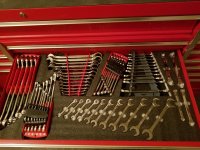
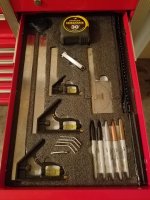
Foam is required in certain industries like aviation maintenance for tool accountability and foreign object damage prevention programs and generally awesome for making sure you didn’t leave your 10mm socket somewhere on your last job, never to be seen again.
This is my world and no such requirement exists. We went to what we call "team toolboxes" with "tool control" for 2 reasons:
1) We wanted a way to reduce FOD. There are other and better ways than foam. We now have tool control EPIQ boxes where the box senses tools are missing. We had other "mandraulic" ways before foam (tool "chits")
2) We wanted to standardize the tools used to affect specific jobs.
Before the team tool boxes, each mechanic had his own personal toolbox like an automotive shop. Joey Baggadonuts would grind a wrench for a specific job and keep that locked in his personal toolbox for job security. I'm sure this still goes on in plenty of aircraft hangers all over the world. When Joey took the family to the Jersey shore for vacation, no one could do the job he usually did because the special tool was locked in his personal box.
This sounds like Joey is kind of an ***. Viewed from the other perspective, Joey probably knows how to do that task better than anyone else. He ground his own tool for it! So maybe we are all better off just waiting for Joey to get back from vacation. Anyway, the company thought if a special wrench was required:
- engineering should know about that and do better. (Nobody ever told us they needed a special wrench)
- industrial engineering should design the special wrench and put it in the tool crib or in every box, & make it available to our customers.
- Last (and I've talked about this many times here), with a team tool box, engineering knew exactly what tools were available to our production line, which allowed us to design products for specific tools (we try not to, but sometimes we do).
Sorry if that's more than you wanted to know. Let's wrap this up by saying:
- Aircraft toolbox drawer layouts are designed very specifically/thoughtfully to address specific jobs being worked, the number of mechanics being supported by that box, the schedules outlining how long the jobs take to complete etc.
- The mechanics never seem to like them. Tools are always in the wrong drawer for them. It's like having someone else arrange your kitchen cabinets. (or your wife's kitchen cabinets).
- We make our own layouts because they are so specific. But you could potentially offer that service to automotive dealerships or industry. But then you shouldn't be here. My sense is, AI could not offer the end product industry would want.
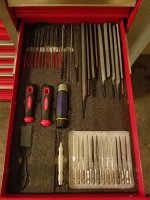
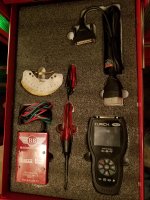
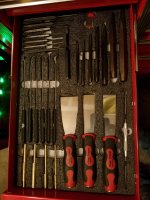
That’s the catalyst for this project; I’m launching a business called Profoama that will take a customer-supplied photo of tools laid out in a drawer, segment & mask them, and then export it to a CNC cutting file to create custom shadow foam (top cut foam layer over contrasting color uncut base layer). The object recognition portion of the project (what these photos are for) is for more advanced features I hope to roll out once I start selling enough to pay for the developers’ time; sorting, justifying, nesting, grouping, and providing recommended layouts to optimize drawer space, etc.
If I can teach an AI model to recognize different types of drivers (nut, screw, etc) vs hammers/mallets vs sockets and ratchets, etc., it can do a better job of providing smart layout suggestions so it isn’t taking a few random sockets and using them to fill unused space in your files drawer, for example, when that space could be better utilized by a sanding block, grinding wheel or other similar-purpose implement.
Foam can always be modified by hand later if you add tools, but if you’re just starting out with a new job kit or upgrading your box, new precision-cut foam would be an awesome upgrade. Ideally old orders can be retrieved and modified if you wanted the whole drawer recut, but I haven’t gotten that far yet. Devs are just wrapping up things on the segmentation and mask coding and putting a storefront together for my beta testers to put to work. Turns out developers are EXPENSIVE, and I have a lot of awesome ideas I’ve gotta prioritize based on my life savings-turned-R&D budget until I get to a sustainment-through-sales point.

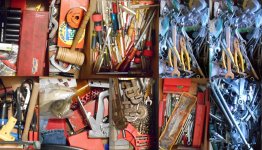
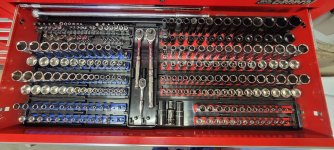
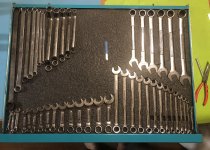
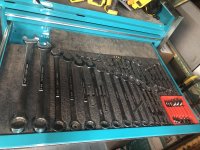
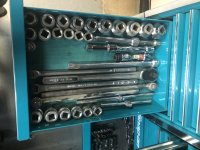
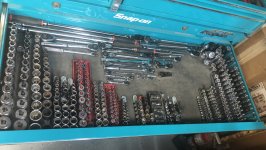
When you look at drawer like mine for example, there are higher density organization systems out there than foam. Foam can't beat this. A lot of this is just the packaging the tools were shipped in (read: free). Tools that come in defined sets typically have storage solutions already. Sockets come in definable sets. Screwdrivers do. Wrenches do. Extensions do. And products exist for all of that.

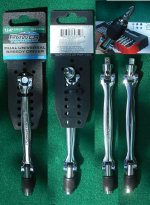
BUT! There's nothing on the market I could buy to organize my ratchets much better than how they are now. The problem with ratchets specifically is that no 2 of us have the same set of ratchets. So no off the shelf product will ever really suit.
Also notice- reading between the lines of the responses you've gotten, the discussion of the use of foam to organize tools is binary. It's all or nothing. What if instead of a drawer solution, you offered just custom ratchet storage? A block of foam you insert into a drawer.
So the scenario would be this: The customer types the brand and part numbers of each ratchet into a text field on a website (or selects from a drop down of tools you have data for). You get the data and have a vector plot of every major brand and model of ratchet. You run an auto nesting routine and submit a low res unusable graphic to the customer for approval. If he or she agrees, they hit the "buy it now" button.
I would also include the option of customer graphics for additional $10. Some guys might want their logo, a sports team, car brand etc. My guess is, your CNC could do it.
Hope this helps.