To avoid these ads, REGISTER NOW!

High tech solutions to older problems in HVAC

bonneyman

Well-known member
Joined
Apr 22, 2010
Messages
8,850
Location
Desert SW
The popularity of the "Old School" thread got me thinking. Perhaps there's a place for new fangled ideas that could serve as solutions for old unit problems? Since I'm a older technician I'm not familiar with most of the new technology over the past decade. But I'm willing to learn, and hope that you current techs might share your opinions on things.

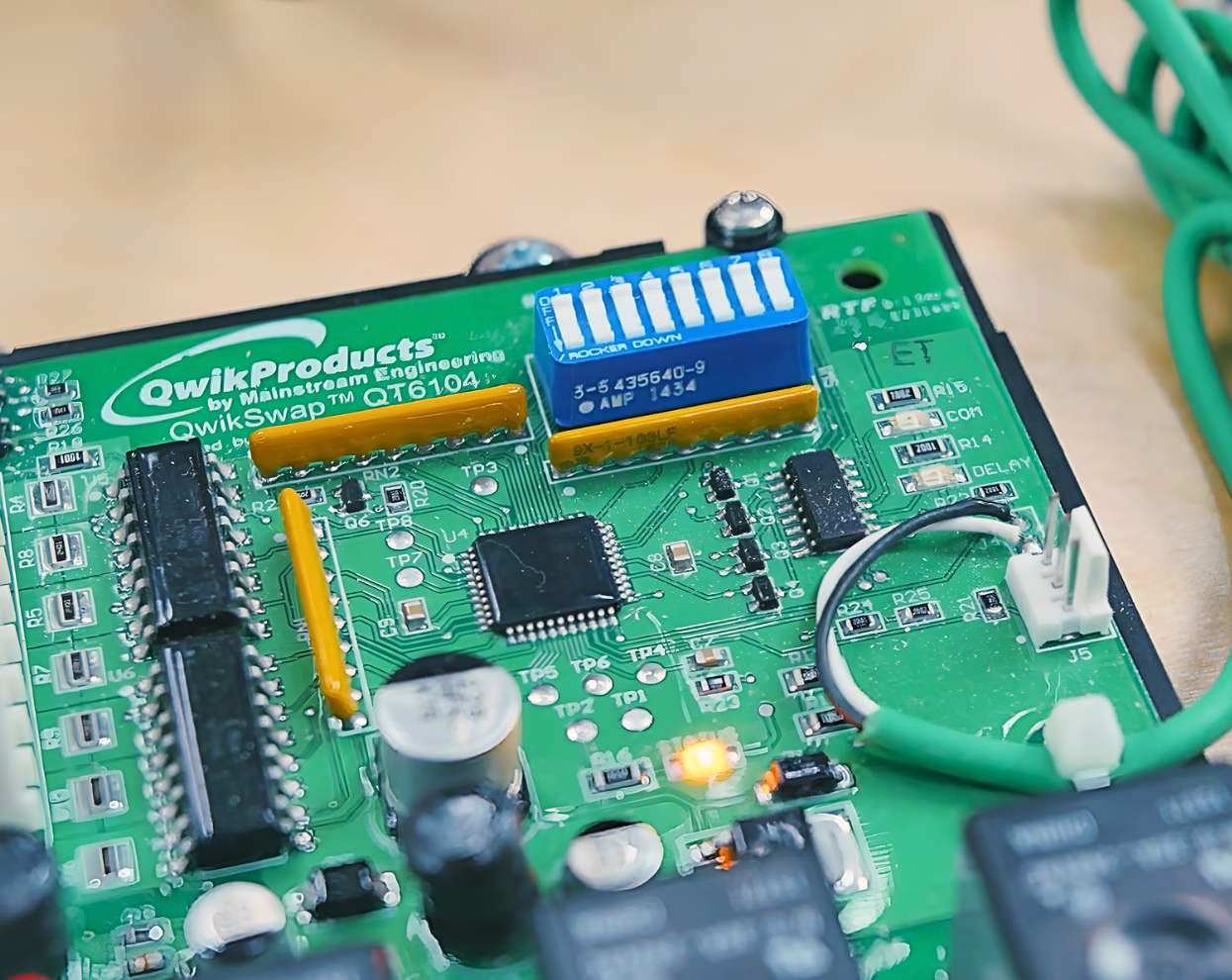
Qwik Swap
What if you have a newer high efficiency unit with a bad ECM in it? Those variable speed motors are quite pricey. Came across this device that allows you to swap out that OEM variable speed blower with a generic ECM or even an older PSC motor. $300 plus the price of a PSC would be alot cheaper than an OEM replacement - and probably available locally, too!
ICM-U Universal defrost control
I used ICM back in the day because they offered a whole line of custom fit OEM direct replacements for various manufacturers defrost controls. Really came in handy on older 1970's and 80's NLA controls. But I see they've discontinued those for this "Universal" defrost board. Anybody uses it?
https://www.icmcontrols.com/product/icm-udefrost/

Portable battery power vac
I dragged around a corded shop vac for various jobs but have seen these Li-Ion vacs used with various attachments that allowed one to pull clogs out of condensate lines rather than the pushing I did with nitrogen.
The guys used this adapter and hose kit for PVC drains.
 
To avoid these ads, REGISTER NOW!
OP
B

bonneyman

Well-known member
Joined
Apr 22, 2010
Messages
8,850
Location
Desert SW
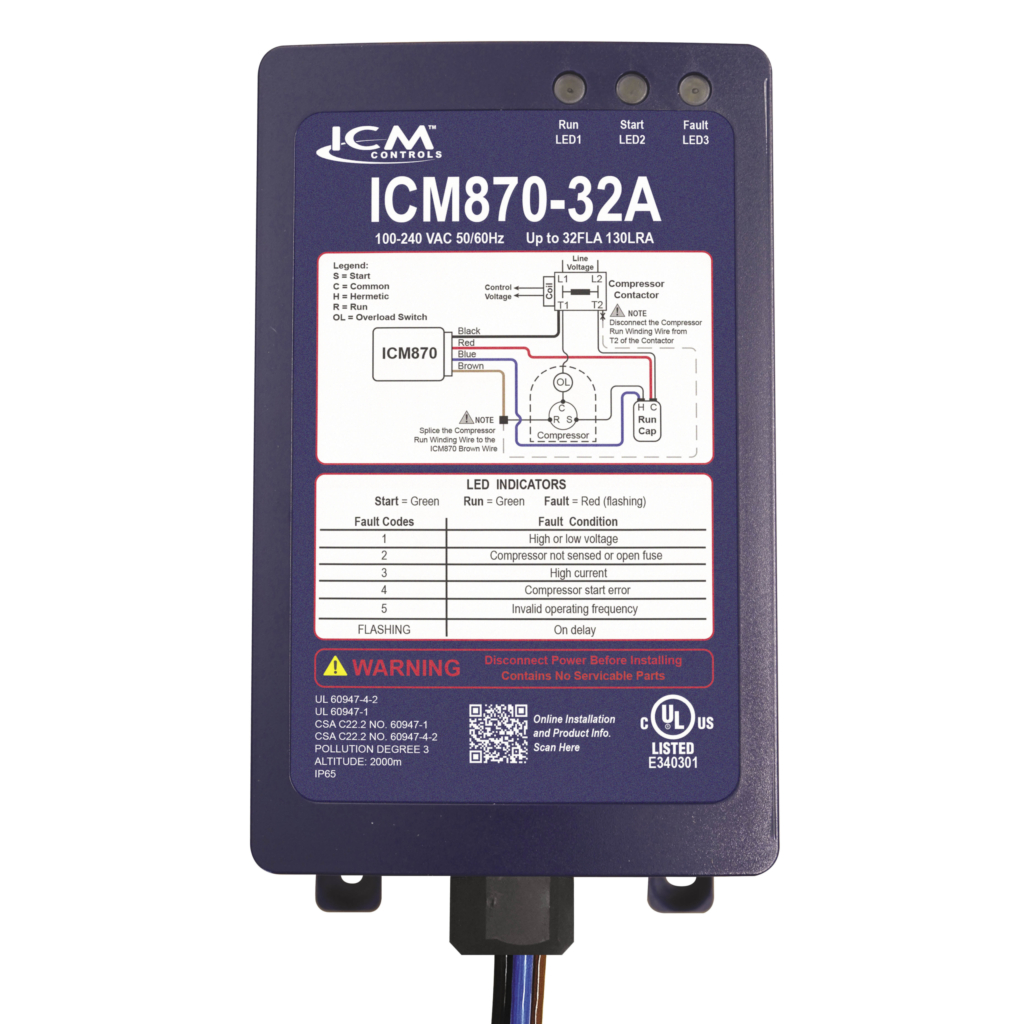
Came across this device advertised as a soft start that can drop the inrush current on the compressor by 75%. Supposed to protect the compressor and capacitor, and can institute a 4 minute time delay feature if it notices any irregularities. About $400.


bob smith1

Active member
Joined
Jul 2, 2026
Messages
33
Came across this device advertised as a soft start that can drop the inrush current on the compressor by 75%. Supposed to protect the compressor and capacitor, and can institute a 4 minute time delay feature if it notices any irregularities. About $400.


I've followed this advent for 20 years, practically begging for 3p compressors and VFDs. These soft starts have serious tech in them! Way more than people even realize, and the OEMs don't want me to say, but they read back EMF for speed inputs in how to control the compressor better. A page right out of the sensorless vector handbook.

Old school techs can't even get their head around it.
 
OP
B

bonneyman

Well-known member
Joined
Apr 22, 2010
Messages
8,850
Location
Desert SW
Add a wire
For older homes with only 4 wires in the thermostat but you need 5 wires with a new install. Running new stat wire through a house with limited access can be a real pain, so Carrier came up with this little thing to "add" a wire electronically. I've heard of - but not seen - techs using 2 or 3 of these things to get themselves the wires they need. With the advent of new wi-fi stats this is kinda passe but if it'd work for your application - they still make them.
A new fangled version that looks simple to use.

Digital thermostats (programmable, non-wifi)
Programmable thermostats came out right after I started doing HVAC hard and heavy, and they were the "new" thing, so the boss investigated them. He settled on Maple Chase for his entry level stat, and Honeywell's Chronotherm 3 for his deluxe model.
The HW had this mode called "Adaptive Recovery" which would learn the building it was in for a year, and then automatically make temp and time adjustments to meet the programmed setting but save some run time. If you kept manually changing the settings it would mess it all up, but - if you left it alone - it would adapt to your schedule and save money. As much as 17%. Groundbreaking at the time, but pretty commonplace now. With the advent of Wi-Fi stats most of these older styles have been discontinued. But a few are still available.

When I started my business I was given a Braeburn digital stat - salesman said if you like it you'd buy more. I loved them! Really liked the feature of being able to replace batteries from the front without having to take the stat off the wall. I carried one model that would cover 75% of the applications I ran into - so it reduced inventory. Braeburn has change their design, and their quality is not the same. But they're not bad for what they are.

So in my house I've installed the Honeywell T4 Pro. Can be run off of battieries or a common wire. After a year it's been OK for me.

Digital thermometers
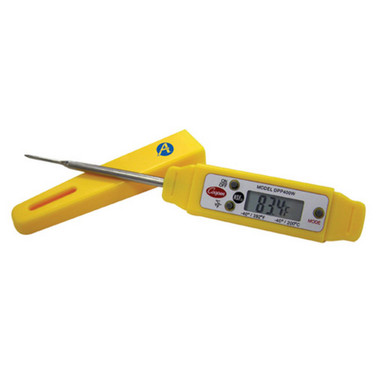
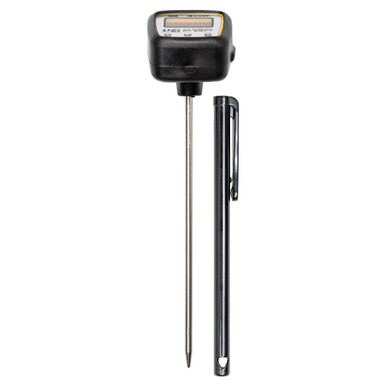
I'm not a total fuddy-duddy when it comes to new technology - I just don't jump on the bandwagon until the tech proves itself. With pocket thermometers it was advantageous to have a faster response time. But - since I worked on evap coolers - I kept dropping them into the water, ruining them. They didn't like sweat much either, and if the batteries weren't watched closely you'd be buying another thermometer soon. All that and the cost of them back then made me just give up and go full analog for pocket thermometers. But brands increased and costs came down over time. Epstein had a sale on some pocket digital thermometers a while ago and I bought a handful. They are my regular use ones now.
 
OP
B

bonneyman

Well-known member
Joined
Apr 22, 2010
Messages
8,850
Location
Desert SW
A/C leak check ideas
There were sonic detectors, and several different types of hand held electronic freon detectors I've used over the years. But honestly, I've found more leaks with soap bubbles than any other method. Plus, I could use it to clean my hands, clean up grease and oil spills in the truck, and - when massively diluted - clean condenser coils. (Dawn Blue dish soap was my preferred brand). But at my last paid job the guys were using this new stuff, and I ended up buying a bottle just for the heck of it. https://www.refrigtech.com/big-blu/
Though this yellow stuff is definitely been around awhile - and works on any refrigerant. It used to be this bright yellow just for visual bubble detection, but now apparently is UV light reactive - so that's an added bonus if you have a light.

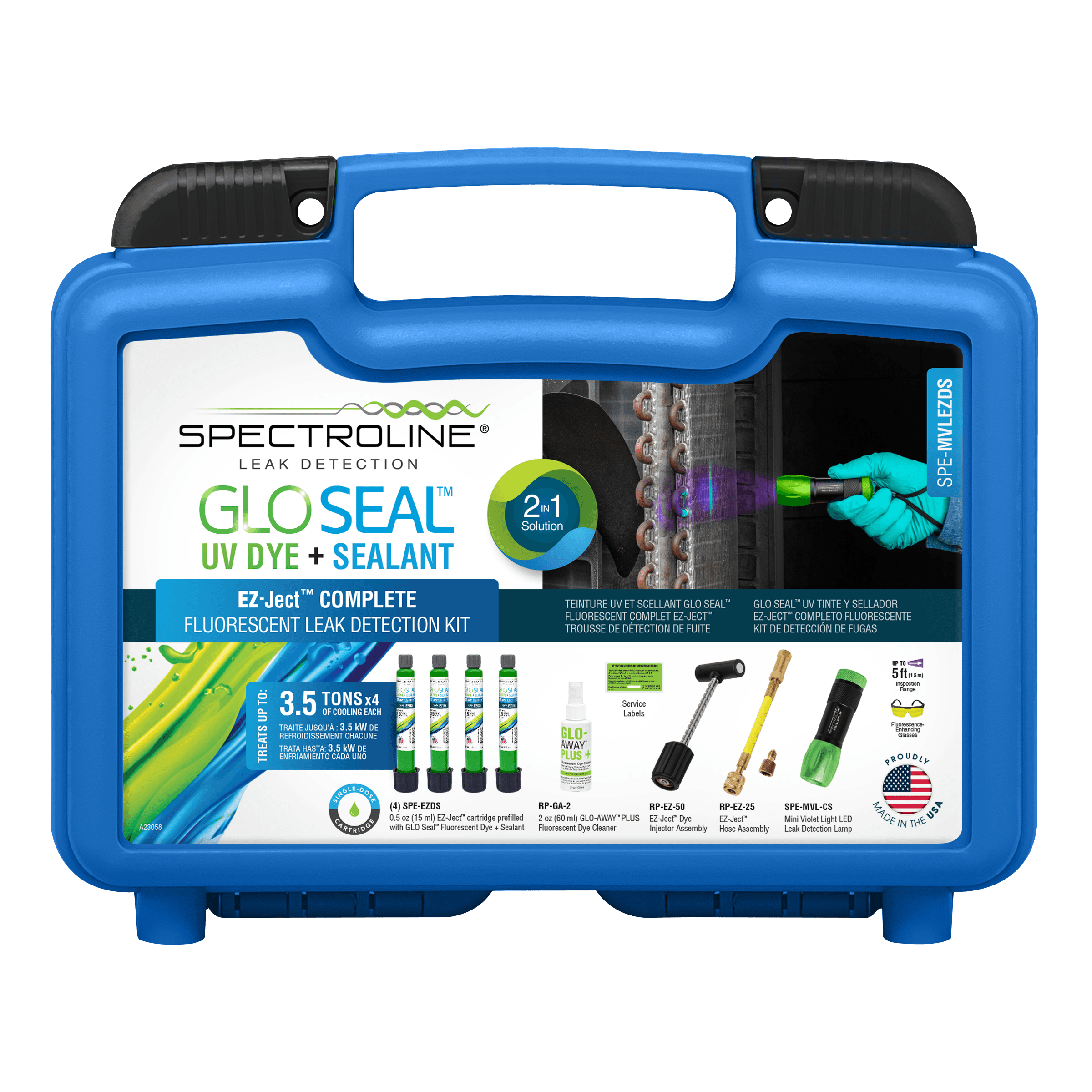
I looked into the injectable dye leak stuff when it first became available but was told any freon tainted with dye wouldn't be accepted for reclaim and recycle. So I didn't use it. Though on my home unit recently, I used some and couldn't find any leaks in the system - then found a broken schrader cap seal depressing the valve core when tightened! Ugh! All that hassle, but I now have peace of mind.

For portable electronic combustible gas leak detection I used the TIF 8800. No longer have it, but found a Blue Point version (obviously made by TIF) at an estate sale and grabbed it.
 
To avoid these ads, REGISTER NOW!

Just_Steve

Well-known member
Joined
Jun 2, 2020
Messages
911
Location
Dutchess County, NY
A/C leak check ideas
There were sonic detectors, and several different types of hand held electronic freon detectors I've used over the years. But honestly, I've found more leaks with soap bubbles than any other method. Plus, I could use it to clean my hands, clean up grease and oil spills in the truck, and - when massively diluted - clean condenser coils. (Dawn Blue dish soap was my preferred brand). But at my last paid job the guys were using this new stuff, and I ended up buying a bottle just for the heck of it. https://www.refrigtech.com/big-blu/
Though this yellow stuff is definitely been around awhile - and works on any refrigerant. It used to be this bright yellow just for visual bubble detection, but now apparently is UV light reactive - so that's an added bonus if you have a light.

I looked into the injectable dye leak stuff when it first became available but was told any freon tainted with dye wouldn't be accepted for reclaim and recycle. So I didn't use it. Though on my home unit recently, I used some and couldn't find any leaks in the system - then found a broken schrader cap seal depressing the valve core when tightened! Ugh! All that hassle, but I now have peace of mind.

For portable electronic combustible gas leak detection I used the TIF 8800. No longer have it, but found a Blue Point version (obviously made by TIF) at an estate sale and grabbed it.
I'll tell you how old I am without telling you.
This is what I used to find leaks for many years.


Propane Halide Leak Detector
 
OP
B

bonneyman

Well-known member
Joined
Apr 22, 2010
Messages
8,850
Location
Desert SW
Remember back when that Dura-Lube stuff came out that was advertised to reduce wear in your car engine and extend life? I read about this additive that did the same thing for A/C compressors. Fully compatible with all the refrigerants and oils at the time, and was said to reduce friction, extend compressor life, and reduce amp draw. It was invented in 1954, and I figured if it was still around there must be something to the story. Called Supco 88.
I bought some and started using it as a break free to get away from WD-40 and the headaches. Worked great! So I injected some into my home A/C and years later she's running great and the electric bills haven't skyrocketed. I popped the caps off of blower motors and add about 10 drops in each gland packing. Original cond motor still running! Anything that uses mineral oil will benefit from it's use. You can't use it with R-410a but for any older systems and motors it's great.

Some years late another pressurized additive was introduced claiming most of the same benefits but also claiming to help heat transfer inside the coil tubes by preventing oil from getting thick and globbing up. Called Zerol Ice. It supposedly could be used with any refrigerant (and R-410a was in use) so I have to assume it's mostly a synthetic oil with additives.
I used it on 4 customers units. After 2 years all reported savings in their electric bills except one. That customer was on a monthly payment plan, so, she didn't know if she had any savings. But the next year she told me when the power company reviewed her account, they decided not to raise her base rate! So, it must have done something.
 
Last edited:
OP
B

bonneyman

Well-known member
Joined
Apr 22, 2010
Messages
8,850
Location
Desert SW
I used my little battery DeWalt vacuum to **** a pull string in 1-1/4" about 250 ft
quite impressed that I didnt need to drag the shop vac out.
That reminds me of a story.
I worked for this contractor when I first started working in the industry, and we were working at this church. The stat needing replacing, but the stat wire was old, cracked, and broken. We're like, "How do we get a new stat wire pulled from the sanctuary outside to the package unit?" My boss rigged up a string with a styrofoam cup tied to the end. We turned on the blower, and dropped this thing into the return vent. The airflow sucked it underground all the way out to the unit. We watched the blower assembly, and when we saw the string we grabbed it. Turned off the blower, and used that string to pull a stronger wire thru. Then pulled the new stat wire bundle thru the return with that wire. Once in the blower area we fished it thru to the control compartment and secured it so it wouldn't get sucked up later.
Total time: 30 minutes. Customer with happy with a new stat, and we didn't have to punch and drill holes all over to run the new stat wire.
Thanks for the memory! Haven't thought about that in years! Maybe it'll help somebody with a similar problem.
 
Last edited:
OP
B

bonneyman

Well-known member
Joined
Apr 22, 2010
Messages
8,850
Location
Desert SW
Condensate fixes

I've already spoke about the E-Z trap condensate P-trap system from Rectorseal, with clear U-tube for easy viewing for clogs, a long flexible brush for cleaning, and provision for a unit off switch in case of blockage.

For units needing a condensate pump, I found the Diversitech CP-22 pump has a transparent bottom for debris viewing as well, and older models featured a non-float activation switch. I've found that the floats get stuck, encrusted with debris, or start soaking up water and thus losing their bouyancy. The Diversitech one had a contact sensor to avoid all that.

For cleaning, I've tried all kinds of slow-dissolving tablets and inserts. The best one was made by Wagner Corporation. Couldn't find them now, This one was about the best I've found that currently available.

Honestly, the best condensate line cleaner I've found was an old product called Goodwins Pine Ammonia at a garage sale. Stuff worked fantastic! Posted about it before in January 2021.
When it ran out, I found a formula on line that I think approximated the formula well. 3 parts Pine-Sol to 1 part household ammonia. I added some drops of green food coloring just to prevent mix ups in the laundry room. After 4-5 years I finally pulled my pump apart to clean it, and it had virtually no build-up in the pain. No strong ammonia smell in the hose, drain hose never clogs.
 

Attachments

  • IMG_2895.JPG
    IMG_2895.JPG
    120.8 KB · Views: 0
  • IMG_2897.JPG
    IMG_2897.JPG
    105.1 KB · Views: 0
OP
B

bonneyman

Well-known member
Joined
Apr 22, 2010
Messages
8,850
Location
Desert SW
I've heard about these years ago but never got around to using one. An electronic contactor for compressors that replaces the standard electro-mechanical style found in most all A/C's.
They are sealed against dirt and insects, last alot longer than normal contactors, and can work with voltages lower than regular ones. Most regular contactors will drop out - or chatter - if the coil voltage goes below 18VAC. Electronic contactors will work solidly below that voltage, solving problems with systems that have long (or bad stat) wires. Most newer electronic contactors also have brown-out protection and time delays programmed in.
I almost always replaced bad contactors with 3 pole varieties - even if the OEM was only 1 or 2 pole. Was a bit more expensive but one fried contact down the road could have the wires switched to the unused pole and save time and money. (y)


And with capacitors, I went to 440V rated ones exclusively. Even if the stock cap was 370V rated. The MF rating was the same, but the higher voltage rating meant better/thicker internal insulation, and caps were getting so crappy that every unit benefitted from the cap insulation being "beefier". The cost difference between the two voltage ratings were negligible. And when I bought new motors (condenser or blower) I bought a new cap, I cut open the motor box and stuck the correct cap inside. That way, when I was on the roof, I didn't have to climb back down to get a cap because I forgot it. It was already in the motor box. (y)
 
Last edited:
To avoid these ads, REGISTER NOW!
Top Bottom