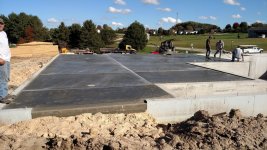
Keeping these points to the exterior of the poured foundation wall, here's the best current technology can offer:
- Mortar cant strip at the footing/wall connection
- Footing drain tile, solid perforated pipe, socked, at or a couple inches above the bottom of the footing. Connected to sump pump (daylight is for walk-outs). Vertical cleanouts to above grade at every corner.
- Window wells graveled, then piped into footing drain tile.
- Asphaltic emulsion damproofing. This will prevent standing moisture penetration through concrete, but does not span across cracks that WILL develop (you might call this "tar").
- Self-adhered sheet waterproofing (you might call this "sticky membrane"). This will expand a bit and still cover those cracks that WILL occur (but surely will get brittle over time).
- Exterior rigid insulation. This is the best location for basement insulation, as any condensation occuring will be outside.
- Dimpled membrane, another product that is similar to what the gravel does for redundancy. There are two ways to install this, one with the dimples toward the concrete. This provides a drainage plane down to the drain tile. The other way is toward the soil, which requires a fabric on the dimples. This way alleviates more hydrostatic pressure.
- Fabric wrapped (like a burrito) gravel from the drain tile all the way to within 6" of grade (Most contractors will not do this because of the labor involved - backfill soil, leave room for 12" plane of gravel, then compact. Repeat in lifts of 6"-12").
- Grade sloped away from foundation, 8" below sill.
There are specific details in installing each, like making sure the damproofing is compatible with the rigid insulation, covering the exposed insulation and capping it and the membrane, the direction to point the pipe holes, etc.


 Still have family and tools there.