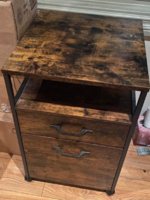
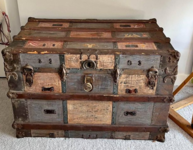
"distressed finish"
was all the rage in the mid-1960s.
they sold kits: base color / glaze
paint object with "base coat" (some sort of polychrome tone)
with a wad of cheesecloth, wipe on a mix of polyurethane with some sort of pigment in it. (originally those "glazes" contained a sepia tone pigment.)
let stand a couple minutes. wipe with a piece of clean cheesecloth until it desired look is achieved.
can also be done mixing metallic pigments into the glaze. gold is popular. (Daniel Smith sells powdered gold pigment.)
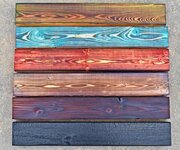
You can also bring up the grain by application of flame to wood.
Everything from "light scorch" to "full on charcoal" can be done.
I did a sculpture where this technique was used for the base platform: torching the wood and then brushing it agressively with a file card.
(It looks darker than it actually is because I had to wash it to take the photo - it was a bit dusty.)
You can experiment with lighter finishes over darker finishes, but my results have been mixed. Once you apply the first (darker) finish, you've somewhat "sealed" the surface, so subsequent applications (of a lighter tone) don't always do that (sometimes necessary) "penetration" thing. Again, I've played with that one on many pieces - with mixed results. (I think the walking sticks were one of the last experiments.)
Popular items used to add "age" marks to pieces for distressed finishes include (but are not limited to) bundles of keys, pieces of bicycle chain, pieces of broken saw blades.