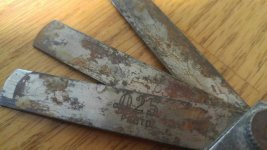
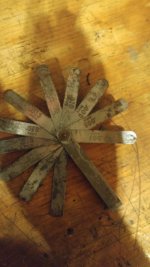
I spent many years in machine maintenance and a lot of setups were done with feeler gauges. Part of the test is FEEL and if you have a rough surface then the feel goes to hell or the parts being gauged are scratched or abraded if the feeler stock is not smooth. If checking pinpoints then they drop into the divot. There are appropriate places for feeler gauges and their fine finish.
I'm in hope that some of the youngsters that read this learn that rusty old measuring tools are not something that can be brought to new. Some will not see the difference between this and polishing up a rusty set of jo blocks.
lg
no neat sig line
If you're checking between pinpoints, once the gauge is in, there is nothing to feel. It either passes or doesn't. Once it's in the gap, all you've learned is that it already fit. Anyway, that's what wire gauges were made for. With a wire, the roundness does give you something to feel.
As for abrading parts, this too is BS. Either the steel isn't going to hurt the parts, or you need to be using brass gauges. FYI, the manufacturer's etching is no different than a controlled rust, and leaves a texture identical to what cleaned up rust is like. Yes, this can be abrasive, but again, not to a degree that would matter, when we're talking about the tolerances of the gigantic steps between blades.
The Evaporust absolutely would not. It only removes rust and not sound steel, unlike acid based derust baths. What metal has already turned to rust is gone and whatever innacuracy this causes you are stuck with. The brass brush will not remove good steel either. It is softer than steel but dealing with those thin leaves, possibly depositing brass on the rough surface or creasing a leaf, I would use the Evaporust. To be honest, corroded measuring standards are not something I would bother with.
But the Evaporust will remove the etching, which is also iron oxide.

I was referring to using a wire wheel on the blades having an affect on their thickness.
Most steel wheels are probably way too harsh a treatment (though a CAREFUL use of a fine steel wheel should be ok). Personally, I find that scotchbrite is also too abrasive. But a brass wheel will not do any harm.