To avoid these ads, REGISTER NOW!

How to test this?

bluedog225

Well-known member
Joined
Jan 31, 2012
Messages
3,285
Location
Texas
I’ll be installing one or two mini splits before it gets hot. And a couple more later.

I know I’ll need a vacuum pump. And this came up at Restore. I got it for $300.

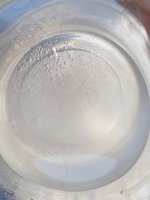
It looks new. There’s no oil in it, but I suspect the oil is appropriately drained after each use.

Is there any way I can test this? I’ve got seven days to return it if it’s a dud.

Thanks

IMG_9874.jpeg

IMG_9873.jpeg
 
To avoid these ads, REGISTER NOW!

engineer2

Well-known member
Joined
Dec 13, 2009
Messages
11,798
Location
Chicago burbs
Assuming you have a manifold set to make the connections, you just need a micron vacuum gauge. I've got an old SUPCO VG-60 which has a row of LEDs. Works fine for general AC work. Plenty of digital ones are in a similar price range. See how quick it pumps down and how low it will go.

"An AC system should be evacuated to a minimum of 500 microns, with many technicians targeting 200–400 microns."
If the hoses and connections are good and there are no leaks, getting below 500 should be easy, but may take longer.
When practical, I'll let the pump run overnight and sometimes get to down to 100 microns. You'll get more moisture out of the drier.
 

fitter30

Well-known member
Joined
Jun 23, 2019
Messages
2,973
Location
Peace Valley,mo
"ONLY USE VAC PUMP OIL" vac oil is changed because of contamination or moisture. Moisture in the oil and you can't see it unless there's a lot will turn oil white. If pump doesn't pull down <400 micron change oil. Moisture causes high vapor pressure which = not good vacuum.
 

dscheidt

Well-known member
Joined
Apr 26, 2017
Messages
2,892
"ONLY USE VAC PUMP OIL" vac oil is changed because of contamination or moisture. Moisture in the oil and you can't see it unless there's a lot will turn oil white. If pump doesn't pull down <400 micron change oil. Moisture causes high vapor pressure which = not good vacuum.
Just change the oil every job. If you're a DIYer, you're not doing enough work for the cost of oil to be an issue.
 
OP
B

bluedog225

Well-known member
Joined
Jan 31, 2012
Messages
3,285
Location
Texas
Most hoses leak to a certain degree as do many micron gauges brand new out of the box. Check your micron gauge when you first get it, the first (2) I purchase leaked, return them if they do.

Ok. I read the manual, filled with oil, attached micron gauge. It pulled down to 500 microns very quickly and was down to 90 microns by the time I got it shut down.

The shutdown procedure is to shut the isolation valve, open the gas ballast, wait 3 seconds, then turn it off.

I left the micron gauge on with the isolation valve shut. It jumped around a bit but has settled down to 490 microns. Then 510 microns in ten minutes. The gauge auto shuts off.

I’m thinking it’s not leaking. Is this a valid test?

And should I go ahead and drain the oil after each use, even a test like this? And finally, store it with oil or not. The manual doesn’t say.

Thanks
 
Last edited:

pcmeiners

Well-known member
Joined
Aug 13, 2009
Messages
7,901
Location
In the only town in Pennsylvania, Bloomsburg.
"And should I go ahead and drain the oil after each use"

If your only going to use the vacuum pump once a years change the oil. If you use it once and then store the pump, change the oil

Changing the oil every time is not necessary for every job if the pump is used within a short time (within weeks). Letting a pump sit for long periods of time with a good deal of moisture (or possible acid) in the oil is not good. If the unit was used in a lab with a use requiring extreme low micron levels it would be a different story as would be the case if the pump pulled a vacuum in a contaminated system. The pumps I have are Edwards, the internals parts are stainless, the pump vains are phenolic both material are relatively immune to moisture but the casing is aluminum as are other parts which are affected by moisture.

Have 5 vacuum pumps I rebuilt, most had oil which was used for long periods ( within a chemistry lab) with a lot moisture in the oil, before rebuilding they pumped down below 100 microns easily . The main issue is the internal parts can get coated with hard to remove materials, not good for a pump or the ability to pump down to very low micron levels (similar to <20 microns) which is not necessary for HVAC work.

"I left the micron gauge on with the isolation valve shut. It jumped around a bit but has settled down to 490 microns. Then 510 microns ten minutes. The gauge auto shuts off."

10 minutes is not a lot of time for a test. That said it appears it is holding. There will always be a reasonable amount of variation in reading due to temperature and moisture in the system. A jump from 490 to 510 is reasonable as long as it does not continue to rise over a long period of time, even an hour is not enough test time for a very slow leak. If it continues to rise, especially lineally either you have a leak or moisture is still in the system; if moisture is behind a valve or is absorbed in materials or the system is large it can take a while to remove moisture, moisture can freeze if a system is pumped down very fast. Unless your in a rush test with the micron/pressure gauge for 24 hours
 
Last edited:

brewchief

Well-known member
Joined
Sep 20, 2008
Messages
2,370
Location
Michigan
I have the same pump right now, I think it's 8 or 9 years old and still works great, I change the oil when it starts to take a longer time to pull under 200 microns, not uncommon to do 10 or 15 A/C replacements before needing a change. If your dealing with a contaminated system then you might change it multiple times in one day.

As you add in a manifold set and hoses it gets harder to pull a deep vacuum, they will always have some degree of leakage right through the hoses, vacuum rated core depressors are also seldom truly vacuum rated in my experience .
 

danski0224

Well-known member
Joined
Jan 29, 2005
Messages
13,411
Location
Near Naperville, IL
Ok. I read the manual, filled with oil, attached micron gauge. It pulled down to 500 microns very quickly and was down to 90 microns by the time I got it shut down.
If the micron gauge was attached directly to the pump, and if the micron gauge is a good one, it should read below 100 microns very quickly, even down to 20 microns can be attainable.

I would run it with the valve closed for 30 minutes or so, change the oil, and check it again. Old oil or actual water can remain behind.
The shutdown procedure is to shut the isolation valve, open the gas ballast, wait 3 seconds, then turn it off.

I left the micron gauge on with the isolation valve shut. It jumped around a bit but has settled down to 490 microns. Then 510 microns in ten minutes. The gauge auto shuts off.
The isolation valve on a typical HVAC vacuum pump is not rated to hold vacuum. The smaller the test chamber, the more difficult it is to get a stable micron reading- excluding things like leaky hoses/equipment.
I’m thinking it’s not leaking. Is this a valid test?
If the gauge is attached directly to the port on the pump, 500 microns is not very good at all.
And should I go ahead and drain the oil after each use, even a test like this? And finally, store it with oil or not. The manual doesn’t say.
If the pump is used to evacuate "clean" or new work, there is little risk of contaminated oil. I would store it with oil and change the oil before use if it sits for months at a time, unless you can verify that the pump works with the existing oil with a micron gauge before use. I use synthetic oil in mine, and verify operation with a micron gauge before use.

True Tech Tools has some videos on HVAC evacuation.
 
OP
B

bluedog225

Well-known member
Joined
Jan 31, 2012
Messages
3,285
Location
Texas
If the micron gauge was attached directly to the pump, and if the micron gauge is a good one, it should read below 100 microns very quickly, even down to 20 microns can be attainable.

I would run it with the valve closed for 30 minutes or so, change the oil, and check it again. Old oil or actual water can remain behind.

The isolation valve on a typical HVAC vacuum pump is not rated to hold vacuum. The smaller the test chamber, the more difficult it is to get a stable micron reading- excluding things like leaky hoses/equipment.

If the gauge is attached directly to the port on the pump, 500 microns is not very good at all.

If the pump is used to evacuate "clean" or new work, there is little risk of contaminated oil. I would store it with oil and change the oil before use if it sits for months at a time, unless you can verify that the pump works with the existing oil with a micron gauge before use. I use synthetic oil in mine, and verify operation with a micron gauge before use.

True Tech Tools has some videos on HVAC evacuation.

Thanks for all the detail. A couple of questions. First it did get down below 100 microns very quickly with the gauge attached directly to the pump. I just tried to stop it at 500 microns thinking that was a good place to test.

Is it OK to leave this thing running for 30 minutes? Double checking because that seems odd to me.

If the isolation valve is not rated to hold vacuum, how would I test this?

I’ll check out true tech tools. Thanks.
 

danski0224

Well-known member
Joined
Jan 29, 2005
Messages
13,411
Location
Near Naperville, IL
A vacuum pump can be left running for hours.

Connect the micron gauge to the port on the pump and turn it on. The pump should reach under 100 quickly if the pump/oil is good.

Vacuum is isolated with core removal tools and vacuum rated hoses. The valve on the pump is no good for this.

Watch those videos.
 
To avoid these ads, REGISTER NOW!
OP
B

bluedog225

Well-known member
Joined
Jan 31, 2012
Messages
3,285
Location
Texas
A vacuum pump can be left running for hours.

Connect the micron gauge to the port on the pump and turn it on. The pump should reach under 100 quickly if the pump/oil is good.

Vacuum is isolated with core removal tools and vacuum rated hoses. The valve on the pump is no good for this.

Watch those videos.

If I’m understanding correctly, it sounds like I need the full setup to test the guage.
 

pcmeiners

Well-known member
Joined
Aug 13, 2009
Messages
7,901
Location
In the only town in Pennsylvania, Bloomsburg.
First it did get down below 100 microns very quickly with the gauge attached directly to the pump.
You should test for vacuum with the micron gauge connected directly to the king valve via a core removal tool (with an isolation valve). Unless your lucky adding a hose before the gauges is not a good idea. Had brand new hoses which did not leak when I got them, put them away unused for 2 months, used them again they leaked. Get in the habit of of attaching directly to the king valve, pump down to a low micron level, then turn off the isolation valve to get the hose and pump out of the loop.

Once I am done testing and after opening the king valve to release the gas to the system I replace the king valve cover caps with thread sealant, i use blue Loctite just in case the cores in the king valve leak.
 
Last edited:

Ohmthis

Well-known member
Joined
Jan 20, 2013
Messages
3,009
Location
Outside of Louisville KY
I was taught to connect my micron gauge to a recovery tank. Use vacuum rated hoses as most will permeate through the sides. I have the same pump, it is also 7-9yrs old. I can pump a 30lb recovery tank to 50 microns in about 35-45 minutes. I use the JB “Black Gold” vacuum pump oil and change it after about 2-3 jobs. If I notice it taking longer pump down, I’ll change it before the next job.
 

Snapped-off

Well-known member
Joined
Feb 22, 2012
Messages
4,783
Location
Indiana
Get yourself a valve core remover as well. Appion makes a nice one.
1000038362.png

I would also skip the manifold when evacuating. Hook the pump straight to the unit, with the micron gauge on the opposite end of the system.
 
OP
B

bluedog225

Well-known member
Joined
Jan 31, 2012
Messages
3,285
Location
Texas
Get yourself a valve core remover as well. Appion makes a nice one.
1000038362.png

I would also skip the manifold when evacuating. Hook the pump straight to the unit, with the micron gauge on the opposite end of the system.
Thanks. Where do you guys buy your stuff? Supplyhouse.com? Looks like appion website doesn’t sell.

And do you recommend 5/16 or 1/4?
 

Snapped-off

Well-known member
Joined
Feb 22, 2012
Messages
4,783
Location
Indiana
Thanks. Where do you guys buy your stuff? Supplyhouse.com? Looks like appion website doesn’t sell.

And do you recommend 5/16 or 1/4?
Local supply house.

I would think a mini split has ¼", but I don't work on them. Someone will likely confirm.

All my industrial HVAC has ¼".
 
OP
B

bluedog225

Well-known member
Joined
Jan 31, 2012
Messages
3,285
Location
Texas
Did you go to the site I recommended and watch their videos?

They will sell tools to anyone with a credit card. I do not recommend buying the tools unless you know how to use them.

But, whatever.

Easy there. Over 250 videos.

I didn’t see any links below the video. But I do see they have a standalone website. I’m hearing you recommend them. Thanks
 
OP
B

bluedog225

Well-known member
Joined
Jan 31, 2012
Messages
3,285
Location
Texas
Did you go to the site I recommended and watch their videos?

They will sell tools to anyone with a credit card. I do not recommend buying the tools unless you know how to use them.

But, whatever.

And they are good videos. Thanks again. \Good example:


Ohmthis

Well-known member
Joined
Jan 20, 2013
Messages
3,009
Location
Outside of Louisville KY
Thanks. Where do you guys buy your stuff? Supplyhouse.com? Looks like appion website doesn’t sell.

And do you recommend 5/16 or 1/4?
You can buy any of these tools online. Not all mini split manufacturers use the same size ports. I have a 5/16 and a 1/4 valve core removal tool. You got a great vacuum pump, but that’s like 1/25th of the equation. Watch those videos on True Tech Tools, it will teach you a lot and you can make a list of tools and ask if it’s truly needed. Do you have a plan for the installation? Give us some info like what size shop, how it’s insulated, where you live and so on. Once it’s decided what size and type equipment is needed, you can shop for equipment. Then you can get the correct parts, pieces, and tools. There are some very knowledgeable people here that will help out.
 
OP
B

bluedog225

Well-known member
Joined
Jan 31, 2012
Messages
3,285
Location
Texas
You can buy any of these tools online. Not all mini split manufacturers use the same size ports. I have a 5/16 and a 1/4 valve core removal tool. You got a great vacuum pump, but that’s like 1/25th of the equation. Watch those videos on True Tech Tools, it will teach you a lot and you can make a list of tools and ask if it’s truly needed. Do you have a plan for the installation? Give us some info like what size shop, how it’s insulated, where you live and so on. Once it’s decided what size and type equipment is needed, you can shop for equipment. Then you can get the correct parts, pieces, and tools. There are some very knowledgeable people here that will help out.

Thanks for the offer. I’m still working on this thing. It’s a little difficult to size the air con need. It’s 30 feet tall with a concrete garage on the bottom. Concrete room is pretty tight with two commercial insulated garage doors. The upper portion is a 20 foot tall room 24’ x 24’. The side walls are difficult to insulate because they’re double 2 x 6 timber strand with 9 inches between the studs. The western wall is traditionally built 2x 8. I’m using mineral wool for the walls, but having to cut it by hand. Not too bad since the place is small.

The whole thing is sheathed in three-quarter inch polyiso with a rain screen. And will have about 14” of blown cellulose in the roof. And Henry’s cool roof on the standing seam. Central Texas.

All off grid with solar. My plan is to install a single head 24,000 BTU unit and decide what other units I might need. I’m almost certainly installed at least one more for redundancy. And another in each of the shipping containers.

I plan to run the unit pretty hard between about 10 AM and 5 PM. No point in letting free electricity go to waste.

We’ve got all the steel we need for the front balcony. Hopefully that will be in within the month.


IMG_9991.jpeg
 

Ohmthis

Well-known member
Joined
Jan 20, 2013
Messages
3,009
Location
Outside of Louisville KY
Thanks for the offer. I’m still working on this thing. It’s a little difficult to size the air con need. It’s 30 feet tall with a concrete garage on the bottom. Concrete room is pretty tight with two commercial insulated garage doors. The upper portion is a 20 foot tall room 24’ x 24’. The side walls are difficult to insulate because they’re double 2 x 6 timber strand with 9 inches between the studs. The western wall is traditionally built 2x 8. I’m using mineral wool for the walls, but having to cut it by hand. Not too bad since the place is small.

The whole thing is sheathed in three-quarter inch polyiso with a rain screen. And will have about 14” of blown cellulose in the roof. And Henry’s cool roof on the standing seam. Central Texas.

All off grid with solar. My plan is to install a single head 24,000 BTU unit and decide what other units I might need. I’m almost certainly installed at least one more for redundancy. And another in each of the shipping containers.

I plan to run the unit pretty hard between about 10 AM and 5 PM. No point in letting free electricity go to waste.

We’ve got all the steel we need for the front balcony. Hopefully that will be in within the month.


IMG_9991.jpeg
Wow! Thats quite the build. That will be kinda difficult to figure the Manual J on. 🤣 is this a living area up top with a garage on the bottom?
 
OP
B

bluedog225

Well-known member
Joined
Jan 31, 2012
Messages
3,285
Location
Texas
Wow! Thats quite the build. That will be kinda difficult to figure the Manual J on. 🤣 is this a living area up top with a garage on the bottom?

Exactly. The upper area has a loft covering about half the area. There’s an open staircase going down to the garage. I’m thinking I won’t need to cool that space independently. And the wood stove is down there in the garage. There will probably be a propane freestanding fireplace on the second floor. Sort of a big tiny house.
 

Codyboy

Well-known member
Joined
Jan 31, 2019
Messages
1,650
Location
S.E. TEXAS
I wish. The one I’m familiar with won’t sell to public.
Well then familiarize yourself with one that will.
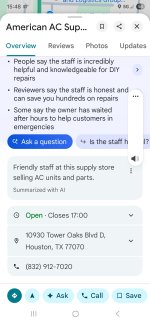
This guy will sell any part you want. Not sure where yout at , hes in NW Houston, Jones rd and fm 1960 area.
 

Attachments

  • Screenshot_20260423_154829_Maps.jpg
    Screenshot_20260423_154829_Maps.jpg
    501.8 KB · Views: 4
To avoid these ads, REGISTER NOW!
Top Bottom