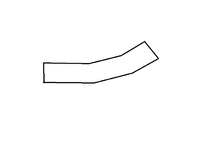
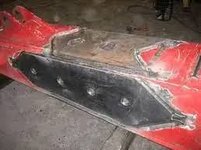
Like Kerrynzl said, the bottom is in tension. That’s your most bang for the buck location to add flat bar.
I’d grind the the weld on the bottom. Hook to your vehicle. Jack it up close to the weld area as you can and still have room to weld. This will help close that gap. Weld it on the bottom once the gap is closed. Grind smooth. Then put on the flat bar on the bottom and weld all around. Then do the same for the side. The top is in compression, adding material there isn’t going to help much.
This ^^^ except you don't want the ends of the plates welded fully across [if you want to fully weld the plate , taper the ends to a point]
Steel is always flexible, So the last thing you need is an abrupt stop in this flexibility [this become a stress point for metal fatigue]
When we build rollcages for race cars , we need to weld a footplate at the bottom of the cage [to the floor]
The FIA specifies the square area of these plates and they must be stitch welded to the floor [which is stronger than fully welding]
The same applies to "seam welding" the unibody [stitch welding is stronger than fully welding.]
And when it comes to seatbelt anchor points the plates must be stitch welded AND the corners rounded [the stitch welds are not allowed on the corners] They actually prefer doubler plates that are rosette welded together
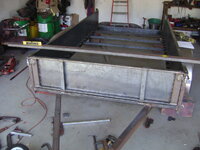
@redm18 needs to look at how the forces are applied to the steel [which is probably vertical]
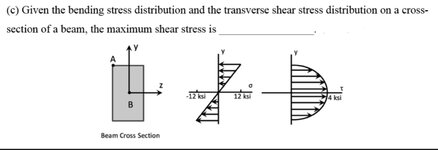
With vertical loads, the top and bottom flanges bear the loads [compression and tension] Which explains why structures like buildings and bridges have "I" beams and not "H" beams.
A fishplate on the side is less effective than on the underneath.
Sometimes "Less is More" [I've witnessed tests done to destruction to see how this all works]
AND
Shape is more important than size!!!!
Many engineers will simply overbuild something to compensate for poor design