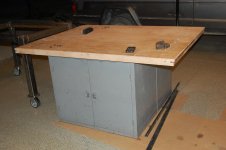
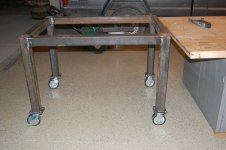
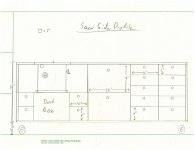
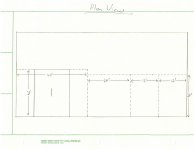
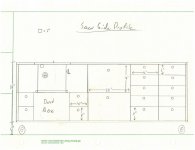
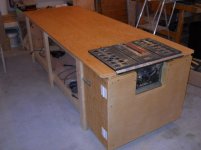
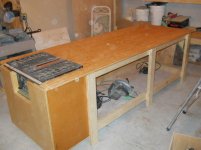
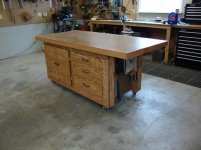
I have a 3.5' x 9.0' work table on wheels. I paid more for the wheels than the table. The casters have high bearing load, rated for wet environments, and all lock both in swivel and in roll (Colson Total Lock system).
Getting the wheel part right was very important. The wheels ALL needed to swivel 360 degrees, because moving a 9' long table with two straight and two swivel casters is quite an awkward exercise of forward and backs, not to mention the turning circle diameter would have tripled over my all swivel set up that can turn on it's own center axis.
Also, the wheels themselves had to be of a large enough diameter (5"-6" minimum) to smoothly negotiate over expansion seams in the concrete driveway, the transition seam between the driveway and the garage pad, as well as be able to bridge over the undulations of old asphalt that is no longer smooth because the surface fines have been washed away by 30 years of rain, exposing the craggy surfaced aggregate that would hamper a wheel of 4" or less in diameter.
And, since the table has been kept outside, unprotected, 24/7 for over 25 years ongoing now, the wheels needed to have bearings both in the wheel axis as well as the swiveling caster plate that were capable of enduring rain water exposure, cold nights, as well as lubricant melting hot summer days.
Like I said, the casters I spec'ed for my outdoor table cost more than the (all steel) table. I ordered them from a caster company (Colson).
As for the table, it is all steel framing (welded angle iron), with galvanized sheet metal that fully wraps over and underneath (spot welded to itself) the 3/4" table top substrate. This "poor man's steel table" set up has worked great for a weather resistant multi-purpose work surface... but is not necessarily as straight and true as a solid 3/4" steel surface might be, because the sheet metal wrap expands and contracts with the sun's pelting heat, creating undulations on the surface.
Also, the sheet metal remembers every missed hammer stroke a little deeper than solid steel might. However, solid steel would be infinitely heavier to wheel around, and at 9 feet long, would be cost prohibitive for an ad hoc home shop environment. Not to mention the constant corrosion battle that non galvanized steel would present, both on top as well as underneath from condensation beading.
Speaking of heat, any steel table can get fairly warm if left out in the sun... sometimes too hot to touch. But I have noticed that the galvanized sheet metal covering doesn't get as warm as the steel I'm working with that is setting on top. It seems that the thin surface of the galvanized sheet doesn't absorb as much heat due to the non metal substrate between the galvanized sheet that makes up the "stiffness" of the table between the lower and upper sheets.
I apologize for not having pictures to show... but I hope that at least the verbal description of my "outside the box" table helps inspire some of your own ideas for building a large, mobile, outdoor work surface.