The finish on your socket is a non specific finish we call "
black oxide". Its a chemical conversion coating where the outer most layer of the steel is essentially corroded. Black oxide is a cheap, environmentally safe, rust preventative, but its fragile.
New black oxide tools should be oiled, greased, or waxed to preserve their finish. Black oxide typcally has a toothed nature that absorbs and holds oil very well. It's one reason why they apply it to drill bits. Used motor oil is really fine. Vaseline is great for your black oxide tools you don't use everyday. I have spun many impact sockets against an oily rag. If the rag is abrasive, you can remove black oxide like this. But I think a lot of pros do this as a matter of course to keep rust off their impacts. I like to run white crayon into markings to help me read them. Crayon is wax and that helps the finish.

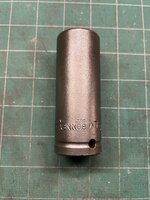
These are 2 of my most used impact sockets. I bought these probably 30 years ago. The original finish is thin, but with a little maintenance, these still look fine. Actually, looking closely at the picture, I'm shocked these aren't all buggered up. I've used these a lot! But I do tend to work pretty clean. And for many many years I was using either a low powered air gun or my low torque Bosch impact. That could be the reason these are so nice looking.
Black oxide isn't something you can do at home, but there is an adjacent chemical conversion you can use to touch up black oxide called "
cold bluing". You can find this in many forms from a liquid to a paste.
Brownell's "
Oxpho blue" is popular with firearms enthusaists and works well. To get satisfyingly dark black oxide looking finish, be sure to degrease the tool well. I sometimes use brake clean or soak tools in Castrol Super Clean or Purple Power. I think these are both powerful lye based degreasers. Note that black oxide is a corrosion so Evaporust will remove it (DAMHIKT).

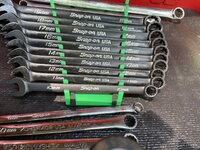
I used the process outlined below on many or most of these wrenches. Note their oily appearance. That's really what these tools need to look like. They really need oil.
Once degreased, the directions say paint on the cold bluing solution with a q tip. I soak the part in the solution for 10 minutes. Take it out and warm it with a torch or heat gun. Even the flame from a candle will help the chemical reaction and will darken the finish. I think heat makes the finish more tenacious. You don't need to heat it beyond that which is comfortable to hold. 120F is good enough or thereabouts.
You are supposed to rinse the tool with distilled water afterwards. I don't always do that. The finish will continue to darken, deepen as it dries. I always finish with oil. I use whatever is handy, but not WD-40. Use a decently thick oil.
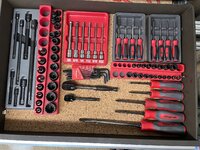
I wanted decent quality tools for my machine shop. I like Snap On tools and have them in my automotive tool boxes in my garage. My mini machine shop is not close to the garage and I needed SAE tools. The screwdrivers, sockets, extensions etc, were all purchased on eBay in bad cosmetic condition. Black Oxide tools, when corroded and rusty, are not appealing. So I paid maybe 25% of list for much of these tools (not the picks, mini screw drivers or ball ends, they were all bought new).
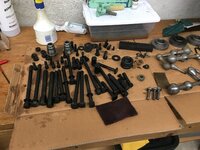
They say "I don't want blue" parts etc. Or cold bluing doesn't produce a deep black. These parts are fresh out of the solution and look plenty black to me.

You can spot several of those bolts in this picture. I think the blued parts look pretty slick. (quill handle is painted, hand wheel is black plastic, but the quill lock, head bolts quill stop hardware were all cold blued.)


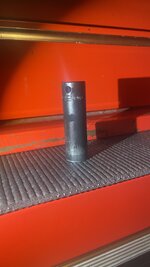


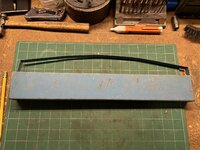
 Then make sure you oil them! Again my preference is CRC 3-36.