To avoid these ads, REGISTER NOW!

Impact sockets on hand ratchets

To avoid these ads, REGISTER NOW!

Olafur

Well-known member
Joined
Jun 2, 2011
Messages
2,577
Location
Iceland
The logic makes sense... the chrome socket is too brittle for the impact and can shatter, whereas the impact sockets are manufactured to handle the impact and should it fail, fail in a crack vs shatter. I am speaking generally. Now when it comes to the other way around, is there a disadvantage to the impact socket on the hand ratchet?
Not that I am aware of in this regard. Chrome is easier to clean up, easier to find if dropped into dark places, and they tend to be less bulky and so forth...

As the story goes impact sockets are more malleable like you stated and offer better safety on impact guns. The obvious downside is they won't last very long if very malleable (soft). So very good impact sockets from safety standpoint ain't very good from durability standpoint.

Perhaps this is the reason reputable companies like Snap On make impact sockets that don't last very long as indicated by many comments here on G.J. I have seen old impacts from top brand basically worn out. Koken, Facom etc.

But it seems this has changed in recent decades, and it's rare to see any signs of mushrooming or wear in impacts these days. I am pretty sure there really isn't much difference between the material in great many current impact sockets vs their chrome counterparts. And when they fail they look very similar. IMO these lines are very blurred.

However it's good for the tool business if everyone has to buy two complete sets of sockets.

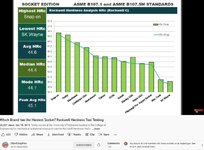
Some of the youtube heroes should invest in hardness tester and check out the difference between chrome and impact sockets and bits across popular brands, it could be interesting.
 

Olafur

Well-known member
Joined
Jun 2, 2011
Messages
2,577
Location
Iceland
Looking at the impact socket, what does it bring to the hand tool? Is this design better than the chrome socket design, even on a hand ratchet?
The impact bit pictured (not sure about the correct english term) has more torsional rigidity than the other. So it has less flex. This matters when using impact, less energy is taken up by the flex in the bit, and hence more energy is transmitted to the business end.

No difference when turning by hand, so to speak.

This might seem trivial but it's not. Good example is current and popular cordless tools who tend to be short on energy per blow so to speak. It doesn't take much flex to render them almost useless. Even the most powerful 1/2" drive cordless impacts become gutless with extensions. Their air counterparts do the same but to lesser degree since they have more energy per blow.
 

ATC

Well-known member
Joined
May 12, 2012
Messages
8,267
Location
VA
When an extension is driven by hand with a ratchet or breaker bar, there is no difference, at the socket. Torque is not lost on a steady twisting action. Internittent impact action can be absorbed in the twist of an extension.
The Torque Test Channel showed how much impact torque can be lost through a universal joint as the angle of attack is increased.

I like using impact extensions when the bolt is questionable. Either by rust or known history of being weak. The impact extension let’s me feel the bolt better, and not the twisting of the extension.
 

ecotec

Well-known member
Joined
Oct 5, 2010
Messages
5,420
For work, I use chrome deep 9/16” and 3/4” sockets on impact drivers pretty often. I use them, specifically, for working with Unistrut. The impact sockets will not fit inside the strut.

Anything longer than a deep socket, and I use a sanding drum (without sandpaper) to run the hardware most of the way.
 

Al Borland

Well-known member
Joined
Jan 20, 2016
Messages
1,598
Some impact socket mfgs won't warranty impact sockets used on hand tools. I speculate that is due to them fearing that the stresses will be more focused and you'd wallow out the drive ends prematurely? OTherwise I have no idea.

I too use 1/2 impacts only for the most part aside for a dedicated 22mm chrome for tires I leave in the car, and a 27mm for toyotas.
Exactly how would they know?
Using Chromes on impact will wallow out the drive end, eventually. and that is obvious. The chrome may crack and peel, and the socket might, just might, split or shatter.
You are not going to wallow out an impact socket using it on ratchets or breakers.
The Impacts are (usually) thicker/heavier and may not fit some places.
For a Torx/allen hex, fit/clearance is not likely an issue.
 

Odd-job

Well-known member
Joined
Aug 13, 2017
Messages
2,256
Location
SF Bay Area
Not going to comment on blowing up chrome sockets on an impact, but I think the main reason not to use a impact allen socket specifically is that they tend not to bite into fasteners as well as the hardened S2 stuff especially in the smaller sizes. Fastener dependent of course, but every impact allen socket I have tends to round out hex cap screws below 8mm to the extent I kind of gave up on them 95% of the time. I reach for the impacts first though for 8mm and above like for 17mm Mercedes differential drain plugs where the impacting action really helps loosen the sealant around the bolt.
 

VolvoRyan

Well-known member
Joined
Dec 29, 2019
Messages
1,339
Location
Kentuckiana, USA
Impact tools on hand drives is a non-issue in "real-time". In geological time, something molecular may happen, but in day to day use, they're not getting loaded to the point of deformation even with breaker bars. If they are, it's only momentarily. Even on rusty crusty fasteners, once they're broken free, the load on them drops dramatically trying to work them out.

Impact sockets are consumables by nature. Softer metal so as not to damage the gun or the fastener. As such, they'll "loosen up" and lose effectiveness over time. Doesn't matter if they're Pittsburgh or Snap-On. If your impact sockets are loose enough to notice on hand tools, they're leaving real torque on the table when used on an impact wrench.

Thickness of an impact socket vs. chrome can be an issue. Traditionally, "high-end" impact sockets have had thinner walls than "import" brands. Knowing that snobs like us complain about this stuff on YouTube, the less expensive brands likely have thinned down their sockets. I'd expect "thickness" to be less of an issue today than it was even five years ago.

Almost all of my 1/2" stuff is "impact". Saves money, saves space. When they wear out, they get replaced.

-Ryan
 

Astro_Pneumatic_Tools

Well-known member
Joined
Oct 30, 2013
Messages
2,107
Location
South El Monte
I feel like I could just answer all these Q's from a manufacturer's perspective

1. Can you use impact sockets on hand tools.
Sure, there's no real downside besides wall thickness at times. No warranty concerns, they will work the same as chrome sockets.

2. Do impact sockets and extensions work better on hand tools.
No, as mentioned here linear applications of torque dont effect dimension difference between chrome and impact attachments differently. Unless the tool is ultimately failing or breaking, turning something slowly for example in a clockwise direction will soak up , bind and eventually work all the same regardless of any of the forces at play you're thinking of. Only applies to impacts.

3. Are chrome hand tool sockets harder?
Yes. In general they are. Not because of chrome plating though. While being often the same material (Cr-V & CRO-MO), we of course have a long list of heat treatment regimens we can choose from after forging. ASME B107.2 for impact sockets and attachments just happens to be a different standard than the hand driven ASME, and allows for hardness to start at a low 38 Hrc. So on the whole, impact sockets are softer and given the choice you'd rather replace a socket than the tool driving it from wear. You'll actually find that cheaply processed impact sockets, especially in China where Cr-V is almost exclusively used, are rock hard compared to professional brands.
Of course this aim changes as the dimensions on the piece do, our small stubby nano impact sockets for instance we target something completely different than our pinless universals for cross sectional yield PSI requirements. But all within the B107.2 window.
 

Jacobs976

Well-known member
Joined
Sep 11, 2020
Messages
830
Location
Indiana
With the bit sockets I feel like it's about the quality. I've had chrome ones snap and twist, some even shearing the actual socket in the process but some hold up to proper abuse. Impacts have done better in my limited usage(I don't like impact drivers with bits because they have deformed pretty quick whether it's twisting or stripping).

Something else with impacts though, using a manual impact and a hammer has only messed up the finish for me so far and they've seen proper abuse even cracking fasteners.

End of the day I think it's just a matter of finding a good brand regardless of type.
 

Sweetcorn

Well-known member
Joined
Feb 14, 2018
Messages
669
Location
North Central Ohio
Not that I am aware of in this regard. Chrome is easier to clean up, easier to find if dropped into dark places, and they tend to be less bulky and so forth...

As the story goes impact sockets are more malleable like you stated and offer better safety on impact guns. The obvious downside is they won't last very long if very malleable (soft). So very good impact sockets from safety standpoint ain't very good from durability standpoint.

Perhaps this is the reason reputable companies like Snap On make impact sockets that don't last very long as indicated by many comments here on G.J. I have seen old impacts from top brand basically worn out. Koken, Facom etc.

But it seems this has changed in recent decades, and it's rare to see any signs of mushrooming or wear in impacts these days. I am pretty sure there really isn't much difference between the material in great many current impact sockets vs their chrome counterparts. And when they fail they look very similar. IMO these lines are very blurred.

However it's good for the tool business if everyone has to buy two complete sets of sockets.

Some of the youtube heroes should invest in hardness tester and check out the difference between chrome and impact sockets and bits across popular brands, it could be interesting.
I have a hardness tester and I think this thread has pushed me over the edge and I'll be testing sockets for their exact hardness now, lol.

Though I will say there is far more involved in durability of steels than their hardness alone.
 

Belanice

Well-known member
Joined
Sep 18, 2022
Messages
80
Most of my hex bits are made of S2, a few are made of SCMV or HSS. Half of my hex keys are made of S2 or SNCM and the other half are CrV. For bit sockets, I think the key might be material hardness and yield strength.
 

Attachments

  • 001.jpg
    001.jpg
    295.9 KB · Views: 51
  • 002.jpg
    002.jpg
    397.5 KB · Views: 25
  • 003.jpg
    003.jpg
    129.1 KB · Views: 18
  • 004.jpg
    004.jpg
    130.1 KB · Views: 17
  • 005.jpg
    005.jpg
    157.2 KB · Views: 38
OP
B

_brian_

Well-known member
Joined
Jun 23, 2019
Messages
360
Location
Wisconsin, USA
The answer to why you shouldn't use impact sockets for hand ratchets is simple. The molecules in the socket will shift over time and it'll lose accuracy. So basically it'll deform due to the properties of molybdenum.

The opposite case is quite similar. Yes, it may shatter, but what will really happen will depend on composition of the steel alloy and can't be generalized that easily. It may also deform and get stuck like when you use a non-impact rated bit in a 1/4 impact driver.

Use the right tool for the job!
I understand the use the right tool for the job principal. My query comes from many stating that you should just use your impact sockets on your hand tools and avoid the chrome sockets (for most things). Many manufacturers will tell you the same, go ahead, they are fine to use on the hand tools. My intent is to understand both sides though. I understand there is no safety issue with impact on hand tools. But, is there more to the picture? It seems that others are believing the same as I am, that there is an actual reason to not use impact sockets on hand tools.
 
OP
B

_brian_

Well-known member
Joined
Jun 23, 2019
Messages
360
Location
Wisconsin, USA
Thank you kindly to those who have posted information on this. I am happy to read or view anything someone shares that provides solid and real information.
 

tattooman

Member
Joined
Apr 27, 2019
Messages
24
Location
va
I have changed from the shiny chrome preference to the matte finish myself, but I understand your point. The black oxide or phosphate finish does retain a lot of soiling and will rust easily if not used or oiled in some way periodically. Rust happens fast on many US brands of bit sockets, such as Gearwrench, the most trusted name in rust bit sockets. Best fix I found is white petrolatum, VERY light coating.
Seriously ? Vaseline ?? That STOPS rust ?
 
To avoid these ads, REGISTER NOW!

Ton ton

Well-known member
Joined
Oct 16, 2019
Messages
4,592
Location
Page County,VA
I feel like I could just answer all these Q's from a manufacturer's perspective

1. Can you use impact sockets on hand tools.
Sure, there's no real downside besides wall thickness at times. No warranty concerns, they will work the same as chrome sockets.

2. Do impact sockets and extensions work better on hand tools.
No, as mentioned here linear applications of torque dont effect dimension difference between chrome and impact attachments differently. Unless the tool is ultimately failing or breaking, turning something slowly for example in a clockwise direction will soak up , bind and eventually work all the same regardless of any of the forces at play you're thinking of. Only applies to impacts.

3. Are chrome hand tool sockets harder?
Yes. In general they are. Not because of chrome plating though. While being often the same material (Cr-V & CRO-MO), we of course have a long list of heat treatment regimens we can choose from after forging. ASME B107.2 for impact sockets and attachments just happens to be a different standard than the hand driven ASME, and allows for hardness to start at a low 38 Hrc. So on the whole, impact sockets are softer and given the choice you'd rather replace a socket than the tool driving it from wear. You'll actually find that cheaply processed impact sockets, especially in China where Cr-V is almost exclusively used, are rock hard compared to professional brands.
Of course this aim changes as the dimensions on the piece do, our small stubby nano impact sockets for instance we target something completely different than our pinless universals for cross sectional yield PSI requirements. But all within the B107.2 window.
Thank you for the information.
 

dukefx

Well-known member
Joined
Aug 24, 2022
Messages
387
I understand the use the right tool for the job principal. My query comes from many stating that you should just use your impact sockets on your hand tools and avoid the chrome sockets (for most things). Many manufacturers will tell you the same, go ahead, they are fine to use on the hand tools. My intent is to understand both sides though. I understand there is no safety issue with impact on hand tools. But, is there more to the picture? It seems that others are believing the same as I am, that there is an actual reason to not use impact sockets on hand tools.
I've already mentioned the technical reason and that's as far as I know the only reason to avoid using them on hand tools. There are however various practical reasons as well. For example impact sockets are always thicker (10 mm diameter: 14.5 mm chrome, 16.8 mm impact) and may not always fit. Price may be another factor as impact sockets tend to be (about 20%) more expensive.
 
OP
B

_brian_

Well-known member
Joined
Jun 23, 2019
Messages
360
Location
Wisconsin, USA
I've already mentioned the technical reason and that's as far as I know the only reason to avoid using them on hand tools. There are however various practical reasons as well. For example impact sockets are always thicker (10 mm diameter: 14.5 mm chrome, 16.8 mm impact) and may not always fit. Price may be another factor as impact sockets tend to be (about 20%) more expensive.
Absolutely. I can share some additional examples on this topic, and I will provide pictures here where I can. I have a few sets of sockets:

1. Astro Nano sockets. I have the 3/8 drive metric set, and these are impact sockets. This is a socket I cannot find in chrome, but got close with the OEMTools chrome low profile socket sets. This provides me an impact set that is not really available in chrome. I have the OEMTools low profile socket sets in both metric and SAE.
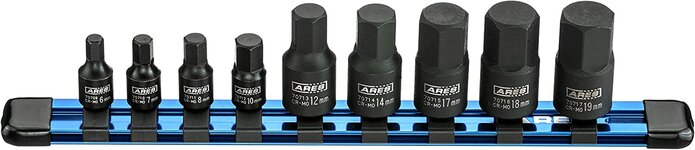
2. ARES 70496 and 70497, metric and SAE hex bit sockets, machined from solid piece of CR-Mo. The profile of these sockets makes them valuable to me, as in the chrome options, I cannot find the same.

In those examples, the impact variety provides me with something I cannot find in chrome versions. I am not really a fan of impacting bit sockets, especially on the smaller sizes. However, the items above are only available as impact. Why are those not made in chrome? The walls are thin on the sockets, and the sockets are smaller than the OEMTools low profile chrome sockets. For the hex bit sockets, it is hard to find something that low profile in chrome, but why, for example, does no one make a similar socket machined from S2 steel or CR-V vs impact hardened CR-Mo?

It seems like the market pushes me to buying impact sockets for hand tools. I am at heart a person of science. I like to know the how and why for things, even while most will say "who cares". While I agree that many times it really does not matter, I like to fill in the knowledge gap. I hope that explains my query in more detail. There must be some logic here, as manufacturers do not do things for no reason. They are either trying to save thus making more money or catering to a specific market, but there is always a reason.

The images below show 1) the Astro nano sockets, 2) the OEMTools low profile sockets and 3) the ARES hex bit sockets.

71lJ6JfAcrL._AC_SL1500_.jpg71Klih+GHeL._AC_SL1500_.jpg716gJfHC7JL._AC_SL1500_.jpg
 

vanapplebomb

Well-known member
Joined
Jul 2, 2019
Messages
385
Location
Holland, MI
Nothing wrong with using impact sockets on a ratchet.

I will say this though. They are typically thicker wall, so they can be an issue where the bolt head is very near another part.

Also, most impact sockets are not hardened to the same extent as non impact sockets. They are intentionally more ductile, needed for impact use. I have seen them wear faster when used with high grade fasteners such as 12.9, 10.9, or grade 8. But, that was over a couple years of daily use. For occasional wrenching, they should last as long as the owner.
 
OP
B

_brian_

Well-known member
Joined
Jun 23, 2019
Messages
360
Location
Wisconsin, USA
Seriously ? Vaseline ?? That STOPS rust ?
Yes, it actually works quite good. I assume the same would hold true with using grease, like a silicone grease if you do not want an oil product. I used it only as I needed a solution fast, and that is what I had. It worked great. I use it mostly on the bits of bit sockets and impact sockets that do not see a lot of use. I use a LIGHT coating, I typically place a small amount on and sort of buff it in was a rag. It leaves no greasy coating and I have never experienced rust. I am sure that many will find some issue with it, but it has worked for me without problems, at least so far.

I did this instead of oil as the oil seems to almost evaporate off, leaving me with rust after a few months time. Since oil is also petroleum based, the petroleum aspect is not an issue for me. I really do not use any of those tools on petroleum sensitive items.
 

Ton ton

Well-known member
Joined
Oct 16, 2019
Messages
4,592
Location
Page County,VA
I believe gray tools markets dual purpose sockets as Duo sockets meant for both hand use and impact guns. I have no real world experience with them. Just read the marketing material.
 

wrenchr

Super Moderator
Staff member
Joined
Jul 29, 2007
Messages
11,603
Location
Michigan
To me the biggest concern on using chrome sockets / extensions on an impact is chrome flaking/peeling. Can be bad for your eyes and hands and breathing it in possibly.
 
OP
B

_brian_

Well-known member
Joined
Jun 23, 2019
Messages
360
Location
Wisconsin, USA
To me the biggest concern on using chrome sockets / extensions on an impact is chrome flaking/peeling. Can be bad for your eyes and hands and breathing it in possibly.
I agree that is a concern. This is looking the other way though, using impact sockets on hand ratchets.
 

demarpaint

Well-known member
Joined
Sep 17, 2010
Messages
1,237
Location
Long Island
If I have the room for the thicker impact sockets I will use them with a hand ratchet. I don't start the project with that in mind, but if the room is there and I have an impact socket in hand I go for it.
 

zendriver

Well-known member
Joined
Dec 10, 2014
Messages
29,780
Location
Indiana

FuzzyTiger

Well-known member
Joined
Aug 17, 2020
Messages
429
Location
Canada
My experience as a hobbyist is that impact sockets wear and deform over time. Which doesn't matter when it comes to using them on an impact tool. They just need to fit well enough to transfer the impacts. I'm sure professionals manage to wear them out to the point where it is a problem but that's not me.

Anyways. The problem I find with using them on hand tools is very similar to what I found when going from low quantity chrome sockets to higher quantity ones. Any amount of excess play between the socket and fastener significantly increases the likelyhood of rounding over the fastener because its more likely to slip off. As a human using a ratchet or breaker bar I'm not applying a purely rotational force on the socket. My hand is on the end of a lever that is offset from the socket, my body position and technique will never be perfect, and there's only a few mm of material on the fasteners to compensate for all of that before the socket slips off. So the better the fit the more torque I can effectively transfer.
 

qqzj

Well-known member
Joined
Nov 28, 2017
Messages
3,747
My experience as a hobbyist is that impact sockets wear and deform over time. Which doesn't matter when it comes to using them on an impact tool. They just need to fit well enough to transfer the impacts. I'm sure professionals manage to wear them out to the point where it is a problem but that's not me.

Anyways. The problem I find with using them on hand tools is very similar to what I found when going from low quantity chrome sockets to higher quantity ones. Any amount of excess play between the socket and fastener significantly increases the likelyhood of rounding over the fastener because its more likely to slip off. As a human using a ratchet or breaker bar I'm not applying a purely rotational force on the socket. My hand is on the end of a lever that is offset from the socket, my body position and technique will never be perfect, and there's only a few mm of material on the fasteners to compensate for all of that before the socket slips off. So the better the fit the more torque I can effectively transfer.
That’s the same as I wrote before. You put it in a much nicer way
 

KnurledNut

Well-known member
Joined
Jan 28, 2011
Messages
8,104
Location
n/a
But in reverse, what if any disadvantages to the impact sockets bring to the hand ratchets?
One disadvantage no one has mentioned is lack of ball detents.
Impact socket square drives have smooth walls that are typically designed for ring retention.
Most also come with one hole for pin retention, that can aid in ball retention.
Not a huge problem, but something to consider.

Of course, this isnt an issue if you have a Proto aerospace ratchet.
:bounce:

52523914353_19b5299b73_c.jpg
 
Last edited:

Boogerman

Well-known member
Joined
Jan 28, 2021
Messages
833
Location
aspen cove hill
Astro Pneumatic answer nicely and thoroughly. Thanks!

Using impact sockets on breaker or ratchet like peeing with gloves on when it's cold. In theory it works, but in reality it doesn't work as well because of thicker, clumsier dimensions involved. I hate extra weight, thickness of impacts. Understand why guys economizing on space or dollars do it, but also feel sorry they have to. I remember when I only had impact set; it sucked.
 
OP
B

_brian_

Well-known member
Joined
Jun 23, 2019
Messages
360
Location
Wisconsin, USA
Astro Pneumatic answer nicely and thoroughly. Thanks!

Using impact sockets on breaker or ratchet like peeing with gloves on when it's cold. In theory it works, but in reality it doesn't work as well because of thicker, clumsier dimensions involved. I hate extra weight, thickness of impacts. Understand why guys economizing on space or dollars do it, but also feel sorry they have to. I remember when I only had impact set; it sucked.
I can agree with this when it comes to standard sockets. However, there are some sockets, like the Astro nano sockets, that are actually smaller than chrome versions, negating that entire argument. This eliminates that entire point. The size is smaller, the weight is smaller and it even offers extra advantage by having a hex end on the drive end that chrome sockets do not offer. Also, this point does not apply to many bit sockets, some I have pictured in this thread. The profile of the bit sockets is smaller than that of most (maybe all) chrome versions.

The points you mention are completely valid. However, my query here is intended to move beyond that. Using one example... take the impact bit socket, machined from one piece of Cr-Mo, and compare it to the bit socket with a socket of Cr-V and a bit insert of S2 steel. In this case again, none of these points apply as weight and size are in favor of the impact version.

As you mention the reply from Astro, I can use their product as example... is there any reason to use a chrome socket on a hand ratchet vs using the nano impact socket? Others have provided comments as to the metal structure and losing its form faster with use, etc. This may be the reason, or only reason, not sure. This is the intent of the thread.
 

qqzj

Well-known member
Joined
Nov 28, 2017
Messages
3,747
Astro 's nano sockets are great. But they are more like hand sockets in that they can break quite easily with impact gun. They just don't have chrome coating so you won't be hurt by chrome flakes
 

Boogerman

Well-known member
Joined
Jan 28, 2021
Messages
833
Location
aspen cove hill
Don't have to use chrome if prefer black sockets. Chrome convenience to stop rust. Quality manufacturers offer black finish sockets same hardness/thin dimensions as chrome ones for applications where chrome flaking could cause contamination problems (precision machines, aircraft, etc). Or as numerous people have said, you can just use standard impact sockets, they fit and work, although my experience is they round over bolts slightly easier than chrome ones do. I prefer use tool most likely to work rather than cheapest one. I have both, use chrome in preference to impact. Another point; for me 12 point much preferable to 6 point; impact are 6 point. Although also have sets of 6 point chrome for times when prefer that. Other guys here prefer 6 point; so impact have an advantage over 12 point chrome for them.

It a Garage Journal thing try save money only use impact sockets, they cheaper and internet talk reinforce for those that talk internet more than work. I see professional millwrights and mechanics use impact sockets a lot; on impact guns. However, if they have choice, they seem prefer use chrome with hand tools. That preference says it all to me; the guys with most experience to learn from go out of their way to use chrome sockets except where impact resistance needed. And, many use chrome sockets for impact, even when have black steel ones. This could be $$$ decision also; the chrome might hold up better long term or damage fewer bolts, or they get warranty service easier.

And, if one piece bit sockets are your thing, have at it. I prefer the replaceable ones, as hex and screwdriver bits break and wear out, and I get them replaced fairly routinely. Have 2 in truck console at moment waiting see tool truck. The black bits rust, the chrome part doesn't. Sometimes one piece fits tight space better and have to use. One piece break also though. More a preference than an advantage; both can be warrantied out if you have the time. I have both kinds; use the chrome ones mostly.

Long time ago I used think I could analyze and figure out better way do things everybody else do. That good; need some people come up new ideas and break old myths. But, fastest way to get to most efficient way of doing thing is watch people that do it for living and have done for long time. By sheer persistence, they usually figure out best way. And high quality manufacturers support that, because they sell the stuff that professional users buy at high prices, and don't sell stuff that they don't use except at lower prices to people that shop more by price, not by ultimate usefulness.

Bottom line I think using impact sockets hand tools is $ decision, or save space decision. If usability primary concern, not $, have sets of both kinds and use where most appropriate.
 
To avoid these ads, REGISTER NOW!
Top Bottom