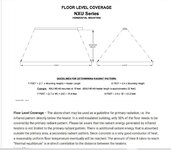
The first foot or two of tube shouldn't get very hot. The next few feet put off the most heat and it tapers off from there to the far end. That's one reason why the U type is popular. It gives the most even heat pattern, plus allows the intake and vent to be on the same wall, which has two advantages. Easier sealed-combustion installation (the most energy efficient setup would be sealed combustion in a well insulated building), and more resistance to wind effects.
You get similar issues with a hydronic baseboard heat loop, where you get more BTU output per foot at the boiler supply end of the loop than you do at the return end. In that case, you put longer baseboards in the far side to compensate.
With radiant tube, how much the output differs down the tube matters depends on stuff like how high you mount it. Low down at say 10', you're going to get real toasty real fast near the hot parts, and be more comfortable near the other parts. Higher up where you are more equidistant from the tube regions, you may not notice the heat concentration as much. Still, you usually want to plan around putting the hot end where more heat is needed. FWIW, no matter how well you insulate a garage door, it's still not well insulated compared to a wall.