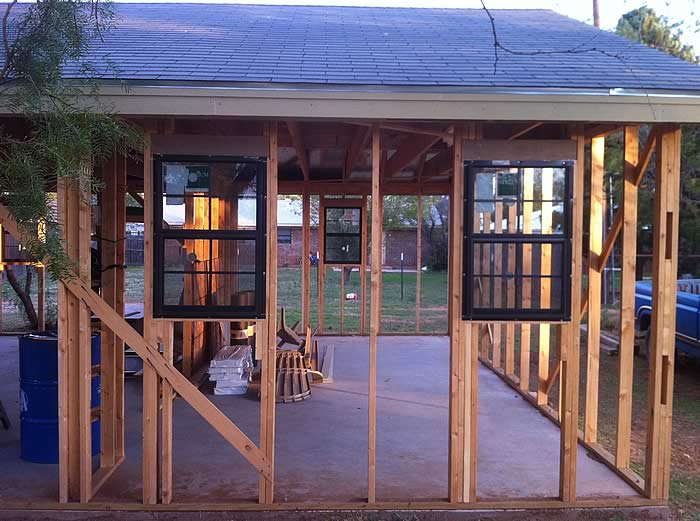
Here are the installation instructions, which don't specify if they are mounted directly to studs:
https://www.simonton.com/wp-content...ruction-Window-Installation-Instructions-.pdf
I realize that proper installation and flashing is paramount, which is why I want to make sure I have the correct information.
Yeah, they don't explicitly state attached directly to studs. To me that looks like standard installation to sheathing. I would call them again. The person at the other end might have been new. I've never heard attachment directly to studs.
Seems like if water gets into nailing fin, it will run BEHIND the sheathing. I think this is a bad idea.
The sources stated are all good practices. My framer installed a bunch of windows on a recent addition and they ran the water-resistive barrier inside the opening on all sides (folded in) and slapped that zip tape over the nail fin.
On a heavy rain some windows leaked. I had to reinstall all 11 of them before my block was installed! Luckily I was able to reinstall them via scaffolding as the mason was building the wall.
I followed the same procedures as referenced on the links. Additionally, if you are installing in a masonry veneer system, you have to do head and sill flashing with end dams.
It gets sort of complicated on cavity walls, but the concept is the same. I think they call it "down and out" or something like that. You want the water, if it get behind the wall, to come out (flashing or weeps) and the nearest horizontal plane.
Good luck
Now that I think about it, my house windows are installed over the studs. The house has shiplap siding and the siding is butted against the window flange. There is no window trim. All houses in my neighborhood are done this way. Flashing was felt paper and there is no sheathing.
Houses built back then are sort of drafty, so I suppose any water that gets behind eventually dries out. With newer houses being more airtight, this doesn't work too well.