To avoid these ads, REGISTER NOW!

insulating with soffit/ridge vent

z28dad

Well-known member
Joined
Jul 20, 2010
Messages
172
Location
VA
This seems like it should be easy. I have scissor trusses in my garage with vented soffits and a ridge vent at the top. I was planning on using something like this from Lowe's:

http://www.lowes.com/pd_135588-7522...rrentURL=/pl__0__s?Ntt=rafter+vent&facetInfo=

I was thinking that I just needed one in each section of the trusses beginning at the soffit to keep the area open from the insulation. That was until I read this:

•Cathedral ceilings require a continuous run of vents from intake to exhaust with a 1" space between each vent

What do you guys think. Thanks for the help. Russ
 
To avoid these ads, REGISTER NOW!

Fastback

Well-known member
Joined
Oct 5, 2010
Messages
518
Location
Indy
Yes, anytime insulation is going up against the backside of the roof sheeting you must use these. I have a ceiling that is part cathedral and then flattens out, I did that to gain height for the lift...but I used several of those things to allow air flow from the soffit to get to the attic space.
 

dirttracker18

Well-known member
Joined
Aug 10, 2009
Messages
3,191
Location
Slate River, ON
It depends on the pitch of your roof and ceiling. Yes you need an airspace so if your scissors end up with a small space you need to run those up to where the insulation no longer meets the roof.

In my case one section was enough as the difference in pitch between my roof and ceiling was enough that the insulation would stop meeting the roof at about 2 to 3 feet with 12 inches of blown in insulation.

Remember you also need to stop the insulation from reaching those soffits as well so some kind of stop is needed. If you pitch difference is tight then adding batts will work. If your pitch difference is big then you can buy different air vents that bend down to close off the soffit area and blow up against them.
 

nippaero

Active member
Joined
May 1, 2009
Messages
27
Dirttracker is right. I had scissor trusses as well and used bats. I ended up using two sections of the vent per run in oder to clear the bats. As long as the air can make it up the vent and to your roof vents you should be fine.


There is only one vent in this picture. I ended up adding another to each section...
 

Attachments

  • IMG_0078.jpg
    IMG_0078.jpg
    53.8 KB · Views: 350
OP
Z

z28dad

Well-known member
Joined
Jul 20, 2010
Messages
172
Location
VA
Thanks for the replies guys. I will snap a few picture after work Friday. I'm thinking I will only need 1 or 2 per row.
 

70 chevelle

Active member
Joined
Jan 12, 2010
Messages
44
Do you need to put one between each truss or just the ones that have the soffit vent
 

nippaero

Active member
Joined
May 1, 2009
Messages
27
You just need one where there is a vent. However, the entire soffit acts like a fresh air raceway so you can add more if you want though it's not required.
 

buzz4041

Well-known member
Joined
Sep 13, 2011
Messages
730
Location
South Texas
I installed 3/4" foam board from the top plate up to the ridge. That way all of the rafters are vented. I do not know what kind of R factor your trying to achieve but this will give R5 with 3/4" and then drywall over it. I used the foil back type R-Matt.
 
OP
Z

z28dad

Well-known member
Joined
Jul 20, 2010
Messages
172
Location
VA
Thank for the replies guys. I think I will only need one to two pieces per truss. I'm planning on using R-30 batts, John Manville Comfort Therm from Lowes. For some reason Lowes doesn't stock the R-30 with the vapor barrier so I will have to special order it.

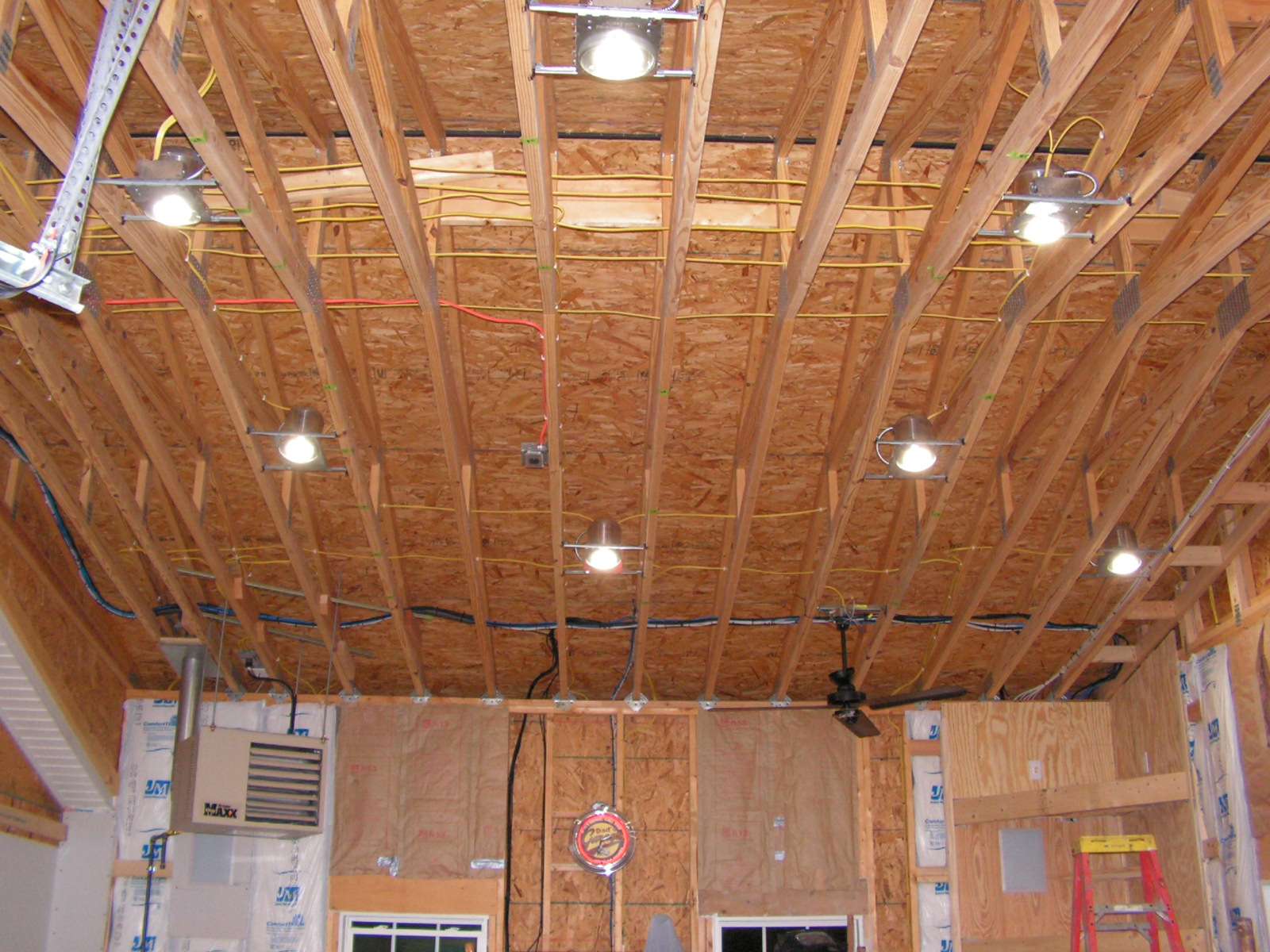
lightsjpg.jpg


I do have another question. The front of my garage roof is built off the main roof sheeting/trusses. The main roof is where the ridge vent is. I'm guessing I will have to cut some holes in the inside sheeting for air to flow from the hand built roof space to the ridge vent.

Here are some pics of what I'm talking about.

Front :

pict0416i.jpg


roofjpg.jpg


pict0418.jpg


hiproofjpg.jpg


frontroof1jpg.jpg


Thanks in advance for any suggestions.
 

rsa

Well-known member
Joined
Mar 3, 2011
Messages
300
Location
Between Raleigh and Fayetteville, NC, USA
Thank for the replies guys. I think I will only need one to two pieces per truss. I'm planning on using R-30 batts, John Manville Comfort Therm from Lowes. For some reason Lowes doesn't stock the R-30 with the vapor barrier so I will have to special order it.
From Building Science Corporation: Understanding Attic Ventilation:
In vented cathedral ceiling assemblies a minimum 2-inch clear airspace is recommended between the underside of the roof deck and the top of the cavity insulation. This is not a code requirement but ought to be (only 1-inch is typically specified in the model codes). It is the author’s experience that typical installation practices and construction tolerances do not result in an airspace of at least 1 inch and rarely is it “clear.” Even when 2” clear space is provided, the rate of ventilation flow will be significantly less than in an open ventilated attic.

In addition to an air barrier at the ceiling line, a Class II vapor retarder (see sidebar) should be installed in Climate Zones 6 or higher (see Map 1).

Class I vapor retarders (i.e. vapor barriers – see sidebar) can be installed in vented attic assemblies in Climate Zones 6 or higher (see Map 1) but should be avoided in other climate zones as top side condensation can occur in summer months during air conditioning periods.

No interior attic assembly side vapor control is required or recommended in climate zones other than Climate Zones 6 or higher (see Map 1) for vented attic assemblies (note the distinction, this is not the case for unvented attic assemblies as will be discussed later). With vented attic assemblies moisture that diffuses into the attic space from the conditioned space is vented to the exterior by attic ventilation.
Also take a look at Lstiburek’s Rules for Venting Roofs. It's short, interesting, and can be an eye opener.

If you're going to drywall, consider using the "Airtight Drywall Approach" to create your air barrier. Now is the perfect time to do it.

Stewart

P. S. You probably Climate Zone 4.
 
OP
Z

z28dad

Well-known member
Joined
Jul 20, 2010
Messages
172
Location
VA
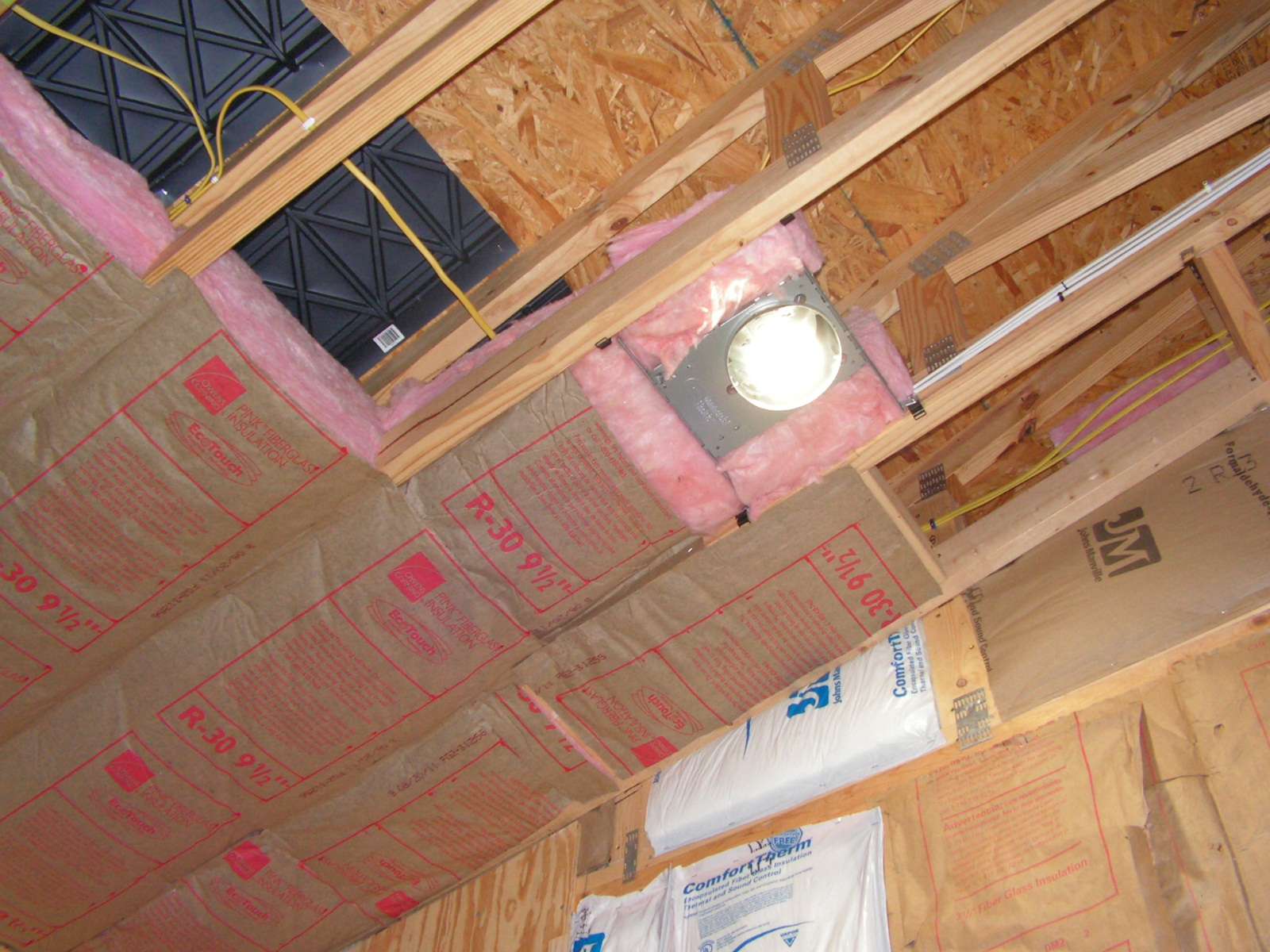
Looks like it will take more than 1 plastic vent in the roof. What I did was cut one in half and added it to the 1st one.

What is the consensus on stapling batt insulation. Directly to the joist or on the side, or does it matter? I started a row stapling directly to the joist and wondered if it would cause problems for the drywall crew.

insulation3jpg.jpg


I stapled the small piece up to the light on the side of the joist. I'm thinking it will be better for the drywall guys.

insulation1jpg.jpg


insulation2jpg.jpg


The lights are ic rated. Still makes me nervous insulating against them, but they don't get hot and that is the main reason I purchased the ic rating lights.
 

Rich H.

Well-known member
Joined
Nov 30, 2010
Messages
285
Location
SE Michigan
Question:
What is the height of your truss at the top plate?

If it is anything less than 10.5" then you should not be using 9.5" thick insulation in that area. The insulation thickness should be reduced in those areas to 1 inch less than the height. This will do a couple things for you: it will ensure the material is not compressed (fiberglass requires full loft to perform to spec), and it will ensure the plastic rafter baffles are not crushed against the roof deck.

As I found out AFTER I started, a "raised heel" scissor truss is the way to go if you want to try to maintain R30 or higher throughout the ceiling envelope. Normal scissor truss usually gets too short at the gable ends to use much more than R19 without risking the above stuff.

The roof insulation absolutely, positively MUST completely cover the top plate of the wall, or go slightly past it. If it does not, moisture and mold is very likely to develop inside the walls per the EPA and department of energy's website (great resource for insulation advice btw). It looks as if you're getting that done?

My own scissor trusses were maybe 8" or so tall at the top plate, so I used thinner R19 for the first few feet from the soffits. After that when there was enough space without compressing the batts, I switched to thicker R38. There's no ego driving my comments/I'm not saying that is "better", I am no professional, but I do know for sure there will be good airflow and that the batts were not compressed at all so it made more sense at the time.

If you staple the kraft paper to the insides of the lumber instead of on the bottom face throughout, the odds of the ceiling being straight/not wavy are better. And there will be fewer holes poked in the kraft vapor retarder, which should give you better performance. Might be worth considering.

Looks like you're doing a real good job and I would not want to make discouraging comments, only intended to help and nothing more.

Here is mine:
http://garagejournal.com/forum/attachment.php?attachmentid=136790&d=1316738912
 
Last edited:
To avoid these ads, REGISTER NOW!
OP
Z

z28dad

Well-known member
Joined
Jul 20, 2010
Messages
172
Location
VA
Thanks for the comments Rich. I appreciate it. I was wondering about the top plate deal. I did reduce the thickness in this area, but only covered about half of the 2x4 top plate because I wanted to make sure I didn't interfere with the venting. I may have to redo these pieces.
 

terry603

Well-known member
Joined
Sep 17, 2011
Messages
377
[ What is the consensus on stapling batt insulation. Directly to the joist or on the side, or does it matter? I started a row stapling directly to the joist and wondered if it would cause problems for the drywall crew.

they are made to staple on the face as you show]
 
OP
Z

z28dad

Well-known member
Joined
Jul 20, 2010
Messages
172
Location
VA
Rich, Just wanted to say thanks for your comments. I took the few rows of r30 down and this weekend I will get some R19. I want to make sure I get the complete top plate covered. I will need at least 2ft before I can get to the r30. I never thought about mold, but now that you mentioned it, I can see where I would have had a BIG problem.

I'm having some issues with the venting of the front of the garage. I'm not really sure how to handle it. My builders sheeted the front scissor trusses in order to be able to build the hand built custom roof on top of it. The custom built roof is built on top of the sheeting that is on top of the scissor trusses. I added braces between the scissor trusses where the homemade rafters rest to add support.

I have installed the baffles but this only get the air between the two front roofs. The ridge vent is on the bottom where the scissor trusses are.

I'm thinking my only option is to cut some access holes in each area to allow the air to flow. I'm not sure if I need a hole between each rafter. I also don't know how large of a hole to cut. Probably just a 4"by 4" hole will be enough. I could put a hole in each section. The sections get longer going form left to right. I also don't want to weaken anything. I don't think it will. If your standing in the front of the garage looking into the area of the two roofs, as you go from left to right the area gets larger. I may just need a couple vent holes down low on the left side that would allow that side to vent and then a couple up high on the right side. Here are some more pics:.

pict1007.jpg


frontbafflesjpg.jpg


toptrussbrcingjpg.jpg


pict1003y.jpg


pict1001.jpg


I'm probably only going to be able to use r19 in the front section of the building.
 
Last edited:

fury9

Well-known member
Joined
Mar 4, 2012
Messages
1,277
Location
Mchenry, IlLaHnoYs
staple to the INSIDE of the joist. If you staple to the face the glue for the drywall will be useless because most of the joist will be covered in paper. And I assume you will be using 5/8 on the ceiling which needs to be glued
 

fury9

Well-known member
Joined
Mar 4, 2012
Messages
1,277
Location
Mchenry, IlLaHnoYs
Either way ,1/2 5/8 it needs to be glued be it on a ceiling or wall.use the 5/8 on the ceiling cause the trusses are probably 2'on center and 1/2 will bow leaving you with an ugly ceiling
 

Rich H.

Well-known member
Joined
Nov 30, 2010
Messages
285
Location
SE Michigan
Sounds like you made a good catch.
The possiblity of mold in the walls is a huge issue you just worked around.

The sheeting appears to be open towards both the eaves and the ridge (if I'm interpreting the pics correctlly)?

As long as it is open on both ends and won't cause the batts to be crushed,
I feel it could be left alone.

Our scissor trusses are a little strange because you have almost no room for insulation at the edges, but you've got tons of space in the middle. To take advantage of the middle under the ridge, a little cellulose or loose fiberglass could be blown on top of the batts in that area. It's extra work but worth it.
 

Nick M

Well-known member
Joined
Nov 4, 2010
Messages
83
I would have put strapping on that ceiling, however all of your lights are up, a little too late.
 

rsa

Well-known member
Joined
Mar 3, 2011
Messages
300
Location
Between Raleigh and Fayetteville, NC, USA
...it will ensure the material is not compressed (fiberglass requires full loft to perform to spec)
You don't get the advertised R-value when you compress the insulation, but you do get a better insulated assembly. Within reason, on an R-value per inch basis, compressing the fiberglass batt increases its performance.

greenbuildingadvisor.com editor Martin Holladay addressed this exact subject in a finehomebuilding.com forum thread
Compressing a 5.5 inch batt to 3.5 inches will reduce the R-value compared to the same batt installed in a 5.5 inch cavity, but will increase the R-value per inch compared to a 3.5 inch batt installed in a 3.5 inch cavity.

In other words, fiberglass manufacturers have not optimized the density or the R-value per inch of their product. They sell a fluffier-than-optimum product in order to reduce the cost of manufacture. If you are willing to buy the 5.5 inch batt and compress it, your 3.5 inch cavity will have a higher R-value than if it were filled with a 3.5 inch thick batt.
 

Cobra6

Well-known member
Joined
Oct 23, 2007
Messages
1,380
Location
Tennessee
I'm struggling with this same issue, but am considering spray foam against the roof deck and not venting. Anyway, here is a product that can be used where the soffits hit the roof deck. Link courtesy of another user:

http://www.bergerbuildingproducts.com/pdfs/Berger_AccuVent_Attic_Vent.pdf

I used the Provent like Z28 Dad used with a Windblock piece
http://adoproducts.com/as_windblock


Can someone tell me how much the Berger AccuVent is for a package of 50? I think they are over $2 each at HD. I don't see them for sale with a price anywhere. It certainly makes the installation a little easier than ProVent and Windblock.
 
To avoid these ads, REGISTER NOW!
Top Bottom