To avoid these ads, REGISTER NOW!

internet to shop

Teken

Well-known member
Joined
Jan 2, 2010
Messages
8,214
Location
The Bad Lands
I don't believe you. Show me a published, industry standard that specifically prohibits couplers. The install we did has passed at least 5 annual audits and its not like they're hidden. There's 32 of them in the closet, in plain view for everyone to see, so its not like the auditor overlooked them.

Just because you decided to do this . . . Doesn't reflect the rest of the industry best practices. :wtf:

The fact you're gloating over installing 32 couplers in a communication closet, makes me take pause in your understanding of the fundamentals of accepted network practices.

You would be kicked out the door and on to the curb in my environment. :spit:

Teken . . .
 
To avoid these ads, REGISTER NOW!

D KRAGER

Well-known member
Joined
Oct 16, 2007
Messages
581
Location
Central IL
Go with the wired route. I did the wireless, it works but you have to know how to change some advanced settings and such. Also if the microwave is running it interfears with the signal and will not come back til the microwave is off...
 

gt40mkii

Banned
Joined
Apr 13, 2011
Messages
323
Just because you decided to do this . . . Doesn't reflect the rest of the industry best practices. :wtf:
Correct. However I believe the fact that this was done with the blessing of the company's IT executive staff (A Fortune 500 company in the IT networking industry,) and that it passed a final inspection upon completion as well a 5 government-mandated IT infrastructure audits tends to lead me to believe everyone involved is OK with those couplers being there. :wtf:

The fact you're gloating over installing 32 couplers in a communication closet, makes me take pause in your understanding of the fundamentals of accepted network practices.
You know so much, educate me. You can start with the published standards I asked about earlier.

You would be kicked out the door and on to the curb in my environment. :spit:

Oddly, that doesn't cause me any concern.
 

DodgeZ

Well-known member
Joined
Mar 27, 2011
Messages
608
These threads always get ridiculous. From WiFi doesn't work to you need fiber. Not even worth replying.
 

MrMark

Well-known member
Joined
Jan 25, 2010
Messages
4,626
Location
Southern Cal.
What's the difference between a "coupler" and a patch panel? Is there a really small patch panel I could mount in my demark box where the DSL/phone line comes in? The box is probably 14X10.
 

Teken

Well-known member
Joined
Jan 2, 2010
Messages
8,214
Location
The Bad Lands
Teken swinging his ego around isn't helping.

Your reply of installing 32 couplers clearly shows your lack of common sense and basic understanding of what is right & wrong.

This has nothing to do with my ego . . . Clearly, my reply affected yours! :bounce:

I am simply stating a fact, not hear say . . . Better stop affirming this task you did is acceptable. Your credibility just keeps dropping down into the toilet! :spit:

Teken . . .
 

gt40mkii

Banned
Joined
Apr 13, 2011
Messages
323
I am simply stating a fact, not hear say . . . Better stop affirming this task you did is acceptable.

And after two requests you still haven't been able to back up your "facts" with any kind of standards documentation (or indeed, any documentation at all.)

Surely you can come up with something? Anything?
 

DodgeZ

Well-known member
Joined
Mar 27, 2011
Messages
608
And after two requests you still haven't been able to back up your "facts" with any kind of standards documentation (or indeed, any documentation at all.)

Surely you can come up with something? Anything?

Are you talking about bean connectors?
 

Falcon67

Well-known member
Joined
Jun 11, 2009
Messages
18,371
Location
Merkel, TX
Just because you decided to do this . . . Doesn't reflect the rest of the industry best practices. :wtf:

The fact you're gloating over installing 32 couplers in a communication closet, makes me take pause in your understanding of the fundamentals of accepted network practices.

You would be kicked out the door and on to the curb in my environment. :spit:

Teken . . .

Since we are 1Gig off topic

Swing this - splice that complies with 568A. And what would you call a termination and an R45 socket with a cable plugged into it. Um - a splice. There's two in every office with a desktop, at least. Maybe 4 with an Cisco IP phone. And two more in the closet between the patch panel and the switch.

http://multimedia.3m.com/mws/mediawebserver?66666UuZjcFSLXTtlxT2NxM_EVuQEcuZgVs6EVs6E666666--

We splice fiber when we have to and cables more than we like when things move. It's just not practical or economical to have somebody come and pull a whole new run of cable for a short move. That's real world with real budgets.
 
Last edited:

Teken

Well-known member
Joined
Jan 2, 2010
Messages
8,214
Location
The Bad Lands
And after two requests you still haven't been able to back up your "facts" with any kind of standards documentation (or indeed, any documentation at all.)

Surely you can come up with something? Anything?

What? That a coupler is not allowed to be used?? :headscrat Clearly, if I have to dumb it down for you. No, there is no formal document that states *YOU* can not use a coupler.
There is no formal document that YOU must comply with anything in this world. It comes down to you following what has been practiced and applied across the world as accepted best practices.

Having said this . . . There are documents that clearly state that after *** feet, a repeater must be used to ensure the correct voltage / bandwidth.

Now, if this is your only weak argument with respect to your poor decisions in the past. Please, I implore you stay out of this industry and let others do the correct job . . .

You're only going to make the next guys job harder . . . :spit:

Teken . . .
 

gt40mkii

Banned
Joined
Apr 13, 2011
Messages
323
Are you talking about bean connectors?

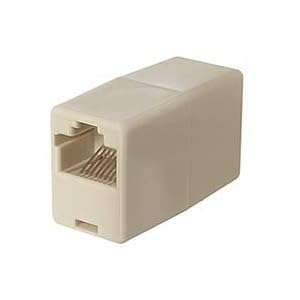
We're talking about these:
21-LxbAijBL._SL500_AA300_.jpg


We splice fiber when we have to and cables more than we like when things move. It's just not practical or economical to have somebody come and pull a whole new run of cable for a short move. That's real world with real budgets.
Exactly. No way were we going to run new cable from 32 cubes to the new closet. Instead, we ran 32 cables from the old closet to the new one and used couplers to connect the old cable to the new.

We'd have just used a patch panel, except the customer didn't want any racks in the old closet. So the cables got joined and put up in the plenum.
 

7echo

Well-known member
Joined
Feb 16, 2008
Messages
432
Location
coastal Georgia
wow, this thread sure runs the gambit of advice....

These threads always get ridiculous. From WiFi doesn't work to you need fiber. Not even worth replying.

For some reason I enjoy these threads. There are the guys that follow all the specs, and the guys that, well, do whatever they want, and some in-between.

We are pulling out cat 5 and replacing it with the latest cat 6 available for an office move. Talking with the electrician he said can you imagine if they changed the specs on romex every couple or three years? Yes, I realize there is a difference and we are talking about data.
 

puttsy

Well-known member
Joined
Nov 22, 2011
Messages
277
Location
Iowa, USA
Puttsy, you said it well. I work in the IT field too and I'll back what you wrote 110 percent.
Do it right the first time and you won't be scratching your head later!

PS, fibre? are you from Canada? :p

thanks jeff. Glad someone can understand. And fibre? It's actually the "correct" spelling for fibre channel. I've worked in the online community extensively and picked up "British/UK English" and "Australian English" languages. Depending on which forums/communities I've been on lately depends on how many typo's I've made in any given version of English. Be it American, British, or Australian...
 

Alchymist

Well-known member
Joined
Mar 1, 2009
Messages
4,423
Location
Central PA
^ correct.

You can't run more than one modem on a DSL line sumultaneously. DSL is a dedicated line to a single modem.
Just run a Cat 5 off your ethernet switch to the garage and you are ready to go. That is what I did in my garage. I've never used the garage computer however. It just takes up space out there.

Not totally true.....
 

Attachments

  • IMG_1300.jpg
    IMG_1300.jpg
    136.7 KB · Views: 37

jeffmoss26

Well-known member
Joined
May 25, 2011
Messages
12,855
Location
Cleveland, Ohio
puttsy, when I hear 'fiber channel' I think of the storage network, not fiber optic cabling itself...this industry is a pain, LOL

falcon, not sure what the link for the scotchlok connectors is for, those are not designed for data applications. phone lines, sure thing...just used some last week.
 
Last edited:

ishiboo

Well-known member
Joined
Oct 27, 2010
Messages
9,481
Location
Oshkosh, WI
Couplers are 100% fine, as are splices/etc. As long as you continue to meet the minimum performance you're fine, no matter if it's a line of couplers every six inches to make the run. It does look sloppy then :) They are not that frequently used professionally, but there is no reason not to use them for an extension like that. Most cases you would use a patch panel, but as he said the customer wanted it hidden. Only on long runs (or crappy wiring devices), or if you have many couplers/splices/etc. will you begin to see performance degrade.

Only thing you have to be careful is stuffing them into the plenum, depending on its usage and the fact the couplers are likely non-plenum.

To the OP - If it's easy to run a wire now and in the future, snag some cheap Cat5E and run it. If you can run a wire now but not in the future (closing a bunch of stuff up), buy a 500' box of Cat6 and run 2 or 3.

If it's difficult to run a wire now, run a wire somewhere with close to line-of-sight of the shop, and use a wireless router to bridge the gap. You can get pre-flashed WRT54Gs on eBay that have DD-WRT that will allow you to run higher power and simplify a wireless bridge, if necessary. (i.e., metal walled shop, poor line-of-sight, etc.)

Any of these will work based on your uses (web surfing on a DSL modem) and you will be happy with their performance. The wired route is more reliable and will be pretty much trouble-free. Wireless works great but is not as fast and they do fail sometimes.

If you have future plans for multimedia, or you have one chance to run any wires you may need in the future, let us know. It's cheaper and easier to run cable now than to make changes in the future when standards change. My house's data boxes all have 2 Cat6, one 5E and one RG6 quad, and 1" ENT to each for future expansion. It comes in handy because I can do HDMI over two Cat6, audio/infrared remote receiver/transmitter over the 5E, and security cameras over any of it, anywhere. The Cat6 is good for the near future but when standards change the ENT will accommodate most anything.
 
To avoid these ads, REGISTER NOW!

ishiboo

Well-known member
Joined
Oct 27, 2010
Messages
9,481
Location
Oshkosh, WI
Not totally true.....

True enough for this discussion. He can't do it with two DSL modems.

The only way I could see this different is if this were a 2000' run and he already had a phone line between them, an easy solution might be point-to-point DSL.
 

puttsy

Well-known member
Joined
Nov 22, 2011
Messages
277
Location
Iowa, USA
puttsy, when I hear 'fiber channel' I think of the storage network, not fiber optic cabling itself...this industry is a pain, LOL

falcon, not sure what the link for the scotchlok connectors is for, those are not designed for data applications. phone lines, sure thing...just used some last week.

So true.

For those confused: Fibre channel is used considerably in data storage/intra-datacenter communication. It's different than typical fiber optic cable, different protocol (i believe. Jeff?). Fiber optic cable is used extensively in the telco industry and in networking, the "fibre" varient is common in intra networks where shifting stuff inside a data center and storage devices. (fibre channel hard drives/array's) but, less common usage as a term. This industry is a hige pain though, I concur. And I will concede that I may have been inaccurate (or at least not as correct as I may have been) by using the "fibre" spelling.
 

gt40mkii

Banned
Joined
Apr 13, 2011
Messages
323
There is no formal document that YOU must comply with anything in this world.
Then kindly STFU. You have your "best practices" and I have mine. Mine were clearly good enough to keep the customer happy for 5 years going, and indeed, he was happy enough to hire me and a couple of my guys for other follow on work and even recommend me to his business associates.

There are documents that clearly state that after *** feet, a repeater must be used to ensure the correct voltage / bandwidth.
Irrelevant to this discussion. The runs were all well within the 100M limit.
 

ishiboo

Well-known member
Joined
Oct 27, 2010
Messages
9,481
Location
Oshkosh, WI
So true.

For those confused: Fibre channel is used considerably in data storage/intra-datacenter communication. It's different than typical fiber optic cable, different protocol (i believe. Jeff?). Fiber optic cable is used extensively in the telco industry and in networking, the "fibre" varient is common in intra networks where shifting stuff inside a data center and storage devices. (fibre channel hard drives/array's) but, less common usage as a term. This industry is a hige pain though, I concur. And I will concede that I may have been inaccurate (or at least not as correct as I may have been) by using the "fibre" spelling.

More or less. Fiber and fibre are the same word, different spellings... the British English "Fibre" vs the American English "Fiber." So optical fiber (cabling) could be fiber or fibre.

Fibre Channel is a proper noun (a name for the technology which was originally based on fiber), so spelling it Fiber Channel is less common/proper, but IMO still acceptable :) It's a different "protocol" in that it encapsulates SCSI, and has different layers of course. It's a bit confusing as Fibre Channel is almost always done over copper these days, not optical fiber. Unfortunately it's gotten less prevalent with more SAN/NAS setups, but Fibre Channel is a very cool technology.
 

gt40mkii

Banned
Joined
Apr 13, 2011
Messages
323
Only thing you have to be careful is stuffing them into the plenum, depending on its usage and the fact the couplers are likely non-plenum.
They weren't. But since they've passed the yearly inspection (these guys have an extensive auditing process every year that covers not only IT issues but fire safety as well as other stuff,) I can only presume that whoever did the fire audit was OK with non-plenum rated couplers being up there.

Now that I think about it, I wonder if the zip-ties we used on the original and new runs were plenum rated.
 

ishiboo

Well-known member
Joined
Oct 27, 2010
Messages
9,481
Location
Oshkosh, WI
They weren't. But since they've passed the yearly inspection (these guys have an extensive auditing process every year that covers not only IT issues but fire safety as well as other stuff,) I can only presume that whoever did the fire audit was OK with non-plenum rated couplers being up there.

Now that I think about it, I wonder if the zip-ties we used on the original and new runs were plenum rated.

Well, it's only a plenum if it's a working airspace, if it's just dead air it doesn't matter. Lot of drop ceilings/etc. use the area as a cold air return, so you'd need it. Otherwise riser is fine.
 

DodgeZ

Well-known member
Joined
Mar 27, 2011
Messages
608
Per the ANSI/TIA/EIA-568-B standard splices aren't allowed. At best you can use a 110 block to make it work and stay within standard. That would be the correct way to do. With those couplers it will still work but I wouldn't say they meet standard. They do add a point of failure. I wouldn't support them in one of my networks. If there is ever network issues it would be the first thing I'd blame. What did the cable certs show?
 

ishiboo

Well-known member
Joined
Oct 27, 2010
Messages
9,481
Location
Oshkosh, WI
Per the ANSI/TIA/EIA-568-B standard splices aren't allowed. At best you can use a 110 block to make it work and stay within standard. That would be the correct way to do. With those couplers it will still work but I wouldn't say they meet standard. They do add a point of failure. I wouldn't support them in one of my networks. If there is ever network issues it would be the first thing I'd blame. What did the cable certs show?

A coupler is simply two jacks. There is nothing not allowed about it, and it meets "the standard" fine. Whenever something goes wrong, if the cabling was installed properly (or even not) chances are it's a termination. I'd say it's far more likely it's at the user-installed RJ45 plug itself than the coupler.
 

DodgeZ

Well-known member
Joined
Mar 27, 2011
Messages
608
For some reason I enjoy these threads. There are the guys that follow all the specs, and the guys that, well, do whatever they want, and some in-between.

We are pulling out cat 5 and replacing it with the latest cat 6 available for an office move. Talking with the electrician he said can you imagine if they changed the specs on romex every couple or three years? Yes, I realize there is a difference and we are talking about data.


I don't mind them. Just the incorrect information in them is a bit much. Also the OP ends up in the middle of a technical debate. It goes from being helpful to a bunch of folks BSing about what they think they know.
 

DodgeZ

Well-known member
Joined
Mar 27, 2011
Messages
608
A coupler is simply two jacks. There is nothing not allowed about it, and it meets "the standard" fine. Whenever something goes wrong, if the cabling was installed properly (or even not) chances are it's a termination. I'd say it's far more likely it's at the user-installed RJ45 plug itself than the coupler.

This is why I wouldn't hire you to do cabling for me. Have you even read the ANSI/TIA/EIA-568-B?
 

ishiboo

Well-known member
Joined
Oct 27, 2010
Messages
9,481
Location
Oshkosh, WI
This is why I wouldn't hire you to do cabling for me. Have you even read the ANSI/TIA/EIA-568-B?

First, 568C is the current standard. Second, I have not read the entire thing, but there are couplers designed and built to meet and exceed 568C, so what in EIA-568 anything says if they meet the standard you cannot use them?
 

DodgeZ

Well-known member
Joined
Mar 27, 2011
Messages
608
First, 568C is the current standard. Second, I have not read the entire thing, but there are couplers designed and built to meet and exceed 568C, so what in EIA-568 anything says if they meet the standard you cannot use them?

First of all we are discussing Cat5e which wouldn't be the current standard. He is the topic at hand.

I had to splice a bunch of Cat5e cables with those couplers when we moved a customer's data center. That was 5 years ago. One of these days I expect we'll have to go back and rewire the closet to remove them, but so far the customer has been pretty happy.

Honestly, I don't see a problem with them being a permanent solution so long as they are well-made. After all, electrically what's the difference between that and a patch-panel?


The connector may say EIA-568 doesn't mean it follows in to line with the standard. You can't have splices in your horizontal runs per the standard.
 

puttsy

Well-known member
Joined
Nov 22, 2011
Messages
277
Location
Iowa, USA
Ok, this is WAY off topic now. NO, Using couplers IS NOT a violation of policy/standards It IS, however, bad practice to the capacity discussed. I don't own a single RJ45 coupler, not a one. Why? If I need one, I'll just terminate raw cable again. If it's run through the wall, I'll likely put a switch at the termination. Computers use ECC (Error Correction code) and Parity so, this coupler solution works, but, you are probably losing a fair amount of data BUT, it "still works" because there is still just enough information transmitted to be reconstructed/reconstituted. Somthing like 99 of 100 packets sent can be lost and the one packet received can be used to reconstruct/replicate/reconstitute the data. That's part of parity.

Also, to the OP. Run 2 CAT6 lines and call it done. That will suffice. If that isn't won't work, run 2 CAT5e runs through conduit. DONE. No fibre/fiber, no muss, no fuss

And to the one who mentioned changing Romex every few years, remember when they changed from 2 to 3 conductor electrical wire? Yeah, it's be like that, EVERY few years. Yuck! (Oh, and no, I don't remember it, that as LONG, long, long before I was born...like, 3 times my age long ago...i think.)
 

ishiboo

Well-known member
Joined
Oct 27, 2010
Messages
9,481
Location
Oshkosh, WI
First of all we are discussing Cat5e which wouldn't be the current standard. He is the topic at hand.

The connector may say EIA-568 doesn't mean it follows in to line with the standard. You can't have splices in your horizontal runs per the standard.

I didn't know that Cat6 was excluded from the discussion, or that the latest standard which superseded a previous one was used. I guess since you've read the 400 or whatever pages of B.* and have to refer back, easier to go to B.* than C.* when you have to look something up?

A coupler is not a splice, it's a connector (or series thereof). A horizontal run needs a "continuous length" but this ends at a "transition point"... i.e. you can connect two horizontal runs together. This is almost the same as the NEC... The purpose of this is so you don't splice a piece of cable together in the middle and bury it somewhere in a wall/etc.

There are installation requirements for the connection which you may not meet sticking a coupler in the ceiling, but for the performance standards it is 100% fine and more than acceptable for a residential installation.
 

ishiboo

Well-known member
Joined
Oct 27, 2010
Messages
9,481
Location
Oshkosh, WI
Ok, this is WAY off topic now. NO, Using couplers IS NOT a violation of policy/standards It IS, however, bad practice to the capacity discussed. I don't own a single RJ45 coupler, not a one. Why? If I need one, I'll just terminate raw cable again. If it's run through the wall, I'll likely put a switch at the termination. Computers use ECC (Error Correction code) and Parity so, this coupler solution works, but, you are probably losing a fair amount of data BUT, it "still works" because there is still just enough information transmitted to be reconstructed/reconstituted. Somthing like 99 of 100 packets sent can be lost and the one packet received can be used to reconstruct/replicate/reconstitute the data. That's part of parity.

Also, to the OP. Run 2 CAT6 lines and call it done. That will suffice. If that isn't won't work, run 2 CAT5e runs through conduit. DONE. No fibre/fiber, no muss, no fuss

And to the one who mentioned changing Romex every few years, remember when they changed from 2 to 3 conductor electrical wire? Yeah, it's be like that, EVERY few years. Yuck! (Oh, and no, I don't remember it, that as LONG, long, long before I was born...like, 3 times my age long ago...i think.)

ANY connection, splice, etc. increases the losses between the two points, however that is built into the standard. Even with a coupler and a couple splices, you will still meet the minimum performance for 100m or gigabit ethernet at 300'. We're talking about less than 1m required at 100', to maintain relevance with this discussion. What is a coupler - it's two jacks and two plugs, and the jacks are connected foolproofly in the most direct manner.

Most commercial installs have more connections than he will have - multiple patch panels along the way like in the main closet, other closets and even a transition into a raceway, before they get to the jack.

Electrical cabling was changed due to safety, not performance, big difference. The ground was added and then NM became NM-B, the major differences. The current/voltage/functional capacity has remained more or less the same throughout. Each subsequent release of a cabling standard lowers cross-talk and increases bandwidth to support a 10fold increase in speed... 10m, 100m, 1g, 10g.
 

Teken

Well-known member
Joined
Jan 2, 2010
Messages
8,214
Location
The Bad Lands
Then kindly STFU. You have your "best practices" and I have mine. Mine were clearly good enough to keep the customer happy for 5 years going, and indeed, he was happy enough to hire me and a couple of my guys for other follow on work and even recommend me to his business associates.

Irrelevant to this discussion. The runs were all well within the 100M limit.

Well, the space shuttle was built by the lowest bidder . . . Look how that faired for them. :lol_hitti

Since your clients level of expectation is so low . . . I gather anything you did would have been accepted in my mind. :wtf: :bounce:

But, I digress . . .

For your reference: 21.6 million people went out of their way to spend aprox $2.** and above for this one item.

21.6 million people you say?? :headscrat Wow, these people must be right and on to something! :shocking:

It was the pet rock . . . :wtf: :confused: Just because its *Good Enough* doesn't make it acceptable, nor long lasting. Try to glean something from this conversation and stop attacking me for stating the obvious facts.

Everyday I see sub standard work, I guess this makes it all right . . . You know what would be a novel idea???

Doing the fucken job right!!! :spit:

Teken . . .
 

DodgeZ

Well-known member
Joined
Mar 27, 2011
Messages
608
I didn't know that Cat6 was excluded from the discussion, or that the latest standard which superseded a previous one was used. I guess since you've read the 400 or whatever pages of B.* and have to refer back, easier to go to B.* than C.* when you have to look something up?

The topic at hand would have followed the older standard is my point. Why would we discuss a standard that wasn't out when the work was done? Though it didn't change for C.


A coupler is not a splice, it's a connector (or series thereof). A horizontal run needs a "continuous length" but this ends at a "transition point"... i.e. you can connect two horizontal runs together.

I don't know what you call a "splice" but I'd call it two hand crimped mod plugs and a coupler. You can use inter connections but they need to be a 110 block or a patch panel.

"Bridged taps and splices are not permitted."
http://www2.warwick.ac.uk/services/its/servicessupport/cabling/activities/568-b.pdf


You can read it how ever you want but they I read is that the coupler doesn't follow the standard.

more than acceptable for a residential installation.
I never said it won't work just said it wasn't part of the standard.


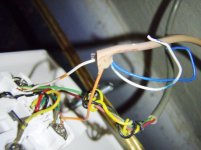
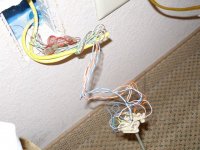
I am attaching some pictures of wiring that "worked" that have seen over the years.
 

Attachments

  • 7.JPG
    7.JPG
    78.2 KB · Views: 21
  • 6.jpg
    6.jpg
    87.3 KB · Views: 18
  • 5.jpg
    5.jpg
    78.8 KB · Views: 18
  • 4.jpg
    4.jpg
    75.8 KB · Views: 18
  • 3.jpg
    3.jpg
    146.5 KB · Views: 21
  • 2.jpg
    2.jpg
    133.4 KB · Views: 21
  • 1.jpg
    1.jpg
    112.1 KB · Views: 23

DodgeZ

Well-known member
Joined
Mar 27, 2011
Messages
608
more
 

Attachments

  • 13.jpg
    13.jpg
    87 KB · Views: 13
  • 12.JPG
    12.JPG
    68.8 KB · Views: 13
  • 11.jpg
    11.jpg
    97.8 KB · Views: 14
  • 10.jpg
    10.jpg
    135.5 KB · Views: 16
  • 9.jpg
    9.jpg
    133.8 KB · Views: 17
  • 8.jpg
    8.jpg
    114 KB · Views: 18
  • 14.JPG
    14.JPG
    51.8 KB · Views: 15
To avoid these ads, REGISTER NOW!
Top Bottom