
The only Koken tools I own are their wonderfully knurled wobble-fix extensions, and they're great. So after hearing a lot of praise for their z-series sockets, curiosity got the better of me and I decided to burn a Zoro 20% off coupon and order a set of 3/8 drive semi-deeps. The set includes 7mm to 19mm sockets, part number RS3300XZ/12, and I got it delivered for $133 before taxes.

I heard that the z-series sockets have a tight fit, both on the ratchet and on the fastener, have thinner walls, and are meticulously finished. But I wasn't sure what that really meant in comparison to other sockets, so I thought I'd share some pics, measurements, and feedback for anyone else wondering about these sockets.
First, the finish is great. These are a satin chrome, polished on the barrel, textured down by the contoured bottom. The contoured bottom provides a bit of lip to grab the socket and pull off a ratchet or extension. Which is helpful, because these things sit tight on the anvil and require a bit more effort to get on and off than any of my other sockets. This comes down to the unique ball detent Koken uses on these z-series.
Koken z-series has a ramped and deep detent:
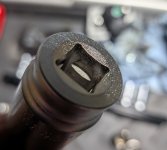
Versus a more traditional socket detent:

It's not cumbersome, but just requires noticeably more effort to engage or remove the socket. I'm sure this tight engagement means I'm less likely to accidentally knock one off the end of an extension, but I've heard it really helps remove slop between the socket and anvil for a more direct feel while ratcheting on some hardware. But it seems this might only be true while using Koken's Zeal ratchets. On my Matco Eighty8, LP90, Gearwrench, etc.. there's some amount of play in the ratchet itself and these sockets do nothing to alleviate that because they actually sit further off the face than my other sockets.
17mm socket on a Matco locking flex head, my most-used 3/8 ratchet:

17mm Craftsman Overdrive socket on the same ratchet:
The Craftsman Overdrive makes for a good comparison to the Koken z-series because they are both known for having very tight tolerances for the fastener head. I wrote about the Overdrive sockets in another post back when I first got them: Craftsman Overdrive Sockets, and they are basically RBRT sockets made in Taiwan with a gunmetal chrome finish and are VERY tight on some fastener heads. Sometimes too tight for use. How do the Koken compare with these and some others? Here's some measurements:
You can see the Koken z-series is tight, but seems to be consistently so across sizes, unlike the Overdrive that are sometimes too tight to engage smaller fastener heads like 8 and 10mm bolts. I've only used these Kokens on one job so far, replacing the APP sensor on my daughter's Honda. The 10 and 12mm sockets had nice engagement and fit with all the hardware. But like the Overdrive, I can see how bolts with paint or rust on them might be an issue.
I really like the slightly higher offset I get with these semi-deeps. They are all 35mm tall. The regular z-series are known for being low-profile, but those don't have any value for me because if I have low clearance on a fastener I would just grab the dual drive nanos. For comparison to regular sockets and the nanos:

Broaching comaprison:

They also have a slightly thinner sidewall than my other sockets. About .5mm thinner for the 10mm compared to the Overdrive, up to 1mm thinner for the 17-19mm sockets. Obviously much thinner compared to the astro nano, as those are impact rated.
My initial impressions are these are nicely finished, very tight-fitting sockets, a little more slender, with good depth, and perfect for hardware in good shape. I assume they fit tighter on a Koken zeal ratchet, but work fine on another brand ratchet just with a little more offset from the ratchet face. They are tight enough on a fastener that they shouldn't round any heads, and while they don't have any special features like the RBRT grooves for grabbing rounded heads, they will probably do a better job grabbing whatever flats are left on a rounded bolt head than a regular socket. But I'm not sure if they'll be the first sockets I grab from the box. I need to use them some more. Thankfully (ha!) our 2006 Suzuki needs its transfer case replaced, so we'll see if I still like these after that job.
I heard that the z-series sockets have a tight fit, both on the ratchet and on the fastener, have thinner walls, and are meticulously finished. But I wasn't sure what that really meant in comparison to other sockets, so I thought I'd share some pics, measurements, and feedback for anyone else wondering about these sockets.
First, the finish is great. These are a satin chrome, polished on the barrel, textured down by the contoured bottom. The contoured bottom provides a bit of lip to grab the socket and pull off a ratchet or extension. Which is helpful, because these things sit tight on the anvil and require a bit more effort to get on and off than any of my other sockets. This comes down to the unique ball detent Koken uses on these z-series.
Koken z-series has a ramped and deep detent:
Versus a more traditional socket detent:
It's not cumbersome, but just requires noticeably more effort to engage or remove the socket. I'm sure this tight engagement means I'm less likely to accidentally knock one off the end of an extension, but I've heard it really helps remove slop between the socket and anvil for a more direct feel while ratcheting on some hardware. But it seems this might only be true while using Koken's Zeal ratchets. On my Matco Eighty8, LP90, Gearwrench, etc.. there's some amount of play in the ratchet itself and these sockets do nothing to alleviate that because they actually sit further off the face than my other sockets.
17mm socket on a Matco locking flex head, my most-used 3/8 ratchet:
17mm Craftsman Overdrive socket on the same ratchet:
The Craftsman Overdrive makes for a good comparison to the Koken z-series because they are both known for having very tight tolerances for the fastener head. I wrote about the Overdrive sockets in another post back when I first got them: Craftsman Overdrive Sockets, and they are basically RBRT sockets made in Taiwan with a gunmetal chrome finish and are VERY tight on some fastener heads. Sometimes too tight for use. How do the Koken compare with these and some others? Here's some measurements:
| Koken z-series | Craftsman Overdrive | USA Craftsman G1 | Astro Nano Impact | TRO Ti | |
| 10mm: | 10.14 | 10.04 | 10.21 | 10.17 | 10.07 |
| 14mm: | 14.14 | 14.14 | 14.24 | 14.27 | NA |
| 17mm: | 17.17 | 17.26 | 17.34 | 17.44 | NA |
You can see the Koken z-series is tight, but seems to be consistently so across sizes, unlike the Overdrive that are sometimes too tight to engage smaller fastener heads like 8 and 10mm bolts. I've only used these Kokens on one job so far, replacing the APP sensor on my daughter's Honda. The 10 and 12mm sockets had nice engagement and fit with all the hardware. But like the Overdrive, I can see how bolts with paint or rust on them might be an issue.
I really like the slightly higher offset I get with these semi-deeps. They are all 35mm tall. The regular z-series are known for being low-profile, but those don't have any value for me because if I have low clearance on a fastener I would just grab the dual drive nanos. For comparison to regular sockets and the nanos:
Broaching comaprison:
They also have a slightly thinner sidewall than my other sockets. About .5mm thinner for the 10mm compared to the Overdrive, up to 1mm thinner for the 17-19mm sockets. Obviously much thinner compared to the astro nano, as those are impact rated.
My initial impressions are these are nicely finished, very tight-fitting sockets, a little more slender, with good depth, and perfect for hardware in good shape. I assume they fit tighter on a Koken zeal ratchet, but work fine on another brand ratchet just with a little more offset from the ratchet face. They are tight enough on a fastener that they shouldn't round any heads, and while they don't have any special features like the RBRT grooves for grabbing rounded heads, they will probably do a better job grabbing whatever flats are left on a rounded bolt head than a regular socket. But I'm not sure if they'll be the first sockets I grab from the box. I need to use them some more. Thankfully (ha!) our 2006 Suzuki needs its transfer case replaced, so we'll see if I still like these after that job.