To avoid these ads, REGISTER NOW!

Laying Cement / Cinder Block Wall. Pro Tricks n Tips??

bren5270

Well-known member
Joined
Sep 30, 2016
Messages
97
Location
New Bern NC
Hey all,

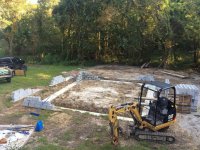
So Ill soon be laying my cement 8x8x16 block stem wall for my garage (about 400 blocks or so), and I was wondering if any of you masons had any tricks or tips for making things easier/better? Ive done some minor block work a while back but I figure with all the experts on here someones probably got some nifty tricks up their sleeves

I know theres obviously different ways to do it according to preference, but here's what Ive been suggested so far:

-Start with the corners after snap-lining the footer, making a pyramid of sorts moving towards the middle course by course
-Mix the mortar in smaller batches (obviously not all at once)
-Don't level every single block 1x1, go in groups of 3 or 4 then level
-Mist the blocks with a hose to keep damp

So do any of you Pro Masons out there have any tricks/tips?

************UPDATE ****************
Ive now done about 3 courses all the way around and heres what I found worked the best:
-Start with the corners, get all 4 corners as level as possible and square, then use mason string from corner to corner pulled nice and tight to reference.
-use a torpedo level to level each block as you go, doesn't have to be perfect but at least within the level lines on the bubble
-Slightly wetter mortar is easier, once you butter it on the sides, the block wicks away some of the moisture so it gets to the right consistency shortly after.
-Use a cheapy 150$ harbor freight mixer to mix a bag of mortar, mix it somewhat wet then dump it into a 5 gallon bucket and pour gallon portions onto your buttering board as you go. If you put a little water on the top of the cement in the bucket, it will give you plenty of time before it starts getting hard.
-I found it a lot easier to just use a decent mallet to get the blocks right, using the trowel took more effort and made kind of a mess
-Butter the side of the block with the block stood up so you aren't trying to butter edges when its vertical, do it with the somewhat wet mortar then let it sit for a bit while you do another block or two so it dries up a tad and sticks to the block better.

Once I got that down it went pretty smoothly.
Good luck to whoever else tries it.
I finally got a mason to come out and do the rest. Apparently I was putting way too much detail and effort into it to get each block good because his blocks weren't level or straight and varied as much as 1/2", but maybe that varies from mason to mason...
 
Last edited:
To avoid these ads, REGISTER NOW!

Toomanytools?

Well-known member
Joined
Nov 4, 2010
Messages
855
Location
Washington
Hire a Mason...Ok are you starting with a nice level solid footer? Minimum 16" wide footer deep enough for your frost level in your area. Also nice to have rebar in footer extending up every other block hole.
 
Last edited:

kd3pc

Well-known member
Joined
Aug 10, 2013
Messages
3,630
Location
Northern Neck
how are your hands??? Can you work in gloves? You will need a helper. Mixing the mortar properly will save you tons of time.

400 blocks will make you wish you hired a mason.

Get a wooden 4' level and it will get used. Level is one thing, square and plumb - two other things. I measure, layout and dry stack the corners to make sure my math is correct. A laser level is nice here to set corners, or water level...but then you know things will match up when you are done.

Electrical boxes imbedded or surface mount? Using wire between courses?

Best of luck.
 

James E

Well-known member
Joined
Jun 21, 2010
Messages
16,507
Location
Raleigh, NC
Just remember that cinder blocks have a top and a bottom. The top edge is fatter so it can hold the mortar for the block above it.
 

madmax908

Well-known member
Joined
Sep 9, 2008
Messages
101
Location
DeLand, FL
I remember helping a grandfather out doing the same thing.
My job was to put the blocks in a basin filled with water.
I remember it being beneficial because the block would not absorb all the water from the cement, leading to stronger adhesion.
He also said nobody does it this way anymore because it takes too long.
YMMV
 

rayra

Well-known member
Joined
Dec 1, 2014
Messages
4,724
Location
Escaped from Los Angeles
set the ends of a run and use a taut guide string between them. Wind the string on some sticks, pin them down with more blocks, aligning the string with the long top edge.
Set the top front edge of your new course to that string. Set your string jussst clear of the block edge, NOT touching it. Maintain that gap as you set the blocks, the string should be free-floating.
Level each block as you go, with the string as your guide. That way you can lay 4-6 blocks quickly and it takes a lot less work to get them right.
That's how you get a straight row.

Try to stair-step the blocks at the ends or at least set the ends of the next row so they can set up enough while you break, or prep for laying the next row.

Get a short level and a long one, use both.

Get the large mason's trowel (pointed arrowhead shape, flat and thin). The heft and end of the handle will make an effective tool for setting the block. Don't use a hammer if you can avoid it, it's a good way to find the flaws in a block and break it apart.
And once you get a feel for it, it makes quick work of buttering a block.

IF you get your mortar to the right consistency you should be able to sling it and have it stick, with just a moderate slump. And in the wheelbarrow you slice it up with the trowel such that you use the long edge of the trowel to dig into those slices / striations and pick up a long narrow bead of mortar on the trowel. This will better match the mating surfaces of the blocks and you won't waste nearly as much down the holes of the blocks. Or onto the ground.

If your mortar is too wet or you skimped too much, DONT try to tuck some more mortar under the block. Pull the block and scrape it clean and butter it again.

Watch your drying time in your local conditions and be sure to dress your joints before things set up too much. You want it dry enough you can shove / shape things with a wire brush without mushing it around. And dry enough your don't smear cement all over the blocks.

Mortar's a lot like concrete or paint. You are managing moisture content. Too dry or too wet and you have a mess.

You'll get a better bond with a high cement mortar mix and if you pre-soak your blocks / bricks. Homer buckets. Lots of homer buckets. Don't lay them dry / dusty. A wet block will better wick the mortar as things dry, making a stronger bond. When you see a block or brick wall with mortar falling loose or it can be readily knocked cleanly off re-used brick, that **** was laid dry / mortar too dry.

Your hands are going to take a beating. Wear sturdy gloves. Your shoulders, lower back and grip muscles are going to hurt like hell.

Try to arrange some shade. IF you can only shade one thing, shade the wheelbarrow / mixed mortar. And start with smaller batches until you get a feel for the work.

Count yourself lucky if you manage to lay 50 your first day.


/grandad was a mason / bricklayer in the Imperial Valley. He taught my Dad some before my Dad joined the Navy. They both taught me and I was child slave labor when Dad retired from the Navy and we got our first house(s) of our own. I still do my own work. About to lay a brick patio this winter.

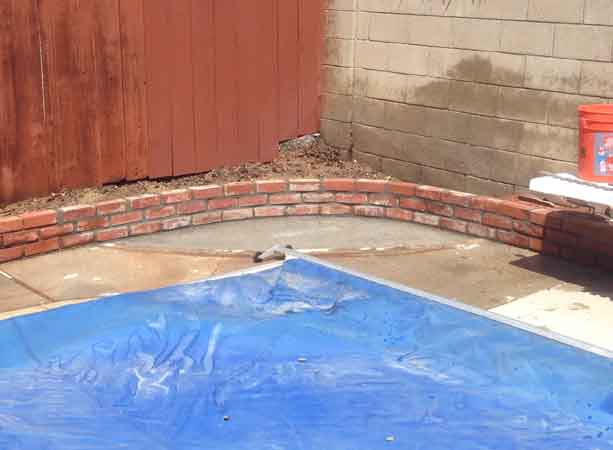
Here's a backyard corner, took out an overgrown palm tree and reversed the curved brick of the original layout. Cleaned and re-used the original brick as I couldn't find anything that matched. Small job, matching two different levels, house is nearly 50yrs old, things shift over time. Made it all work. A small job. All the big ones were before digital cameras. Too old for that **** now. Or not quite, supposed to lay ~30' of slumpstone retaining wall for my folks this Fall, too.

concrete06.jpg


That's all I can think of off the top of my head. If you have more questions PM me,
 
Last edited:

Dan in Pasadena

Well-known member
Joined
Feb 18, 2009
Messages
13,147
Location
Pasadena, CA
It's concrete, not "cement". Cement is to concrete as flour is to cake batter.

There are no cinder blocks commonly available anymore (and haven't been for a looong time) They're concrete block.
 
Last edited:
OP
B

bren5270

Well-known member
Joined
Sep 30, 2016
Messages
97
Location
New Bern NC
Thanks for the tips (especially Rayra!).

Regarding hiring a mason, wish that was an option but its not, hence why I didn't ask if I should just hire a mason.

Cement vs Concrete; yep my mistake.
 

joe--h

Well-known member
Joined
Jan 30, 2013
Messages
536
Are the blocks going to be filled & rebar?
If so just dry stack them and fill, no need for mortar at all.
Joe H
 

Leaflessshadetree

Well-known member
Joined
Aug 1, 2013
Messages
7,165
Location
Don't ask.
Take your time, you will get quicker as it progresses.
Don't be afraid of wasting mortar. If a batch isn't right, mix a new batch. If a block isn't right pull it, scrape off the mortar and try again.
Clean up misplaced mortar and edges as you go. Much easier than after it sets up.
 

Jess

Well-known member
Joined
Oct 22, 2006
Messages
430
Location
Vancouver Island, BC Canada
It can be back breaking work, but the advantage of laying block is that you can stop when you want. A decent level footing is mandatory and it will make setting up the blocks a lot easier. For your string line, look for the wooden corner blocks that hold the string and use mason's twine, which stretches nicely. Set up the corners and fill the block courses between one at a time. I did 6 courses for a 32x40 shed, on the end and one side in 5 days. For the top block use try to get the 'beam' block or whatever they call them locally, as you can put rebar around the top and fill that course to hold tie down bolts. I did vertical rebar and filled the whole wall as it was backfilled to the top. I had set the blocks in piles close to the wall so that I could reach them as it went along. As it went up, I set the blocks on a plank raised up on a some blocks to avoid bending and lifting each one. Saved a lot of back strain. For the mortar, I found that it was easiest to dry mix the masonry sand, and specialty cement in my cement mixer and then add water and mix in a home made mortar 'boat' using a garden hoe. Premix bags works but is more expensive. About a cubic foot worked about right to use up before it became too dry. You can retemper with a tiny bit of water and remix if it isn't gone too far. Practice makes perfect. This was a remote location and I had a couple of quotes, for labour only that came in at $5 a block. I'm sure they didn't want the job and I couldn't afford the quote, so I did it myself
 

rburke65

Well-known member
Joined
Nov 10, 2007
Messages
12,349
Location
Canfield, Ohio
rayra...Mortar's a lot like concrete or paint. You are managing moisture content. Too dry or too wet and you have a mess... THAT is a great piece of insight to managing mortar. My first job after the Navy ('69) was being a 'Mason Tender' on a large mall. There were 4 of us and 10 Mason's up on the scaffold laying 12" block and split face brick. Busted our asses. Good luck.
 

bullnerd

Well-known member
Joined
Sep 17, 2012
Messages
5,690
Location
Jersey
You can do it.
They make little plastic "clips" that hold the string to each course. Very easy to use and quick to adjust. Its actually quite fun once you get going. The nice flat surface makes it easy to check and keep square.

If you can build with Legos, you can build with concrete blocks! Just kidding masons, LOL. Just don't try to make stickers with a vinyl cutting machine, You have to take 4 yrs of college to do that.
 

spudley

Well-known member
Joined
Dec 27, 2016
Messages
702
Location
Northeast Wisconsin
Your hands are going to take a beating. Wear sturdy gloves. Your shoulders, lower back and grip muscles are going to hurt like hell.


Count yourself lucky if you manage to lay 50 your first day.
Laid 11 courses of 10" blk (about 1300) in 6 days with a 16, 15, 14 and 12 yr old crew. All mortar mixed in a wheelbarrow. I'd never do it again and neither would those kids.
Three went on to masters degrees and one's an electrician.
Some of the hardest work I ever did.
Great advice rayra....good luck!
 

bullnerd

Well-known member
Joined
Sep 17, 2012
Messages
5,690
Location
Jersey
Oh, and when your taping the block to get it level and your looking at the level.....keep your fingers out of the way of the mallet.
 

James E

Well-known member
Joined
Jun 21, 2010
Messages
16,507
Location
Raleigh, NC
I remember helping a grandfather out doing the same thing.
My job was to put the blocks in a basin filled with water.
I remember it being beneficial because the block would not absorb all the water from the cement, leading to stronger adhesion.
He also said nobody does it this way anymore because it takes too long.
YMMV

Good point. The mason I worked for many years ago always had me spray the blocks with a hose. Not sure how much water wound up seeping into them that way, though.

You can do it.
They make little plastic "clips" that hold the string to each course. Very easy to use and quick to adjust.

They're also very easy to make out of scraps of wood and any kind of saw.

22P319_AS01
 

dutchgray

Well-known member
Joined
Sep 28, 2014
Messages
6,468
Location
Dorset. England.
Just be glad you have hollow blocks and not solids, 4" are not to bad, but the 6" are heavy and the 9" well best not to think about those, although solids are easier to lay IMO, we dont use hollow blocks all that often here.
 
To avoid these ads, REGISTER NOW!

Dagny

Well-known member
Joined
Jul 25, 2014
Messages
3,007
Location
Northern Wi.
They are called line ties those wooden ones are more for bricks but will work for block.My father was a mason and I started mixing mud for him in 4th grade. Made me a very big and strong young man.
 

couch67

Well-known member
Joined
Mar 18, 2016
Messages
1,404
Location
Ontario Canada
If you have time, buy (off CL) or borrow a small mixer. Saves a ton of time and gives you a more consitent mix. If you have kids this is a great place to get them involved to help out by mixing mortar for you. And if you decide you dont need it for future use, you will get your money back on Craiglist (or Kijiji !) if thats where you bought it.

+1 on dunking the blocks in a bucket when its really hot, this helps minimize the moisture wicking from the mortar to the blocks. once you are in a rythym, blocks go in, come out of the dunk for a bit, then on the wall.

I worked a summer mixing mortar and hauling brick for an industrial refractory brick layer (large ovens and acid tank linings for mine processing sites), and also did the foundation for a 1200 sf addition on my house (on my own, with some key help from the wife and friends). Far from a pro but hope this helps.
 
Last edited:

Fatboy148

Well-known member
Joined
Feb 15, 2017
Messages
999
Hey all,

So Ill soon be laying my cement 8x8x16 block stem wall for my garage (about 400 blocks or so), and I was wondering if any of you masons had any tricks or tips for making things easier/better?

My advise... Use the "power of the pen", just write a check. You'll be dicking around till winter while two guys and $400.00 and it will be done in a day. Then you can get on with pouring cores, back filling and getting ready for the floor, when you will want those same guys back again. IMO...It's not like paint at all....with concrete, "you get one shot at the title". If you loose, out it comes or you live with it.
 

Hilltopmasonry

Well-known member
Joined
Oct 12, 2015
Messages
2,168
Why don't you find a bricklayer that is looking to work for cash as a side job and you labor for him? I am a third-generation bricklayer and will say if you don't have a lot of experience you will waste a lot of time being aggravated. If you find somebody, you can stack blocks for him mix the mud and shovel the mortar so he can lay block all day and will knock it out in no time at all

I learned a long time ago sometimes spending a few dollars by paying a pro goes a very long way


By the time you get done buying all the tools you need and the time you waste redoing mistakes you make it would totally be worth it to pay an expert. A good bricklayer could knock that out in just over a day

Sent from my iPhone using Tapatalk
 
Last edited:

ford33

Well-known member
Joined
Feb 26, 2011
Messages
2,118
Location
Chicago, IL. USA
I spent fours laying block and it was very hard work. If you are young and able go for it. You will be extremely tired and have sore muscles. I wish you well but urge you to find someone who can do it for you. They are quicker and build it correctly.
 

rustyjames

Well-known member
Joined
Dec 28, 2008
Messages
1,077
Location
central nj
Since I noticed a lot of posts stating that the CMU's should be watered down or dampened before installing, this is incorrect, they should be dry when installed.
 

Hilltopmasonry

Well-known member
Joined
Oct 12, 2015
Messages
2,168
Since I noticed a lot of posts stating that the CMU's should be watered down or dampened before installing, this is incorrect, they should be dry when installed.


Yes! you will be in for a miserable day if you try to lay wet or damp block


Sent from my iPhone using Tapatalk
 

joes169

Well-known member
Joined
Sep 19, 2011
Messages
663
Location
WI
That, and it doesn't give a better bond, in fact the opposite is true.

Agreed 100%, the absorbtion of the water from the mortar into the CMU is an important element to CMU construction, it's relatively elementary within the industry.

To the OP, from someone who does this stuff for a living, here's some additional advise:

- Set corner poles from 2x4's, steel tubing, etc..... before you start laying block. Brace them to the ground or bank each way, out of the way of the work area. Mark the height of each course and triple check that the wall lengths and the square/diagonal measurements are exact before you start. It will save you the time of building leads, the entire project should go faster, and the end product should be superior to using a 4' level and building leads.

- String tight mason lines between the corner poles you set up. Always set them on the opposite side you're laying the block from. Use your good eye to sight the lines and ensure they're not noticeably sagging. On long very long walls, you might have to "spot" a block near the middle of the wall and you what we call a "line trig."

- Mix the mud as wet as possible, it should be just dry enough to keep each block up. You can always tighten up later batches as you get the hang of it. And if the mortar is too wet at first, just spread it out over a few feet to dry up.

- If the wall is buried on both sides in the ground, and such not water-proofed, don't try to be a mud miser. Incidental mortar loss in below grade walls isn't the end of the world. (Obviously, if this were a full basement with living space on one side and earth on the other, you don't want additional mortar wasted down the cells.)

- Either wear gloves or DO NOT use you hands to handle mortar. There's tools for that.

- If you going to use a narrow London trowel to lay the block, which is the most commonly found at the big box stores, I would suggest starting about 10-11" long. I prefer larger grips if you are going to be holding the trowel all day. Also, the trowel should feel like an extension of your arm, let it be fluid. One of the biggest mistakes I see new people have is the "death grip" on the trowel, which greatly decreases how well your wrist can move.

I'm sure I'll think of more later..........
 

NUTTSGT

Super Moderator
Staff member
Joined
Sep 14, 2009
Messages
51,005
Location
Northern Central Ohio
No mason here but I have laid a few around the house and garage. What helped me was having watched true masons sling mud and lay blocks, it's truly an art form. Don't just watch them, watch what they are doing. If you have nobody in your area to scope out, spend some time on Youtube watching some videos. Granted, nothing beat first hand experience but if you have an understanding of what's going on or what you're doing, it'll help greatly.

BTW, you could also pour a stem wall using a product like ICFs but remember, once that concrete is cured, it'll be a pain to fix if it's screwed up.
 

rayra

Well-known member
Joined
Dec 1, 2014
Messages
4,724
Location
Escaped from Los Angeles
Agreed 100%, the absorbtion of the water from the mortar into the CMU is an important element to CMU construction, it's relatively elementary within the industry.
...

heh. Way to miss the very point you are trying to make, Wisconsin. You try laying dry dusty block in the hot dry southwest and it just wicks the moisture right the hell out of your mortar. Denying the very opportunity for the bond you want. That's why we start with wet block around here. Or at least the folks do who give a **** about things sticking together longer than it takes the payment to clear.

Like I said, it's about managing moisture content. I know stuff gets done differently in different regions. Apparently you dont.

If the wall construction is too dry or dries too quickly the lime in the mortar doesn't have time to do its thing, which is absorb CO2 and form calcium carbonate, bonding to the masonry.
That's the point of soaking the block, especially here when it's 100F and low humidity.

And it's why the mortar can be knocked cleanly off some used bricks / blocks and not at all off of others. A properly bonded joint, the brick itself will break, instead of the mortar cleaving off / popping loose.

It's like a good wood glue joint being stronger than the wood itself.

And all of that is besides the point that concrete slabs are stronger if kept wet longer. Why does a 'professional' think it's different for mortar joints?

eta nevermind
 
Last edited:
OP
B

bren5270

Well-known member
Joined
Sep 30, 2016
Messages
97
Location
New Bern NC
Thanks for all the tips guys. Yeah I know, I WANT to hire a mason but theres a real shortage of ones around me and the only reputable guy I know cant do it for a while.

So I officially got a start. I found I was using WAY too much mortar (better too much than not enough though) but started getting better after about 20 blocks.

-I didn't wet the blocks because it wasn't too hot and some specs online said if you do they will shrink as they dry
-I got the little 1 1/4 harbor freight mixer and it worked ... not well though.
-Leveling each block with the torpedo level seemed to be the easiest way to do things
-I struggled the most with buttering the sides, no matter what consistency I had I really couldn't get the mortar to stick to the sides well

Its really not a 1 person job though.... as I'm starting to see. Hopefully the one mason I know might have a break in his schedule.
 

Attachments

  • IMG_6134.jpg
    IMG_6134.jpg
    148.8 KB · Views: 57
Last edited:

joes169

Well-known member
Joined
Sep 19, 2011
Messages
663
Location
WI
A properly bonded joint, the brick itself will break, instead of the mortar cleaving off / popping loose.

Sorry, but if you think the mortar should be stronger than the masonry unit, there's no point in me wasting my time on you.............

-I got the little 1 1/4 harbor freight mixer and it worked ... not well though.

-I struggled the most with buttering the sides, no matter what consistency I had I really couldn't get the mortar to stick to the sides well

Concrete mixers don't work very well with mortar, they don't "fluff" the mortar enough and introduce enough air into the mortar, so it's not nearly as workable.

As for buttering the ears, try "priming" the ear first by holding the trowel flat to the end of the block and getting a little bit to stick for the whole height of the block. Then, hit it with the trowel at about 45 degrees with more mortar.

I might have missed it, but what kind of mortar are you using? Almost everything pre-mixed from HD is way too lean on lime in my experience.
 

rustyjames

Well-known member
Joined
Dec 28, 2008
Messages
1,077
Location
central nj
I was going to mention the mixer as well. You really should be using a paddle mixer, or do it by hand. A concrete mixer is not intended for mixing mortar.
 
OP
B

bren5270

Well-known member
Joined
Sep 30, 2016
Messages
97
Location
New Bern NC
well that would explain things I guess. It does have two paddles inside so it fluffs it up a bit but I have to start super wet first otherwise it just sticks and spins around.

Yeah its premix mortar bags. hmm not a bad idea. The videos I saw had one guy who buttered both sides with a little, I tried one side with a regular amount, maybe Ill try that.

Thanks! Yeah getting started definitely was the harder part, I started getting the hang of it after a while.
I may actually have a possible lead on a mason, but if I don't hear anything Ill be back at it again this weekend.
 
To avoid these ads, REGISTER NOW!
Top Bottom