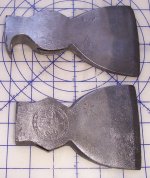
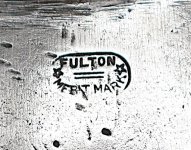
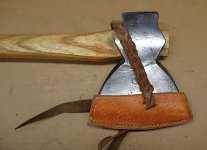
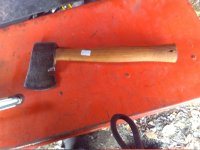
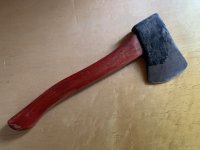
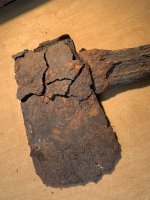
One thing you have to be very careful about concerning old axes, is that when an older company was bought out or up by a larger company, the brand of axe was continued in production to capitalize on the old name. In fact most of the axe brands or names of axes sold in the 20th century by the major manufacturers were previously used by older companies they bought out or bought the rights to. I have a "Blood" brand hewing axe, which is a really old-looking style and a really cool name, and the original Blood company was gone at some point back in the 19th century, but one of the big axe companies of the 20th century continued to make and sell that brand, and I have a hatchet of the same brand also, and my guess is they are probably 20th century axes by a large company, not really old ones made when Mr. Blood was still hammering them out. A friend of mine told me he had an 19th century axe a few years ago and I asked him how he knew it was that old, and he said he could see how it was forged. I popped his bubble by showing him a film made in the 1960s at an axe company in New England that was still making axes every day using it's same old trip-hammers and methods it had been using back into the 19th century. The industrial revolution came along and pretty much everything that was made after the Civil War was made in a similar way to how tools in the 20th century were made. So what looks really old to people today, is usually something from sometime in the 20th century, and even if it is from the 19th century post civil-war, it was usually mass produced using water or steam powered machinery, not by some blacksmith in a village shed.