
You are using an out of date browser. It may not display this or other websites correctly.
You should upgrade or use an alternative browser.
You should upgrade or use an alternative browser.
Let's see your Herbrand!
- Thread starter bluebolt
- Start date

twertsy
Well-known member
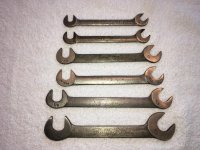
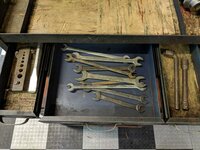
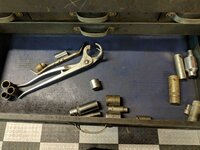
Can't believe I haven't contributed to this thread yet.


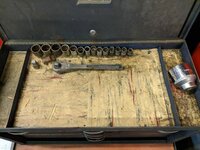
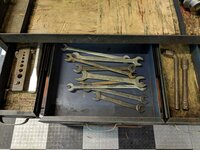
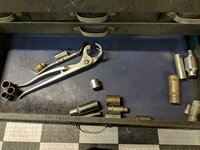


Sent from my Pixel 2 XL using Tapatalk
Sent from my Pixel 2 XL using Tapatalk
Attachments
-
 f6092a38f769bcfea2cc4961fb352800.jpg115.6 KB · Views: 7
 -
 c0807667fa8681de874d520c133c1dff.jpg94.4 KB · Views: 4
 -
 d8fefb3f7696dfac4f1b6cf6cec50d6f.jpg102.5 KB · Views: 4
 -
 1c279167678532940e4b25be25e93111.jpg107.9 KB · Views: 4
 -
 89a0e3e595eece89197536e7d06f9f7c.jpg93.7 KB · Views: 4
 -
 71dab50f923811b717f9229efc9b24e0.jpg124.8 KB · Views: 5
 -
 c04ede41273b90223a9048640953f347.jpg122.9 KB · Views: 4
 -
 9cf7168b648b7b1ed6483682a037d802.jpg70.7 KB · Views: 4
Private Lugnutz
Well-known member
Congrats, Jim! Hooray for onesy-twosy perseverance!I finally finished the Herbrand obstruction wrench set.

Congrats, Jim! Hooray for onesy-twosy perseverance!
Thanks Lugz,
Perseverance is right. I found the last one (1/2”) in an eBay auction. It was in with a bunch of other Herbrand wrenches I didn’t really want, but now own. If anyone is looking for old script Herbrand logo DOE wrenches, send me a PM. I’ll make you a deal you can’t refuse!
Jim C.
twertsy
Well-known member
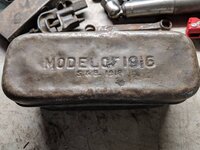
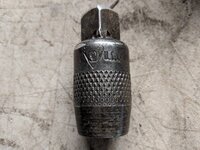
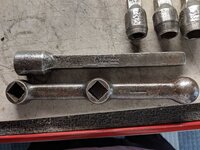
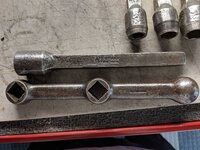
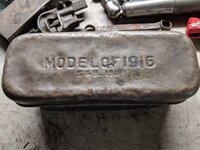
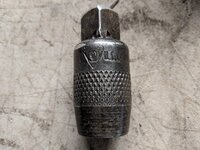
I snagged this set off the web because it was cheap, very early, and included the "year 1" Blackhawk socket. Don't think it is the correct box but who knows? Vehicle kit maybe? Very cool early Herbrand though.



Sent from my Pixel 2 XL using Tapatalk
Sent from my Pixel 2 XL using Tapatalk
Attachments
-
 feee36632f1e446bb7f86b8498d89dbb.jpg126.7 KB · Views: 3
 -
 a2f98050f9dda1cf8369fc7559af5de5.jpg97.9 KB · Views: 3
 -
 d7d4495ef0c75b04929cc1e61d1cf79f.jpg102.2 KB · Views: 3
 -
 71519782831cae67e1f8e34deeb4162a.jpg88.7 KB · Views: 4
 -
 5926a6d5947bf528cc81761434cb7cd6.jpg107.3 KB · Views: 3
 -
 9f690f693244867570ecd59409d99d49.jpg129.7 KB · Views: 3
 -
 31e63ef27254e060d89461e97e244dec.jpg105.7 KB · Views: 3
 -
 e0ea9d6a84f186436b42c4bc5bb5cf62.jpg110 KB · Views: 7
Private Lugnutz
Well-known member
Sweet! Very early.
Private Lugnutz
Well-known member
I think that's an early (WWI and interwar) mess kit can. Sometimes called a bacon can.
EDIT: Yup. The "Model of 1916" indicates the style. The "S.& B." is Sturgis & Burns, one of the suppliers the Army turned to in 1917 or so right around the time Rock Island Arsenal stopped making them. The "1918" is the date of production by Sturgis & Burns of that can. Check this link out here.
That might disappoint you, but I think it's the coolest friggin' thing I have seen all week! The bacon can dates to 1918 (last year of WWI). The tools date to the early 1920's when only a handful of mfgrs (Plomb was one) were making these kinds of hand-forged or machined steel male-drive tang tools. (It's that 'tweener stage that I personally love, and collect like mad, after male-drive tang pressed steel and hot-forged heavy walled sockets.) That means that the Herbrand tools and the S&B bacon can are contemporary to each other. Even though they are not original to the bacon can from the Herbrand factory, they have probably been in there since the 1920's, and the owner, if not a WWI veteran, was at least the kind of guy who made due in his garage, had the bacon can, and they fit!
EDIT: Yup. The "Model of 1916" indicates the style. The "S.& B." is Sturgis & Burns, one of the suppliers the Army turned to in 1917 or so right around the time Rock Island Arsenal stopped making them. The "1918" is the date of production by Sturgis & Burns of that can. Check this link out here.
That might disappoint you, but I think it's the coolest friggin' thing I have seen all week! The bacon can dates to 1918 (last year of WWI). The tools date to the early 1920's when only a handful of mfgrs (Plomb was one) were making these kinds of hand-forged or machined steel male-drive tang tools. (It's that 'tweener stage that I personally love, and collect like mad, after male-drive tang pressed steel and hot-forged heavy walled sockets.) That means that the Herbrand tools and the S&B bacon can are contemporary to each other. Even though they are not original to the bacon can from the Herbrand factory, they have probably been in there since the 1920's, and the owner, if not a WWI veteran, was at least the kind of guy who made due in his garage, had the bacon can, and they fit!
Last edited:
twertsy
Well-known member
Awesome Greg, thank you!I think that's an early (WWI and interwar) mess kit can. Sometimes called a bacon can.
EDIT: Yup. The "Model of 1916" indicates the style. The "S.& B." is Sturgis & Burns, one of the suppliers the Army turned to in 1917 or so right around the time Rock Island Arsenal stopped making them. The "1918" is the date of production by Sturgis & Burns of that can. Check this link out here.
That might disappoint you, but I think it's the coolest friggin' thing I have seen all week! The bacon can dates to 1918 (last year of WWI). The tools date to the early 1920's when only a handful of mfgrs (Plomb was one) were making these kinds of hand-forged or machined steel male-drive tang tools. (It's that 'tweener stage that I personally love, and collect like mad, after male-drive tang pressed steel and hot-forged heavy walled sockets.) That means that the Herbrand tools and the S&B bacon can are contemporary to each other. Even though they are not original to the bacon can from the Herbrand factory, they have probably been in there since the 1920's, and the owner, if not a WWI veteran, was at least the kind of guy who made due in his garage, had the bacon can, and they fit!
Sent from my Pixel 2 XL using Tapatalk
Private Lugnutz
Well-known member
Sure thing. Cool find. Who'd've thunk it? An early Herbrand socket set in a WWI bacon can. Who else can say they have one of those!! Just the kind of thing that makes for an awesome story when visitors pop in and the beer bottles are popped open!
3baygarage
Well-known member
That’s a really cool set.
d42jeep
Well-known member
I took a picture of the Herbrand I’ve accumulated. Except for the early cool ratchet, any of it is available for trades in case anybody is missing any pieces.
-Don
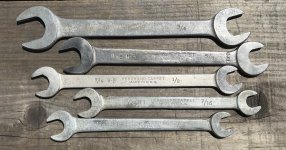

-Don
Last edited:
Sure thing. Cool find. Who'd've thunk it? An early Herbrand socket set in a WWI bacon can. Who else can say they have one of those!! Just the kind of thing that makes for an awesome story when visitors pop in and the beer bottles are popped open!
Maybe with the war and all - and with materials in short supply - tool makers were limited with their purchases so tools got sold in a military food can.
Not much different from today with ammo cans. I store all kinds of stuff in them - they're versatile.
Private Lugnutz
Well-known member
I am not a WWI expert, bonneyman, but I have never read anything about steel shortages in WWI, and I suspect this set - and other tools and sets of the day - would have come in a wooden box in 1916 if they came in a box at all.Maybe with the war and all - and with materials in short supply - tool makers were limited with their purchases so tools got sold in a military food can.
This I agree with, and said the same thing at the end of post #127.bonneyman said:Not much different from today with ammo cans. I store all kinds of stuff in them - they're versatile.
I am not a WWI expert, bonneyman, but I have never read anything about steel shortages in WWI, and I suspect this set - and other tools and sets of the day - would have come in a wooden box in 1916 if they came in a box at all.
This I agree with, and said the same thing at the end of post #127.
Oh, no disagreement lugz. I'm thinking with the whole country involved in the war effort there'd be less energy and material focused on things like tool boxes. Someone probably just appropriated a metal tin they had at hand and made it work. However it came about it's one heck of a tool find!
Last edited:
Username already in use
Well-known member

Private Lugnutz
Well-known member
Cool. Some kind of snap rings.
Interesting pair of Herbrand No. 186 pliers followed me home today.
I've got a pair of Utica's like that. My 1977 catalog calls them lock ring "horse shoe" pliers.
Looks like the style is still made:
https://www.amazon.com/dp/B07QYR719L/?tag=atomicindus08-20
d42jeep
Well-known member
It was common to use horse shoe clips to secure emergency brake linkage to brake shoes on drum brakes. These pliers would be used to remove the clips. I use my pair now to expand the D rings that hold the leather handles to vintage toolboxes.
-Don
-Don
Private Lugnutz
Well-known member
They're in the 1942 catalog (page 61), Unaiu, and your example has the wartime block lettering logo.
Magnum440d100
Well-known member
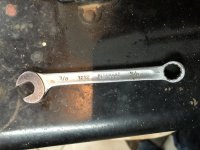
I have a few herbrand tools, though I hardly use them.
But this wrench came in super handy today. I couldn’t lean over the motor that well today due to my back. The open end on this one has an angle that was JUST RIGHT! It was in my backup box, but it was perfect today, so it earned a spot in my main box
But this wrench came in super handy today. I couldn’t lean over the motor that well today due to my back. The open end on this one has an angle that was JUST RIGHT! It was in my backup box, but it was perfect today, so it earned a spot in my main box
Attachments
Thanks Lugz,
Perseverance is right. I found the last one (1/2”) in an eBay auction. It was in with a bunch of other Herbrand wrenches I didn’t really want, but now own. If anyone is looking for old script Herbrand logo DOE wrenches, send me a PM. I’ll make you a deal you can’t refuse!
Jim C.
Well, I couldn’t give them away, so now I guess I’m collecting them!!
Jim C.
Attachments

Private Lugnutz
Well-known member
I always enjoy reading history, RJ, even if I am familiar with it, but I am struggling to understand what prompted that post. It seems like a non sequitur.
Provincial
Well-known member
Probably he was responding to comments upthread about the WWI bacon tin. It does add the information that for the US military, WWI-related fighting dragged out until 1921, and tools/equipment will have been used in combat until then.
Private Lugnutz
Well-known member
I figured that much, Jock, but I still don't understand the significance. How long the war lasted after the armistice is irrelevant. The bacon can was made for the Army in 1918, but that has nothing to do with the tools. The tools were made in the 1920's, but the Army was not using any socket drive wrenches during WWI. No equipment lists include them. We believe they may have been introduced in the Interwar years as early as 1932, but the first time they hit a document is 1938. Hypothetically, just for the sake of argument, even if the Army was using socket drive tools earlier than that, they would not have been issued in that bacon can. Nothing about those tools links them to military use. In short, trying to place those tools in the war is a long stretch, and trying to place them inside that meat can in the war is an even longer stretch.
Has anyone ever compiled a list known AISI numbers stamped on Herbrand tools? There's the relatively common ones like 1340 and 8742 but then today I saw a 4147 and I'm thinking, what was the process ( regulatory, availability, economics, physical acquisition, Company analysis and selection etc.) for switching alloys and which ones actually held up the best? I'm not expecting anyone has actually done that outside of some lost internal company knowledge but the subject is interesting like if you've ever read up on how Ford, after making a big deal about their chrome vanadium steel in Model T's, ended up, because of durability issues, (not wartime restrictions like Herbrand apparently), going to carbon manganese steel on their axles and crankshafts especially, and got away from vanadium, though not chromium, maybe altogether by the time the last T's were being produced and in doing so significantly addressed common part failures.
Last edited:
Private Lugnutz
Well-known member
I'd be interested in seeing that. I have a record of 1038, 1340, 8640, 8642, 8645, and 8742.Has anyone ever compiled a list known AISI numbers stamped on Herbrand tools? There's the relatively common ones like 1340 and 8742 but then today I saw a 4147...
All evidence points to the WPB as the motivating factor for Herbrand's AISI numbers, which always struck me as part hyper-compliance, part patriotic and part marketing. WPB Material Restriction Orders M-18-a, M-21-a, and M-18-d gradually allocated and then ultimately restricted use of precious metals by composition to Ni (< 0.6%), Cr (< 0.6%), Mo (< 0/6%), V (0.0%), and Mn (< 1.65%), with very few exceptions (automotive maintenance hand tools not being one of them). General Preference Order E-6 was a list of available alternatives that were allowed, including pre-existing SAE/AISI 1000 (carbon steel), 1300 (carbon-manganese), 1400, and 9200 (silicon-manganese) series, and so-called "New Emergency" steel compositions, created by a Gov/Industry/Academia consortium, which were essentially low content triple (Ni, Cr, Mo) alloys, assigned the entire 8000 series. All 4100 was verboten.
I have never seen a Herbrand 4147 or any other 4100, which is technically .8% in Cr. 4130 is routine Cro-Moly. 4147 is low in Moly (.15) and relatively high in Mn (.75), but at .8% Cr is .2% above the WPB wartime limit. Hence, my interest.
As for steel properties and heat treatments and what characteristics (strength, durability, elasticity, etc) they give certain steel products, I have a 1944 Wartime Data Supplement to Machinery's Handbook that is very instructive on this subject, as well as a very helpful 1944 Ryerson Steel Co brochure. Home library. If you're interested, I will post some excerpts later.
Last edited:
I'd be interested in seeing that. I have a record of 1038, 1340, 8640, 8642, 8645, and 8742.
All evidence points to the WPB as the motivating factor for Herbrand's AISI numbers, which always struck me as part hyper-compliance, part patriotic and part marketing. ........
Yeah, I have no reason to believe otherwise, I was just thinking about the actual practical implementation at the company level.
Private Lugnutz
Well-known member
Roger. The sources I mention touch on that in sections on how to select steel for certain applications, and they include the cost factor.
I think the 4147 Herbrand is postwar. It has a flat shank (as opposed to the rounded edges shanks) and the markings of a postwar wrench. I have a 1723 just like it, no AISI number. Just speculating that Herbrand may have continued the AISI numbers practice for a year or so. Thanks for pointing it out. I saved the image.
I think the 4147 Herbrand is postwar. It has a flat shank (as opposed to the rounded edges shanks) and the markings of a postwar wrench. I have a 1723 just like it, no AISI number. Just speculating that Herbrand may have continued the AISI numbers practice for a year or so. Thanks for pointing it out. I saved the image.
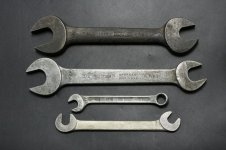
I don't have my random Herbrand stuff separated or anything but I did round these few up. The second one down looks pretty much like the 4147 I mentioned previously. the 3rd one down is AISI 9445 which i think conforms with the wartime regs but is still one I don't think I've seen too often. The wrench at the bottom is a poor picture of an 8742 with chromed wrench faces.
I see "CMN" marked wrenches once in awhile too, not sure if that's CMn as in Carbon Manganese or Chrome Moly Nickel or something else entirely.
I see "CMN" marked wrenches once in awhile too, not sure if that's CMn as in Carbon Manganese or Chrome Moly Nickel or something else entirely.
Attachments
Private Lugnutz
Well-known member
Just looked it up. AISI 9400 and 9600 were added to General Preference Order E-6 updates later in the war. I have never seen a "CMN" marking.
454ragtop
Well-known member
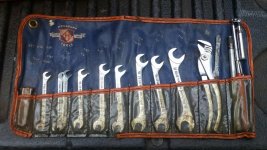
Acquired an ignition tool set in a cool pouch today, give me a day or 2 to get pics. Was surprised not to see one in this thread.
Private Lugnutz
Well-known member
Nice! Looking forward to it. I never see them. I see Duro, Williams, or the ubiquitous Kastar K-Stars almost every week. I think I have one Herbrand ignition wrench, total, and it's a stand-by in a Cornwell set.
Username already in use
Well-known member
Acquired an ignition tool set in a cool pouch today, give me a day or 2 to get pics. Was surprised not to see one in this thread.
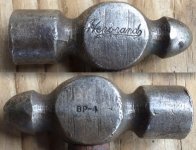
I'm interested to see if the pouch is anything like the one I have.
The wartime Herbrand set was easier for me to piece together than a Bonney set!Nice! Looking forward to it. I never see them. I see Duro, Williams, or the ubiquitous Kastar K-Stars almost every week. I think I have one Herbrand ignition wrench, total, and it's a stand-by in a Cornwell set.
Here's a pic of mine and a bonus pic of a 4oz hammer.
Attachments

Private Lugnutz
Well-known member
I remember that set. The pouch is way more substantial than the typical Duro oilcloth or leatherette pouch.
454ragtop
Well-known member
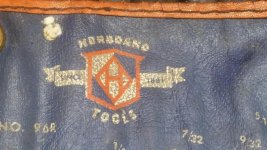
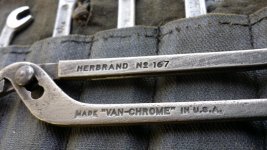
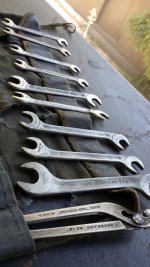
Here you go, all the pieces in the ign set are marked Herbrand except the point file, no markings I could see. Added a pic of a few more Herbrand items that are hanging around. If anybody needs this stuff let me know, not really attached to it.
Attachments

Private Lugnutz
Well-known member
That is a cool pouch and logo. I'm thinking 50's on that.
Oldtuleguy
Well-known member
- Joined
- Nov 4, 2017
- Messages
- 10,486
454ragtop
Well-known member
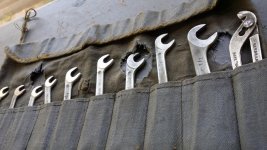
Strangely, I found that same set again today at the flea market, but the roll was in tough shape, and only had the wrenches, rest of the stuff was missing. Almost bought it anyway, but the seller tried to tell me it was a complete set, which it obviously wasn't.